With Just a Primary School Diploma and Still Crafting Bottle Caps at 26, How Did He Amass 287 Billion by 84?
 04/16 2026
 510
510
Source | Jiadpai (Home Appliance Pai)
Author | Xiaoxiao
In the realm of Chinese business, there exist two distinct types of leaders.
One type resembles Lei Jun and Zhou Hongyi, who are perpetually in the online spotlight, eager to become trending topics and adept at harnessing the power of traffic generation.
The other type is remarkably low-key and enigmatic. You might use their products daily or even reside in a building they've constructed, yet remain oblivious to their name or story.
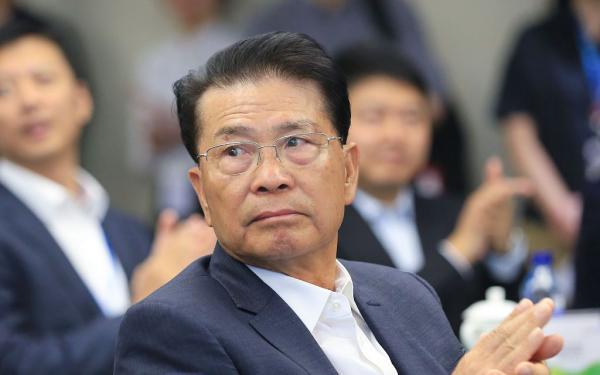
He Xiangjian, the founder of Midea Group, epitomizes the latter.
It's perfectly understandable if you haven't heard of him. But what if I told you about an 84-year-old man who, despite only having a primary school education, adeptly manages a conglomerate worth over 400 billion? Or that he, with a net worth of 287 billion, steadfastly refuses to let his son take the reins, instead entrusting power to an 'outsider'? Wouldn't that pique your curiosity?
Today, let's delve into the extraordinary life of this 'invisible tycoon' from Guangdong.

The First Acceleration: Beyond Just Fans
Let's rewind to 1968 in Beijiao Town, Shunde, Guangdong.
Back then, He Xiangjian was no domineering CEO but a 26-year-old 'nobody' from a humble background. To make ends meet, he took a bold step, rallying 23 villagers to pool 5,000 yuan and establish the 'Beijiao Street Plastic Production Team.'
It was more akin to a small workshop than a production team, crafting glass bottles, plastic caps, and small generator parts—whatever would sustain their livelihood.
Recalling those days, He Xiangjian candidly remarked, 'Back then, we didn't harbor any grand ambitions; we just wanted to ensure our villagers had enough to eat.'
To market these bottles and caps, He Xiangjian traversed the country by train. Back then, the green trains were excruciatingly slow, but his mind raced with ideas. While on the road, he keenly observed a phenomenon: as reforms took hold, people began to accumulate wealth, and with the sweltering weather, electric fans were destined to become a hit!
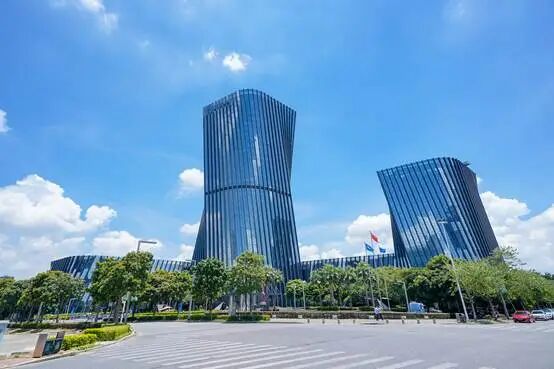
In 1980, He Xiangjian made a daring decision: to transition into fan manufacturing! With that strategic move, Midea officially entered the home appliance industry. Back then, Midea fans were akin to 'money printers,' in high demand. But He Xiangjian, never one to rest on his laurels, wasn't content.
While everyone was fiercely competing in the fan market, he sensed the distant rumble of 'air conditioners.'
In the mid-1980s, air conditioners were still a rarity in China, prohibitively expensive and technically challenging. But He Xiangjian was undeterred; he forged ahead. In 1985, Midea officially ventured into the air conditioning market. From there, Midea evolved from a single-product fan manufacturer to an air conditioner producer and eventually into a comprehensive home appliance giant.

Relinquishing Power with a Toast: Daring to Replace Veterans
If He Xiangjian had only been daring, he might have merely been a successful entrepreneur. What transformed Midea into a Fortune 500 company was his boldness in leadership transition.
Despite only having a primary school education, He Xiangjian earned a nickname: 'Liu Bei in a Suit.' It was bestowed upon him by Toshiba executives, signifying his exceptional talent in utilizing and delegating power.
But 'utilizing new talent' necessitated 'daring to replace old staff.' In 1997, Midea encountered a bottleneck, and the egalitarian approach no longer sufficed. He Xiangjian took a bold step that left everyone astounded: he 'relinquished power with a toast.'
The veterans who had fought alongside him were all his former villagers and comrades, many with limited educational backgrounds and rigid mindsets. He Xiangjian didn't hesitate; he directly persuaded a wave of founding veterans to retire, even including his wife.
Even more audaciously, he pointed to a newly acquired computer and delivered a poignant message to the veterans: 'Whoever can master this computer, I'll promote them immediately; those who can't, sorry, step aside.'
Thus, Midea transformed from a family-run workshop into a breeding ground for professional managers. It was around that time that a young man named Fang Hongbo was discovered, rapidly ascending through the ranks to eventually become He Xiangjian's successor.

A Billion-Dollar Fortune: Preferring an Outsider Over His Son
Chinese private enterprises often grapple with a fatal flaw: 'family succession.' How many companies have crumbled due to power struggles between fathers and sons or in-laws, ending in disarray?
He Xiangjian has one son and two daughters. Logically, such a vast empire should have been passed down to his son, right? But He Xiangjian made a 'counterintuitive' decision. In 2012, at 70, he officially retired. The reins he handed over weren't to his son, He Jianfeng, but to the former 'worker' Fang Hongbo.
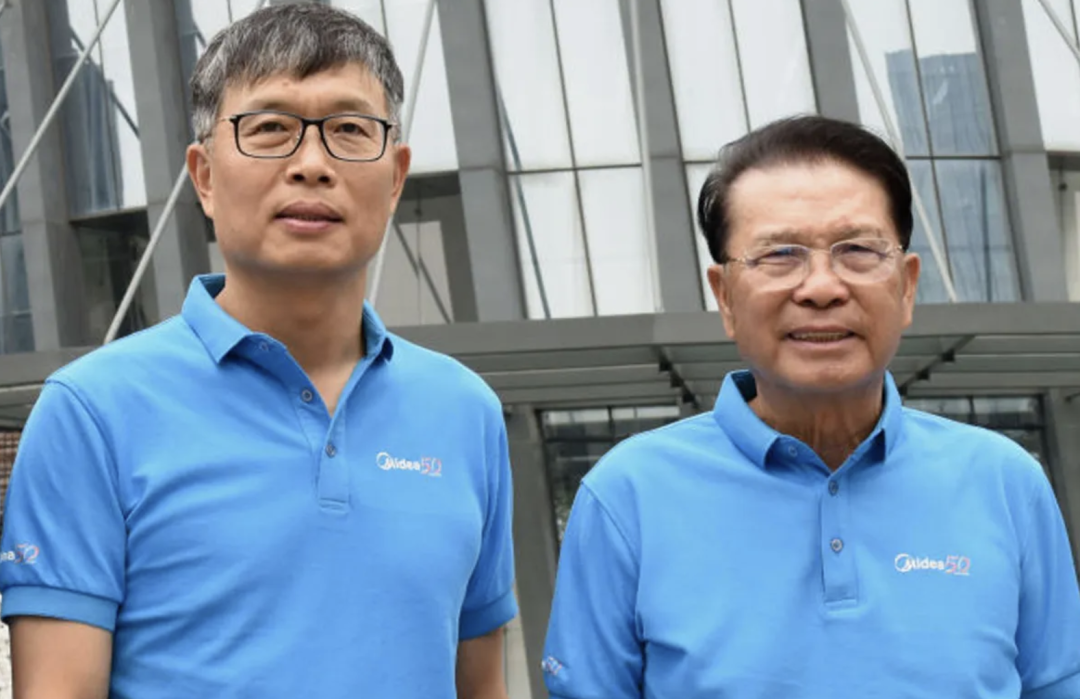
This move left everyone stunned. He Xiangjian explained, 'Midea will never become a family business. My family isn't skilled at management; forcing them into leadership would be irresponsible to the company, the employees, and myself.'
Even more remarkably, his son, He Jianfeng, was also 'rebellious.' While other second-generation heirs aspired to inherit the throne, this young master forged his own path, founding Yingfeng Group and venturing into investments and environmental protection, now worth billions and thriving.
He Xiangjian wasn't just unbothered by this; he was proud. He even went so far as to 'optimize' his son's board seat to make room for professional managers. Such magnanimity is rare not just in China but globally. He didn't pursue family monopoly; he pursued 'talent monopoly.'

The 'Trendiest' 84-Year-Old: Behind the Scenes, Only Doing Good Deeds
What is He Xiangjian doing now? He's already 'disappeared' from the public eye.
Today, Midea, though once surpassing 400 billion in market value, is no longer just a 'home appliance seller' under Fang Hongbo's leadership. It's now a high-tech conglomerate involved in industrial robots, automation, and even healthcare.
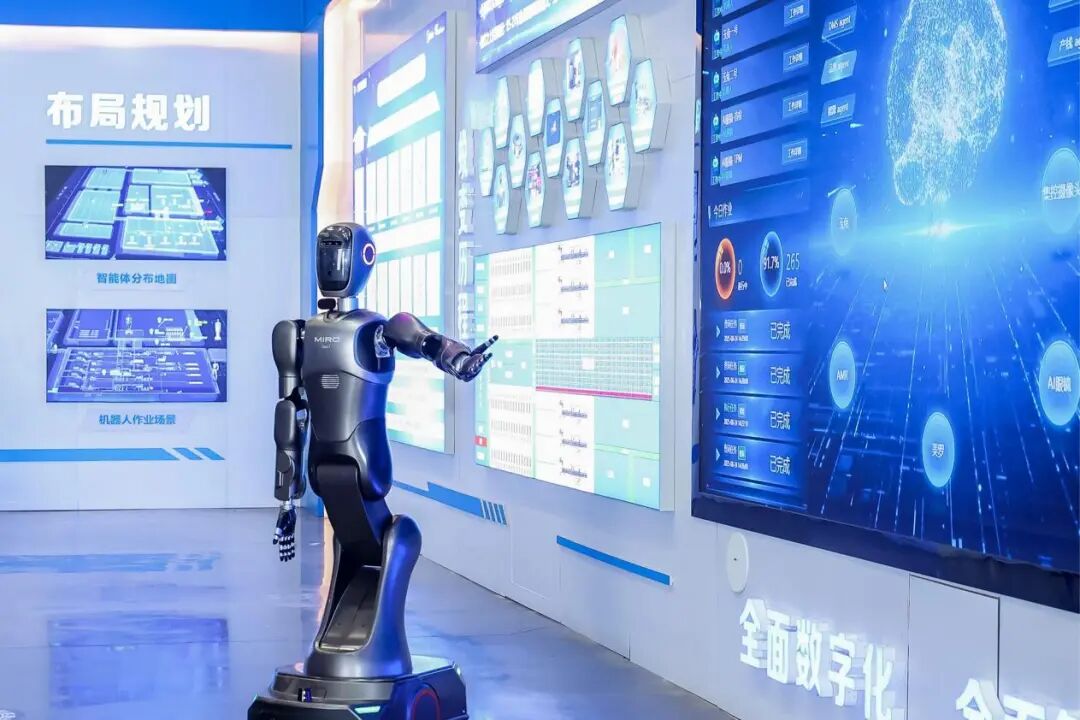
As for He Xiangjian himself, despite holding 287 billion in wealth and still topping the Hurun Rich List in Foshan in 2026, his current 'mission' is philanthropy.
In 2017, he donated 6 billion to charity. Later, he personally funded a 3 billion 'He Xiangjian Young Scientists' program, dedicated to supporting young researchers.
He once said, very plainly, 'I don't know how to spend large sums of money wisely. Handing it over to professionals to help more people is the right thing to do.'
Looking back at He Xiangjian's life, you'll find this man is 'perceptive' to an extraordinary degree. When poor, he dared to take risks; when rich, he dared to let go. While others clung to power, he willingly surrendered it; while others struggled to keep wealth beyond three generations, he ensured his company always had capable leaders.
He demonstrates through his journey that a true leader isn't someone who micromanages the company daily but someone who can step away for a year, and the company still thrives.
In this impatient era, 'Sweeping Monks' like He Xiangjian—who can endure solitude, relinquish interests, and command respect—are truly rare.
After reading this tycoon's story, what strikes you the most? Is it his magnanimity in stepping aside, or do you envy his retired life? Share your thoughts in the comments.
END
-
![]()
Proceed with Caution Before Entering the Indian Auto Market: Even Musk Faced Challenges, What Makes Chery Think It Can Succeed?
-
![]()
EU Intends to Engage in Trade War with China Amid Chinese Cars Nearing 10% of Monthly Sales in Europe
-
![]()
Shenzhen Rolls Out 'Ten Measures' for New Energy Vehicle Insurance: Integrates Innovative Risk Factors and Adopts Battery-Body Separation Model
-
![]()
If You Can’t Drive a Ferrari Yourself, What’s the Point of Owning One?
-
![]()
ByteDance Clarifies: 'No Car Production, No Investment in Saido!' Seres' Stock Price Plummets to New Lows!
-
![]()
New Energy Vehicles Boast Over 60% Penetration Rate: Joint Venture Automakers Must Accelerate Their Efforts
-
![]()
Why Are New Energy Vehicles Becoming Increasingly 'Bulky'?
-
![]()
Over 12 Years, the Average Passenger Vehicle Has Gained Nearly 400 kg, Sparking Netizens' Queries: When Will New Energy Vehicles Revert to Their 'Standard Size'?