How Should Feizhu Tell Its New Story in the Era of AI Large Models?
 04/17 2026
 493
493
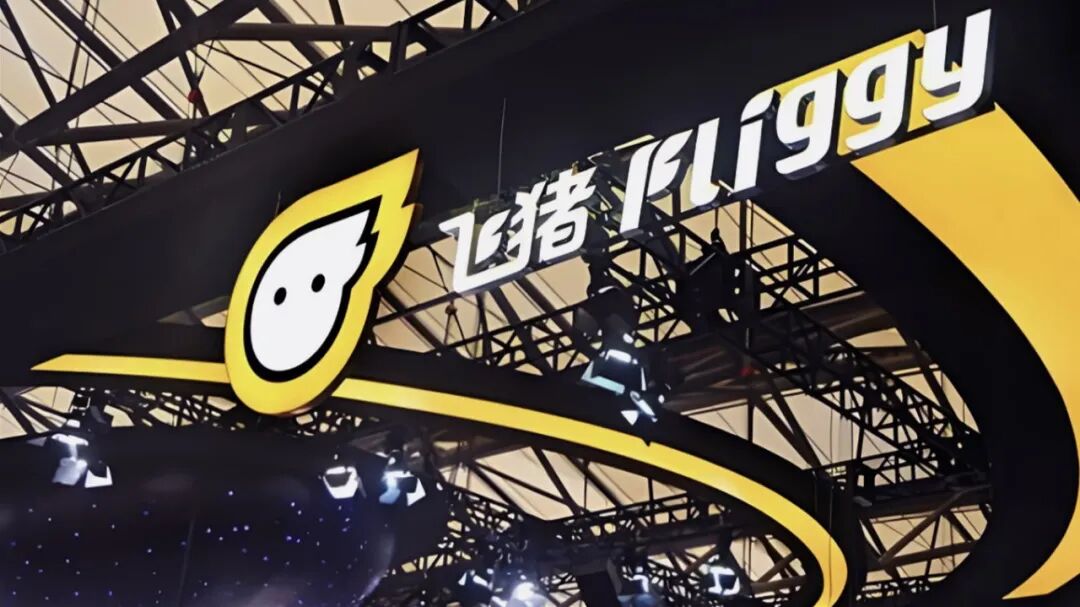
"Committed to becoming an AI-driven intelligent company"
In March of this year, at the Alibaba Center in Beijing, Zhuang Zhuoran, President of Feizhu, stood on stage at a product launch event and pressed the button to launch the FlyAI travel skill plugin. This small-scale event, attended by only a few dozen media outlets, stirred up significant public discussion in the long-stagnant online travel industry.
This is the first standardized AI plugin for travel services in China. It means that users no longer need to open the Feizhu App; they can simply say, "Help me book a flight to Shanghai tomorrow" in any AI application integrated with FlyAI, and complete the entire process from inquiry to payment.
This is just the latest step in Feizhu's All in AI strategy. From launching "Feizhu Ask" last year to introducing "Qianwen Price" this year, and now opening up the FlyAI plugin, Feizhu has rapidly deployed a series of AI products, elevating AI to the highest level of its corporate strategy.
At the 2025 New Fiscal Year Kickoff Meeting, Zhuang Zhuoran clearly stated that all of Feizhu's future businesses would revolve around AI, with the goal of "becoming an AI-driven intelligent company."
However, behind this All in approach, there are both the support of the Alibaba ecosystem and the constraints of being bound to it; there is the potential for AI to reshape industry efficiency, as well as multiple practical challenges regarding the authenticity of demand, commercial closed loops, and industry barriers.
01
Is AI Really the Panacea for the Existing Problems in the Travel Market?
The landscape of China's online travel industry has not undergone substantial changes for many years.
According to the "2025 China Online Travel Market Annual Report" released by Analysys, the transaction scale of China's online travel market exceeded 7 trillion yuan in 2025, representing an 18% year-on-year increase. Among them, Ctrip maintained its first-place position with over 40% market share, followed closely by Meituan, with Feizhu ranking third. The top three players combined accounted for over 80% of the market share, indicating a highly concentrated industry.
In this landscape, Ctrip leverages its supply chain advantages and brand influence accumulated over more than two decades to dominate the mid-to-high-end business travel and long-haul tourism markets, controlling the industry's most core cash cow businesses. Meituan, on the other hand, relies on its massive traffic from local services and strong offline promotion capabilities to establish absolute dominance in the markets for day trip ( day trip ), short-haul trips, and budget hotels, with unparalleled penetration in lower-tier markets ( lower-tier markets ).
Feizhu has attempted various strategic breakthroughs.
Initially, it pursued a platform-based approach, hoping to replicate the Taobao model and create "Tmall for the travel industry." However, the highly non-standardized nature of travel products and the complex fulfillment processes made it impossible for a pure platform model to address the core pain points of user experience and service quality. Later, it focused on the "Global Travel" strategy, heavily investing in the international travel market, only to be severely impacted by black swan events. By the time the international market slowly recovered, the domestic market was already dominated by the other two players.
On the other hand, the dividends of the traditional OTA model have gradually peaked. On the user side, decision-making costs remain high. A complete travel plan requires comparing prices across multiple platforms, researching guides, and piecing together an itinerary, often taking hours or even days. On the merchant side, operational costs continue to rise. Small and medium-sized merchants lack digital capabilities, face high content production and marketing costs, and mostly rely on platform traffic support to survive.
In Feizhu's narrative, AI has become almost the only solution to the industry's structural pain points. It can enable large-scale, customized travel services, making travel advisor services previously only available to high-end users accessible to the general public. At the same time, it can significantly improve merchant operational efficiency and reduce platform service costs.
However, from a third-party industry perspective, this narrative seems to easily confuse two key propositions: AI is a strategic priority for Feizhu, but for the OTA industry as a whole, compared to being an inevitable answer that disrupts the industry, AI is still just a tool for improving efficiency.
From an industry's fundamental logic perspective, the core pain points for OTA users are not "manual itinerary planning is too troublesome," but rather the trust costs arising from information asymmetry, the uncontrollable fulfillment of non-standard services, and the gap between travel expectations and offline experiences.
According to "Travel Daily," a third-party travel industry research institution, most users only use AI travel tools to "generate initial itinerary frameworks and obtain basic guide information." Final booking decisions are still made after verifying reputation through content platforms and comparing prices across multiple OTA platforms. The number of users who truly achieve "AI-powered full-process closed-loop bookings" is extremely limited.
More critically, over 70% of the transaction volume in the OTA industry comes from business travel and standardized flight and hotel bookings. The needs of these users are highly standardized, with extremely short decision-making paths that can be completed within 3 minutes, and do not require complex AI itinerary planning services.
Feizhu's All in AI strategy is a forward-looking layout that leads the industry. However, in the eyes of industry insiders, there is a subtle urgency behind this strategy. If Feizhu fails to seize the industry variables brought by AI, it may remain a supporting role within the Alibaba ecosystem.
Under such circumstances, Zhuang Zhuoran proposed the strategic direction of the "Three E's": AI for Efficiency, to improve the operational efficiency of the platform and merchants; AI for Experience, to redefine the entire user travel journey; and AI for Ecosystem, to serve the entire tourism ecosystem partners. He aims to complete a thorough AI transformation from the perspectives of the platform, users, and merchants.
02
The Ambitions and Practical Boundaries of the Product Matrix
Feizhu's AI strategy attempts to build a complete product matrix covering C-end users, B-end merchants, and ecosystem openness.
The core C-end product is "Feizhu Ask." Launched in April 2025, this product has evolved from a simple AI Q&A tool to the industry's first multi-agent-driven travel AI product, integrating professional roles such as itinerary assistant, route customizer, intelligent transportation advisor, and hotel advisor.
Users can propose complex needs through natural language, such as "Take two elderly people and a 3-year-old child to Sanya for 5 days with a budget of 10,000 yuan. Don't make it too tiring. Mainly want to visit beaches and ocean parks." Feizhu Ask will automatically generate a complete itinerary including attractions, transportation, dining, and accommodation, supporting one-click booking of all linked products, and allowing for itinerary adjustments at any time through natural language.
According to Feizhu's data for the 2026 Spring Festival holiday, the number of orders generated by AI during the holiday period increased significantly compared to the 2025 National Day holiday, with AI consultations accounting for over 60% of total platform consultations. In the "AI Travel Assistant Evaluation System" released by the China Tourism Academy, Feizhu ranked first in overall score, ahead of Ctrip's "Cheng Xiaoyou" and Meituan's "AI Life Assistant."
However, behind these impressive figures, there remains a significant gap between the actual implementation effects of AI in real-world scenarios and user expectations.
Many users report that AI-generated itineraries frequently contain errors, such as incorrect attraction operating hours and unrealistic itinerary pacing. It also struggles to accurately capture users' implicit needs. For example, when a user says "not too expensive hotels," they may mean cost-effective budget hotels rather than dirt-cheap hostels. These needs requiring empathy and offline knowledge are precisely the blind spots of current AI capabilities.
In February of this year, Feizhu launched the "Qianwen Price" campaign in collaboration with Tongyi Qianwen. Users could search for travel-related products in the Qianwen App and receive exclusive discounts provided by Feizhu. This campaign was seen as a benchmark case of synergy between Feizhu and the Alibaba ecosystem, bringing high-quality traffic to Feizhu while increasing user engagement for Tongyi Qianwen.
However, in reality, this was more akin to a traffic exchange where Feizhu used marketing subsidies to drive activity on Qianwen. Feizhu incurred high subsidy costs but achieved limited user retention—users remained more engaged with Qianwen, and their repurchase intentions likely declined once the campaign ended.
On the B-end, Feizhu introduced four intelligent agents: AI Analysis Assistant, AI Optimization Assistant, AI Marketing Assistant, and AI Service Assistant, covering the entire merchant operation chain. According to Feizhu's data, the usage of the AI Product Listing Assistant has increased 13-fold year-on-year, becoming one of the most commonly used tools for small and medium-sized merchants.
For many small and medium-sized merchants, AI tools have indeed lowered the barrier to content production but have also directly led to a high degree of homogenization of product content on the platform. When all merchants use AI to generate similar titles, images, and itinerary descriptions, users cannot distinguish product differences through content and ultimately choose based on price alone.
If C-end and B-end products represent the "internal strength" of Feizhu's AI strategy, then the launch of the FlyAI travel skill plugin represents its "external expansion."
Based on Feizhu's self-developed MCP model context protocol encapsulation, FlyAI provides search, consultation, planning, and booking services covering a full range of products including flights, hotels, tickets, transportation, and destination activities. Any AI application that integrates the plugin can offer complete travel service capabilities.
To date, FlyAI has been integrated into the skill marketplaces of dozens of mainstream AI applications, including OpenClaw, Wukong, and KimiClaw, and has also been launched on system-level AI assistants from Huawei, Xiaomi, OPPO, and Honor. In other words, users can use Feizhu's services to complete travel bookings in any AI application.
In Zhuang Zhuoran's vision, FlyAI aims to "make travel services ubiquitous." In the future, Feizhu will no longer be just an OTA platform but the travel service infrastructure for the entire AI ecosystem.
However, we also know that the core barriers in the OTA industry are direct user reach and brand mindshare. While the plugin model offers advantages, it also brings a hidden risk: the main platform relinquishes direct user touchpoints and cedes core traffic sovereignty.
At the same time, domestic super apps and AI applications with hundreds of millions of monthly active users are almost all direct competitors of Alibaba, such as WeChat, Douyin, and Doubao. Whether they will allow Feizhu's plugin to be integrated and whether they will entrust their travel service scenarios to Feizhu within the Alibaba ecosystem remains uncertain.
03
The Alibaba Ecosystem: Feizhu AI's Biggest Trump Card
Many believe that Feizhu's ability to rapidly advance its AI strategy in a short period is fundamentally supported by the Alibaba ecosystem.
In June last year, Alibaba Group CEO Wu Yongming announced a new round of organizational restructuring, formally merging Ele.me and Feizhu into the Alibaba China E-commerce Business Group, under the unified leadership of Jiang Fan. This adjustment was interpreted by outsiders as Alibaba's move to further integrate consumer ecosystem resources and promote AI implementation across various scenarios. After the restructuring, Feizhu's strategic position significantly rose, gaining access to more group resources.
Alibaba's "E-commerce + Cloud + AI" strategy provides comprehensive underlying support for Feizhu. Technologically, all of Feizhu's AI products are developed based on the Tongyi Qianwen large model, with Alibaba Cloud providing robust computational power support.
In terms of traffic, we must mention the significant traffic dividends Qianwen brought to Feizhu some time ago. Additionally, Feizhu gains access to homepage entries on Alibaba apps like Taobao and Alipay, and the 88VIP membership system is fully integrated with Feizhu.
Scenario and data synergy represent Feizhu AI's core competitive advantage. The Alibaba ecosystem offers full-scenario service capabilities across e-commerce, local services, maps, payments, and finance. Feizhu can integrate these capabilities to provide users with a full-link travel experience covering "dining, accommodation, transportation, sightseeing, shopping, and entertainment."
For example, when a user issues the command "Take my family to Hangzhou for 3 days" in Qianwen, the system can automatically use Feizhu to book flights and hotels, call Amap for route planning, use Ele.me to recommend local restaurants, and use Alipay for visa processing and payments—all without switching between multiple apps, enabling one-stop completion of all operations.
This full-link service experience can only be achieved by platforms like Alibaba that possess a complete consumer ecosystem.
However, despite the grandiose AI strategy, there are still practical challenges from an objective industry perspective. For example, AI cannot solve the non-standard fulfillment challenges in travel because it lacks understanding of the real world. Additionally, AI technology itself has no moat; the AI capabilities Feizhu can implement can be quickly replicated by other platforms.
We can see that while the underlying competitive logic of the OTA industry has not yet changed due to AI, Feizhu is breaking the traditional product form boundaries of the OTA industry and driving intelligent transformation across the entire sector.
The All in AI strategy represents a necessary choice for the company amid industry stagnation and its own development, as well as a crucial validation of the "large model + vertical scenario" implementation in China's internet industry.
This article is an original piece by Xinmou.
— END —
-
![]()
Wang Huiwen, Former Meituan Executive, Achieves 20-Fold ROI, Supports 24 AI Startups
-
![]()
Another AI Computing Power Unicorn Launches IPO! Founded by a Changjiang Scholar
-
![]()
OFILM Holdings Secures Zhongke Daojing, Marking a Significant Leap in the Optical Communication Industry!
-
What Will Be the Next Key Battleground for Large Models After AI Coding?
-
![]()
Leapmotor's Sales Soar, Yet Hidden Concerns Loom
-
![]()
China’s Action Camera Market Soars: 3.12 Million Units Sold in Six Months, DJI Secures 74% Dominance
-
![]()
Zhang Yiming: Strategic Retreat as a Path Forward
-
![]()
Exploring Charging for Some Features of QianWen App: Can It Follow the Path of Doubao?