AI Glasses: Alibaba’s Pursuit of Steady Progress
 04/17 2026
 458
458

Written by | Wen Yehao, Wu Xianzhi
Edited by | Wang Pan
On April 15, Alibaba's Qianwen AI Glasses S1 went on sale, marking another significant move by the tech giant in the hardware sector, particularly in the burgeoning field of AI glasses.
For many observers, the Qianwen AI Glasses S1 seem like a rebranded version of the Quark AI Glasses S1.
Indeed, the hardware specifications of the Qianwen S1 and Quark S1 are nearly identical, both featuring high-end components such as the Qualcomm Snapdragon AR1 + BES2800 dual flagship chips, dual Micro-LED displays, and Sony IMX681 sensors.
However, the key distinction lies in the software. The Quark S1 initially runs on Quark OS and requires an over-the-air (OTA) update to switch to Qianwen OS. Similarly, the model itself necessitates an OTA upgrade to Qianwen. In contrast, the Qianwen S1 comes pre-loaded with the latest Qianwen large model, ensuring that both the product and its AI capabilities are ready for immediate use, rather than being promised for the future.
The smart glasses market is highly competitive, with numerous vendors launching new products within a short span. Besides the Qianwen S1, Meta has already released two prescription AI glasses, Huawei is set to unveil a lightweight AI glasses at its Pura series launch event, and Dayuan o.b.e has also introduced a new AI glasses product.
As a major contender in China's AI glasses market, the launch of the Qianwen S1 reflects Alibaba's unique strategic approach compared to its competitors. Following Alibaba's organizational restructuring, which concentrated its consumer-facing efforts on Qianwen, the Qianwen AI Glasses S1 essentially serve as a platform for model-driven products, emphasizing stability in Alibaba's AI glasses strategy.
The Dual Nature of Ecosystems
The "Battle of a Hundred Glasses," like all previous hardware competitions, hinges on hardware performance and software systems.
At the hardware level, the focus is on a vendor's ability to manage the supply chain and define product specifications. An entrepreneur in the AI glasses startup space noted, "Including myself, all vendors are essentially supply chain integrators."
So far, most hardware competition has centered on waveguide solutions. In the long run, the ultimate goal for AI glasses is to enhance computational power and battery life, effectively fitting a complete Vision Pro into a standard pair of glasses.
The Qianwen S1 adopts a 2D binocular diffractive waveguide and Micro-LED monochrome solution, with an official claimed 40° Field of View (FOV), though some measurements suggest 26.5°. Regardless of the discrepancy, this display solution, sourced from Zhige Technology and Jade Bird Display, prioritizes functionality over cutting-edge hardware experiences. Alibaba recognizes that its strength does not lie in the hardware supply chain and that a satisfactory performance is sufficient.
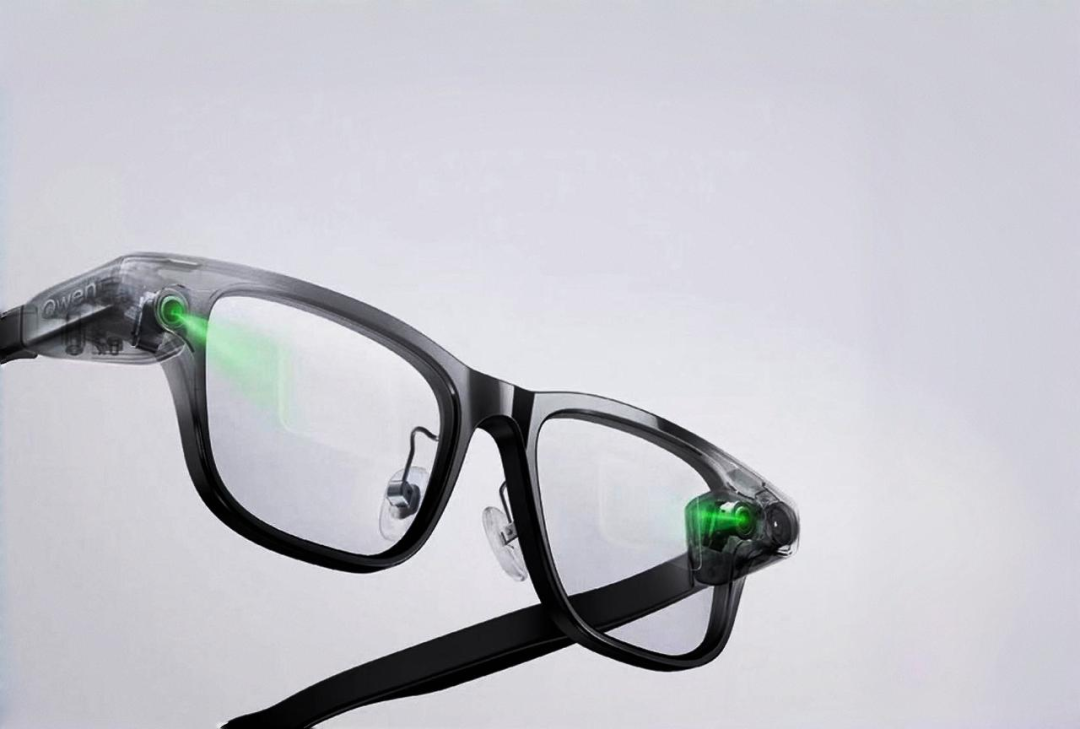
Historically, the underlying operating system (OS) determined the soul of smart hardware. Today, the strength of AI glasses is increasingly defined by the model itself. Alibaba aims to integrate its model capabilities and service ecosystem into AI glasses, creating a comprehensive entry point for both hardware and software.
In terms of the service ecosystem, the Qianwen S1 goes beyond merely integrating Alibaba's ecosystem. Overall, the Qianwen S1 attempts to build its differentiated capabilities through closed-loop vertical functions.
For example, the Blue Ring payment system, which allows users to scan and pay with a glance and voice confirmation, leverages Alipay's ecosystem for "look-and-pay" functionality and connects to various life services such as AI-powered parking fees, bike-sharing scans, and utility bill payments. Amap provides exclusive AR navigation and integrated trip planning, creating differentiated AR navigation that follows head movements. Fliggy's itinerary and AR tour guide integrate translation and navigation.
"The key to making AI glasses truly unique lies not just in hardware iteration but in model capabilities," an industry insider noted. While Alibaba's approach of turning Qianwen into a super app may not be entirely flawless, frequent user engagement could achieve a similar effect.
At a deeper level, model capabilities determine the effectiveness of "service delivery" in real-world scenarios, which can be summarized as "fast thinking" and "slow thinking."
"Fast thinking" is primarily reflected in response efficiency and accuracy. The aforementioned features like glance-and-scan payment, AR navigation, and Fliggy-based smart translation are all examples of "fast thinking." An industry insider told Photon Planet that the real-world performance of the updated Qwen3.5-Omni has been impressive.
The other part is "slow thinking," which, as Lin Junyang previously mentioned, does not pursue immediate feedback but instead relies on context and experience for deep reasoning and decision-making.
For example, after a full meeting, the system can automatically organize the logic—such as distinguishing speaker identities and categorizing statements like "The product manager said to optimize the payment process," "The technician said development could be completed next week," and "The operator said supporting activities are needed." It can also extract core to-dos, such as "The technician will complete payment process optimization next week, and the operator will prepare supporting activities simultaneously," and even suggest, based on Alibaba's ecosystem, to "create a to-do in DingTalk and assign relevant responsible parties."
Perhaps only by entering "slow thinking" can the ecological and technological advantages of giants like Alibaba gradually emerge.
Alibaba's Strengths, Awaiting Full Realization
Alibaba is undoubtedly one of the most formidable players in the "Battle of a Hundred Glasses."
With its dual strengths of ecosystem and large models, along with nearly unlimited resources, such a robust configuration is relatively rare in the AI glasses industry. However, this domestic player with the most potential has taken a relatively conservative path.
The product logic of the Qianwen AI Glasses S1 essentially involves repackaging Alibaba's consumer internet ecosystem with AI and bringing it to glasses. Using Amap for travel and navigation, Taobao for shopping, and Alipay for payments—these are all mature scenarios refined by Alibaba over a decade and represent high-frequency, essential user needs.

Examining the offerings of the Qianwen AI Glasses, they reflect the robust nature of a major player—from hot-swappable batteries to continuously introducing new scenarios like bike-sharing scans and food delivery, it has ensured that all "correct options" meet at least a satisfactory standard.
Transplanting this mature ecological chain onto glasses to achieve "what you see is what you get" is not inherently flawed and can even be considered highly efficient and clever. However, this obsession with stability has caused the Qianwen AI Glasses to subconsciously avoid all "unknowns" that could lead to errors or revolutionary breakthroughs.
After all, if the mindset remains focused on bringing the old world over, the new world will struggle to emerge on its own.
This is precisely where the strategic divide lies between major players like Alibaba and startups.
Major players like Alibaba aim to create "glasses for everyone," pursuing scalability, standardization, and low risk. Startups, lacking the strengths or burdens of major players, must streamline and focus on niche areas, creating "glasses that a certain group cannot live without" and pursuing irreplaceability in vertical scenarios.
A simple example: Alibaba today, or ByteDance's XR efforts a few years ago, focuses on gradually replacing smartphones to fill the regret of not having secured a hardware entry point earlier. In contrast, the aforementioned AI glasses entrepreneur told Photon Planet that his current goal is to dominate the office scenario and replace mechanical keyboards.
Neither logic is inherently superior. In the short term, Alibaba's conservative approach may even dominate in sales, but from an industry perspective, the initiative for innovation seems to be shifting toward startups. While Alibaba may win today, it needs to guard against losing tomorrow.
This dynamic is also evident in overseas expansion.
According to media reports, Qianwen AI Glasses plan to fully enter international markets this year. While expanding globally may weaken the persuasiveness of Alibaba's proprietary ecosystem, the Qianwen model's strength and ease of adapting to international ecosystems make this proactive stance unsurprising.
More intriguing than the expansion itself is the motivation behind it.
In the past, Chinese hardware players expanding overseas relied on a relatively simple logic: leveraging China's mature supply chain to create cost-effective hardware, capture overseas markets, and earn one-time profits. This approach has long been used by Chinese companies in home appliances, smartphones, and even automobiles to some extent. It is not a low-level strategy.
However, in the AI era, there may be a more imaginative approach.
Compared to smartphones, the overall experience of AI glasses is highly dependent on AI. Theoretically, the AI glasses sector could give rise to new business models—where hardware serves as merely an entry point, and profits are generated not from hardware sales but from subsequent AI subscriptions and services over the long term.
Recently, NVIDIA CEO Jensen Huang argued in an article titled "AI Is a Five-Layer Cake" that energy is the first principle of AI. Currently, China possesses the world's most cost-effective energy and computational infrastructure.
Data shows that China's average industrial electricity price is below 0.6 yuan/kWh, with data center electricity prices typically halved, compared to nearly 1 yuan/kWh in the U.S. and over 2.5 yuan/kWh in the U.K. and Germany. This cost advantage, combined with other factors, has led to domestic large models offering significantly lower token pricing than their foreign counterparts.
In other words, from an overseas expansion perspective, Chinese AI glasses—or future AI devices—may not need to rely on one-time hardware profits but could instead continuously sell cheaper tokens globally.
Notably, last month, Alibaba established the ATH business group with the core goal of "creating, delivering, and applying tokens." Since it has already entered the fray, it might as well go all in.
Cultivating Hard Skills
For a long time, the entire XR industry has been stuck on the same question: What is the killer app? It seems that once a scenario that users cannot live without is found, AI glasses will explode in popularity like smartphones did.
As a result, in the "Battle of a Hundred Glasses," players are desperately integrating various capabilities into AI glasses, from teleprompters and translation to photography, payment, Q&A, and navigation. While this appears lively, it is essentially just a replication of smartphone capabilities.
However, the supposed causal relationship may have been reversed from the start. Perhaps it is not the killer app that makes the hardware, but the disruptive hardware innovation itself that becomes the killer app.
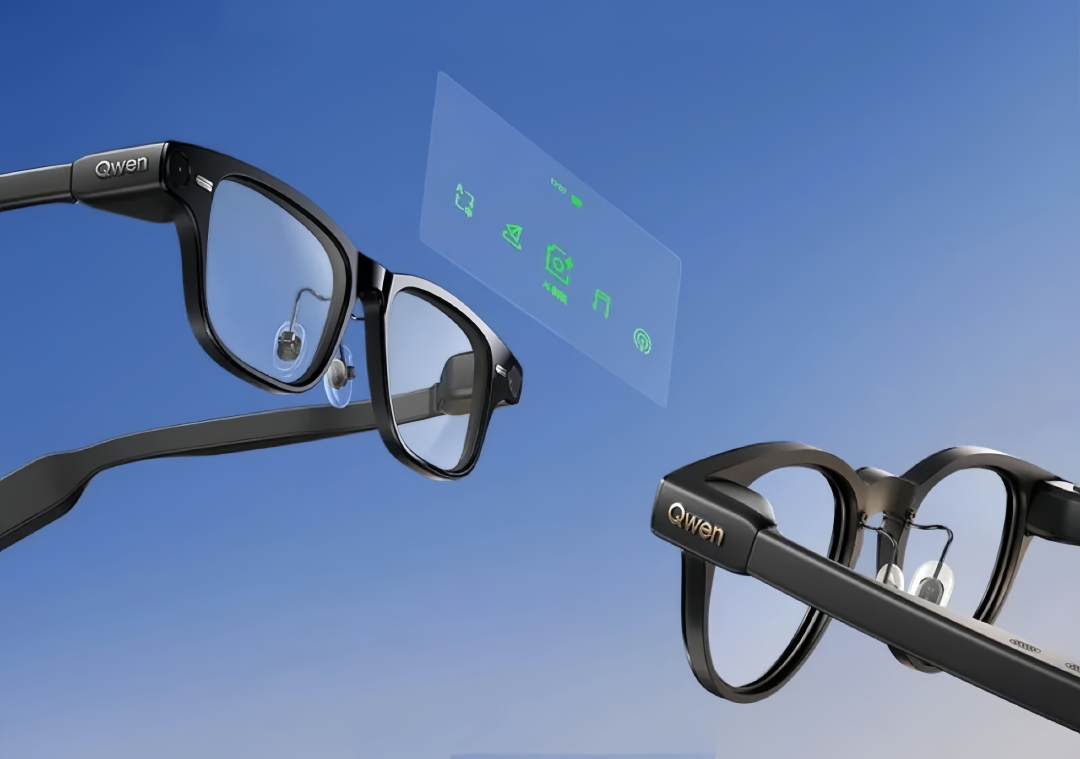
Currently, the AI glasses industry stands on the brink of a technological explosion. An industry insider told Photon Planet that "the iteration speed of waveguide solutions is the fastest-growing hardware direction," with 70° Field of View (FOV) waveguides representing the current sweet spot for AR/smart glasses optics. An Israeli startup has already demonstrated a product prototype. Once technology advances to an 80° FOV balance point, smart glasses will converge with AR glasses.
This means that critical technological breakthroughs are imminent. With subsequent iterations, when hardware advances to the point where a complete Vision Pro can fit into a standard pair of glasses, killer scenarios will naturally emerge.
At present, the Qianwen AI Glasses' strengths lie in Alibaba's ecosystem, model capabilities, and financial resources. However, AI glasses are ultimately hardware products. If the hardware competitiveness is insufficient, even if Alibaba can profit from the Qianwen model across the industry, it may not be able to defend this terminal entry point.
Ultimately, the Qianwen S1 has validated real market demand in the safest way possible and raised the industry's baseline. However, for Alibaba, which holds multiple aces, securing a ticket in the AI glasses race requires stepping out of the comfort zone of "ecosystem transplantation" and "integrated innovation." It must invest in core technology R&D, focus on hardware innovation, and deliver a product that truly defines the era.
Fortunately, the "Battle of a Hundred Glasses" has only just begun, and both Alibaba and other players still have ample time.
-
![]()
Wang Huiwen, Former Meituan Executive, Achieves 20-Fold ROI, Supports 24 AI Startups
-
![]()
Another AI Computing Power Unicorn Launches IPO! Founded by a Changjiang Scholar
-
![]()
OFILM Holdings Secures Zhongke Daojing, Marking a Significant Leap in the Optical Communication Industry!
-
What Will Be the Next Key Battleground for Large Models After AI Coding?
-
![]()
Leapmotor's Sales Soar, Yet Hidden Concerns Loom
-
![]()
China’s Action Camera Market Soars: 3.12 Million Units Sold in Six Months, DJI Secures 74% Dominance
-
![]()
Zhang Yiming: Strategic Retreat as a Path Forward
-
![]()
Exploring Charging for Some Features of QianWen App: Can It Follow the Path of Doubao?