Alibaba's 'Blockbuster' HappyHorse: Youku as the Key to 'Setting the Stage'
 04/17 2026
 684
684
Editor: Liu Zhicheng
Reviewer: Xu Xu
HappyHorse Takes Off, Reigniting the Video AI Race
Following Tongyi Qianwen and Lingguang, Alibaba has finally introduced a truly competitive product in its AI model lineup with HappyHorse.
This significant move comes after the establishment of the ATH Innovation Business Unit in March.
A project of HappyHorse's magnitude could not have been developed in just a few weeks. Earlier reports indicate that 'HappyHorse' originated from Alibaba's Taotian Technology Department, specifically the Future Life Lab of the former Taotian Group.
It wasn't until March of this year, under the leadership of Wu Yongming, who heads the ATH Innovation Business Unit, that the 'HappyHorse' project was transferred to the AI Innovation Business Unit under ATH.
This suggests that the previous organizational restructuring laid the groundwork. Now, with a unified front for AI operations, the focus shifts to application development and commercialization.
After all, Wu Yongming has set an ambitious target of exceeding $100 billion in cloud and AI revenue over the next five years. The pressing question now is: How will this goal be achieved?
That may be the crux of the matter.
Can Alibaba's Content Ecosystem Leverage HappyHorse's Popularity?
Examining HappyHorse's rise to prominence is quite revealing: It first dominated the charts anonymously, sparked widespread discussion, and finally Alibaba claimed ownership.
This strategy bears some resemblance to Xiaomi's approach with its 'Hunter Alpha' AI model but differs significantly from ByteDance's Seedance, which achieved viral status through a different route.
Xiaomi's anonymous chart-topping strategy for its large model seemed heavily orchestrated.
How did ByteDance's Seedance achieve viral success?
It began with AI-generated videos of real people gaining traction, then sparked controversy over portrait rights, leading ByteDance to suspend the real-person video generation feature.
Seedance's viral success was unexpected and somewhat uncontrollable.
In contrast, Alibaba's approach with HappyHorse appears well-planned: anonymous chart domination, followed by claiming ownership once the hype reached its peak. Alibaba's marketing prowess is undeniable.
Doesn't HappyHorse aim to replicate Seedance's viral traffic?
It's not that they don't want to; they likely can't. One reason may be Alibaba's lack of an influential content platform compared to Douyin or Kuaishou.
Why is that?
For video generation AI, a content platform with economies of scale is crucial.
Consider how ByteDance's Seedance and Kuaishou's Kling AI both rely on their short-video content ecosystems as core infrastructure and strategic assets.
This ecosystem offers three key advantages:
First, it provides fertile ground for AI model iteration.
From Sora to Kling, Seedance, and now HappyHorse, video AI has undergone several iterations. This indicates that no single technology can dominate indefinitely; technological leadership is constantly shifting.
How long can HappyHorse maintain its lead? It relies not just on the tech team's occasional brilliance but also on large-scale user engagement and data to support continuous AI algorithm iteration.
This is where the content ecosystem's value becomes evident.
Second, AI product growth and user acquisition become easier.
Alibaba knows best how much money and resources were spent on user acquisition for Tongyi Qianwen. Will HappyHorse follow a similar path? This question warrants deep consideration.
Why did Kling commercialize so quickly? Why did Seedance have such a significant viral impact? One reason may be that Douyin and Kuaishou's existing content ecosystems accelerated the commercialization of their AI video models.
If HappyHorse can leverage Alibaba's content ecosystem to go viral like Seedance, achieving organic user growth, future commercialization may be smoother.
Third, the content platform's economies of scale can better support Alibaba AI's commercialization.
AI video generation essentially involves token distribution. Success depends not just on technological prowess but also on scale and distribution efficiency. Larger token distribution with higher efficiency allows for lower unit prices, facilitating commercialization.
Price wars have occurred in the AI video generation industry. Before HappyHorse's rise, Jimeng had just tightened its first-time recharge discounts and raised annual membership fees. ByteDance then leveraged Seedance's advantage to push forward commercialization.
Will HappyHorse affect Seedance's commercialization pace?
In the short term, yes, but likely not significantly in the long run. Douyin boasts 900 million users and tens of millions of creators. Technology isn't the sole determinant of pricing power in the AI industry; user base and ecosystem scale also play crucial roles.
Alibaba does have its video content ecosystem, such as Youku.
However, compared to Kuaishou (740 million MAU) and Douyin (900 million MAU), Youku's 130 million MAU pales in comparison in terms of both traffic scale and content influence.
HappyHorse is impressive, but is Alibaba's content ecosystem ready? Are Orca Entertainment and Youku prepared?
These questions require long-term consideration.
HappyHorse's Future May Hinge on Fan Luyuan's Strategy
As HappyHorse prepares for commercialization, the greatest pressure may not fall on Wu Jia but on Fan Luyuan, who oversees Alibaba's digital media and entertainment business.

Theoretically, within Alibaba's ecosystem, no platform is better suited than Youku to serve as a stage for Alibaba's AI video model.
Tianyancha app information reveals that Orca Entertainment, a wholly-owned subsidiary, includes Youku. For Alibaba, Youku remains at the forefront of its content ecosystem.
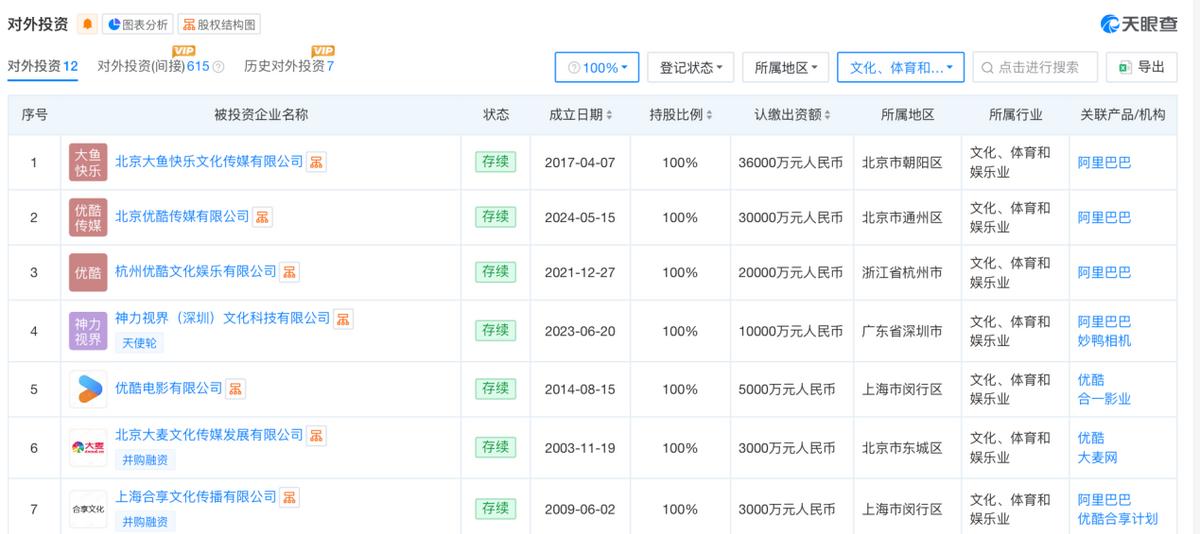
What is Youku's strategic value to Alibaba's AI ambitions? What role does Orca Entertainment play in Alibaba's overall AI strategy?
These core questions must be answered by Fan Luyuan.
In March, almost concurrently with the AI business line restructuring, Fan Luyuan, Chairman and CEO of Orca Entertainment Group, announced an organizational upgrade. Du Yanlong was appointed CTO of Orca Entertainment Group, and Wu Qian (Guangying) became President of Youku.
Fan Luyuan stated, 'AI is leading a profound transformation in the entertainment industry. The best way to face this transformation is to embrace it. Only by understanding and innovating today can we believe in the future.'
Appointing a CTO for an entertainment group is noteworthy. At the very least, it suggests Fan Luyuan recognizes the need for change.
But the question remains: With HappyHorse going viral, is it too late for organizational restructuring?
Currently, it seems challenging for Youku to shoulder the burden of AI content ecosystem development.
All issues ultimately trace back to organizational structure.
In the past, Youku and Orca Entertainment seemed to operate parallel to Alibaba Group's strategic priorities.
Strategically, in August 2025, Orca Entertainment (Youku, Damai) was reclassified under Alibaba's 'All Other' business segment, indicating it no longer shares the same strategic tier as core businesses like e-commerce and cloud intelligence.
Operationally, Orca Entertainment Group's businesses have struggled to deeply integrate with Alibaba's current AI initiatives.
Consider how Alibaba has focused on instant retail and food delivery wars. After integrating Ele.me into Taobao Deals, Fliggy, Amap, and Hema have also joined the fray. Once considered 'peripheral businesses,' they now have new directions. Meanwhile, Youku hasn't demonstrated its value to Alibaba's core strategies.
Thus, despite several organizational restructurings, Youku remains marginalized within Alibaba's ecosystem, failing to integrate into its core operations.
Two main factors may constrain Youku:
First, limited financial flexibility.
In FY2025, Orca Entertainment reported an adjusted loss of RMB 554 million. In the first half of FY2026, the 'All Other' segment, which includes Orca Entertainment, was the only one among Alibaba's four business segments to experience a revenue decline.
Being classified under 'All Other' financially means Orca Entertainment is unlikely to receive significant strategic resource allocation from the group in the short term.
Therefore, Fan Luyuan may prioritize using AI technology to reduce costs and increase efficiency for content production over supporting HappyHorse.
For example, leveraging AI for script evaluation, auxiliary creation, and shortening production cycles to lower content costs.
This approach isn't wrong.
AI's greatest value for video content lies in cost reduction and efficiency improvement. Moreover, without significant group resources, self-reliance becomes essential.
However, the issue is that the group won't allocate resources unless it sees the true value of the AI strategy.
Alibaba now considers tokens as strategic core assets rather than just technical metrics. Can future Youku consume more token resources and generate greater value?
This question is likely more critical.
This leads to the second point: the awkward position of long-form video in the AI era.
While Alibaba aggressively advances its strategies, Youku's inaction may stem from the difficulty in integrating long-form video content with Alibaba's business attributes.
E-commerce and instant retail rely on live streaming and short content, which Youku struggles to provide. Additionally, its relatively small user base limits its potential for empowerment.
Nevertheless, realistically, Youku is unlikely to quickly fill Alibaba's content ecosystem gap.
Especially now, with HappyHorse going viral and the video generation AI sector needing content ecosystem support, how can Youku prove its strategic value to Alibaba?
This question warrants deep consideration.
Alibaba's current strategic core is AI. Among its AI business lines, HappyHorse is the hottest.
For Youku, it cannot remain passive in the AI arena.
A direct and potentially effective approach would be to use Alibaba's HappyHorse to produce an AI-generated short drama or creative video exclusively for Youku.
Regardless of market reception, this move itself would signal strongly to the group: Youku is not just a content consumer but also an AI technology testbed and amplifier.
More importantly, Youku needs to demonstrate clearly to Alibaba that it remains capable and willing to be the primary platform for implementing the group's AI strategies in the entertainment sector.
Only then can Youku shed its 'peripheral business' label and truly contribute to Alibaba's core strategic value creation.
iQIYI and Youku have adopted vastly different strategies regarding AI.
iQIYI CEO Gong Yu has not only listed 'building an AIGC ecosystem' as one of the company's three core strategic goals for 2026 but also, during its Hong Kong IPO process, presented iQIYI's content ecosystem and AI strategy as a clear closed loop.
iQIYI's proactive AI strategy and speed of action may be precisely what Youku and Orca Entertainment currently lack.
In summary, for Youku and its parent company Orca Entertainment, the AI wave presents both unprecedented challenges and rare opportunities for a comeback.
Missing out on the short-video era was Youku's greatest regret.
Can Fan Luyuan build a stage for 'HappyHorse' to thrive, aligning Youku's content ecosystem with Alibaba's AI ambitions?
The curtain has risen on this new era, and the future remains worth anticipating.
Disclaimer: This article is based on legally disclosed company information and publicly available data. The author does not guarantee the completeness or timeliness of this information. Additionally, stock market investments carry risks; enter cautiously. This article does not constitute investment advice. Investors must conduct their own due diligence.
-
![]()
Wang Huiwen, Former Meituan Executive, Achieves 20-Fold ROI, Supports 24 AI Startups
-
![]()
Another AI Computing Power Unicorn Launches IPO! Founded by a Changjiang Scholar
-
![]()
OFILM Holdings Secures Zhongke Daojing, Marking a Significant Leap in the Optical Communication Industry!
-
What Will Be the Next Key Battleground for Large Models After AI Coding?
-
![]()
Leapmotor's Sales Soar, Yet Hidden Concerns Loom
-
![]()
China’s Action Camera Market Soars: 3.12 Million Units Sold in Six Months, DJI Secures 74% Dominance
-
![]()
Zhang Yiming: Strategic Retreat as a Path Forward
-
![]()
Exploring Charging for Some Features of QianWen App: Can It Follow the Path of Doubao?