Alibaba's $100 Billion Gamble: Can a 'Little Horse' Shift the Tide?
 04/17 2026
 691
691

Author|Zhang Qian
Editor|Hu Zhanjia
Operations|Chen Jiahui
Produced by|LingTai_LT (ID: LingTai_LT)
Header Image|Publicly available online
On the evening of March 19, when CEO Wu Yongming announced during Alibaba's Q3 2026 earnings analyst call that 'cloud and AI commercialization revenue, including MaaS, will exceed $100 billion annually over the next five years,' those in attendance did some mental calculations. Starting at $14.5 billion, with a 47% CAGR for five consecutive years.
It took Amazon AWS eight years to grow from $12.2 billion to $107.6 billion, averaging 31% annually. Google Cloud hit 48% growth in Q4 last year, but from a smaller base and only for one quarter.
Alibaba Cloud is aiming for five consecutive years. This isn't a prediction—it's a forcing mechanism. Using an impossible target to push a 20-year-old company to relearn how to sprint.
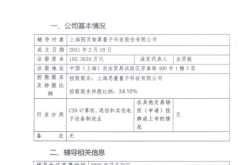
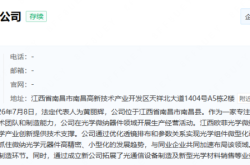
Now, that rallying cry has a new echo—a 'little horse' named HappyHorse has burst onto the scene. On April 10, Alibaba officially confirmed HappyHorse's belonging (affiliation), stating it is currently in beta testing, with API access planned for April 30, 2026. This finally puts Alibaba Cloud at the AI video table.
 HappyHorse Pries Open ByteDance's 'Monopolized' Market
AI video is, without question, the clearest commercialization scenario today. A single 15-second video consumes 300,000 tokens, with daily consumption for animated and short drama companies reaching millions or even tens of millions. According to iResearch and Tianyancha's combined data, China's AI video generation market was valued at RMB 10-15 billion in 2025 and is expected to surpass RMB 20 billion in 2026.
Yet for the past two years, Alibaba has been largely absent from this market.
ByteDance's Seedance 2.0 went viral after launching Jimeng and Doubao in February this year. Feng Ji, founder of Game Science, called it 'the strongest on Earth,' while Tim from Film Storm said it 'changed the video industry.' Its success led to capacity bottlenecks—users routinely waited hours, with premium members ($499/month) still facing 3+ hour delays. After OpenAI shut down Sora in March, Jimeng raised prices three times in a month, halved token quotas, and required enterprise clients to sign RMB 5 million minimum agreements for 'full-power' access.
Even so, animated and short drama companies flocked to it. Traditional live-action shorts cost millions and take months to produce; Seedance's efficiency and cost advantages were a game-changer. By late March, ByteDance's animated drama daily consumption exceeded RMB 70 million, surpassing live-action shorts for the first time.
Volcano Engine's 'monopoly' objectively left a window for Alibaba. But windows don't stay open forever—Alibaba had to strike while Seedance faced capacity bottlenecks and pricing controversies.
The turning point came one early morning (early morning) in April.
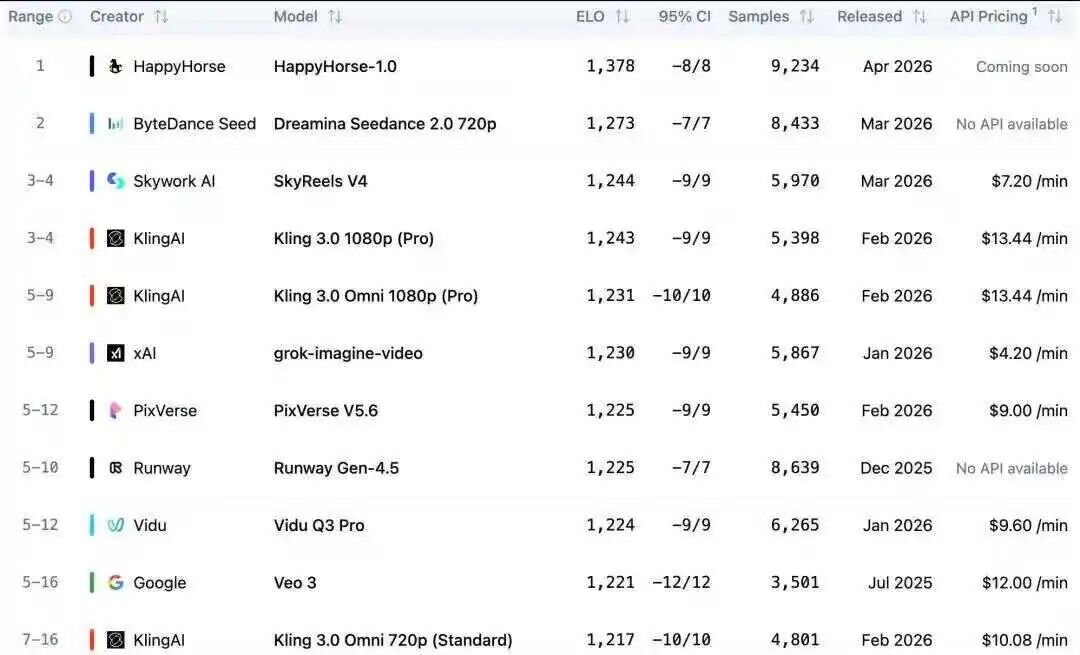
An AI video generation model named 'HappyHorse-1.0' suddenly topped the blind test rankings on Artificial Analysis Video Arena. While the industry speculated about its origin, Alibaba stepped forward to claim it—an internal test product from Alibaba Token Hub (ATH) Business Group's AI Innovation Division, set for API release on April 30.
What truly matters lies beneath the surface.
According to Jiemian News, Alibaba Cloud's frontline sales teams have begun actively poaching Volcano Engine's AI video clients. An Alibaba Cloud salesperson told Jiemian that AI video clients are where the real money is, but Alibaba previously struggled to serve top clients in animated dramas, short dramas, and the broader video generation industry. 'Many clients are frustrated with Volcano Engine's dominance—long queues and price hikes. If another option with comparable capabilities and reasonable pricing emerges, there's strong interest.'
HappyHorse provides the leverage to pry open the market. The salesperson's team has already lined up enterprise clients for beta testing, including some with daily spending in the hundreds of thousands.
But sales teams are also anxious. Blind test Elo scores fluctuate wildly. A generative AI infrastructure entrepreneur told Jiemian, 'Based on the videos I've seen and Arena tests, it's far inferior to Seedance 2.0.' He attributed HappyHorse's high score to frequently facing older models, advising, 'Don't take it too seriously.' However, he acknowledged its open-source potential.
A source close to Alibaba countered, 'Rankings don't always reflect real-world experience, but they give sales teams confidence to knock on doors. Before, they couldn't even get in; now, at least they can talk.'""HappyHorse's core strengths lie in fluid motion, natural colors, dynamic performance, and synchronized audio generation. According to Tianyancha's media roundup, a basketball video showed realistic ball physics, with footsteps, ball impacts, shoe squeaks, and ambient sounds perfectly synced. This native audio-video synchronization is one of the most critical technical breakthroughs in video models over the past year.
However, Seedance 2.0 remains competitive in character details and multi-shot storytelling. Most publicly available HappyHorse examples are 10-second clips. The true test will come from large-scale beta feedback and product launch responses.
 Dual Tracks: Open-Source vs. Commercial Race
HappyHorse's organizational placement reveals Alibaba's internal strategy.
The Alibaba Token Hub (ATH) Business Group, established in March 2026, unifies five business lines: Tongyi Labs, MaaS Business Line, Qianwen Division, Wukong Division, and AI Innovation Division. HappyHorse comes from the AI Innovation Division, led by Zhang Di, former Kuaishou VP and Kling technical lead, who rejoined Alibaba in late 2025.
Tongyi Wanxiang and HappyHorse operate on separate tracks: Wanxiang falls under Tongyi's large model division, pursuing an open-source route; HappyHorse targets commercial scenarios and client conversion, with its open-source status still undecided.
This 'dual-track' approach resembles internal competition but isn't contradictory. Wanxiang builds open-source ecosystems and technical influence, while HappyHorse drives client conversion and revenue. HappyHorse's emergence epitomizes Alibaba Cloud's MaaS strategy.

A year and a half ago, asking any cloud vendor if MaaS could be profitable would almost always yield a shake of the head. Model price wars pushed token prices below cost, and immature technology left application scenarios unclear. A large model client spending RMB 10,000 monthly was equivalent in scale to a public cloud client spending RMB 10 million—a full order of magnitude difference in sales commissions.
Alibaba Cloud and Tencent Cloud didn't even include MaaS in their 2025 KPIs.
The tide turned in late 2025. The rise of agents caused token consumption to spike exponentially, with single tasks consuming 100-1,000x more than traditional chatbots. Multimodal models opened new frontiers—text-to-image and text-to-video required far more compute than text, offering relatively lucrative margins.
According to Wu Yongming, token consumption on Alibaba's Bailian MaaS platform grew 6x in three months, with MaaS set to become Alibaba Cloud's largest revenue source.
HappyHorse's debut finally gives Alibaba a stake in the largest growth market for video generation. Sales teams have reclassified opportunities: previously tiered by spend (RMB 100,000, 1 million, 10 million), now by tokens (1 billion, 10 billion, 100 billion).
While estimates may deviate from actual consumption, tokens have become the universal language. At least everyone's aligned. And alignment brings pricing strategy choices. If Alibaba undercuts ByteDance in video generation, the impact would be immediate. For animated drama companies spending hundreds of thousands daily, saving a few yuan per million tokens could translate to significant annual cost differences.
But price cuts are a double-edged sword. Alibaba Cloud recently raised AI compute and storage prices by up to 34% due to global AI demand surges and supply chain hikes. A reverse move in video models could disrupt overall pricing.
 T-Head's Ace: The Power of Self-Developed Chips
Amid price hikes, Alibaba holds a unique card—T-Head's self-developed GPUs.
According to Alibaba's March earnings report, self-developed GPUs have entered mass production, with 470,000 units shipped. Over 60% of this compute power serves external clients, generating annualized revenue in the tens of billions. On April 18's price hike list, T-Head's 'Zhenwu' series AI compute prices rose 5–34%.
Self-developed chips mean more than cost control—they grant pricing leverage. As global AI compute supply chains raise prices, Alibaba Cloud can adjust more confidently without being held hostage by upstream suppliers.
HappyHorse adds a new dimension to this vertical integration. If video generation models can scale on T-Head chips, Alibaba will control costs from training to inference. But capacity bottlenecks are real. Media reports indicate Alibaba Cloud's AI compute supply is strained, with some regional teams already hitting 2026 fiscal year sales targets early. '470,000 units sounds like a lot, but it's a small fraction of national AI compute demand,' a chip industry source noted.
HappyHorse's beta and upcoming API launch will be T-Head chips' first large-scale stress test for video generation. Success hinges on performance delivery, client retention, and cost optimization.
 Alibaba's High-Stakes Gamble: Identity and Valuation
A 47% CAGR means adding nearly half of Alibaba Cloud's current size annually. Yet traditional cloud market growth has slowed sharply, and competitors continue to wage price wars.
A subtler threat is MaaS becoming the gateway. Clients often start with MaaS before adopting underlying compute and storage resources. Volcano Engine broke through its 'client acquisition barrier' this way—building relationships through model services before expanding downward.
HappyHorse lets Alibaba play the same card. Sales teams have already prepared beta client lists, including video generation firms with daily spends in the hundreds of thousands. If these clients validate HappyHorse's performance, follow-up purchases of cloud computing, storage, and big data products will naturally follow.
But client migration costs are non-trivial. Seedance 2.0, after two months, is deeply embedded in many studios' workflows. Even with equivalent performance, switching tools requires relearning. HappyHorse must offer sufficient differentiation to justify the shift.

Morgan Stanley's projections are tantalizing: if Alibaba Cloud achieves $100 billion in five-year revenue with reasonable valuation multiples, its cloud business alone could be worth $400 billion—far exceeding Alibaba's current ~$300 billion market cap.
Beyond proving the $100 billion target isn't just rhetoric, the bigger question is identity. Is Alibaba a 'e-commerce company with cloud' or a 'cloud company with e-commerce'? This is fundamentally a declaration of its tech stock identity.
Organizationally, Alibaba has long used 'stretch goals' to drive change. 'Aim for the highest, and you may reach the middle'—even if it falls short of $100 billion, an $80 billion outcome would still be transformative.
April 30's API launch will be HappyHorse's first major test. Will it become a 'Seedance killer' or another 'overhyped flop'? The market will soon decide.
Wu Yongming concluded the earnings call with a stark reminder: 'We have no retreat. Either charge ahead or be redefined.'""HappyHorse's neigh is the latest echo of that charge. But victory depends on whether the little horse can truly run.
-
![]()
Wang Huiwen, Former Meituan Executive, Achieves 20-Fold ROI, Supports 24 AI Startups
-
![]()
Another AI Computing Power Unicorn Launches IPO! Founded by a Changjiang Scholar
-
![]()
OFILM Holdings Secures Zhongke Daojing, Marking a Significant Leap in the Optical Communication Industry!
-
What Will Be the Next Key Battleground for Large Models After AI Coding?
-
![]()
Leapmotor's Sales Soar, Yet Hidden Concerns Loom
-
![]()
China’s Action Camera Market Soars: 3.12 Million Units Sold in Six Months, DJI Secures 74% Dominance
-
![]()
Zhang Yiming: Strategic Retreat as a Path Forward
-
![]()
Exploring Charging for Some Features of QianWen App: Can It Follow the Path of Doubao?