DeepSeek Finally Accepts 50 Billion Yuan in Funding
 06/17 2026
 394
394
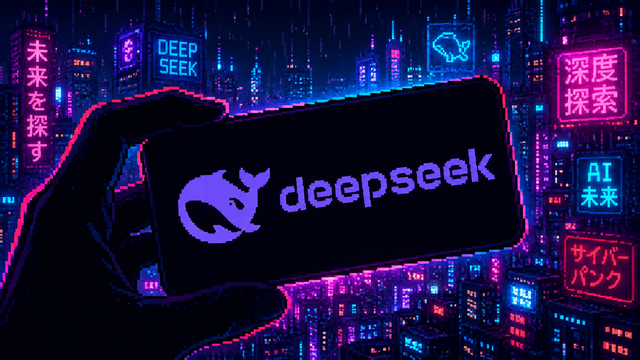
Over the past two years, DeepSeek has been an outlier in China’s AI circle—and the global one, too.
While other large model companies were busy raising funds, inflating valuations, and spinning stories for investors, DeepSeek opted out entirely. Its capital came from High-Flyer Quantitative—the quantitative private equity fund founded by Liang Wenfeng, which achieved a 2025 annualized return rate of 56.55% and managed over 70 billion yuan in assets. All R&D funding flowed from this source, eliminating the need for external capital or explaining quarterly commercialization setbacks to any investors.
This approach cultivated a widely recognized 'Sweeping Monk' scenario: In January 2025, DeepSeek-R1 dominated global benchmark rankings, shaking U.S. tech stocks for an entire day. Yet Liang Wenfeng still refused to raise funds afterward. The external perception of the company solidified into a single label: 'flush with cash.'
In May this year, that perception began to shift. Media reports emerged: DeepSeek was engaging external investors, with figures growing increasingly substantial. The news fermented in industry circles for nearly two months, fueling speculation about who secured deals, who missed out, and the actual valuation.
Recently, foreign media outlet *The Information* reported that DeepSeek’s first-round financing had officially closed, raising over 50 billion yuan (approximately $7.4 billion). Neither DeepSeek nor its investors have yet confirmed the financing details. If officially announced, it would shatter China’s AI industry record for single-round funding.
This is the same Liang Wenfeng and the same DeepSeek—only this time, he decided to accept external capital.
The investor roster for this round numbers fewer than 10 but boasts a star-studded lineup.
The most heavyweight participant is the National Integrated Circuit Industry Investment Fund, commonly known as the 'Big Fund.' Established 12 years ago, the Big Fund has exclusively focused on semiconductor and chip investments—until now. This marks its first cross-border capital injection into a large model enterprise. Among other investors, Tencent contributed 10 billion yuan, becoming one of the largest external institutional investors in this round (Liang Wenfeng personally invested 20 billion yuan, making him the largest single contributor). Contemporary Amperex Technology (CATL) followed with 5 billion yuan, while NetEase, JD.com, and IDG Capital each invested around 3 billion yuan. Institutions like Monolith Capital also appeared on the investor list.
This lineup speaks volumes.
The Big Fund’s entry signals that at the national level, large models are now considered strategic infrastructure on par with semiconductors—previously, its mandate covered only chips. Tencent’s participation as an institutional investor secures an ecological foothold beyond competition. CATL’s involvement is more surprising: Why would a battery company invest in AI? The answer may lie in the energy demands of computing data centers—a new direction CATL is betting on.
State-backed entities, gaming, social media, e-commerce, logistics, industrial manufacturing, and capital—this list covers nearly half of China’s economic growth engines, underscoring the financing’s significance.
Before officially launching this funding round, Liang Wenfeng took a critical step.
On April 27, 2026, DeepSeek completed industrial and commercial registration changes, increasing its registered capital from 10 million yuan to 15 million yuan, with Liang Wenfeng personally subscribing to the entire additional amount. Media reports indicate this move boosted his direct shareholding from 1% to 34%. Combined with indirect equity held through High-Flyer-affiliated companies, Liang Wenfeng’s total control over DeepSeek reached approximately 84%, with voting rights nearing 100%.
The timing of this maneuver—just before financing details went public—was impeccably precise.
Post-investment, parties will discover they’ve acquired a highly unusual asset: Funds must be injected into a limited partnership managed by Liang Wenfeng, not directly into DeepSeek’s main entity. All investors relinquish voting rights in DeepSeek. Equity holdings carry a five-year lockup period, prohibiting secondary market or private transfers to prevent short-term profit-taking. Liang’s team also mandates strict verification of all investors’ limited partner (LP) identities to mitigate risks of equity flowing to opaque entities.
In other words: Investors can share in the company’s growth but exert virtually no influence over its decisions—the keys remain firmly in Liang Wenfeng’s hands. And they must commit to being 'long-termists' alongside him.
Notably, the Big Fund is the sole exception. According to *Reuters*, its funds flow directly into DeepSeek’s main entity while retaining voting rights and exemption from the five-year lockup. This divergent treatment—far from ordinary financial investment—constitutes direct national strategic endorsement.
So why did Liang Wenfeng choose to raise funds at this precise moment?
Three concurrent pressures converged.
First, talent retention. Since 2025, DeepSeek has lost at least five core researchers, including Guo Daya (lead researcher for R1, who joined ByteDance) and Wang Bingxuan (primary author of the first-generation large model, who moved to Tencent). As an unlisted company, DeepSeek’s employee stock options lack market pricing or exit channels, making retention increasingly difficult.
Second, computing power demands. The AI competition is shifting from chatbots to AI Agents, requiring orders-of-magnitude greater computing resources for training and inference. High-Flyer Quantitative’s profits alone can no longer sustain these costs.
Third, valuation dynamics. DeepSeek’s valuation skyrocketed from $10 billion to over $50 billion in just two months. Such windows rarely remain open.
Combined, these factors transformed financing from 'unnecessary' to 'urgent.'
Media reports reveal that over 60% of the raised funds will go toward computing infrastructure, approximately 25% toward model R&D iteration, and the remaining 15% toward core talent incentives.
Computing power represents a deeper strategic thread.
DeepSeek’s V4 preview released in April 2026 is the first trillion-parameter open-source model fully adapted to Huawei’s Ascend platform. This marks far more than a technical shift. NVIDIA’s top-tier computing chips remain subject to export controls, leaving Chinese AI firms passively dependent on foreign hardware. DeepSeek’s V4 proves that domestic chips can power elite large models. Over 60% of this financing round will continue funding domestic computing infrastructure like Huawei’s Ascend, with clear directional intent.
The Big Fund’s leadership in this timing becomes comprehensible. Historically focused on the chip supply chain—from design to manufacturing to packaging—the fund now enters the large model arena, adhering to the same logic: Domestic computing power requires not just superior chips but superior models running on them. DeepSeek completes this missing link.
The industry-wide ripple effects of this financing merit attention. Traditionally, large model companies’ valuations correlated with revenue scales. DeepSeek, however, lacks a business model yet saw its valuation sextuple in two months. Markets priced it based on something else: technological sovereignty and ecological control. A firm capable of breaking NVIDIA’s computing stranglehold and setting global open-source standards holds strategic value far beyond quarterly earnings. Once this valuation logic takes hold, the entire domestic AI financing landscape will shift accordingly.
With financing secured, product developments are also accelerating. Reports indicate DeepSeek plans to launch version V4.1 soon, fully supporting the MCP protocol and integrating image and audio input capabilities to transition into multimodality. Capital inflows may accelerate iteration cycles.
Despite securing the largest AI funding round in China to date, DeepSeek remains fundamentally unchanged.
It continues open-sourcing models. The V4 preview released in April 2026 open-sourced its weights and will not alter this approach post-financing. According to reports, Liang Wenfeng clarified in investor meetings that the primary mission remains technological advancement, not short-term monetization.
What has changed is the scale and source of capital. The operational logic endures.
Outsiders injecting funds find themselves standing outside, unable to see internal operations or influence decisions. A company maintaining such independence amid the largest-ever domestic AI funding round is rare. How far this logic can extend remains to be seen, but history offers an optimistic precedent.
-
Trillion-Dollar Commercial Space Industry: Profits Start Not with Rockets
-
![]()
Baidu Netdisk Encounters a 'Significant' Challenger: Tencent Netdisk Makes Its Debut
-
![]()
Tencent Cloud Drive: A Rising Contender to Baidu Cloud
-
![]()
AR Optical Leader Quietly Achieves 1 Million Units in Mass Production!
-
![]()
Raising 289 Million for Optical R&D! Olight Technology Prepares for GEM IPO
-
![]()
【OFweek Weike Cup】Cybernetics Officially Nominated for the 2026 Outstanding Contribution Award for Optical Industry Application Solutions
-
![]()
Precocious Ideals, Rebuilding A New Ideal
-
![]()
DeepSeek Finally Accepts 50 Billion Yuan in Funding