No Airflow in a Vacuum: How Will Musk's SpaceX Manage Thermal Control for Space-Based AI?
 06/22 2026
 480
480
In the age of AI computing power surging, Musk's proposal for space-based computing power has sparked significant debate, with heat dissipation being the most contentious issue.
Some argue that space is 'extremely cold,' making it a brilliant idea to relocate AI computing power or data centers to orbit, thus saving substantial cooling efforts.
Others, more rationally, point out that while space is indeed cold, it lacks air. The heat generated by chips cannot be carried away by wind or dissipated through cooling tower evaporation. Instead, it eventually transforms into infrared radiation, slowly emitted into the universe, making radiative heat dissipation even more challenging.
Clearly, the latter perspective is more scientifically grounded. The truly challenging aspect of Musk's space AI computing power plan may not be launching computing chips like GPUs into space, but rather preventing them from being 'roasted' by the heat they generate.
Therefore, this article analyzes, from a popular science perspective, why space-based AI computing power is challenging, how current space satellites manage thermal control, and what methods SpaceX might employ for effective thermal management.
1. Why is Heat Dissipation the Most Challenging Aspect of Space-Based AI Computing Power?
Let's start with the heat dissipation of ground-based AI computing power or data centers. On Earth, electronic devices primarily rely on three paths for heat dissipation: chips transfer heat to cooling plates or air, which is then carried away by water and air, and finally discharged into the environment through cooling towers.
However, in the vacuum of space, convection is almost entirely absent, and evaporative cooling cannot be directly applied. The system is left with only two tasks:
- Efficiently transfer heat from inside the chip to the satellite's surface;
- Emit the heat from the satellite's surface into space in the form of infrared radiation.
The complete path is roughly as follows:
Heat generated by the chip flows to heat-conductive materials and cold plates, then through heat pipes or liquid loops to radiators, and finally, through infrared radiation, is emitted into the universe, completing the heat dissipation process.
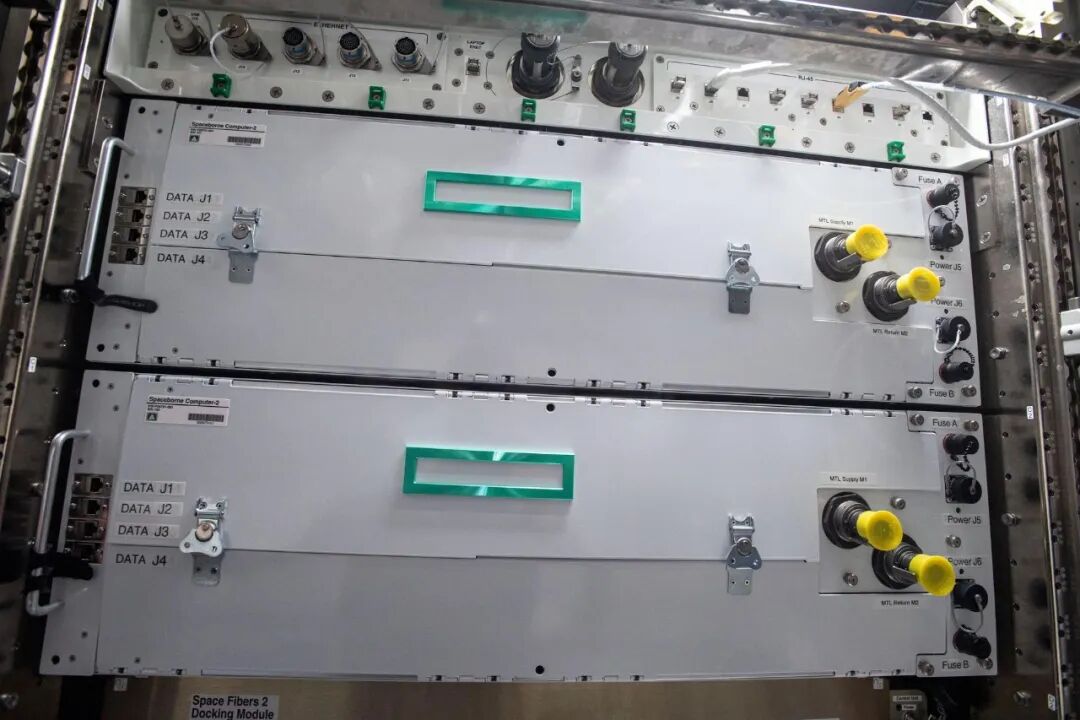
Figure 1: The Spaceborne Computer-2 installed on the International Space Station.
This is a truly in-orbit commercial high-performance computing device, but its heat must still be discharged through the space station's thermal control system.
Image: NASA/Michael Hopkins.
The problem, however, is that radiative heat dissipation is not as powerful as imagined. According to the Stefan-Boltzmann law, an ideal heat sink at 300-350K with an emissivity of about 0.9 can theoretically only discharge about 400-800 watts per square meter.
This means that to discharge just 1 megawatt of waste heat, approximately 1,250-2,500 square meters of effective heat dissipation area may be required. Considering solar irradiation, Earth's infrared radiation, material aging, attitude constraints, and safety margins, the actual area would be even larger.
Moreover, space heat dissipation presents three additional challenges:
- The sunlit side can be very hot, while the shadowed side is extremely cold, causing satellites to experience temperature cycles with each orbit around Earth.
- The high heat flux density of GPUs means that even if average heat can be dissipated, local hotspots on the chip may still occur.
- Heat sinks, piping, and coolant all add mass, and every kilogram in orbit requires rocket transportation.
Therefore, space is not a free 'giant refrigerator' but a massive vacuum bottle without fans or cooling towers, relying solely on infrared radiation for heat dissipation.
2. How Do Starlink and Existing Spacecraft Manage Thermal Control?
So, how do the electronic chips on existing satellites, such as SpaceX's Starlink communication satellites, manage thermal control?
In fact, existing satellites have already developed a set of mature thermal control methods, although their power is typically much lower than that of large AI data centers. These satellites follow the theory outlined in the previous section, primarily consisting of three steps:
- Spread the heat. Chips diffuse heat concentrated in a small area to a larger satellite structure through thermal interface materials, such as aluminum alloy structures, graphite sheets, or thermal strips. This spreads the chip's temperature to other areas, preventing overheating around the chip.
- Move the heat. Satellites commonly use heat pipes, loop heat pipes, or pump-driven liquid loops to transfer heat from electronic devices to heat dissipation areas on the shaded side. Heat is transferred internally through evaporation and condensation cycles.
- Radiate the heat. The satellite's surface uses materials like white thermal control coatings and optical solar reflectors to minimize sunlight absorption while maximizing infrared emission. Multilayer insulation materials protect components that should not be heated or cooled.
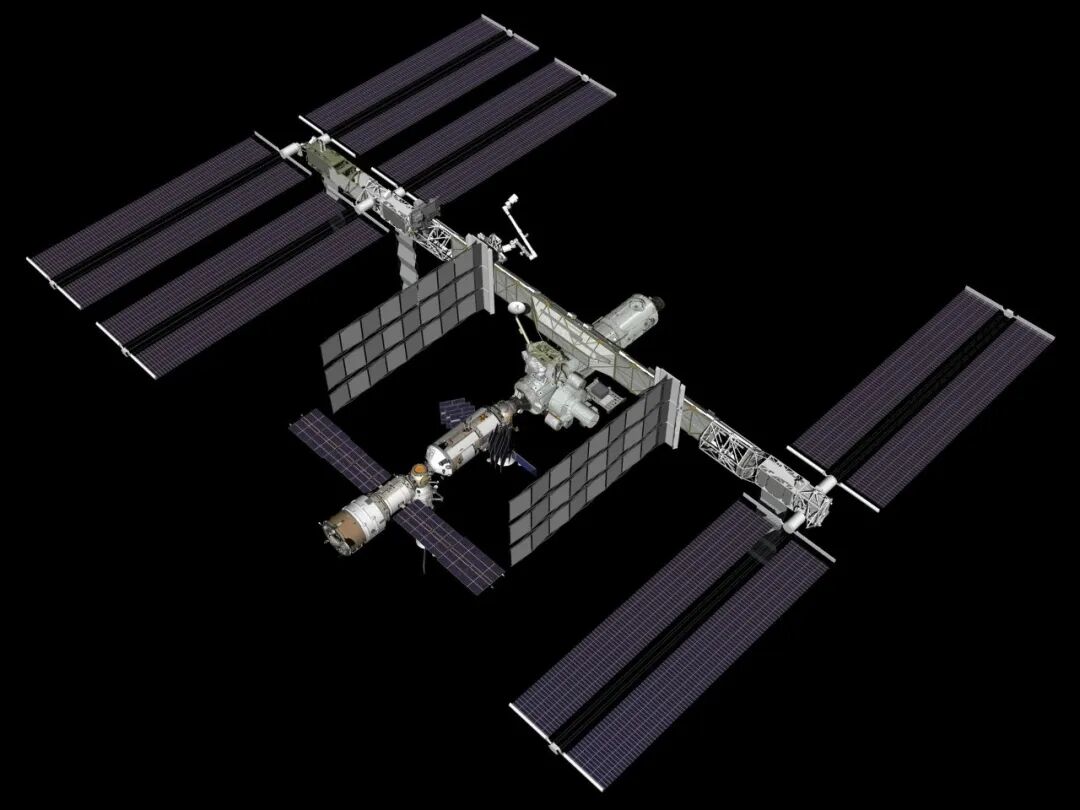
Figure 2: Schematic of the International Space Station's thermal control layout.
The deep purple long wings on the periphery are solar panels; the grayish-white panels extending in different directions in the middle are the radiators.
Image: NASA, JSC2007-E-099883.
The International Space Station provides a reference closer to a data center. It uses internal water circulation and external ammonia circulation to transfer heat generated by equipment and crew to large external radiators. In other words, liquid cooling still exists in space, but the coolant ultimately transfers heat to radiative panels.
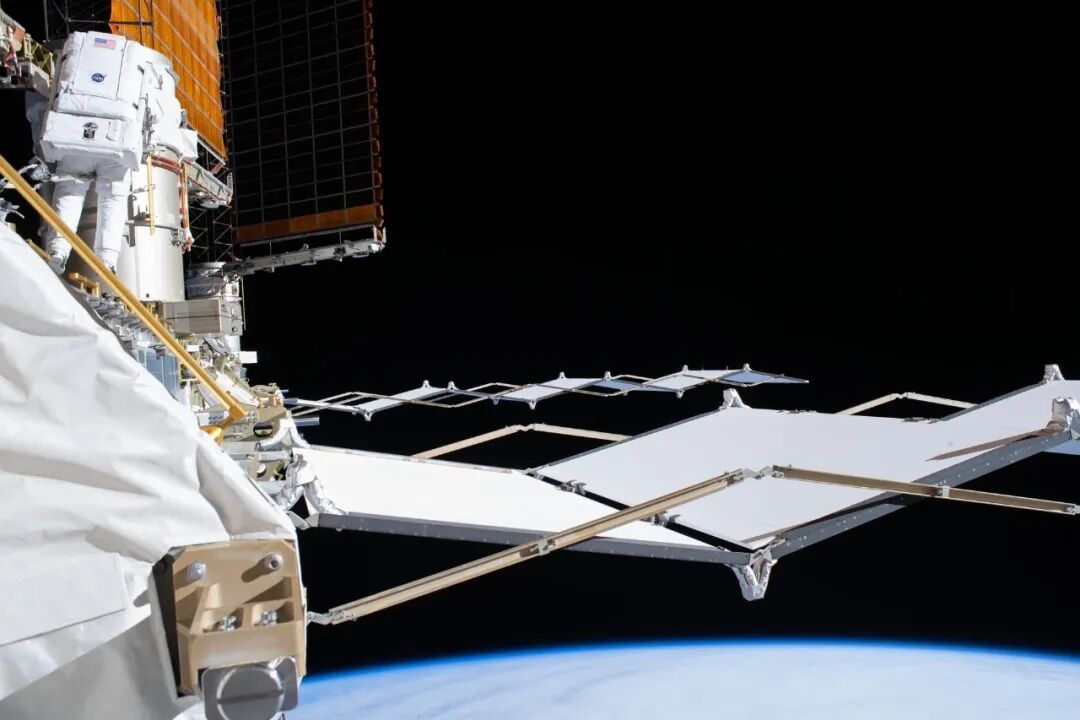
Figure 3: The white radiators of the International Space Station's external active thermal control system.
They emit heat generated by the power and cabin systems into space in the form of infrared radiation.
Image: NASA, ISS063-E-034131.
Starlink satellites adopt a flattened structure, which is advantageous for increasing surface area and shortening heat conduction paths. However, SpaceX has not disclosed complete thermal control details. A reasonable assumption is that their communication payloads, power, and propulsion systems primarily rely on structural heat conduction, heat pipes, and fuselage radiation surfaces for heat dissipation. Since the power of a single Starlink satellite differs by several orders of magnitude from that of an AI data center, it does not require data center-scale giant radiators.
This is the biggest leap from 'communication satellites' to 'orbital data centers': the technical principles remain unchanged, but the scale of heat dissipation may increase by dozens or even hundreds of times.
3. How Might Musk Solve the Heat Dissipation Problem for Space-Based Computing Power?
Currently, Musk and SpaceX have not announced a complete, verifiable thermal control solution for orbital data centers. Therefore, the following can only be engineering deductions based on existing aerospace technology, Starlink architecture, and Starship's transportation logic.
We believe that Musk's SpaceX may solve the space-based computing power heat dissipation problem through the following schemes:
- Distribute computing power across numerous satellites instead of building a single giant data center. The most SpaceX-style solution: space-based computing power will not involve building a several-hundred-megawatt orbital space station but rather a constellation of standardized computing satellites, consistent with the current Starlink approach.
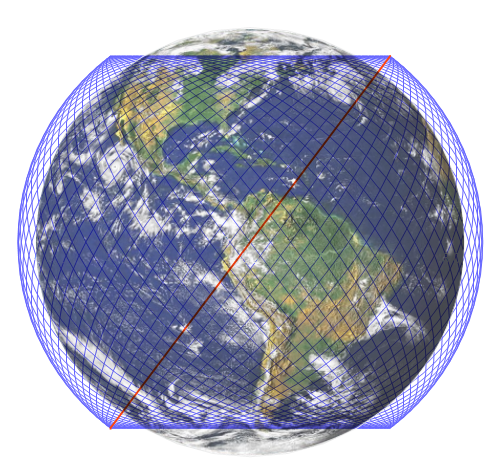
Figure 4: Schematic of Starlink's multi-orbital planes.
Distributed orbital computing power can distribute power generation, computation, and heat dissipation tasks across numerous independent nodes.
Schematic: Lamid58, CC BY-SA 4.0.
In this way, each satellite handles only limited power, and radiators can be deployed dispersedly with the satellites. A single satellite failure will not cripple the entire data center, and Starlink's batch manufacturing, inter-satellite laser communication, and rapid iteration capabilities can still be utilized.
Musk's 'heat dissipation bet' is not on some magical heat dissipation material but on the simultaneous progress of launch costs, chip energy efficiency, solar energy, and satellite scalability.
- Allow chips to operate at higher temperatures. Radiative capacity is proportional to the fourth power of absolute temperature. The higher the radiator temperature, the more heat can be discharged per unit area.
Therefore, space GPUs may not pursue the low temperatures of ground-based data centers but instead use high-temperature-resistant chips, direct liquid cooling cold plates, and high-temperature coolants to operate radiators at higher temperatures. The trade-offs include greater challenges in chip lifespan, material reliability, and radiation damage control.
Of course, this solution is unlikely, as Musk has mentioned in various interviews that his idea is to launch any chip from Earth into space.
- Use lightweight, deployable large-area cooling fins. This seems to be a certainty. From the images in the IPO PPT, it can be seen that the computing satellites have massive solar panels, with the solar panels facing the sun and the radiators avoiding the sun and Earth as much as possible, possibly arranged separately like a 'light side' and a 'shadow side.'
The cooling fins may use thin films, composite material flow channels, two-phase cooling loops, and high-emissivity selective coatings. The goal is not to make the surface extremely cold but to achieve the largest possible effective radiative area with the least mass.
It can be seen that besides the wings on both sides of the computing satellite, there is also a tail fin, which is likely also for heat dissipation.
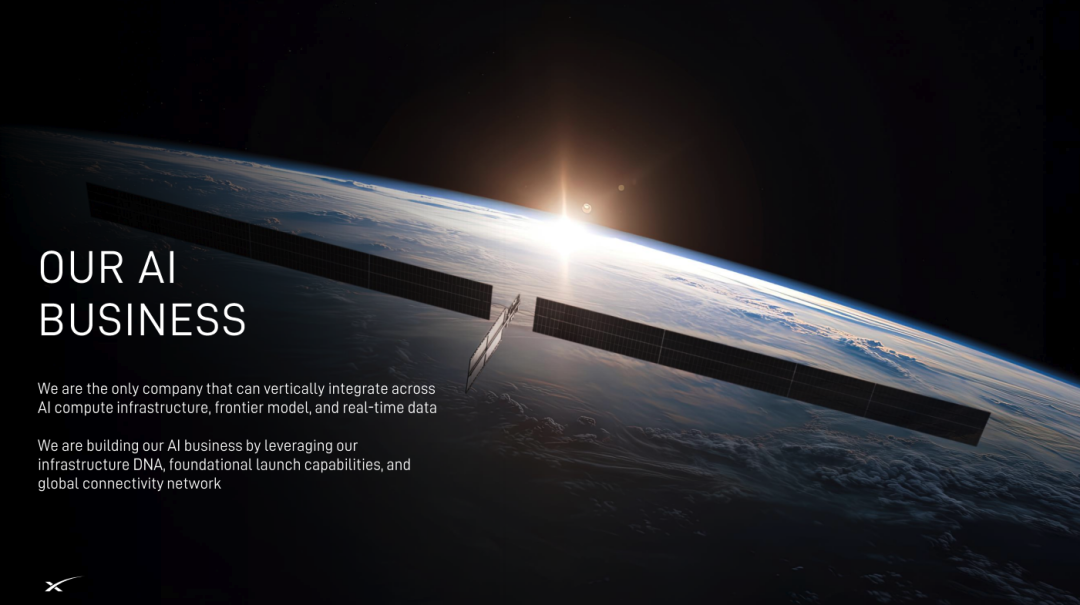
Figure 5: SpaceX's IPO images likely show something similar.
- Use phase change materials and computing power scheduling to flatten peaks. Additionally, AI workloads do not always remain at peak levels. Satellites can use phase change materials to temporarily absorb heat and then slowly release it when the workload decreases.
At the same time, computing tasks can be scheduled based on temperature: if a satellite overheats, reduce its frequency and transfer tasks to other nodes; reduce computation when in unfavorable attitudes or exposed to sunlight, and resume full load when heat dissipation conditions improve.
In other words, future scheduling systems will manage not only GPUs and networks but also the 'thermal budget' of each satellite.
- Use Starship to turn the radiator's mass problem into an economic problem. Finally, traditional satellites pursue extreme lightweighting because launch mass is extremely expensive. Musk's difference is his hope to reduce the cost per unit of orbit insertion through Starship.
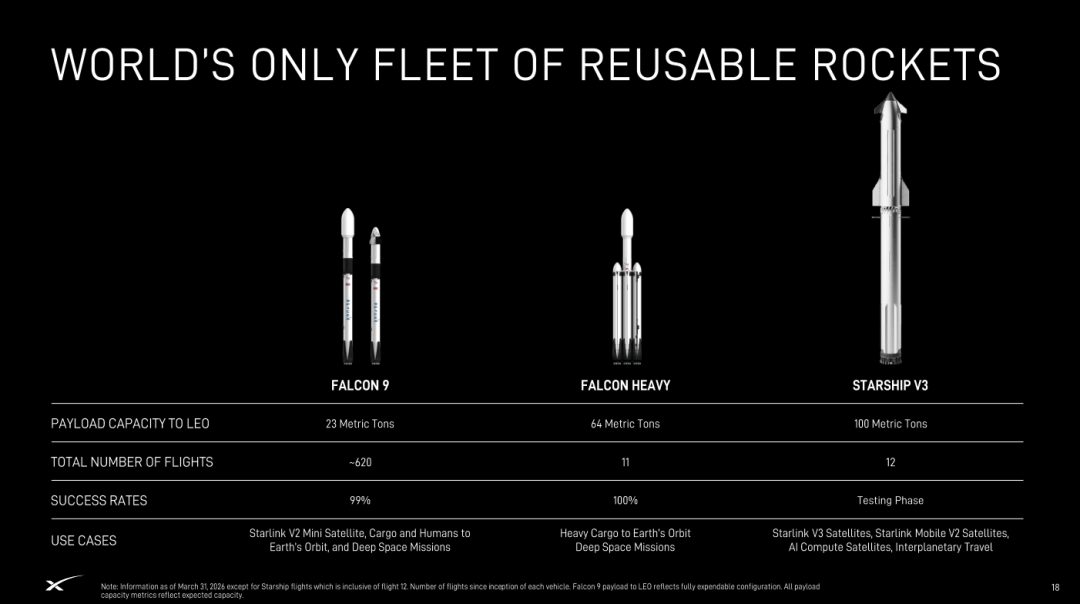
Figure 6: SpaceX's spacecraft
If launches are cheap enough, SpaceX can accept larger radiators, more coolant, and higher redundancy. Its solution may not be the most elegant thermodynamically but could be the easiest to scale manufacturingly and economically.
Conclusion
It is clear that Musk cannot circumvent the laws of physics. No matter how advanced the chips or how cheap the rockets, most of the energy consumed must ultimately be discharged as heat.
Therefore, the true core asset of space-based computing power may not just be the number of GPUs but 'heat dissipation capacity per kilogram': how energy-efficient the chips are, how quickly heat can be spread, how much heat can be discharged per square meter of radiator, and how much sustained computing power can be supported per kilogram of the system.
Space is indeed very cold. But for a GPU running at full speed, what is most scarce there is not low temperature but a sufficiently wide heat dissipation path.
Finally, Musk has indeed opened up our imaginations, somewhat like how Prince Henry the Navigator and Columbus initiated the Age of Discovery. We are beginning to turn our gaze toward space, embarking on another human journey.
References and Images: SpaceX_IPO_Roadshow_Final.pdf
*Unauthorized reproduction or excerpting is strictly prohibited.
-
![]()
Insta360’s Post-Lockup Period Begins: Employees Suspected of Selling Shares, Institutions Biding Their Time—Is a Major Storm on the Horizon?
-
![]()
Are Houses Getting 'ID Cards' Now? In the Future, House Decorating, Renting, and Buying Will All Be Possible with a Simple Scan!
-
![]()
Where Should the Senior Citizens in County Towns Go?
-
![]()
【OFweek Weike Cup】Santec Officially Enters for the 2026 Optical Industry Annual Innovation Product Award
-
![]()
Anhui’s Taihu County Establishes a Project with an Impressive Annual Production Capacity of 850 Million Square Meters of Optical Film, Along with Supporting Rollers!
-
![]()
The AI Unicorn Valued at 960 Billion is Raising Funds Again
-
![]()
Unveiling the Strategy: The RMB 11.5 Million Deal of MLOptics
-
![]()
Qingtian Lease Hits 7 Billion Valuation in Six Months, Coexistence of Robot Leasing Bubble and Reality