Insta360’s Post-Lockup Period Begins: Employees Suspected of Selling Shares, Institutions Biding Their Time—Is a Major Storm on the Horizon?
 06/22 2026
 568
568
Over the past month, shareholders of Insta360 have been expressing their dissatisfaction.
Insta360, hailed as the "pioneer smart imaging stock" on the STAR Market, has failed to prevent a substantial decline in its stock price—from around 225 yuan at its peak in mid-May to approximately 147 yuan. Compared to its zenith of 377 yuan in September 2023, its market capitalization has plummeted by 60%.
Furious investors have been relentlessly questioning Insta360.
Some have criticized the persistent downturn in Insta360's stock price, stating, "According to statistics, from September last year to now, Insta360's stock price decline ranks fifth among over 5,000 non-ST stocks listed on the Shanghai and Shenzhen stock exchanges, with a drop of nearly 60%. Your company's performance has deteriorated since its listing. Has this severely harmed the interests of secondary market investors? Has it significantly eroded the capital market's trust and confidence in the company?"
Other investors have criticized Insta360 for its inaction amidst the market cap plunge, questioning, "In response to widespread investor demands for stock price stabilization, why has the company remained silent and taken no action even after the release of lock-up shares?"
Insta360's market capitalization has nose-dived by 60%, influenced by a combination of factors. On June 11, 2026, 227 million lock-up shares (56.50% of total share capital) were released, increasing the free float by seven to eight times and creating immense selling pressure. Additionally, Insta360 continued to experience "revenue growth without profit increase" in Q1 2025 and 2026, facing mid-term earnings pressure. Long-term competitive pressure also looms large, as the panoramic camera market has limited capacity, while the action camera sector faces fierce competition from companies like GoPro and DJI, accompanied by persistent risks of technology patent infringement litigation. Insta360 is entrenched in a comprehensive war of attrition involving technology, capital, talent, branding, and supply chains.
Under multiple pressures, Insta360's allure has faded. Not only have its market capitalization and profits declined, but so too may long-term confidence in the capital markets.
The selling pressure from the lock-up release is substantial.
On June 11, 2026, 226.56 million initial lock-up shares of Insta360 became tradable, representing 56.5% of total share capital and approximately 40 billion yuan in market value. The tradable shares suddenly expanded nearly eightfold post-release. Most of these shares are held by early-stage investment institutions and employees who acquired them at low costs, giving them incentives to cash out—the source of the first-week selling pressure.
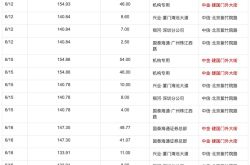
According to rough statistics by Caijing Story Hub, block trades in the first week post-lockup (June 12, 15, 16) totaled 3.5294 million shares and 529 million yuan. These sell orders clearly fell into two distinct groups, differing in discount levels:
The low-discount group (with a discount of about 1%): Trading at around 154 yuan, the seller was the CICC Jianguomenwai Avenue business unit, with buyers being institutional-dedicated and Guotai Haitong headquarters. This group accumulated 2.8984 million shares over three days.
The high-discount group (with a discount of about 10%): Trading at 133–140 yuan, the seller was the CITIC Zizhuyuan Road business unit, with buyers being various business units of Industrial Securities, Galaxy Securities, and Guotai Haitong. This group accumulated 631,000 shares over three days.
The discount level reveals the seller's urgency. The low-discount group sold nearly at market price, with institutions as buyers, indicating no panic and suggesting pre-arranged reductions. The high-discount group, willing to sell at a 10% discount for immediate liquidation, with retail investors as buyers, indicates a desire for quick cash-out.
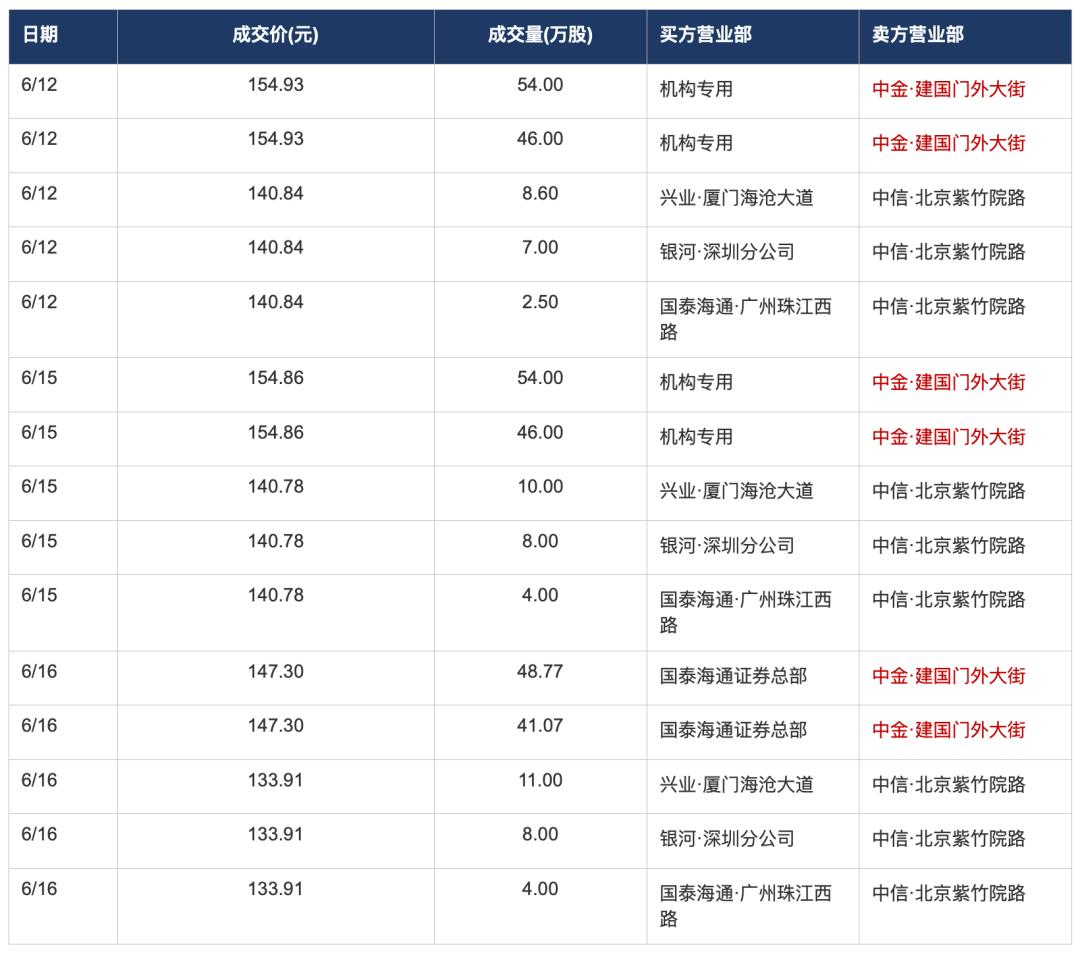
Detailed breakdown of block trades in Insta360's first week post-lockup. Data source: East Money Choice.
The low-discount group can largely be identified as employees.
The low-discount group accumulated 2.8984 million shares over three days, matching the total employee strategic placement during the IPO (CICC Insta360 No.1: 1.3307 million shares + No.2: 1.5677 million shares = 2.8984 million shares). Moreover, the securities firm associated with the seller's business unit is the manager of these two asset management plans. Thus, this group's reductions can largely be attributed to the employee shareholding platform. It should be noted that exchanges only disclose business units, not shareholder names; this judgment is inferred from matching seats and shareholdings, not from announcements.
Employees were willing to sell at a discount because their holding cost was the issue price of 47.27 yuan. Selling at around 154 yuan now yielded approximately a triple profit. Nearly clearing their positions in the first week indicates strong cashing-out intentions, possibly reflecting insufficient confidence in the company's future. However, the modest discount and lack of panic selling also suggest they are not overly pessimistic about the company's fundamentals. The high-discount group's seller identity was not disclosed, but given the structure of lock-up shareholders, they are likely early-stage small and medium-sized financial investors.
Calculated this way, the selling pressure in the first week post-lockup mainly came from employees and small and medium-sized venture capital firms, together accounting for only about 1.6% of the lock-up volume. Core institutional shareholders holding over 5% did not reduce their stakes. Because large institutions did not act, Insta360's stock price only fell slightly by 0.04% on the lock-up release day (June 11), with the market briefly interpreting it as "positive."
However, by June 12, the stock price plummeted by 4.22%, with an overall first-week correction of 11%, partially releasing emotional shocks. But the real impact lies ahead, as large institutions' reductions will likely unfold over the next six months, peaking 3 to 6 months post-lockup. Thus, the pressure from this lockup is far from fully released.
Among the major institutional shareholders unlocking shares are IDG (EARN ACE, holding 11.96%), Qiming (QM101, 8.44%), and Xunlei (7.84%). Together, they hold over 110 million shares, accounting for about half of the 227 million lock-up shares—over 30 times the first-week block trade volume.
Referring to STAR Market lockup release patterns, financial investors like venture capital and private equity typically peak their reductions 3 to 6 months post-lockup. Three things warrant attention next: whether IDG, Qiming, and Xunlei issue pre-disclosure announcements for share reductions, whether block trade discounts widen further, and whether incoming funds (margin financing, institutions) buy or sell.
Since these three hold over 5% each, regulations require a 15-trading-day pre-disclosure for reductions. No such announcements were made on the Shanghai Stock Exchange this week. Thus, Caijing Story Hub estimates that none had acted by the first week's end.
Once these three reduce their stakes, the impact will be far greater. A simple comparison shows that in the first week post-lockup, employees and small and medium-sized venture capital firms sold only about 3.52 million shares, 1.6% of the total lock-up volume, which the secondary market absorbed easily. Although the stock price fell 11%, no panic selling occurred. However, these three hold 110 million shares.
Thus, the timing of these core institutions' reductions is truly critical. Especially for early-stage investment institutions with extremely low costs, floating profits may reach dozens or even hundreds of times. They are more likely to exit en masse when liquidity improves and market sentiment recovers. Consequently, the impact of institutional shareholders' gradual reductions on Insta360's stock price is likely long-term, following a "time for space" approach—delaying the main selling pressure.
Lockup releases are a double-edged sword.
If a company's fundamentals are strong, the stock price impact from lockup releases is often short-term, even creating a "golden buying opportunity." But if fundamentals are weak, lockup releases act as a "magnifier" and "trigger" for market cap collapses.
For Insta360, the pressure extends beyond selling pressure and market cap declines from the lockup release.
In 2025 and Q1 2026, Insta360's earnings performance was severely imbalanced.
Revenue maintained high growth, with the company's 2025 revenue increasing by 74.76% year-on-year and Q1 2026 revenue by 83.11% year-on-year.
Profit performance, however, severely lagged. In 2025, the company achieved a total profit of 840 million yuan, down 20.70% year-on-year; net profit attributable to shareholders of the listed company fell by 6.62% year-on-year, the first decline in net profit attributable to shareholders since public financial data became available; net profit after deducting non-recurring items was 850 million yuan, down 10.09% year-on-year.
By Q1 2026, Insta360's net profit attributable to shareholders had dropped to 84.62 million yuan. The overall net profit margin attributable to shareholders had plunged to just 3.4%, less than a quarter of Q4 last year and even lower than the already highly competitive small home appliance industry.
Anticipating market concerns about declining profits, Insta360 Chairman Liu Jingkang handwrote a shareholder letter in April this year to reassure the market.
Liu explained the reasons for the sustained profit decline: short-term storage costs exert pressure and may rise further, affecting the company's gross margin; continuous investment in custom chips and the deep integration of AI and organizational structures require increased IT and data infrastructure spending, both contributing to profit pressure.
Subsequently, Liu optimistically stated that three new product categories—gimbal cameras, microphones, and drones—are expected to transition from "investment" to "revenue" within a year, improving profit performance.
However, Liu likely underestimated both competitors and the intensity of competition.
On June 15, DJI released the Osmo Pocket 4P, featuring a vertical dual-lens design and priced 200 yuan lower than the similarly positioned Insta360 Luna, with domestic sales starting on the 23rd. On the Tmall digital camera bestsellers list (June 18 ranking), Insta360 Luna ranked second, while DJI Pocket 4 and Pocket 3 ranked first and third, respectively, sandwiching Insta360.
In other words, in this product category, Insta360 has lost pricing power, making profit improvement even more challenging.
In his shareholder letter, Liu appeared confident in technological leadership, attributing profit declines to increased R&D investment.
However, his "pretended relaxation" cannot conceal the fierceness of technological competition. The industry is engaged in intense offensive and defensive maneuvers, with DJI taking the initiative and Insta360 on the defensive.
Before DJI filed patent lawsuits in the U.S., it had already taken action domestically, suing Insta360 for drone patent infringement in Shenzhen in March this year. DJI's dual-front lawsuits in China and the U.S. aim to overwhelm Insta360 in technological competition.
Technological R&D requires massive, long-term financial support. In terms of cash reserves, upstart Insta360 and industry leader DJI differ by several orders of magnitude. According to media reports, DJI's sales exceeded 80 billion yuan last year, with profits surpassing 20 billion yuan. Insta360's annual revenue is less than 10 billion yuan, with profits below 1 billion yuan. Technological R&D must precede financial resources; given the significant disparity in financial strength, the technological reserve gap is likely to widen further.
As Liu stated, the imaging market's size is driven by technological product innovation. If Insta360 cannot maintain technological leadership in innovation, what will it rely on to secure a future?
For Insta360, the pressure from the lockup release is merely the catalyst. The real threat looming overhead is the stagnation of fundamentals—revenue growth remains sharp, but profit margins are dulling. Surrounded by competitors, Insta360 is engaged in an all-encompassing positional war involving technology, products, talent, capital, and supply chains.
Liu's shareholder letter is filled with aspirations for the future, but capital markets only trust tangible earnings data and verifiable technological barriers. Under multiple pressures, what Insta360 needs now is perhaps not just a pretense of relaxation but a genuine victory reflected in profit statements and technological barriers.
Otherwise, the lockup release will unlock not just stock liquidity but also the liquidity of market confidence in the company.
-
![]()
Insta360’s Post-Lockup Period Begins: Employees Suspected of Selling Shares, Institutions Biding Their Time—Is a Major Storm on the Horizon?
-
![]()
Are Houses Getting 'ID Cards' Now? In the Future, House Decorating, Renting, and Buying Will All Be Possible with a Simple Scan!
-
![]()
Where Should the Senior Citizens in County Towns Go?
-
![]()
【OFweek Weike Cup】Santec Officially Enters for the 2026 Optical Industry Annual Innovation Product Award
-
![]()
Anhui’s Taihu County Establishes a Project with an Impressive Annual Production Capacity of 850 Million Square Meters of Optical Film, Along with Supporting Rollers!
-
![]()
The AI Unicorn Valued at 960 Billion is Raising Funds Again
-
![]()
Unveiling the Strategy: The RMB 11.5 Million Deal of MLOptics
-
![]()
Qingtian Lease Hits 7 Billion Valuation in Six Months, Coexistence of Robot Leasing Bubble and Reality