Qingtian Lease Hits 7 Billion Valuation in Six Months, Coexistence of Robot Leasing Bubble and Reality
 06/22 2026
 523
523
This article is the 1048th original work by DeepDive Atom
"
Humanoid Robot Leasing: Hype or Here to Stay?
Song Que | Author
DeepDive Atom Studio | Editor
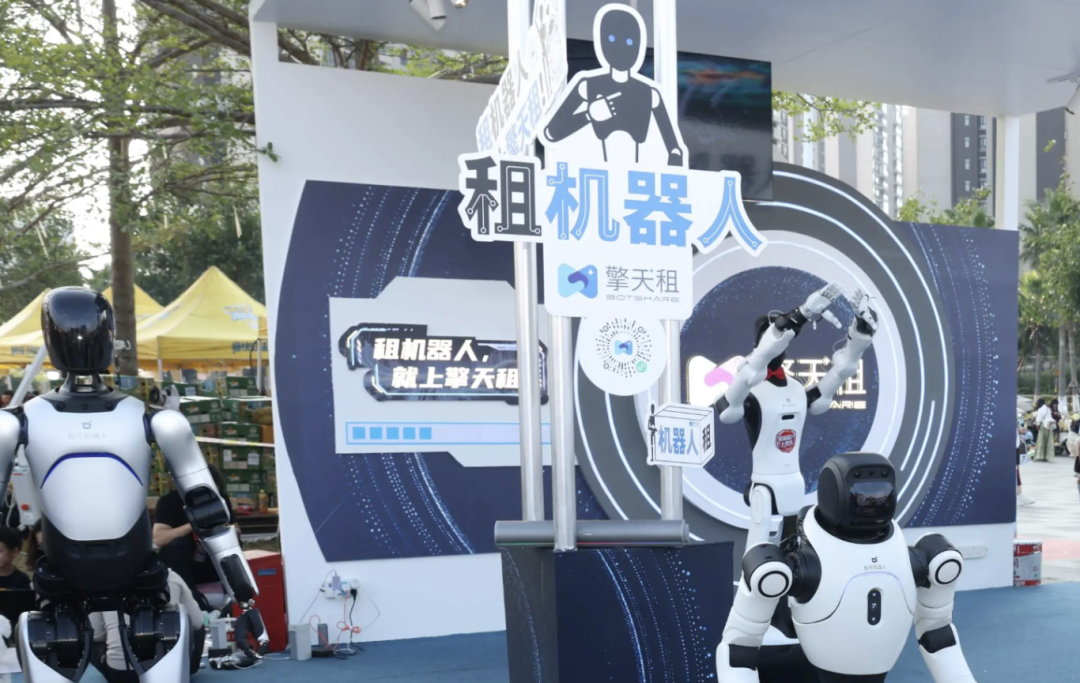
In 2026, the embodied AI sector continues to surge, with the commercialization of humanoid robots reaching a critical inflection point. Among the hard-tech enterprises, robot leasing platform Qingtian Lease has become one of the industry's most talked-about unicorns, thanks to its extreme capital growth rate.
Founded in December 2025, the company completed six rounds of financing in just six months, attracting top-tier capital including Hillhouse Capital, Fosun Capital, Mingjia Capital, and Yuehua Entertainment. After its latest funding round, Qingtian Lease's valuation soared to 7 billion yuan, setting a new record for the fastest valuation growth in the humanoid robot service sector.
Its ultra-fast financing pace and sky-high valuation premium quickly placed Qingtian Lease at the center of industry attention. On the capital side, it is a highly sought-after tech newcomer, seen as the "Didi of the robot era," carrying the ultimate vision of Robotics-as-a-Service (RaaS). However, while top-tier capital piles in and valuations skyrocket, Qingtian Lease faces real-world issues such as plummeting rental prices, insufficient demand, and weak competitive moats. This extreme contrast makes its 7 billion valuation highly eye-catching.
Dual Titans Clash: Qingtian Lease Becomes Zhiyuan Robotics' Core Commercialization Lever
The current humanoid robot sector has evolved into a duopoly between Zhiyuan Robotics and Unitree Technology, with the two firms dominating global shipments and the industry's Matthew effect becoming increasingly pronounced. Their development paths differ sharply, with competition spanning product, commercialization, and ecosystem dimensions. However, Unitree Technology has already gone public on the secondary market, temporarily outpacing Zhiyuan Robotics.
In contrast, Zhiyuan Robotics, founded later, is no longer limited to single hardware sales but focuses on an "AI Large Model + Full-Scene Ecosystem" approach. Compared to Unitree's hardware-heavy, product-focused route, Zhiyuan prioritizes commercialization and industrial ecosystem construction, covering leasing, data, components, and other full-industry-chain segments to differentiate itself from competitors.
Amid intense industry competition, the profit margins of standalone hardware sales are dwindling. The birth of Qingtian Lease represents Zhiyuan Robotics' strategic move to counter Unitree, address commercialization gaps, and seize market scenarios—a key card in its bid to overtake rivals.
From 2023 to 2025, Unitree Technology's revenue reached 159 million, 393 million, and 1.699 billion yuan, respectively, with 2025 seeing a 300%+ YoY surge. Despite this, industry-leading revenues remain modest compared to market caps exceeding 400 billion yuan, highlighting a performance gap.
As a domestic leader in general-purpose humanoid robot R&D, Zhiyuan Robotics possesses full capabilities in hardware development, algorithm iteration, and mass production. However, going public will expose it to market and performance pressures. Hence, controlling Qingtian Lease serves as Zhiyuan's core monetization vehicle, linking hardware shipments, data feedback, and capital appreciation.
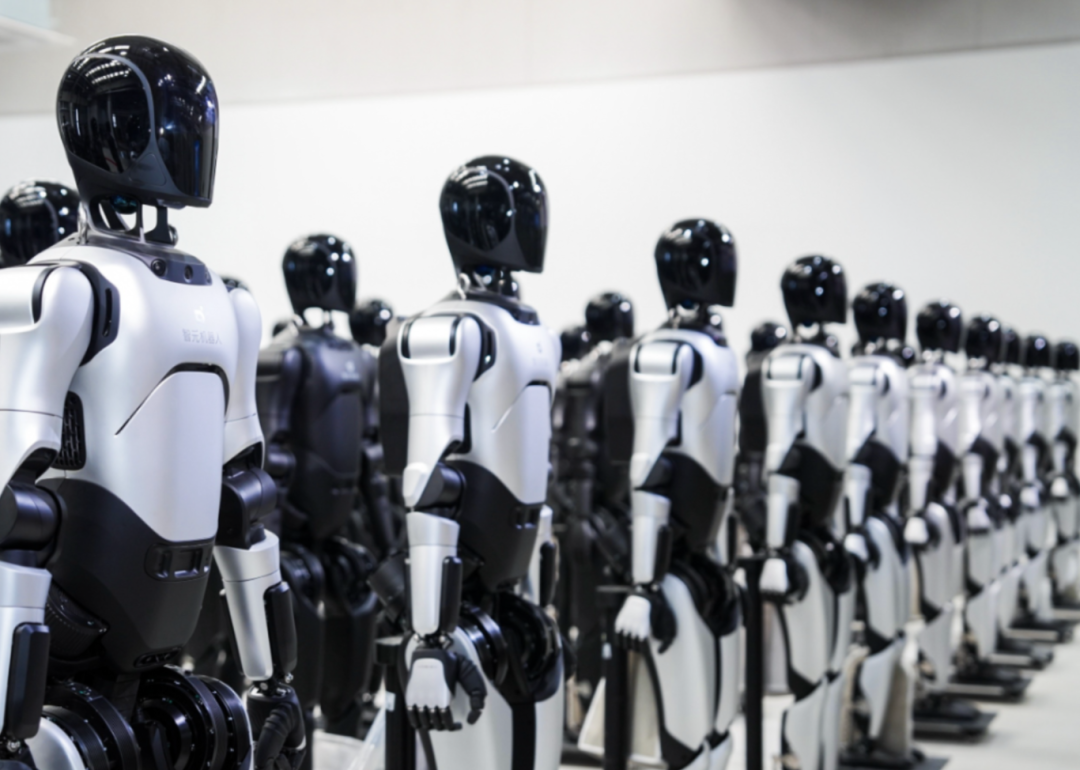
In 2025, only 18,000 robots were sold globally, with projections of 50,000–100,000 units for the current year. Direct sales of humanoid robots face industry pain points: single-unit prices often reach tens of thousands or even over 100,000 yuan, creating immense purchase pressure. This is a real challenge for most small-to-medium B-end clients. Qingtian Lease's emergence bridges the gap from factories to end customers for Zhiyuan Robotics.
Additionally, expensive and maintenance-heavy robots generate significant aftermarket demand. Li Yiyan, CEO of Qingtian Lease, argues that leasing will create a "Tuhu Auto Care for the embodied AI era," where robots are accessed on-demand like utilities.
For Zhiyuan Robotics, Qingtian Lease's primary value lies in rapidly absorbing production capacity and accelerating cash flow. In March 2026, Zhiyuan announced the rollout of 10,000 humanoid robots, with bulk supplies prioritized for Qingtian Lease. The platform coordinates leasing firms for mass purchases, then distributes units to national city partners for operation. This "lease-instead-of-sale" model monetizes devices immediately upon production.
Under traditional direct sales, devices are scattered, making data collection difficult and forcing R&D to rely on lab simulations. Qingtian Lease's robots, however, operate frequently in real-world scenarios like cultural tourism, commercial events, parks, and factories. Beyond hardware monetization, Qingtian Lease serves as Zhiyuan's scene-based data collection hub.
At the capital level, Qingtian Lease is a key narrative booster for Zhiyuan's Hong Kong IPO bid. While most humanoid robot firms remain stuck in hardware R&D and small-scale pilots, Zhiyuan—a yet-to-profit hard-tech company—faces high expectations from capital markets for landing scenarios, business models, and ecosystem moats.
Qingtian Lease's independent financing and growth into a 7 billion valuation unicorn prove to capital markets that Zhiyuan has built a complete RaaS ecosystem of "hardware manufacturing + scene services + data iteration." Backed by marquee investors like Hillhouse, Fosun, and Yuehua Entertainment, it demonstrates that Zhiyuan is not just a hardware maker but a platform company with a full-service ecosystem.
Billion-Dollar Market, Trillion-Dollar Dilemma: The Industry Bubble Behind Qingtian Lease's 7 Billion Valuation
iiMedia Research predicts the domestic robot leasing market will surpass 10 billion yuan in 2026, up sharply from 1 billion yuan in 2025. Humanoid robot leasing, a mainstream scenario for embodied AI adoption, is seen by capital markets as a high-growth gold mine.
However, Qingtian Lease's 7 billion valuation after just six months appears misaligned with industry scale and its own operations, showing clear bubble traits. Comparisons with mature domestic sharing economy and industrial equipment leasing sectors highlight this valuation's irrationality.
Before delisting, shared power bank leader Monster Charging had a market cap of around $297 million. EasyCloud, an early mover in enterprise IT equipment leasing and lifecycle management, reported 1.5 billion yuan in 2025 revenue and 130 million yuan in net profit but holds a market cap of just over 1.5 billion yuan. Traditional industrial equipment leasing leaders' valuations remain tightly tied to revenue, profitability, and market penetration.
Qingtian Lease's 7 billion valuation stems not from current operations but from primary market speculation about the "robot labor sharing platform's" long-term value. Capital compares it to early-stage Didi and Meituan, betting it will consolidate industry resources first and form a monopolistic platform network, prematurely pricing in years of future growth.
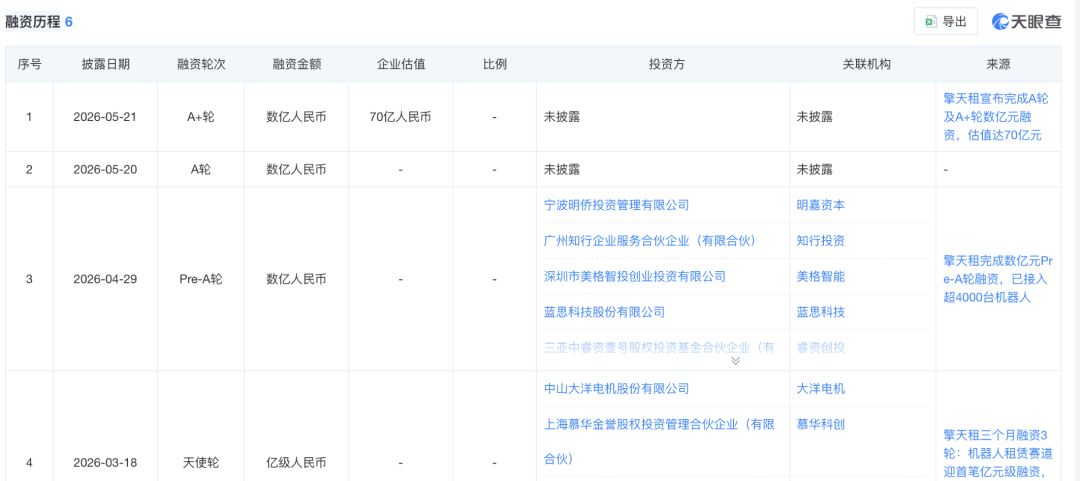
Tianyancha data shows over 1.08 million robot-related firms now exist. Robot leasing firms expanded rapidly, with ~1,500 new entrants nationally in 2025. Unitree's Jishizu and regional SME leasing players have flooded the market, causing a surge in leasable robot inventory. Yet, industry-wide end-user demand has not kept pace, with market growth lagging far behind firm expansion.
According to 21st Century Business Herald, May 2026 marks a tipping point where Chinese humanoid robots shift from luxury items to commodities. On secondhand sites and dismantled markets, engineering prototypes bought for 300,000–800,000 yuan in 2024–2025 now fetch just 30,000–60,000 yuan.
Falling upstream prices and intensifying competition have triggered a leasing market price war. Daily rental rates for humanoid robots plummeted from 15,000–30,000 yuan during the 2025 Spring Festival Gala to 2,500–5,000 yuan in 2026, with some platforms offering 999 yuan trial packages or 1 yuan flash lease subsidies, eroding industry-wide gross margins. While Li Yiyan notes daily rates remain in the thousands of dollars in Europe, domestic competition is fierce.

Currently, most orders come from one-time novelty scenarios like corporate anniversaries, openings, exhibitions, and cultural tourism check-ins, with low repurchase rates. Many robots sit idle, unable to generate stable cash flow, making it hard to sustain high valuations. Qingtian Lease's 7 billion valuation relies heavily on the "robot labor sharing platform" narrative.
Missing Demand, Weak Moats: Qingtian Lease's Growth Challenges and Path Forward
Beyond capital hype, Qingtian Lease faces two critical weaknesses: no stable core demand base and no exclusive competitive moats.
First, demand is fragile. Most platform orders come from viral scenarios like performances, traffic generation, and check-ins, driven by public novelty and unsustainable. As the industry cools and audiences tire, entertainment-related orders will shrink, leaving many city partners with real losses and no path to profitability.
Second, moats are shallow. Qingtian Lease is essentially an online matching platform, outsourcing hardware procurement, maintenance, and fulfillment, with few heavy assets or proprietary tech barriers. Robots are sourced from multiple vendors like Zhiyuan, Unitree, and Accelerated Evolution, offering no exclusive supply advantages. Offline debugging, transport, and repairs are handled by city partners, while its dispatch systems and operational models are easily replicable.
Now, Unitree's Jishizu and thousands of SMEs are undercutting prices, intensifying industry competition. Meanwhile, humanoid robots iterate every six months, causing rapid depreciation of old models and algorithm obsolescence, adding asset impairment pressures. Coupled with Zhiyuan's majority control, Qingtian Lease struggles to act as a neutral third-party platform, limiting cooperation from other hardware makers and further constraining ecosystem growth.
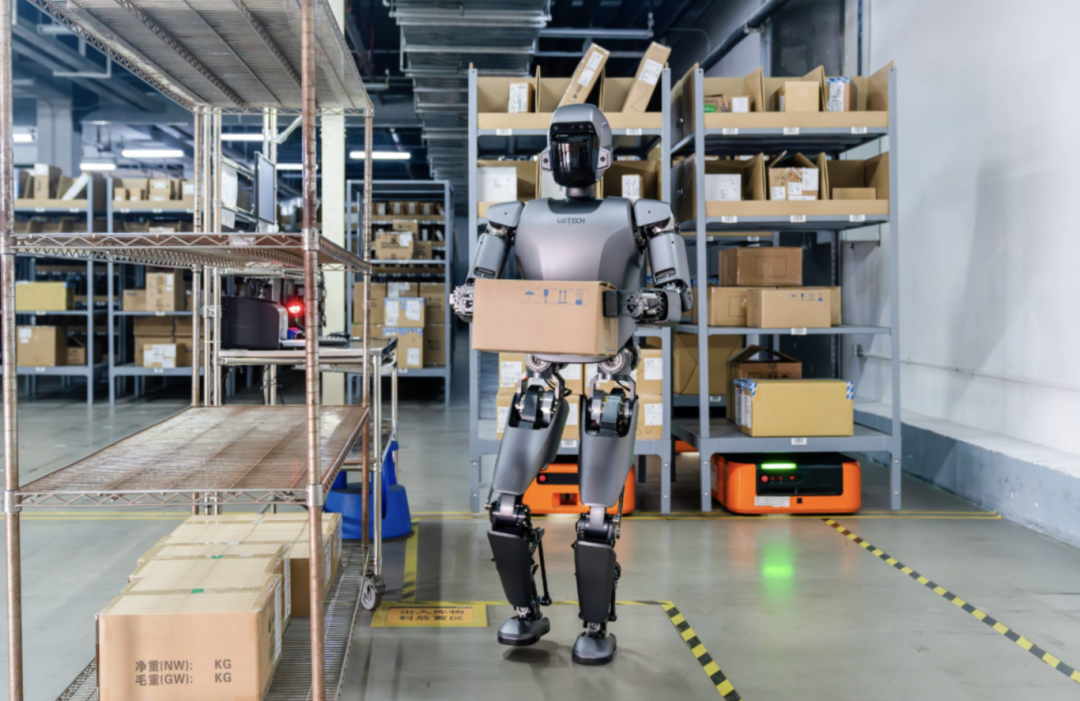
To address these weaknesses, Qingtian Lease has set clear long-term transformation goals: evolving from a "viral performance leasing platform" to a global robot labor RaaS infrastructure, upgrading from "hardware leasing" to "robot service sales." It aims to optimize hardware lifecycle management through bulk procurement to cut costs, establish a secondhand resale and residual value recovery system to maximize asset utilization, and replace capital narratives with real profitability. The platform is also accelerating global expansion into 13 overseas markets, replicating its domestic model to unlock a second growth engine.
Undeniably, humanoid robots and robotics services represent long-term tech trends, and Qingtian Lease has caught the industry's zeitgeist. However, its path ahead is fraught with challenges: surviving industry price wars, resolving franchisee disputes, navigating demand shifts, and building core barriers to achieve sustainable profitability amid fierce competition.
-
![]()
Insta360’s Post-Lockup Period Begins: Employees Suspected of Selling Shares, Institutions Biding Their Time—Is a Major Storm on the Horizon?
-
![]()
Are Houses Getting 'ID Cards' Now? In the Future, House Decorating, Renting, and Buying Will All Be Possible with a Simple Scan!
-
![]()
Where Should the Senior Citizens in County Towns Go?
-
![]()
【OFweek Weike Cup】Santec Officially Enters for the 2026 Optical Industry Annual Innovation Product Award
-
![]()
Anhui’s Taihu County Establishes a Project with an Impressive Annual Production Capacity of 850 Million Square Meters of Optical Film, Along with Supporting Rollers!
-
![]()
The AI Unicorn Valued at 960 Billion is Raising Funds Again
-
![]()
Unveiling the Strategy: The RMB 11.5 Million Deal of MLOptics
-
![]()
Qingtian Lease Hits 7 Billion Valuation in Six Months, Coexistence of Robot Leasing Bubble and Reality