Why Is OpenAI Considering Postponing Its IPO?
 07/08 2026
 547
547
This article is crafted based on publicly accessible information and serves purely as a platform for informational exchange, not as any form of investment guidance.
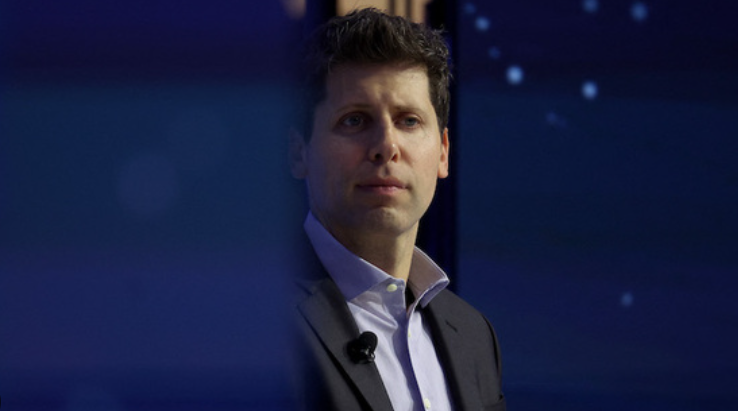
$1 trillion.
This number reverberates through Silicon Valley boardrooms, like a mystical incantation—or a binding chain.
On June 8, OpenAI discreetly submitted its S-1 document, sparking market speculation that the long-awaited IPO was on the horizon. However, a report from The New York Times abruptly halted this momentum: the company is contemplating delaying its IPO until 2027.
The rationale is straightforward yet profound: Sam Altman is steadfast in his valuation target of $1 trillion. Advisors presented a starkly rational choice—either delay the IPO to secure the coveted trillion-dollar valuation or proceed immediately with a lower valuation. Altman's stance was unequivocal: $1 trillion, no compromises.
On the same day, CNBC unveiled further details. OpenAI has not yet embarked on any pre-IPO investor roadshows, pricing tests, or demand assessments. These pre-roadshow meetings will commence only after the listing timeline is firmly established. A source close to the decision-making process disclosed that when submitting the filing in early June, the company internally acknowledged that "it might still take some time," as certain matters are more easily accomplished in the private sphere.
In Tokyo, the news had already caused a stir well in advance.
01
The Benchmark's Shadow
What Altman may be awaiting is not merely a better price but a narrative compelling enough to surpass SpaceX's.
Advisors presented him with a memo as clinical as it was unforgiving, featuring Musk's SpaceX. Having secured over $85 billion in financing this year, SpaceX dazzled the market with a $1.77 trillion valuation at IPO. Yet, what followed? Its stock price plummeted from a peak of $202 to $153, below its opening price, with no signs of a rebound.
This is the cautionary tale presented to them. SpaceX is no longer the "poster child of the space economy" from textbooks but a real-world cautionary tale that investment bankers use to dissuade clients.
If SpaceX cannot sustain a trillion-dollar valuation in the public market, why should OpenAI?
Behind this question lurks a deeper unease: SpaceX's volatility underscores a truth—today's public market evaluates "super unicorns" not on faith but on fear. Fear of interest rate hikes, fear of competition, fear of technological obsolescence, and an even greater fear of realizing that those expensive projects labeled "next-generation infrastructure" have failed to deliver on their commercial promises.
Between SpaceX and OpenAI lies an unseen divide. One deals in the scarcity of the physical world; the other in the substitutability of the digital realm. SpaceX has demonstrated market pricing for scarcity with its reusable rockets yet remains penalized by the public market. OpenAI has yet to complete this demonstration. ChatGPT's 900 million weekly active users, $2 billion in monthly revenue, and developer enthusiasm—valued at $85.2 billion in private markets—what value do they hold in the public markets?
Altman is betting that time is on his side. He needs to demonstrate to the market not just growth but irreversible substitutability. He needs Claude's ascent to appear as a rival that can be outpaced, GPT-5 to prove its generational leap, and quarterly revenue records to gradually erase SpaceX's shadow. Until then, he will not step onto that pricing stage.
02
The Ripple Effect Through the Supply Chain
While OpenAI hesitates, the industrial supply chain reacts prematurely and violently.
SoftBank's market value plummeted by over 12% in two days. The Japanese investment behemoth's total committed investment in OpenAI is projected to reach approximately $65 billion by October. Hiroki Takei, a strategist at Mitsubishi UFJ Morgan Stanley Securities, bluntly told Bloomberg: Once OpenAI goes public, it will provide a public pricing benchmark for one of SoftBank's largest private holdings. The delay caused this benchmark to vanish, forcing the market to adjust expectations downward first.
Kioxia, Japan's premier storage chip manufacturer, followed suit with a 12% decline. As a direct beneficiary of AI infrastructure development, it briefly surpassed the Nikkei 225 index in market value. Any delay in OpenAI's IPO timeline necessitates a recalibration of expectations for the entire AI computing investment landscape.
The most nuanced signal emanates from prediction markets. Traders on Kalshi are re-betting with real money: The probability of OpenAI officially announcing an IPO before March 2027 stands at only 59%, rising to 73% before June 2027. Only about one-third of contracts indicate any movement within 2026.
More intriguingly, Anthropic may indeed seize the spotlight first.
Bloomberg reports that OpenAI internally anticipates Anthropic to go public before itself. On June 1, Anthropic quietly filed a confidential S-1, valuing itself at $96.5 billion—over $10 billion higher than OpenAI's last valuation. The two companies stand nearly shoulder-to-shoulder at the IPO starting line, but Anthropic has a tighter timeline, having considered completing its listing by October this year.
If Anthropic steps into the limelight first, regardless of whether its debut performance is stellar or lackluster, it will become the first benchmark for public markets to price the entire AI industry. OpenAI will be compelled to measure itself against someone else's yardstick.
03
The Pace of Capital Expenditure
Delaying the listing does not equate to halting spending.
According to The New York Times, citing insiders, OpenAI's 2025 annual revenue is projected to be around $13 billion, with current monthly revenue hovering around $2 billion. Meanwhile, its expenditures on data centers, talent acquisition, and enterprise sales are escalating at a steeper rate. This is a high-stakes war of attrition, fueled by $12.2 billion in private market financing.
Opting to remain private is a double-edged sword. On one hand, it shields the company from the short-term pressure of quarterly scrutiny from public markets, allowing for quiet strategic positioning in technological deep waters. On the other hand, it delays an inevitable step: once that S-1 filing takes effect, the world will scrutinize the true financial statements of this so-called "most expensive startup in history."
Until then, the market can only gauge its value through indirect evidence. SoftBank's stock price, SpaceX's stock charts, Kioxia's orders, Anthropic's valuation race—these fragments coalesce to form OpenAI's temporary pricing model. And this model itself is fragile, like a contract stitched together with disparate currencies.
The $1 trillion Altman seeks is not mere vanity. It is the minimum threshold a company needs to mobilize capital over the long term. In Silicon Valley, valuation is not just a number—it is power. The currency to attract global top talent, the leverage to negotiate computing contracts with cloud providers, the financial heft to maintain independent survival amid geopolitical turmoil. He once described going public as "a financing event, done when the time is right."
Now, he awaits that "right" moment. He waits for SpaceX's shadow to be eclipsed by new narratives, for Anthropic to test the waters first, for his own models to prove they are not chasing a bubble.
An unspoken truth remains: When a company prices itself at $1 trillion, it is no longer selling a business model, not a technological moat, not even discounted future cash flows. It is selling the ultimate proposition of human intelligence substitutability.
No one can answer this proposition with an S-1 filing. It requires decades of reality to prove—or disprove—slowly.
Altman chooses to wait. And the cost of waiting is letting the entire market grope for pricing in the dark. SoftBank gropes, Kioxia gropes, Musk gropes, every fund manager trying to bet on the AI era gropes. In this darkness, the only light comes from Anthropic's knocking door. Once that door opens, light will flood in, and OpenAI, standing in that light, will no longer be able to hide behind the fog of valuation.
$1 trillion. This is not a price tag—it is a declaration. And declarations require time to redeem.
-
![]()
OFILM Reports Colossal 460 Million Yuan Loss: Founder Quietly Shifts Focus to Optical Modules!
-
![]()
Yutong Optics and Zeiss Forge Partnership to Develop Quality Measurement System and Launch "Optical Communication Joint Measurement Class"
-
![]()
AutoNavi Revises Splash Screen Ads with Precision Amid Controversy
-
![]()
Unlicensed Vehicle Disputes: AutoNavi Ensnared in the Aggregation Model
-
![]()
Agent: The 'Hard Requirement' for Entering Core Enterprise Systems for the First Time
-
![]()
Global Auto Market Outlook: Sales Decline in China, US, and Europe, Chinese Exports Approach 10 Million
-
![]()
AI Pioneer Breaks Free from the 'Doldrums'
-
![]()
Valuation Exceeds $26 Billion! Three Chinese "Gold Medalists" Shake Up the AI Industry