AutoNavi Revises Splash Screen Ads with Precision Amid Controversy
 07/08 2026
 447
447
AutoNavi Adjusts Sensitive Splash Ads; Liu Zhenfei Maintains Calm Amidst Storm
Author | Wang Tiemei
Editor | Gu Nian
Just three days after navigation apps like AutoNavi sparked public debate on June 24th due to their 'shake-to-skip splash screen ads,' users began reporting on social media that splash screen ads had made a return.
Screenshots revealed that ads for brands like McDonald's, L'Oréal, and Sprite were once again appearing on the startup page, albeit with a modified interaction method. The controversial 'shake-to-skip' feature was replaced with options to 'swipe up to view' or click for more details.
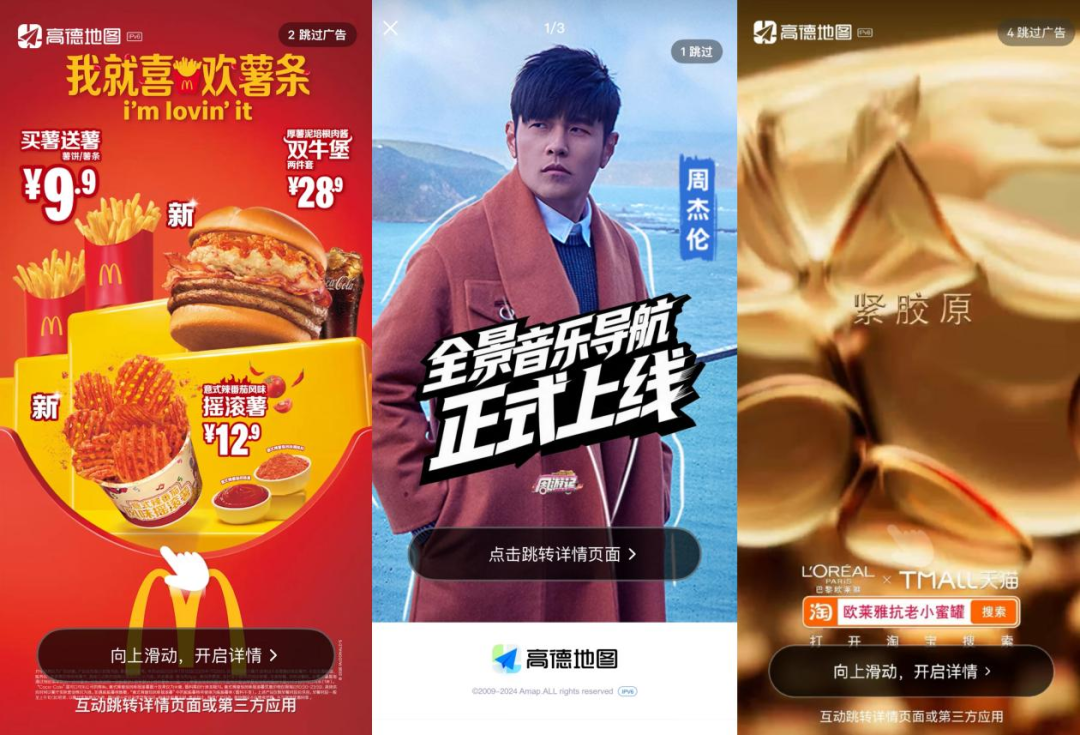
It's clear that while splash screen ad slots remain, the highly sensitive 'shake ads' have been removed. Some users also noted that AutoNavi had not only changed the ad interaction method but had also subtly shifted the ad entry position.
Opting to discontinue the 'shake-to-skip' interactive format as a means to resolve the splash screen ad controversy represents a strategic compromise between ensuring user safety and generating revenue for navigation maps.
Before successfully transitioning into an AI-driven company, completely eliminating these seemingly bothersome ad slots is no small feat. After all, AutoNavi requires substantial and sustained cash flow to support long-term investments in world models and embodied AI.
Despite the backing of Alibaba Group, AutoNavi aims to avoid being perceived as a stagnant, wealthy heir.
Subtle Refinements in Splash Screen Ads
In addition to the return of splash screen ads, users have observed several nuanced adjustments by AutoNavi.
For instance, options like 'Disable Personalized Ads' in AutoNavi Maps have become harder to locate.
Previously, users could typically find these settings by navigating from 'My' to 'Settings,' then to 'About AutoNavi Maps,' where they would encounter the 'Privacy Settings' entry. However, in the updated version, this entry is no longer found along the original path, despite no change in the official guidance steps.
Further investigation by users revealed that 'Privacy Settings' had been relocated to the 'Settings—Account & Security' path and renamed 'Privacy & Permission Management.' This alteration has increased the effort required for users to locate these settings, sparking discussions on social media about the 'disappearance' of the original entry.
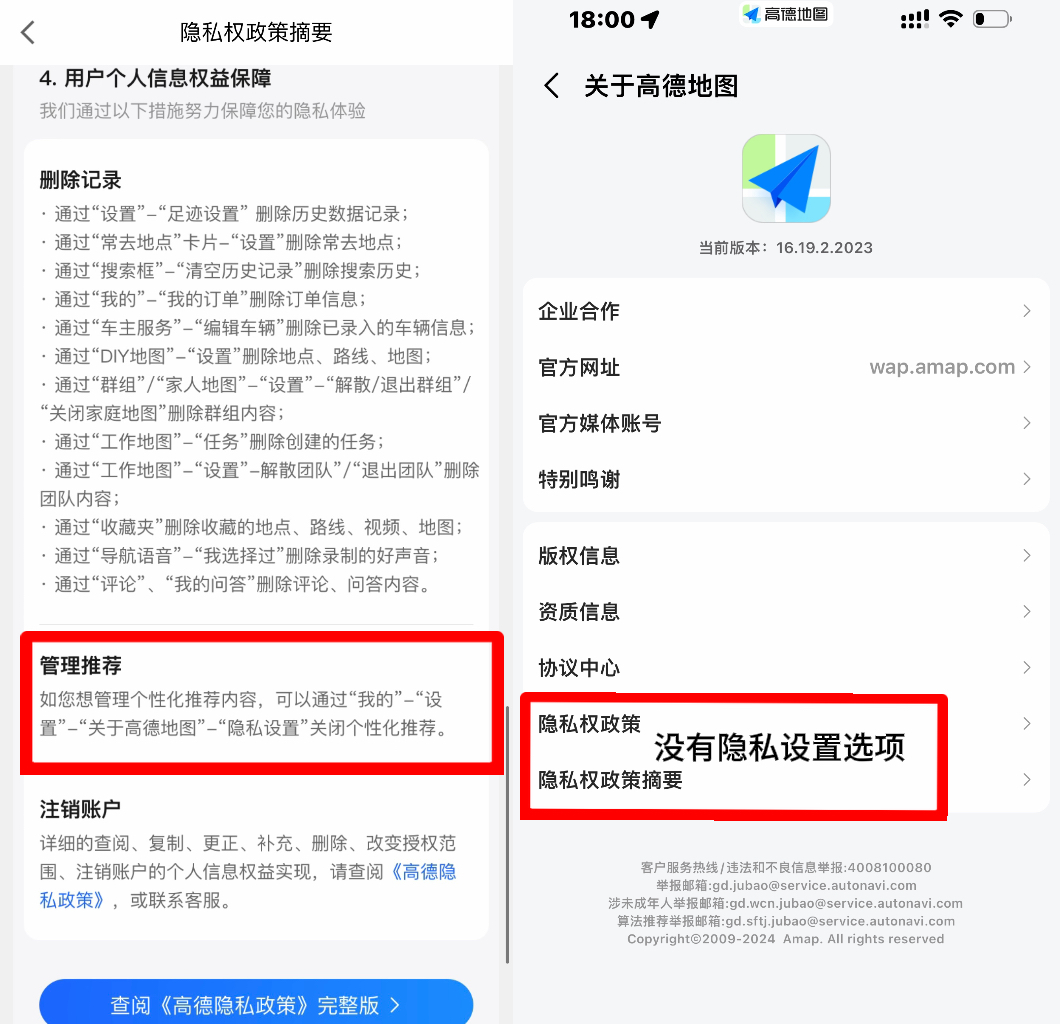
Although explanations clarify that neither personalized nor programmatic ad settings reduce the number of ad displays but merely affect ad precision, some users have reported fewer splash screen ads after disabling these options, while others have noticed no significant change in their experience.
Reducing splash screen ads has also become a hot topic on social media. Some users have experimented with switching system languages or fonts, changing from Simplified Chinese to Traditional Chinese or English, to observe changes in ad frequency, believing that ads appear less frequently under these conditions.
Moreover, some users have pointed out that while 'shake-to-skip' triggers are no longer prominent in splash screen scenarios, they may still appear on the main navigation interface. One user encountered a 'shake-to-view' Vivo mobile phone ad during route navigation.
'This is even more egregious than splash screen shake ads because, while already in navigation, the ad appears right in the center, directly obstructing the original route information.'
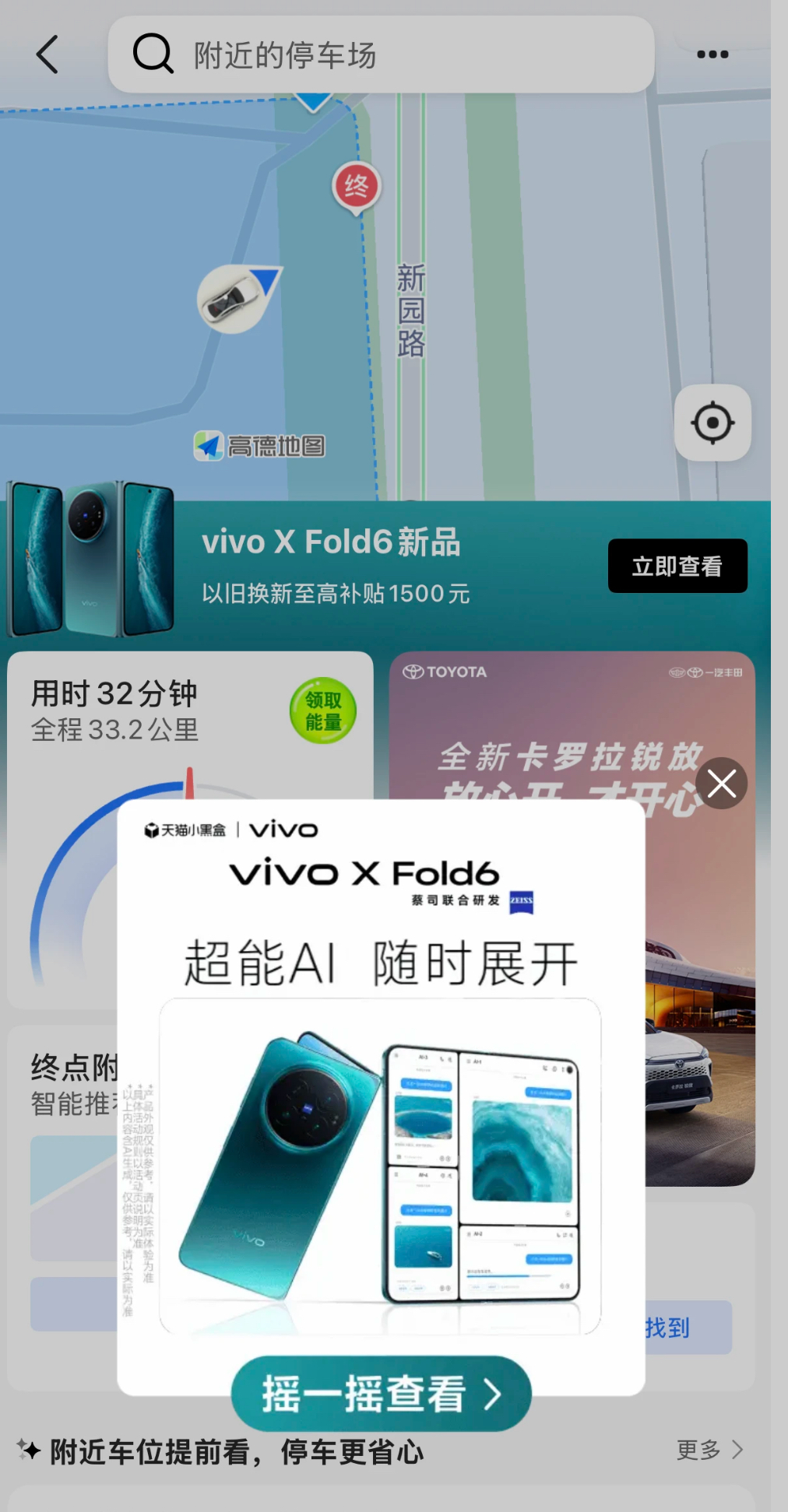
Currently, AutoNavi's approach to problem-solving involves retaining splash screen ads while avoiding high-risk issues that could spark public controversy. These meticulously crafted details suggest that splash screen ads, as a lucrative asset, are not easily removable from AutoNavi Maps.
The subtle refinements in splash screen ads also aim to comply with regulatory requirements. The 2025 'Safety Requirements for Shake-to-Trigger Ad Behaviors' stipulate that when triggering a skip, device acceleration should be no less than 15 meters per second squared, rotation angle no less than 35 degrees, and operation time no less than 3 seconds.
In June 2026, the Ministry of Industry and Information Technology further mandated platforms to rectify issues like highly sensitive 'shake-to-skip' and erratic sliding skips. These standards attempt to draw a clear boundary: shaking a phone does not equate to user consent to view ads.
For navigation apps like AutoNavi, this boundary holds even greater significance. Users might be driving, passing over speed bumps, or picking up their phones to confirm routes. A misclick may merely be annoying in a video app but could pose safety risks in navigation scenarios.
While AutoNavi trains AI to understand the physical world, it nearly first got schooled by traditional navigation challenges. Rapid Monetization: The Governance Era of Yu Yongfu's High-Quality Assets
Two days before this public controversy, Alibaba's management participated in an outdoor rice-planting event at Xixi Wetland.
Following the event, AutoNavi Chairman Liu Zhenfei posted on the internal network, stating, 'Plant when it's time to plant, endure when it's time to endure, and leave the rest to time,' and 'Rice-planting, like AI development, tests perseverance.'
This statement likely reflects Liu Zhenfei's career insights from his years at Alibaba.
He joined Alibaba in 2006, initially leading the ad technology team and building the Alimama ad system. Later, he spearheaded the establishment of Taobao's technical support department to ensure the platform could 'withstand the massive transaction traffic of Double 11.' As AutoNavi's president for nearly a decade, he grew AutoNavi from 40 million daily active users (DAU) to a stable over 100 million.
His counterpart, Guo Ning, is AutoNavi's only executive to have served as head of the foundational platform, middle platform, and business divisions. Before his promotion to CEO in this role, Guo Ning served as AutoNavi's COO since 2023, managing the APP platform business and lifestyle services sector, effectively overseeing Alibaba's local life on-site business.
Under their governance, AutoNavi achieved profitability in less than a year. In February 2025, Alibaba announced at its quarterly results briefing for the period ending December 31, 2024, that AutoNavi had achieved profitability for the first time.
However, two caveats regarding this profitability are noteworthy:
First, Alibaba disclosed AutoNavi's first quarterly profit, not full-year profitability for 2024.
Second, Alibaba did not disclose AutoNavi's standalone revenue, profit, or business segment proportions. During the same period, the Local Services Group, which includes AutoNavi and Ele.me, reported revenue of RMB 16.988 billion, with an adjusted EBITA loss of RMB 596 million. The exact amount AutoNavi earned or its ad contribution remains incalculable from financial reports.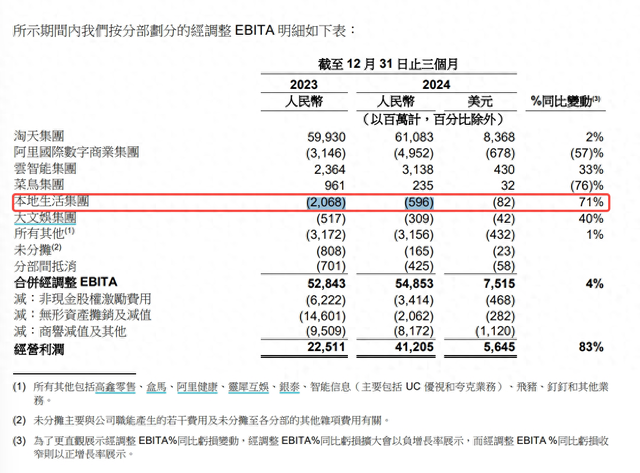
A decade has passed since Alibaba fully acquired AutoNavi in 2014 to its first quarterly profit.
Before them, Yu Yongfu granted AutoNavi a three-year reprieve from profitability.
In September 2014, Yu Yongfu, responsible for integrating AutoNavi, proposed the 'New AutoNavi' strategy: focusing on user needs, map navigation, and technological research and development, with no commercialization targets for three years.
He even stated then that the privatized AutoNavi faced no financial pressure and 'only needed to consider how to spend money.' This reflects a now-luxurious patience.
AutoNavi utilized this period to continue enhancing map data, real-time traffic, and navigation capabilities. By late January 2016, AutoNavi announced over 500 million cumulative users, with active users growing over 100% in 2015. In October of the same year, AutoNavi claimed its client's daily active users surpassed Baidu Maps.
The map product's flywheel began turning: more users generated more driving data, more data improved route planning and real-time traffic, and better navigation attracted more users.
By July 2017, AutoNavi launched the 'Easy Travel Platform,' integrating ride-hailing service providers like Didi, Ucar, Shouqi, and Cao Cao. This marked nearly three years since Yu Yongfu announced the 'three-year no-commercialization goal.'
Arguably, the duo inherited and rapidly monetized the richest assets from Yu Yongfu's governance era.
However, an Alibaba insider revealed that during DingTalk's internal public relations crisis, employees jokingly referred to an internal pun (homophonic meme) CP between G-Dragon (GD) and Zhao Lusi (zhaoless).
As AutoNavi enters the profitability era, its corporate governance may still have room for improvement.
 Can Legacy Assets Support Simultaneously Advancing New Businesses?
With the emergence of new management and group divisions, Liu Zhenfei and Guo Ning must not only make AutoNavi financially self-sufficient but also realign it organizationally with the group's mainline, proving AutoNavi remains authentically 'Alibaba-gened' and integrated within the group's core system.
Over the past year, AutoNavi has intensively promoted AI-related businesses. Guo Ning personally led a three-month closed-door research and development effort at Hangzhou Xixi Park, launching the 'AutoNavi Street Rankings' in September 2025. This product attempts to bypass heavy offline promotion, dynamically generating daily rankings via AI based on over 300 dimensions of user behavior data and AutoNavi's world model.
On paper, within 23 days of launch, users surpassed 400 million; within 100 days, they exceeded 660 million. To ensure the credibility of real-visit rankings, Guo Ning pledged that the Street Rankings would 'never be commercialized.'
In reality, the Street Rankings represent just one branch of AutoNavi's AI initiatives.
Starting in 2025, AutoNavi proposed 'Full AI Integration,' releasing 'AutoNavi Maps 2025,' upgrading the map into an AI-native application, and introducing so-called AI agents based on maps, core to transforming road networks, locations, and real-time traffic information into 'spatial data' understandable and reasoned by AI.
Beyond software changes, AutoNavi also ventured into more cutting-edge domains, such as embodied AI.
In early 2026, it launched its self-developed world model, 'Fantasy World,' for spatial environment simulation and data training.
In April, it showcased the robot 'AutoNavi Tutu,' emphasizing its ability to autonomously navigate and act in open environments, one of Alibaba's earlier embodied AI hardware implementations.
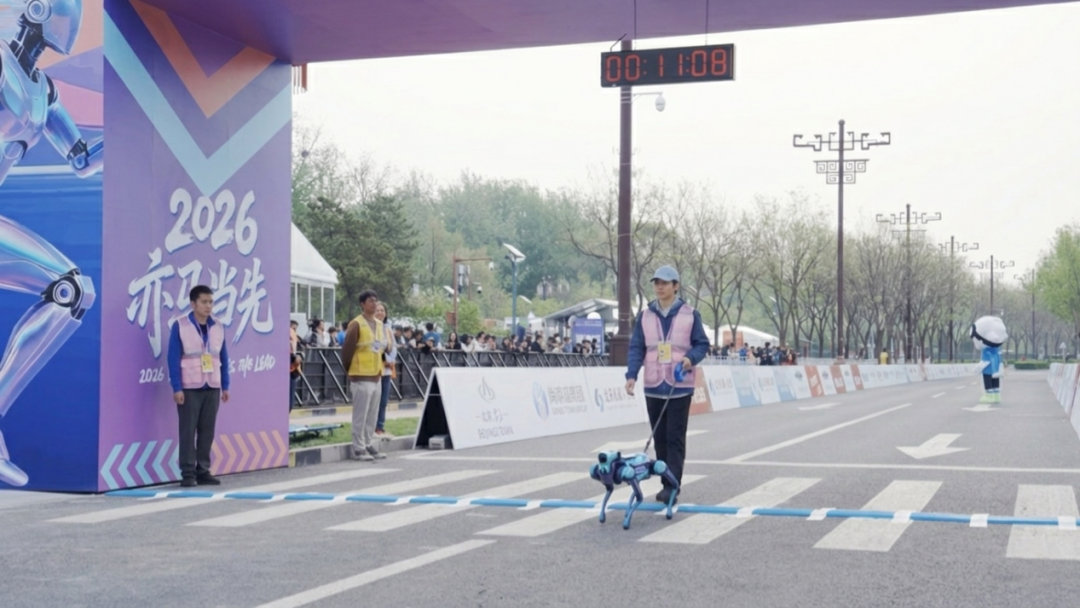
Another example is entering the Robotaxi sector. In November 2025, AutoNavi announced a partnership with XPENG Motors to jointly provide Robotaxi services globally. However, their latest specific collaboration update in this area remains stuck at seven months prior.
These projects continually advance toward 'Cloud + AI' and large model narratives. However, still in their investment phase, they are unlikely to yield short-term revenue returns, all telling a longer-term story.
Amidst these simultaneously advancing new businesses, AutoNavi's legacy businesses continue to struggle.
Data from March 2026 shows that despite a 15.6% month-on-month increase in daily average orders, AutoNavi Ride's order compliance rate stood at only 70.6%, down 2.3 percentage points from the previous month.
It was the only platform among seven major aggregators, besides Meituan, to experience a decline.
For comparison, Didi Chuxing and Huaxiaozhu Chuxing had compliance rates of 80.9% and 85.1%, respectively, both continuing to rise. Data reflects trends: AutoNavi's order volume is growing, but compliance is declining.
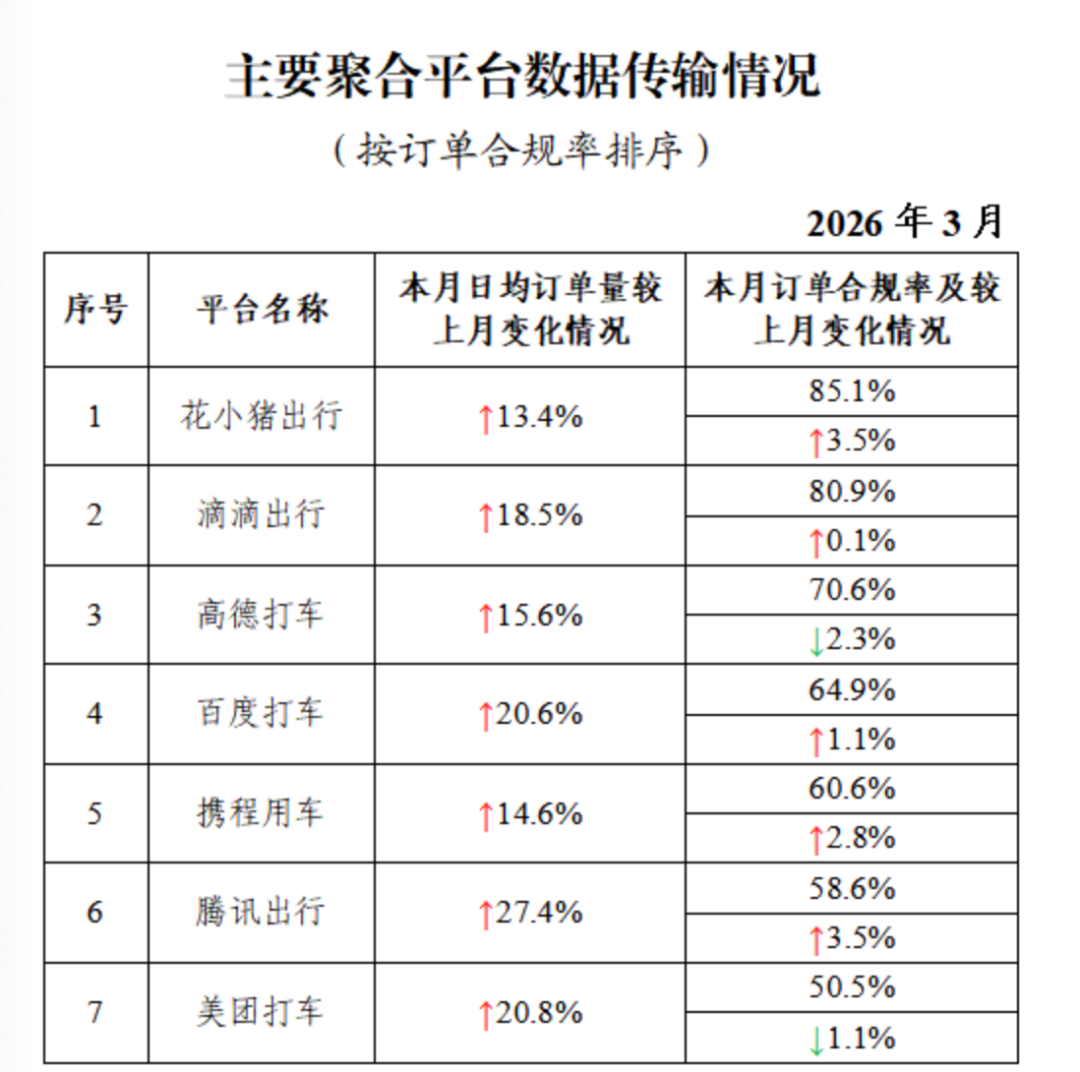
This implies that some of the new orders may come from transport capacity with inadequate qualifications, such as drivers or vehicles lacking both required certificates. With ongoing intensification of ride-hailing compliance inspections nationwide, the risks associated with this growth method are rising. Once subject to concentrated penalties, the impact would be direct.
Beyond compliance issues, profitability poses a more immediate challenge. Multiple layers of fees exist between aggregation platforms and actual carrier platforms. In 2025, AutoNavi announced reducing its information service fee cap to 9% and pushing no fewer than 80 partner platforms to control their comprehensive commission cap within 27%.
While order volumes are large, the money retained per order is limited; charging excessively would simultaneously face pressure from drivers, partner platforms, and regulatory authorities.
Actual tests show that for the same route selected in different cities, AutoNavi's estimated fares are consistently significantly lower than Didi's. A substantial portion of order revenue is allocated to driver shares and subsidies, with industry estimates indicating that approximately 85% of new Gross Transaction Value (GTV) is used to cover transport capacity costs. Even if the platform maintains its commission ratio unchanged, its actual take-home revenue declines.
As AutoNavi's core monetization business faces declining compliance rates, shrinking profit margins, and intensifying competition, it struggles to serve as a stable, effortless cash flow to support AI's new narrative.
The AI industry holds the promise of thriving across diverse sectors, yet it still has a long way to go before tangible results can be fully realized. From Liu Zhenfei's perspective—the Chairman of AutoNavi—'the advancement of AI demands unwavering perseverance.' Within this broader context of persistence, the decision on whether to eliminate splash screen advertisements is but a minor detail. The true test of the leader's resolve may lie in whether AutoNavi, now in its second year under new management, can sustain profitability.
-
![]()
OFILM Reports Colossal 460 Million Yuan Loss: Founder Quietly Shifts Focus to Optical Modules!
-
![]()
Yutong Optics and Zeiss Forge Partnership to Develop Quality Measurement System and Launch "Optical Communication Joint Measurement Class"
-
![]()
AutoNavi Revises Splash Screen Ads with Precision Amid Controversy
-
![]()
Unlicensed Vehicle Disputes: AutoNavi Ensnared in the Aggregation Model
-
![]()
Agent: The 'Hard Requirement' for Entering Core Enterprise Systems for the First Time
-
![]()
Global Auto Market Outlook: Sales Decline in China, US, and Europe, Chinese Exports Approach 10 Million
-
![]()
AI Pioneer Breaks Free from the 'Doldrums'
-
![]()
Valuation Exceeds $26 Billion! Three Chinese "Gold Medalists" Shake Up the AI Industry