OFILM Reports Colossal 460 Million Yuan Loss: Founder Quietly Shifts Focus to Optical Modules!
 07/08 2026
 349
349
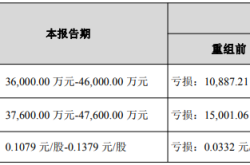
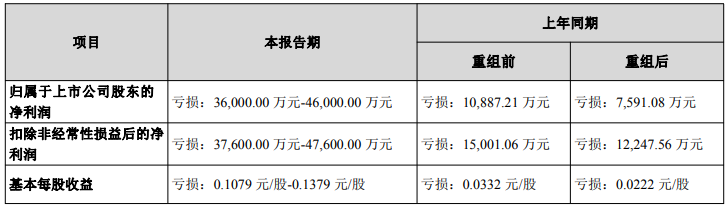
On July 8, OFILM unveiled its semi-annual earnings forecast for 2026, projecting a net loss attributable to shareholders ranging from 360 million to 460 million yuan for the January-June period. This marks a staggering 230% to 322% surge from the 109 million yuan loss recorded in the same period prior to restructuring, and a 374% to 507% leap from the simulated 75.91 million yuan loss post-restructuring.
The non-recurring net profit outlook is equally alarming, with an anticipated loss between 376 million and 476 million yuan. This represents a 151% to 217% increase from the 150 million yuan loss in the corresponding period before restructuring, and a 208% to 290% jump from the 122 million yuan loss after restructuring.
In its announcement, OFILM attributed the sharp downturn in performance to three key factors: Firstly, significant price hikes in memory chips, compounded by weakening demand in the downstream terminal market, prompted some terminal manufacturers to proactively scale back production and shipment plans. This resulted in a temporary slump in the company's sales order volume and exerted pressure on the gross profit of its main business. Secondly, the company received fewer government subsidies related to income compared to the previous year. Additionally, the year-on-year rise in minority shareholder gains/losses directly eroded net profit attributable to shareholders. The more profitable the subsidiary, the larger the portion claimed by minority shareholders based on their ownership stake, thereby diminishing the net profit attributable to shareholders. This is a fundamental tenet in consolidated financial statement accounting.
OFILM is not alone in grappling with this predicament. According to Counterpoint Research data, China's smartphone sales during the 2026 618 promotion period plummeted by 13% year-on-year, primarily due to escalating memory chip prices driving up phone costs and prices, which significantly squeezed manufacturers' promotional margins.
IDC's May forecast further underscores the global smartphone market's woes, indicating that global smartphone shipments in 2026 will be revised downward to 1.09 billion units, marking a 13.9% year-on-year decline and the lowest level since 2013. For OFILM, whose core business revolves around smartphone camera modules, the confluence of terminal market contraction and cost impacts makes a substantial shrinkage in main business gross profit almost inevitable.
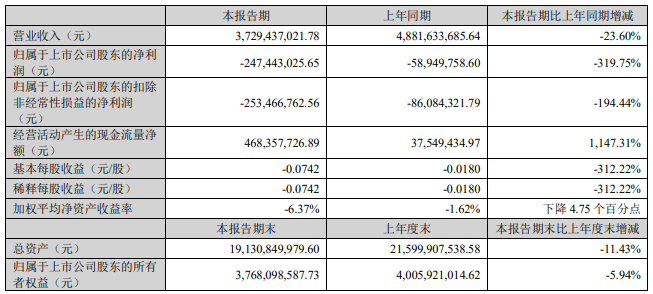
This marks OFILM's second consecutive quarterly loss. In the first quarter of this year, the company reported revenue of 3.729 billion yuan, a 23.6% year-on-year decline, and a net loss attributable to shareholders of 247 million yuan, a 319.75% surge from the 58.95 million yuan loss in the same period last year. Over half of the semi-annual loss was incurred in the first quarter alone.
Just a week prior to the earnings forecast disclosure, OFILM completed a major capital operation by acquiring a 28.2461% stake in OFILM Microelectronics (Nanchang) Co., Ltd., held by Nanchang Industrial Alliance Investment Management Co., Ltd., through share issuance. The transaction, valued at 1.463 billion yuan, involved issuing 138 million new shares that made their debut on July 2.
Post-transaction, OFILM achieved 100% ownership of the subsidiary. Owing to the subsidiary's profitability in the first half of 2026, minority shareholders had already claimed their share of profits from January to June based on the original ownership stake (71.7539%). Following the July acquisition, the gains/losses corresponding to the remaining minority stake ceased to appear as minority shareholder gains/losses. The company explicitly stated in its earnings forecast that the "year-on-year increase in minority shareholder gains/losses" temporarily weighed on net profit attributable to shareholders.
From a business structure standpoint, OFILM currently operates across three major segments: smartphones, smart vehicles, and emerging fields. Its main product portfolio includes optical camera modules, optical lenses, fingerprint recognition modules, machine vision depth cameras, and components for intelligent driving and smart cockpits.
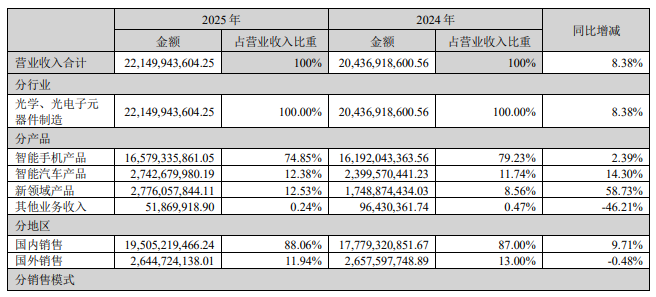
However, the smartphone business remains the dominant force. In 2025, this segment generated approximately 16.579 billion yuan in revenue, accounting for 74.85% of total revenue, with a mere 2.39% growth rate and a narrowed gross margin of 9.72%. The company's 2025 annual report revealed total revenue of 22.15 billion yuan, an 8.38% year-on-year increase, but net profit attributable to shareholders of only 41.6342 million yuan, a 28.69% decline, and a non-recurring net loss of 29.8877 million yuan.
As of the end of 2025, the company's consolidated retained earnings stood at -6.669 billion yuan. With sluggish growth in its core business, fragile profitability, and external cost pressures, OFILM's operational challenges did not materialize overnight.
Amid mounting pressure on its traditional business, OFILM is accelerating its strategic deployment in new sectors to seek breakthroughs. On June 15, OFILM Machine Vision Technology (Jiangxi) Co., Ltd., was established in Nanchang, with the machine vision business—previously housed under the microelectronics division—now operating independently. This business focuses on 3D visual perception and industrial intelligent inspection, supplying embodied AI companies like UBTECH, Deep Robotics, and Zibianliang, as well as core components for intelligent cleaning equipment manufacturers such as Ecovacs and Roborock.
In 2025, OFILM's emerging field products generated 2.776 billion yuan in revenue, a 58.73% year-on-year increase, with a gross margin of 15.59%—the highest among its three business segments. The independent operation of the machine vision business is perceived by the market as a signal to further amplify this growth engine, though its ability to offset the smartphone business decline in the short term remains uncertain.
Furthermore, Xinfeiguang, founded by OFILM's founder Cai Rongjun, is operating its optical module factory at full capacity and has successfully penetrated major North American clients, aiming to achieve an annual output value of 40 billion yuan within three years.
According to sources, Xinfeiguang is currently in a critical mass production phase and requires more support from OFILM's past production experience, leaving open the possibility of further capital collaboration with OFILM.
The optical module sector pursued by the founder complements the listed company's current core optical module business. Whether synergies will materialize in the future remains a focal point for OFILM·Optics' ongoing coverage.
-
![]()
OFILM Reports Colossal 460 Million Yuan Loss: Founder Quietly Shifts Focus to Optical Modules!
-
![]()
Yutong Optics and Zeiss Forge Partnership to Develop Quality Measurement System and Launch "Optical Communication Joint Measurement Class"
-
![]()
AutoNavi Revises Splash Screen Ads with Precision Amid Controversy
-
![]()
Unlicensed Vehicle Disputes: AutoNavi Ensnared in the Aggregation Model
-
![]()
Agent: The 'Hard Requirement' for Entering Core Enterprise Systems for the First Time
-
![]()
Global Auto Market Outlook: Sales Decline in China, US, and Europe, Chinese Exports Approach 10 Million
-
![]()
AI Pioneer Breaks Free from the 'Doldrums'
-
![]()
Valuation Exceeds $26 Billion! Three Chinese "Gold Medalists" Shake Up the AI Industry