Alipay AI-Integrated Express Delivery: Seamless Ordering, Yet Hurdles in Receiving
 07/15 2026
 426
426

"I need to send a package." Upon confirming the shipping details, a variety of express companies pop up on the phone screen, enabling consumers to compare and select based on their preferences. This marks the dawn of a new era in AI-driven delivery services.
This is the innovative delivery experience, now enhanced by artificial intelligence.
As reported by various media outlets, on July 7th, the Alipay AI open platform was officially unveiled, entering an invitation-only testing phase. It provides AI access capabilities to merchants, institutions, smart terminals, large model platforms, and other ecosystem partners.
So far, several leading express delivery firms, including JD Logistics, STO Express, ZTO Express, YTO Express, J&T Express, Deppon Express, and SF Same-Day, have officially joined forces with the Alipay AI ecosystem.
Leveraging Alipay AI, consumers can effortlessly send or track packages with a single sentence, bypassing the need for repetitive navigation and directly accessing the service interface, thus streamlining the entire process.
I. Enhanced Delivery Experience: Conversational Interface
"Through our strategic layout within the Alipay AI ecosystem, SF Same-Day will expand user access points, transitioning from 'service discovery by users' to 'direct conversational access,' thereby offering a more convenient and intelligent interactive experience," remarked an official from SF Same-Day.
"This partnership with the Alipay AI ecosystem signifies another experience upgrade for J&T Express, continually evolving around core user needs such as shipping, tracking, and after-sales services," added another representative.
The shift from 'service discovery by users' to 'direct conversational access' ultimately aims to bring services directly to users. While the concept may seem avant-garde, for the average consumer, the key question is whether Alipay AI truly comprehends their needs.
From a user's standpoint, Delivery Guide conducted a package-sending test using Alipay AI.
On the Alipay homepage, click the AI icon with a profile picture in the bottom left corner. Upon entry, simply type "I want to send a package," and AI Abao will automatically display the shipping information form. After filling in the details and confirming the shipment, ordering options from multiple express companies will be presented.
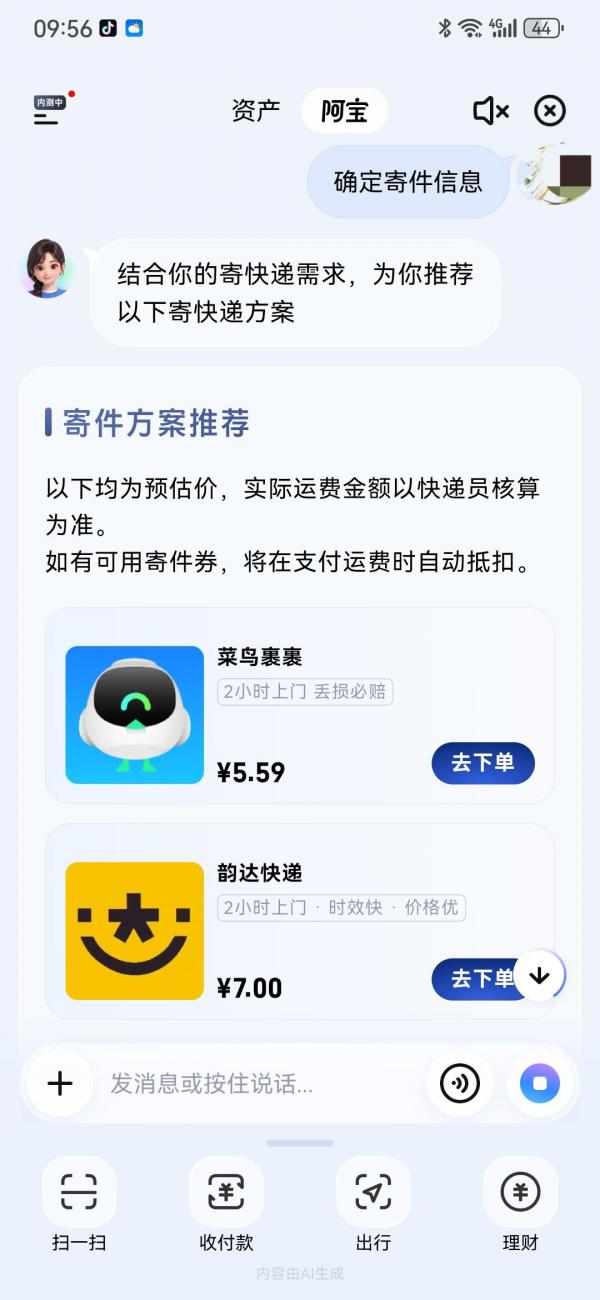
Like a well-organized map, each express company's service advantages and estimated prices are clearly indicated, facilitating easy comparison. Subsequently, select an express company and proceed to place the order.
Alternatively, you can directly type "Send via XX Express," fill in the shipping information, and confirm the order.
For the average consumer, the revolutionary aspect of this experience lies in the ability to resolve issues with a single sentence, enabling clear comparisons at a glance.
Previously, consumers were not short of services but had to repeatedly switch between different mini-programs for comparison. Now, Alipay AI handles all the backend processes, presenting only the clearest results, requiring just a simple choice, with the rest managed by the system in a closed loop.
When AI transforms 'sending a package' into an initial query and a price list, what it truly achieves is not necessarily making services more 'intelligent' but certainly more convenient.
Ultimately, in package delivery, the true turning point from 'service discovery by users' to 'service reaching users' is not AI's proactivity but the efficiency with which consumers can complete the task.
Ironically, despite this convenient operation, consumers remain skeptical.
II. Critical Reflection Amidst the Hype: Misaligned Service Enhancements
"Enough with the gimmicks; improving the last-mile delivery network would be more meaningful." "Reducing losses for outlet operators would be the most stable approach," commented netizens regarding the integration of certain express companies with Alipay AI.
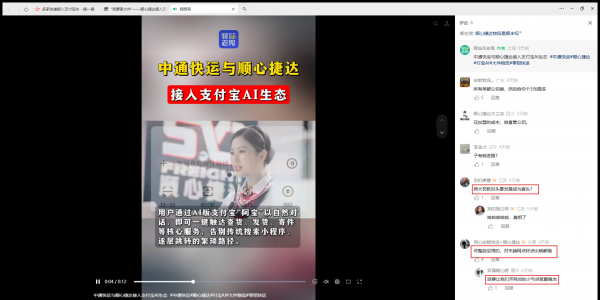
When express companies' official accounts announced their integration with Alipay AI in a grand manner, the comment sections quickly transformed into complaint forums, with many netizens expressing dissatisfaction with their services.
Take Deppon Express's Xiaohongshu account as an example. A post that should have been a celebratory announcement about integrating with Alipay AI turned into a collective outpouring in the "Victims' Alliance": some shared their complaints about Deppon Express on the Heimao Complaints Platform, others recounted their arduous journey of unsuccessful rights protection, while some directly vented their frustration.
The situation with Fengchao was no different. Instead of anticipation and excitement about Fengchao's integration with Alipay AI, the comment sections were filled with complaints and queries: "My package is lost, and I've called for four days without a single reply."
"When will you resolve my lost package issue? Does Fengchao still issue fake tracking numbers? My package hasn't moved, and customer service just passes the buck, telling me to ask STO Express, whose customer service says they can't find the order number. I can't even reach the courier. What does this mean?"
These queries cast a shadow over the technological narrative of express companies integrating with the Alipay AI ecosystem, revealing an easily overlooked truth: in the express delivery industry, if consumer "convenience" is solely built on optimizing front-end interactions without translating into back-end ecosystem improvements, such convenience is superficial and fragile.
The perceived service quality by consumers largely hinges on the terminal end of express services—whether couriers arrive on time, packages are intact, deliveries are timely, and claims are processed smoothly—rather than the smoothness of the AI interface at the delivery end.
This exposes a harsh reality: consumer patience with "technological progress" is being eroded by daily "service regressions."
This is not a coincidental public opinion misfocus but an inevitable emotional backlash. On the Heimao Complaints Platform, a search for "express delivery" yields a staggering 2.06 million complaints. The situation is equally dire on social media platforms like Xiaohongshu, Weibo, and Douyin, where discussions about express delivery are almost entirely negative.
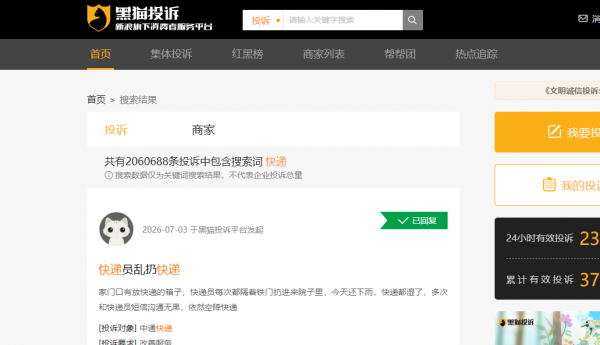
Ultimately, consumers' attitude toward express companies integrating with Alipay AI is not a rejection of technology but a rejection of a "head-in-the-clouds" technological arrogance. Consumers desire not just "faster ordering" but a more reliable entire service chain, especially the delivery and after-sales parts at the service terminal. The word "reliable" breaks down into: being able to find someone when issues arise, receiving compensation for losses, and couriers arriving as promised.
AI is not a panacea; it's the rope beside the lifesaver. The prerequisite is that the lifesaver must be properly secured to use AI to quickly pull oneself ashore. Similarly, the express delivery industry must genuinely address service pain points to reap greater benefits from AI.
-
Standing at a Distance, Behind Xiaomi's Phone Slowdown and Layoffs", "Xiaomi Phone, Declining Sales, Offline Stores, Product Strategy, Comprehensive Ecosystem of People, Vehicles, and Homes", "Accordi
-
![]()
Phoenix Optics Forecasts a Nearly 70% Drop in First-Half Net Profit, Yet Optical Business Profit Shows Growth!
-
![]()
A Staggering 50.16% Reduction in Losses Projected! COST's Interim Report Signals a Pivotal Moment
-
![]()
Nearly 19% of National Total! Guangdong Boasts 164 Registered Large Models as New AI Personification Regulations Take Effect
-
![]()
BYD’s Baosha, Sought After by Australians, Makes a Triumphant Return to China
-
【Focus】Analysis of Downstream Demand Sectors and Key Enterprise Development for Acrylic OCA Optical Adhesives in China by 2026
-
![]()
Big News! OpenAI Poaches Apple's Hardware Team
-
Hot Topic | DeepSeek and Zhipu Cross into Chipmaking, Domestic AI Firms Vie for Computing Autonomy