BYD’s Baosha, Sought After by Australians, Makes a Triumphant Return to China
 07/15 2026
 525
525
Source | Yuan Auto
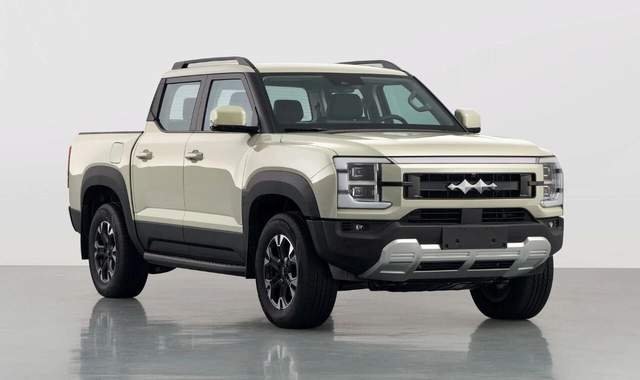
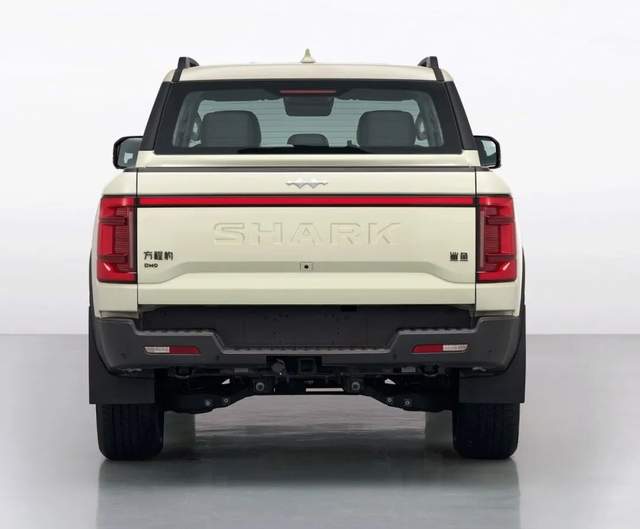
The 409th batch of the "Road Motor Vehicle Production Enterprises and Products Announcement," released by the Ministry of Industry and Information Technology on July 10, features BYD’s pickup truck, which has been available in overseas markets such as Australia and Mexico for over a year. This hybrid pickup is marketed under the Fangchengbao brand in China, with the rear badge displaying "Shark" or, alternatively, "Baosha."
BYD has recently introduced numerous new models, but Baosha stands out due to its exceptional significance and warrants a dedicated article.
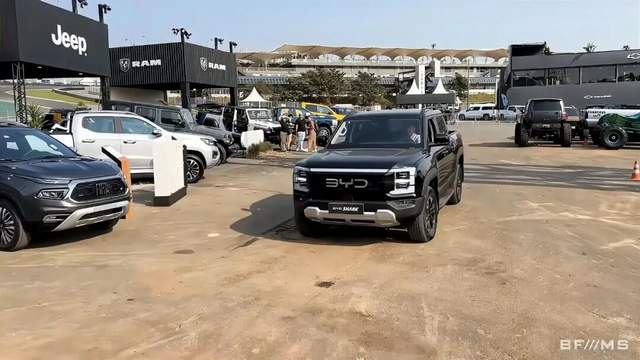
With 18,000 units sold, BYD Baosha (marketed as the BYD Shark 6 in Australia) achieved the fourth position in Australia’s annual pickup sales for 2025, trailing only the Ford Ranger, Toyota Hilux, and Isuzu D-MAX. In comparison, Great Wall’s top-selling model, the Great Wall Cannon, sold 6,163 units in the Australian pickup market in 2025, despite having a longer market presence.
It's noteworthy that Australians, unlike consumers in the domestic auto market, have a strong preference for rugged yet practical pickups, with many families using them as daily vehicles. Data indicates that from 2020 to 2025, pickup sales in Australia consistently accounted for approximately 20% of the total auto market each year.
As BYD’s inaugural pickup, Baosha’s ability to carve out a significant position in a major pickup market within its first year of sales likely surprised many competitors. Now, with Baosha returning to China, it signals a pivotal development for domestic pickup manufacturers, led by Great Wall.
After all, the domestic pickup market remains one of the few lucrative segments that doesn't necessitate price wars.
01 The Lucrative Yet Under-the-Radar Pickup Market
Since pickups are not classified as passenger vehicles in China, this segment has largely remained out of the market spotlight. However, this does not imply that pickups are an insignificant niche.
According to the China Passenger Car Association, domestic wholesale pickup sales totaled 589,000 units from January to December 2025, marking an 11.8% year-on-year increase from 2024. In 2026, while growth in passenger vehicle sales weakened, the pickup segment continued to expand, with wholesale sales in the first half of the year increasing by 9.2% year-on-year to 344,000 units.
It's crucial to highlight that a significant portion of this growth can be attributed to export demand. If we consider only domestic demand, pickup sales have declined, mirroring trends in the overall passenger vehicle market.
Nevertheless, the overall pickup sales volume is steadily rising, providing automakers with a "safe haven" where they are not compelled to engage in constant price wars. From this perspective, Great Wall, which has maintained its leadership in the pickup segment for 28 consecutive years, holds significant influence.

In terms of sales, Great Wall Pickup consistently commands half of the domestic pickup market, with a terminal market share exceeding 44% in the first half of this year. In terms of quality, pickups have consistently been a high-margin segment for Great Wall.
According to Great Wall Motor's Q1 2026 financial report, the automaker, which began with SUVs and pickups, achieved revenue of RMB 45.109 billion during the reporting period, a record high for a first quarter. Despite rising component costs and an intensifying industry price war, its net profit, excluding non-recurring items, declined year-on-year but remained positive, outperforming the broader market.
While the financial report does not delve deeply into pickup-specific metrics, it is widely acknowledged that the pickup business is not a liability for Great Wall.
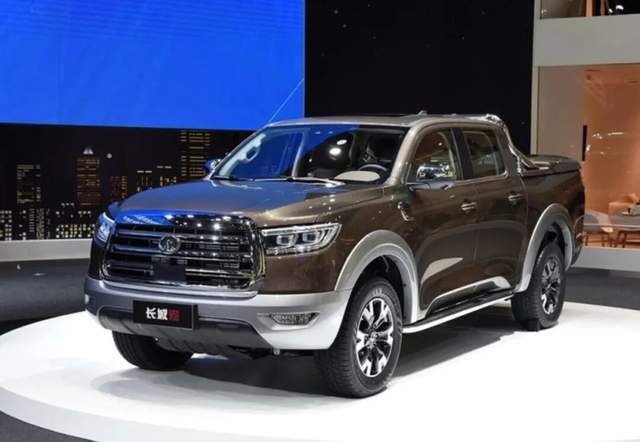
Additionally, according to Great Wall Motor's 2025 annual financial report, the gross profit margin for its automotive sales business during the reporting period was 17.29%, down 2.18% year-on-year from 2024. Considering that Great Wall Pickup prices have remained relatively stable and management has repeatedly stated that pickup profitability exceeds the corporate average, and referencing research reports from institutions like Everbright Securities and Ping An Securities, it is reasonable to estimate that Great Wall Pickup's gross profit margin has been between 17% and 20% in recent years.
A gross profit margin of 17% to 20% for automotive sales places it among the top tier in the current industry. Simply put, Great Wall Pickup's profitability is on par with brands like Li Auto, NIO, and Xiaomi, far surpassing ordinary affordable electric vehicles.
02 Taking a Different Path from Great Wall Pickup
With BYD Baosha gaining widespread recognition in overseas pickup markets and now returning to the domestic auto market, its objective is clear: to tap into a more profitable niche.
However, Baosha's ambition to make a mark in the domestic pickup market will not be easy, given Great Wall's absolute dominance in this segment. To break through, BYD appears to be betting on high-end pickups, a relatively weak area for Great Wall Pickup.
According to Great Wall Pickup's 2025 sales data, approximately 73% of its annual sales of over 180,000 units came from the Great Wall Cannon, priced between RMB 100,000 and RMB 200,000. The remaining approximately 27% consisted mainly of the RMB 100,000-level Fengjun and King Kong series, with the Shanhai Cannon, targeting the RMB 200,000 and above market, accounting for only a single-digit percentage.
Judging by Baosha's declared hardware specifications for its new model and its pricing in Australia, which is roughly on par with the Great Wall Shanhai Cannon, BYD clearly isn't aiming to compete in the utility pickup segment. To gain consumer acceptance for high-end pickups, BYD has positioned Baosha under the relatively upscale Fangchengbao brand in China. More importantly, it needs to tell a compelling lifestyle story unique to pickups.
This is where Xiaomi Pengcheng might benefit BYD.
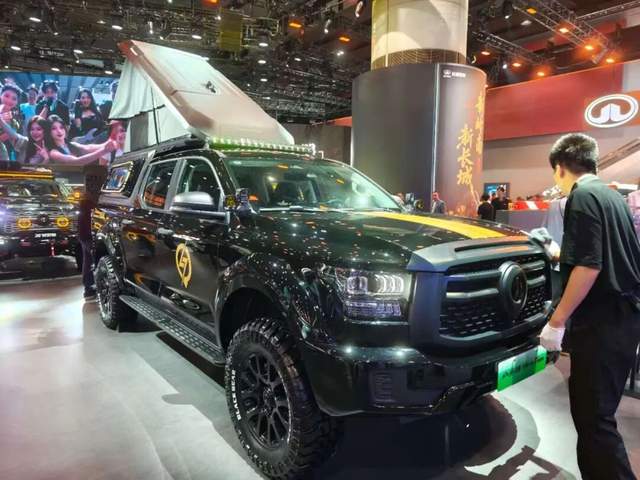
As Xiaomi Auto's new product line, Xiaomi Pengcheng is defined as a "sport nomadic space" for camping, travel, and multi-lifestyle scenarios. Its two new models, the N90 and N70, completed their MIIT new vehicle declarations alongside BYD Baosha.
"A solo camping studio, a mountain café for two, an outdoor living room for groups, a family camping bed." According to Lei Jun, the Xiaomi Pengcheng N90 and N70 will primarily promote the camping vehicle concept, with some versions even featuring roof-raising tents.
Coincidentally, Huawei's AITO Xingjie G9 was recently revealed to have a similar design. It's expected that camping vehicles will become a new focal point in the domestic auto market.

Although the Xiaomi Pengcheng N90, N70, and Xingjie G9 are all SUVs, if these new models successfully popularize the camping vehicle concept, it would be a significant boost for BYD Baosha. After all, as a pickup, Baosha inherently has greater potential for camping vehicle modifications, whether it's customizing the cargo bed or towing a trailer camper, with highly mature solutions available.
In addition to industry trends driving attention, BYD's launch of Baosha coincides with a series of favorable policies for pickups. According to a joint announcement by nine departments, including the Ministry of Commerce in June this year, regulations restricting pickups from entering cities will be accelerated for relaxation, with pickup and RV camping being key areas for liberalization, accompanied by improvements in road access, modification, and annual inspection rules.
Of course, these benefits aren't limited to BYD Baosha; they also bode well for the Great Wall Shanhai Cannon. However, there's no denying that Baosha, returning with overseas acclaim, is a highly promising variable for BYD in the second half of the year.
Some images sourced from the internet. Please notify us for removal if there is any infringement.
-
AI's Richest Person Revealed: A Native of Zhanjiang!
-
No one dares to bet big on Seres' financial report
-
Standing at a Distance, Behind Xiaomi's Phone Slowdown and Layoffs", "Xiaomi Phone, Declining Sales, Offline Stores, Product Strategy, Comprehensive Ecosystem of People, Vehicles, and Homes", "Accordi
-
![]()
ByteDance Enters Physical AI, Igniting the Second Wave of 'Feast'?
-
![]()
Phoenix Optics Forecasts a Nearly 70% Drop in First-Half Net Profit, Yet Optical Business Profit Shows Growth!
-
![]()
A Staggering 50.16% Reduction in Losses Projected! COST's Interim Report Signals a Pivotal Moment
-
![]()
Nearly 19% of National Total! Guangdong Boasts 164 Registered Large Models as New AI Personification Regulations Take Effect
-
![]()
BYD’s Baosha, Sought After by Australians, Makes a Triumphant Return to China