Nearly 19% of National Total! Guangdong Boasts 164 Registered Large Models as New AI Personification Regulations Take Effect
 07/15 2026
 425
425
On July 14, Guangzhou hosted the fourth press conference on Guangdong's Registered Large Models, centered around the theme "Harnessing Model Potential, Pioneering Guangdong's Future." During the event, representatives from 32 companies ascended the stage to receive their "Generative AI Service Registration Certificates."
Consequently, Guangdong has now amassed a total of 164 registered large models, representing nearly 19% of the national tally of 868. Guangzhou alone accounts for 94 models, constituting over half of the provincial total.
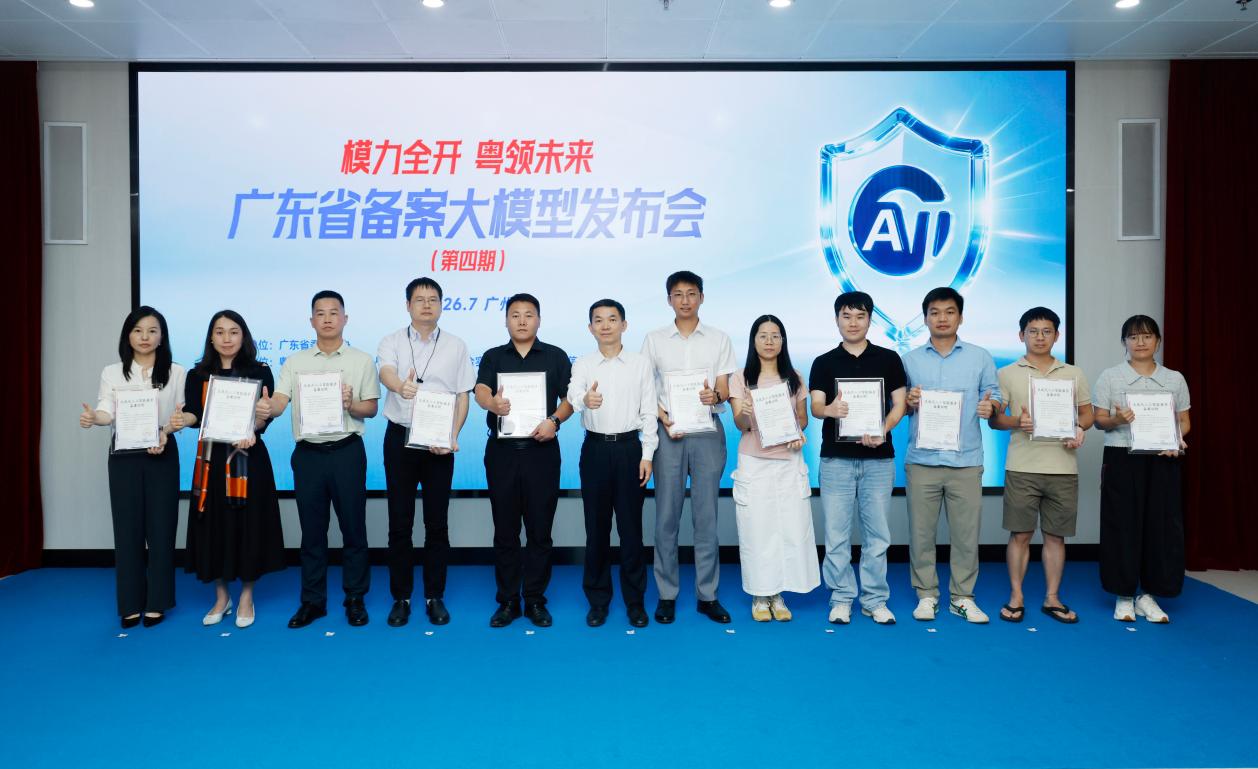
Image Source: Cyberspace Administration of Guangdong Provincial Party Committee
The Guangzhou Municipal Cyberspace Administration announced its collaboration with the Guangdong-Hong Kong-Macao Greater Bay Area Generative AI Safety Development Joint Laboratory to streamline the registration service process. A Guangzhou service station for the joint laboratory will be established at the Guangzhou Information Security Evaluation Center.
In essence, future registrations will become more convenient. Although the standards will remain stringent, the process will be smoother.
In his address, the Cyberspace Administration of the Provincial Party Committee emphasized its commitment to balancing development and security, enhancing registration services, refining the AI governance framework, and positioning Guangdong as a beacon of technological innovation, industrial cluster hub, and AI safety governance exemplar. The aim is to not only expand but also sustain its competitive edge.
The 32 newly registered large models span over ten specialized domains, including government affairs, education, culture and tourism, security, law, industry, healthcare, and media, each with unique strengths.
Specifically, Zhuhai Media's Zhiqing Jiuzhang Large Model is tailored for intelligent media content creation; three models—Kaitian Emotional Companion Large Model, Anxin AI Large Model, and Xin Dalu Large Model—concentrate on emotional support and mental health; four models—Kuixing Large Model, Wukong Zhihui Large Model, Zhuoyue Education Large Model, and Xiaoma Zhixue Education Large Model—are designed for educational and teaching applications; and another group of models excel in sectors such as manufacturing, healthcare, and law.
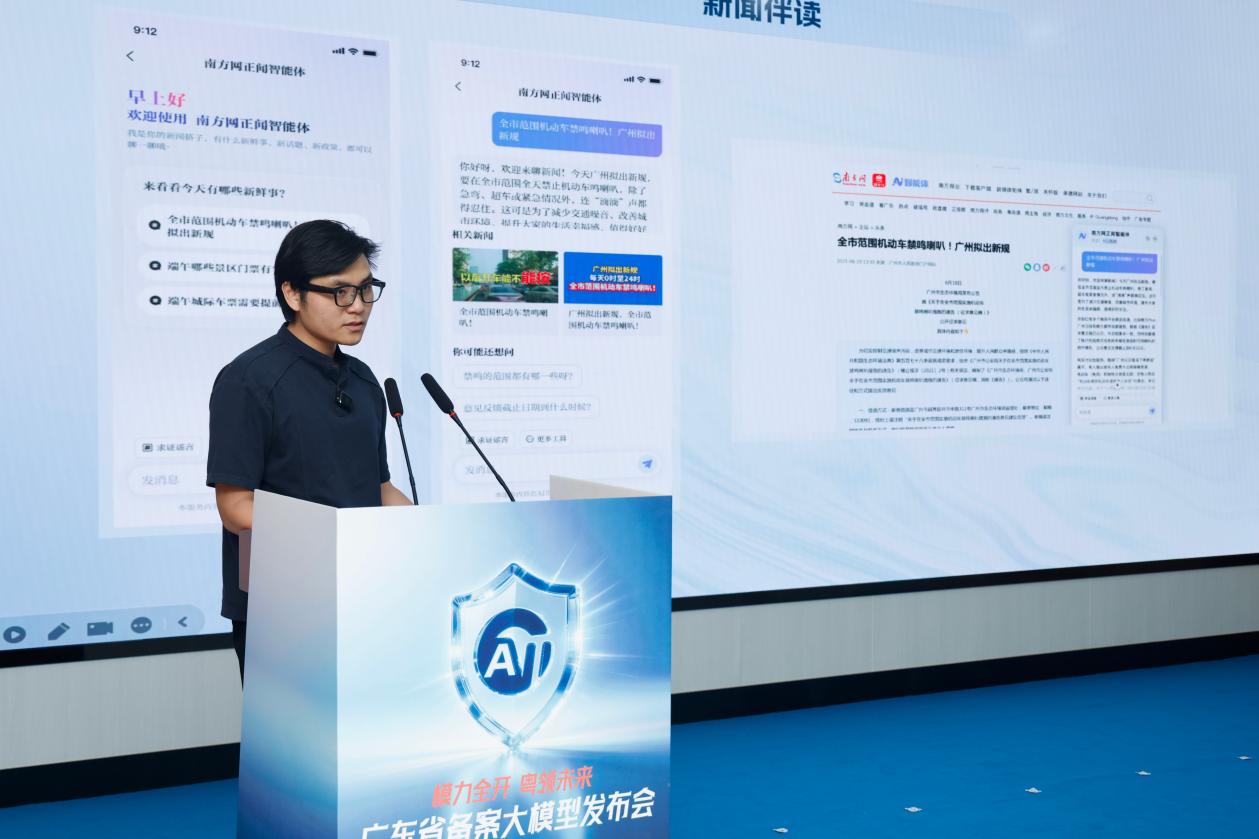
Image Source: Cyberspace Administration of Guangdong Provincial Party Committee
At the press conference, representatives from several companies highlighted their strengths:
Luo Xiaoran, Deputy Director of the Technology Research and Development Center at Southcn.com, explained that the Wanjuan Large Model focuses on news and government affairs, establishing an intelligent agent service matrix that spans multiple scenarios, including government services, women's and children's welfare, sports, culture, and tourism.
Liu Jie, Chairman of Guangzhou Sanchuantian Artificial Intelligence Technology Co., Ltd., noted that after more than two decades of in-depth experience in digital exhibition halls, the company has developed the Wanwu Large Model, enhancing creative design with AI capabilities.
Zhang Zhiyun, CEO of Guangzhou Nandafeite Medical and Health Technology Co., Ltd., claimed that the Three-Practitioner Co-Management AI Large Model supports the entire weight and metabolic health management chain, constructing an "AI + Digital" chronic disease management system.
Zeng Jing, Deputy General Manager of Heyuanda Information Technology Co., Ltd., stated that the Heyu Zhiqing Zhengyi Large Model specializes in government system intelligence, providing precise business support.
With both general-purpose and vertical industry large models advancing in tandem, Guangdong solidifies its position as a national leader in terms of registered inventory scale, industry segmentation breadth, and implementation scenario diversity.
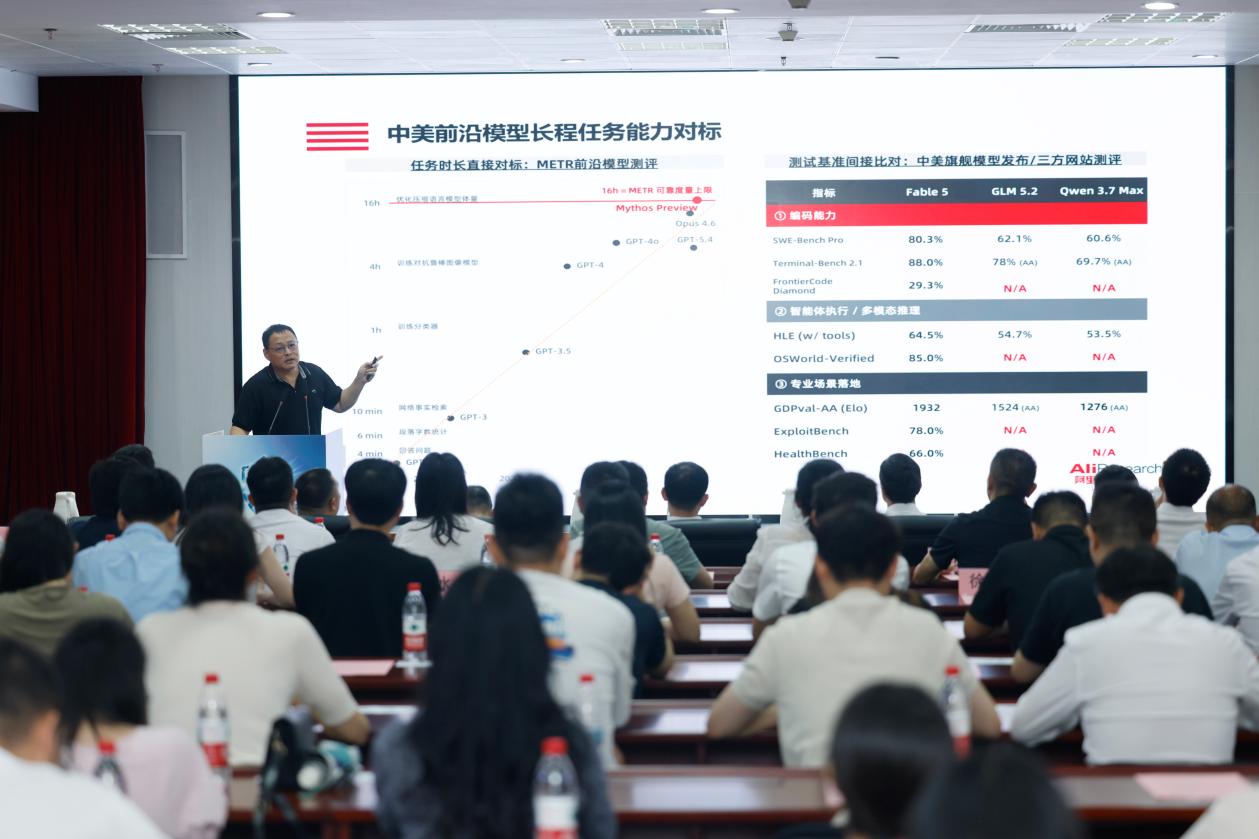
Image Source: Cyberspace Administration of Guangdong Provincial Party Committee
The day following the press conference, on July 15, the "Interim Measures for the Administration of Personified Interactive Services of Artificial Intelligence" officially came into force.
Personified interactive services involve AI interactions that closely mimic human behavior, such as emotional companionship, intelligent customer service, and virtual assistants. This sector has witnessed rapid and unregulated growth over the past year, with product launches outpacing the establishment of regulatory frameworks. The new regulations signify that this "gray area" is now subject to formal governance.
Business leaders from the Provincial Cyberspace Administration elucidated key policy points, analyzed current risks, clarified regulatory targets and compliance procedures, and formulated local implementation measures tailored to Guangdong's specific context.
Jiang Yuhao, Professor at the Institute of Public Policy at South China University of Technology and Director of the Guangdong New Quality Productivity Policy Research Center, examined the development landscape of large models in China and the United States from three perspectives: strategy, technology, and prospects. His recommendations centered on technology route selection, industrial organization capabilities, and innovation ecosystem resilience.
What particularly stood out was the official adoption of the term "rainforest-style AI innovation ecosystem" to describe the current scenario. With 164 registered large models spanning over ten industries, it indeed mirrors the biodiversity of a rainforest. Guangdong's AI ecosystem is flourishing with vitality.
-
AI's Richest Person Revealed: A Native of Zhanjiang!
-
No one dares to bet big on Seres' financial report
-
Standing at a Distance, Behind Xiaomi's Phone Slowdown and Layoffs", "Xiaomi Phone, Declining Sales, Offline Stores, Product Strategy, Comprehensive Ecosystem of People, Vehicles, and Homes", "Accordi
-
![]()
ByteDance Enters Physical AI, Igniting the Second Wave of 'Feast'?
-
![]()
Phoenix Optics Forecasts a Nearly 70% Drop in First-Half Net Profit, Yet Optical Business Profit Shows Growth!
-
![]()
A Staggering 50.16% Reduction in Losses Projected! COST's Interim Report Signals a Pivotal Moment
-
![]()
Nearly 19% of National Total! Guangdong Boasts 164 Registered Large Models as New AI Personification Regulations Take Effect
-
![]()
BYD’s Baosha, Sought After by Australians, Makes a Triumphant Return to China