Huawei and China’s Changan Automobile Forge New Alliance! Covering AI, Computing Power, and Large Models
 08/13 2026
 557
557
August 11, Shenzhen—China Changan Automobile Group Co., Ltd. and Huawei have signed a strategic cooperation framework agreement.
The two parties will collaborate in areas including AI products and applications, general and automotive-specific large models, digital infrastructure, computing power, hardware and software, digital energy, internationalization, and the cultivation of digital and intelligent talent. This agreement essentially encompasses nearly all facets of digital transformation for a central enterprise, spanning from corporate IT infrastructure to automotive intelligence.
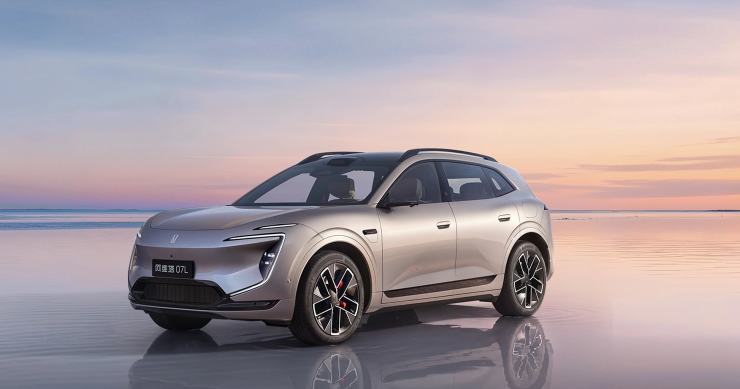
Cooperation between Changan and Huawei is not a novelty. The Avatar project leveraged Huawei's HI mode in 2019, and in August 2024, Avatar acquired a 10% stake in Huawei's independent automotive business unit, "Yinwang," for 11.5 billion yuan. Changan Automobile Chairman Zhu Huarong also became the vice chairman of Yinwang's board.
However, the framework agreement signed this time broadens the scope of cooperation from intelligent vehicles to the entire enterprise's digitalization system.
There is a notable timing detail. China Changan Automobile Group was officially established on July 29. This first-tier central enterprise, spun off from the China South Industries Group, boasts a registered capital of 20 billion yuan and 117 subsidiaries. It is the third automotive central enterprise after FAW and Dongfeng. From its inception to signing the framework agreement with Huawei, only 13 days elapsed.
A newly established central enterprise, in its first major external cooperation decision, has fully entrusted its digital infrastructure, computing power, and large models to a private enterprise. This marks a precedent within the central enterprise system.
Three Central Enterprises, Three Strategies
The intelligent vehicle strategies of the three major automotive central enterprises have diverged significantly.
FAW primarily focuses on in-house research and development, supplemented by strategic partnerships. The Hongqi brand has developed its own intelligent driving system, although it has also collaborated with Huawei in intelligent cockpits and vehicle-cloud areas. However, FAW maintains control over its core technology stack. The trade-off is a slower pace of innovation. In the first half of 2025, FAW's self-branded new energy vehicle sales reached 145,000 units, the lowest among the three central enterprises.
Dongfeng has opted for a middle ground. VOYAH and MHERO utilize Huawei's HI mode, while Dongfeng is also developing its own full-stack in-house research and development architecture, internally codenamed "Dongfeng Answer." Dongfeng even established a "DH Project" with Huawei, involving joint office work and full-chain collaboration from product definition to marketing. However, Dongfeng always maintains control, with cooperation and in-house research and development proceeding in parallel. In the first half of 2025, Dongfeng's new energy vehicle sales reached 402,000 units, ranking in the middle.
Changan has taken the most aggressive approach. All Avatar models come standard with Huawei ADS, Deepal integrates Huawei Qiankun ADS, and Qiyuan connects to Huawei HiCar. Zhu Huarong serves as vice chairman of Yinwang's board, and the joint Avatar-Huawei team, numbering nearly a thousand people, is stationed at Changan's headquarters in Chongqing. In the first half of 2025, Changan's new energy vehicle sales reached 451,700 units, ranking first among the three central enterprises.
Behind the sales gap lies the cost of route selection. Changan quickly adopted the best available intelligent solution at the time, achieving the best growth among the three central enterprises. However, on the flip side, Changan has almost no in-house research and development capabilities in intelligence. Changan is also promoting an in-house intelligent driving system called "Tianshu" as a backup to Huawei's solutions. However, with the signing of this framework agreement, the viability of this path is no longer crucial.
Examining the newly added content in the agreement, previously, Changan's cooperation with Huawei focused on the automotive business unit level, namely intelligent driving and intelligent cockpits. This agreement introduces three new keywords: digital infrastructure, computing power, and general large models.
Digital infrastructure refers to the entire IT infrastructure of an enterprise. Computing power is the hardware foundation for AI training and inference. General large models serve as the foundation for all AI applications. Entrusting all three to a single company means Changan is outsourcing its entire enterprise's digital capabilities.
Toyota's Arene OS has been delayed for three years and has not yet launched, while Volkswagen's software division, Cariad, has seen four CEO changes. However, these automakers are at least persisting in developing their own software. Among China's three major central enterprises, Changan is the first to choose a different path.
Beyond Vehicle Manufacturing
When China Changan Automobile Group was established, Zhu Huarong made a statement. He said the new central enterprise would focus on creating new productive forces such as intelligent vehicle robots, flying cars, and embodied intelligence, exploring a new ecosystem for three-dimensional travel across sea, land, and air.
None of these goals are traditional automotive businesses. Intelligent vehicle robots require large models as decision-making hubs, flying cars need high-precision simulation and massive computing power for verification, and embodied intelligence requires AI training platforms. The China South Industries Group does not produce these, and Changan Automobile cannot produce them either.
But Huawei can. In 2024, Huawei's intelligent vehicle solutions generated 26.353 billion yuan in revenue, a year-on-year increase of 474.4%, achieving profitability for the first time that year. Qiankun Intelligent Driving has collaborated with 14 automakers, covering 33 mass-produced models, with cumulative assisted driving mileage exceeding 5 billion kilometers. Huawei also offers the Pangu large model, Ascend computing power chips, and Huawei Cloud.
These three offerings precisely cover all of Changan's new central enterprise's technological needs.
The agreement also mentions "internationalization." The new central enterprise's target markets are clearly defined, covering five major regions: Southeast Asia, Middle East and Africa, Central and South America, Eurasia, and Europe. Huawei has a business presence in over 170 countries worldwide, with established communication networks, cloud service nodes, and sales channels.
For Changan to go global, leveraging Huawei's infrastructure is much faster than building it from scratch.
Huawei's R&D investment in 2024 reached 164.7 billion yuan. Changan Automobile's R&D investment is less than 10 billion yuan. The gap is 16-fold, akin to using a bicycle lane budget to build a high-speed rail. This disparity means that even if Changan tripled its R&D budget, it could not keep pace with Huawei's technological iteration speed.
In 2025, SAIC, GAC, Dongfeng... all automotive central and state-owned enterprises are moving closer to Huawei. However, the degree of integration varies. SAIC, GAC, and Dongfeng all retain in-house research and development teams, while Changan is the only central enterprise fully integrated from the automotive business unit to digital infrastructure, computing power, and general large models.
The Bet
By entrusting its digital capabilities entirely to Huawei, Changan is betting on two things.
First, Huawei's ICT capabilities are far superior to Changan's in-house capabilities, and the gap will only widen. In Yinwang's equity structure, Huawei holds 80%, while Avatar and Seres each hold 10%. By making the automotive business unit independent, Huawei aims to create an open intelligent vehicle platform. As a central enterprise investing in Yinwang, Changan's status itself serves as a vote of confidence. Huawei will prioritize Changan's technological needs no less than any other automaker.
Second, Huawei also needs Changan. Currently, Yinwang has only two automaker shareholders: Seres and Avatar. Huawei wants to attract more automakers to invest, but half a year has passed without FAW, SAIC, or GAC following suit. Changan is the most significant central enterprise endorsement Huawei can secure.
The risks are equally clear. By entrusting its digital infrastructure, computing power, and large model capabilities to Huawei, Changan is tying its technological roadmap to Huawei for the next decade. If Huawei adjusts its automotive strategy or if Yinwang's equity structure changes, Changan will have no alternative options.
Avatar sold 59,084 units in the first half of 2025, a year-on-year increase of 103.5%. The numbers look good, but Avatar must compete in the market with Aito and Luxeed, which also use Huawei's solutions. With the same intelligent driving and cockpit systems, differentiation becomes increasingly difficult.
No previous Chinese automotive central enterprise has outsourced its core capabilities entirely to a single supplier.
Changan has chosen the most aggressive path.
-
![]()
Cambrian Technologies Records 2.3 Billion Yuan Net Profit in Six Months, Earning the Title of 'Profit-Generating Powerhouse'
-
![]()
Tencent Makes a Bold Move on AI, But Will the Capital Market Buy In?
-
![]()
How Deepseek V4 Pro Outperformed Claude: The Scaling Up of China’s Super-Nodes
-
![]()
The Real Story Behind Zhong Shanshan’s ‘Criticism’ of E-commerce
-
![]()
Summer Blockbuster Season Sees 3% Market Share for Panoramic Cameras: Far from the Mainstream Imaging Trend
-
![]()
Summer Blockbuster Season Captures 3% Market Share: Panoramic Cameras Remain Outside Mainstream Imaging Trends
-
![]()
Why Are Giants Like Alibaba Remaining Silent Amid Zhong Shanshan's Criticism?
-
![]()
Which Automakers Have Achieved Over One Million Export Units for Two Straight Months?