Why Are Giants Like Alibaba Remaining Silent Amid Zhong Shanshan's Criticism?
 08/13 2026
 522
522
On August 8, 2026, Zhong Shanshan, the founder of Nongfu Spring, made an appearance on CCTV Finance's "Dialogue" program. Speaking from a jasmine field in Hengzhou, Guangxi, to an audience exceeding 100 million, he made a bold statement: "I believe the influence of (e-commerce) platforms must be curbed."

This Chinese billionaire, the wealthiest man in the country, is no stranger to voicing his criticisms of e-commerce platforms.
From his dismissal of live-stream entrepreneurs in Ganzhou, Jiangxi, in 2024, to his WeChat posts in 2025 branding the "four major e-commerce platforms" as "meat grinders of China's economy" and "exploiters of small merchants," and his April 2025 essay asserting that "farmers and traditional industries across the nation are working for internet platforms"—Zhong has publicly criticized e-commerce platforms at least five times in two years, with his rhetoric becoming increasingly harsh.
This time, his attack was particularly fierce.
He labeled e-commerce platforms as "undeniable special intermediaries," accusing them of "using algorithms to adjust commissions per order and manipulate traffic distribution," leaving merchants "unable to calculate their earnings after completing a deal." He warned that e-commerce has "decimated many urban retailers," stifling impulsive, emotional consumption from street shopping and "imprisoning minds, erasing sensibility and creativity."
His remarks immediately sparked a public debate.
Supporters claimed that "e-commerce platforms ruined the real economy," while opponents argued that "without e-commerce, physical store prices would soar." Financial writer Wu Xiaobo joined the discussion, agreeing with Zhong's criticism of platforms' "black box" rules but noting that Zhong "identified the disease but prescribed the wrong cure."
Yet amid this uproar, a striking detail emerged: the criticized e-commerce platforms remained silent.
Alibaba did not issue a response. JD.com remained quiet. Pinduoduo had no comment. Meituan also did not respond. The entire e-commerce sector seemed collectively mute.
This raises a question: Where has the once-combative internet industry, known for its public relations wars, gone?
I. A Silent Half-Year: The Quiet End of an Era
China's internet landscape in 2026 exudes an unusual sense of "quietude."
This silence permeates every corner.
The 2026 618 shopping festival was dubbed by media as the "lowest-key, most mundane" in 16 years. There were no real-time sales updates, no countdown tension, and even JD.com, the traditional "host" of the 618 event, canceled its annual June 18 press conference.
More poignantly, "internet giants'" PR professionals, once perpetually busy, began vacationing worldwide that summer.
This is not just industry quietude—it marks the end of an era.
For example, even Wu Sheng's annual speech, traditionally held in early August, was moved to Hong Kong this year.

II. From 'Infinite Game' to 'Finite Game': Why Big Tech Stopped Fighting?
Why have internet giants ceased their "wars"?
The answer may lie in the industry's fundamental shift.
1. From Growth to Maturity: The Pie Stops Growing
For over two decades, the internet sector was China's most dynamic industry, dominating trends and news.
Its vibrancy came from constant expansion—new users, new markets, new sectors.
But by 2026, this logic changed.
QuestMobile data shows that in February 2026, China's mobile internet monthly active users grew by just 19.04 million, a mere 1.5% year-on-year increase. The mobile internet was "shifting from demographic dividends to high-quality inventory operations."
According to tech/internet analyst Zhang Dongwei, JD.com's local services battle, likely the internet's last major war, exemplifies this shift.
When an industry transitions from an "infinite game" to a "finite game," competition rules transform. In infinite games, players vie for future possibilities; in finite games, they fight over existing shares.
Share battles are more exhausting, brutal, and silent than expansion.

2. From Burning Cash to Counting Pennies: Capital Loses Patience
Big tech's past PR, price, and subsidy wars relied on capital markets prioritizing growth over profitability.
But that tolerance is fading.
The Hang Seng Tech Index has fallen approximately 25% from its October 2025 peak, with internet stocks down over 30%. When capital no longer pays for stories, companies must focus on survival and profitability.
3. From PR Wars to AI Wars: The Battleground Shifts
China's top tech firms remain Alibaba, ByteDance, Tencent, and Baidu, but "spending logic has changed."
New-era tech companies like DeepSeek, Moonshot AI, and Zhipu AI avoid traditional internet PR tactics.
"What are the new strategies? The new communication logic?"
—This question now plagues China's entire tech sector.
With AI, large models, and embodied intelligence dominating attention, traditional internet "noise" seems redundant, even obsolete.
It's not that big tech wants to stop fighting—it's that fighting no longer matters in this era.

III. The Cost of Silence: Who Pays?
Big tech's "quietude" appears strategic, but beneath the surface, currents churn. The costs of collective silence rapidly spread through related sectors.
The media industry faces a "funding drought."
During China's internet boom, "media relying on internet companies thrived for 16 years." Press conferences, commissioned articles, ad placements, and PR events formed a mature 16-year interest chain.
By mid-2026, everything stopped abruptly.
One analysis bluntly predicts: Media relying on traditional internet commissions and connections "may see income halve by 2027 and collapse by 2028."
PR Newswire's 2026 Global Media Survey reveals that 49% of journalists cite "resource constraints (budget cuts, layoffs, workload surges)" as their second-biggest challenge, up from 29% in 2025. Traditional media ad revenue also plummeted—TV, radio, newspapers, and magazines saw ad revenue drop 16.3%, 19.4%, 8.4%, and 20.9% respectively in 2025.
AI's impact stings even more.
PR professionals increasingly complain about media using AI for writing.
Veteran journalists lament that media and PR work was once "artisanal, requiring time, talent, and care," but AI now enables "industrial-scale production," crushing artisans' livelihoods.

Professionals' Existential Crisis
"We all benefited from the internet's rise," writes an industry observer. "Only through the internet could we escape small towns, gain knowledge, wealth, and status." Yet by 2026, many find themselves at a crossroads.
Job market data is harsher.
Big tech PR roles now face an invisible "seniority-age" ruler: P7 candidates over 37 see resumes ignored; P8 candidates over 43 lose final interviews to "cost-effectiveness"; P9 candidates over 46 receive fewer headhunter calls. Social media fills with posts like "A big tech P8, 43, unemployed for six months."
PR is not alone.
In 2026, multiple internet giants launched new layoff waves. "High performers" and "senior P-levels" no longer enjoy protection. Tencent abolished titles, JD.com cut hierarchies, ByteDance eliminated inefficiencies—all targeting mid-level employees.
Deeper anxiety stems from fundamental professional role redefinition.
As public information sources shift from traditional search engines to generative AI, PR professionals evolve from "media gatekeepers" to "algorithm strategists." Work now focuses not just on "human-oriented" communication but on balancing human and machine interactions.
This shift triggers "skill anxiety and identity reflection."
"We suddenly realize the booming big tech PR era may end, but we refuse to face it."
Refusal stems from uncertainty about how to adapt.
Declining Innovation
The gravest concern isn't lost income or jobs—it's the silent erosion of innovation.
Internet "noise" once symbolized vitality—new firms, experimental models, viral topics. Today, the sector "resembles a traditional industry, a mature market with little room for growth."
Data confirms this "maturity anxiety."
By December 2025, China's search engine users plummeted to 782 million, with penetration falling from 79.2% to 69.5% in a year—nearly 100 million users lost. Baidu App's monthly active users dropped nearly 70 million from mid-2025 to Q1 2026. One comment cuts to the chase: "Every AI answer kills a website."
More alarmingly, even in AI, spending logic has transformed.
China's top AI firms like DeepSeek, Moonshot AI, and Zhipu AI "avoid traditional internet PR tactics."
When an industry's key players go silent, when its noisiest groups fall quiet, we lose more than press conferences and PR articles—we lose the "anything is possible" energy and future certainty that once defined the sector.
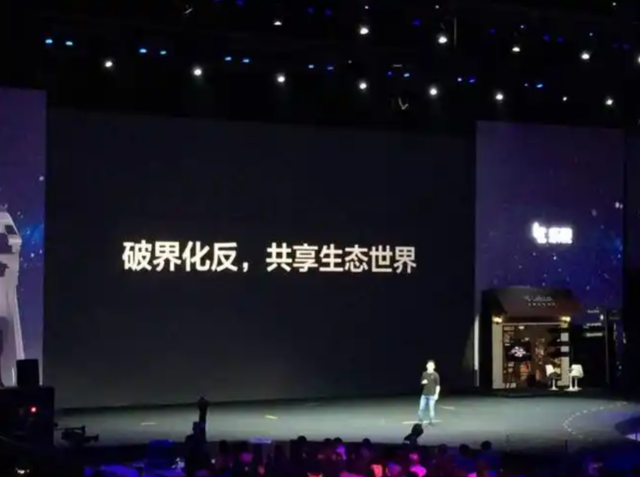
Observation: Farewell or Evolution?
When Zhong Shanshan criticized e-commerce platforms on CCTV, the accused remained silent.
This silence reflects not just "no response" but "no idea how to respond"—or perhaps, "response no longer matters."
China's internet in 2026 stands at a delicate crossroads. It has evolved from "emerging economy to civic infrastructure," from trendy frontier to utility like electricity and water. It no longer needs fights to prove relevance, nor can it afford cash-burning spectacles.
Every evolution—from internet to mobile internet to AI—brings growing pains.
Like China's once-bustling village entrances, now quiet as young people leave and elders pass away.
Internet quietude may signal maturity—or an era's end. The answer may only emerge in the next decade.
One certainty remains: The once-noisy, vibrant internet world is gone forever.
The village entrance falls silent.
The question is: Where can the young people destined to leave go next?
-
![]()
Domestic Wi-Fi Chips Usher in Prime Era
-
![]()
HONOR Unveils Robot Phone, Yet AI-Driven Smartphones Still Await Market Breakthrough
-
![]()
Jiemei Technology Splurges 915 Million Yuan, Making a Bold Move into Optical Ultra-Precision Equipment
-
![]()
Intensifying Investment in Advanced Coating Equipment: Landun Optoelectronics Aims to Secure Majority Stake in Lanchuang Technology
-
![]()
Honor’s Ambition Demands More Than a Gimbal-Equipped Phone
-
![]()
IIHS Latest Fatality Report: Small Cars and Muscle Cars Are the 'Deadliest,' While Large Pickups Pose the Greatest Threat to Others
-
![]()
Can Leapmotor Sustain Its Leadership with a Low-Price Strategy?
-
![]()
Growing a Moving 'Head': Can Honor’s Robot Phone Revolutionize AI Smartphones?