Parameters VS Hard Currency: The Reconstruction of Token Standard System and AI Value Chain
 04/16 2026
 650
650

*Image produced by Doubao
"We are stepping into a new era of AI defined by a 'Token standard'."
Editor | Xiaoyang & Jack
Produced by | Jixin
As 2026 begins, the buzzwords in the tech circle are quietly shifting. "Lobster farming" has replaced "metaverse" as the new topic of conversation in teahouses and dinner parties. The lobster craze signifies a tipping point: AI agents are evolving from mere "chat" toys into "working" digital employees.
Boiling alongside is Token, the lifeblood of the AI world. No longer just a cold billing parameter in the technical backend, its price is climbing at a staggering rate. NVIDIA CEO Jensen Huang's assertion at GTC 2026 has quickly become reality: "base salary + Token quota" is now a standard compensation package for engineers. Internal emails from Alibaba, Tencent, and other tech giants reveal that Token quotas have become a coveted hard-currency benefit for attracting top talent.
This is no science fiction parable. Token monetization marks a critical milestone in AI's transformation from a "money-burning tech toy" into a "priced, tradable factor of production." The exponential growth in Token consumption not only drives up computing power prices but also fundamentally rewrites the rules of the game across every link, from R&D to corporate compensation. An AI economy characterized by a "Token standard" is rapidly emerging amidst the roar of computing power.
From "Chat" to "Work": The Inflection Point of Token Consumption
The sudden scarcity and "value" of Tokens stem from a fundamental shift in AI application paradigms.
Chat Era (Chat): Low-cost, shallow interaction. Previous large model applications centered on dialogue and Q&A. A single interaction consumed hundreds to thousands of Tokens, with costs so low that users were oblivious. AI served as a knowledgeable, tireless chat partner or copywriting assistant, its value lying in "information generation and reorganization."
Agent Era (Work): High-consumption, deep-chain operations. AI agents like OpenClaw have initiated a "task execution" model. Their goal is not to answer "how to write a financial report" but to directly operate software, automating the entire process of "data collection, chart generation, analysis writing, formatting, and email dispatch." This requires agents to perform multi-step complex reasoning, invoke various API tools, and backtrack and adjust through trial and error. Token consumption per task easily surges into the hundreds of thousands, with complex tasks reaching millions or even billions.
Huang referred to future data centers as "AI factories," whose product is Tokens. He noted that global AI computing expenditure as a share of GDP is set for a hundredfold increase. The proliferation of agents is driving a historic shift in computing power demand from training (one-time, centralized capital expenditure) to inference (ongoing, distributed operational costs). Inference computing power has become a strategic resource scarcer than gold.
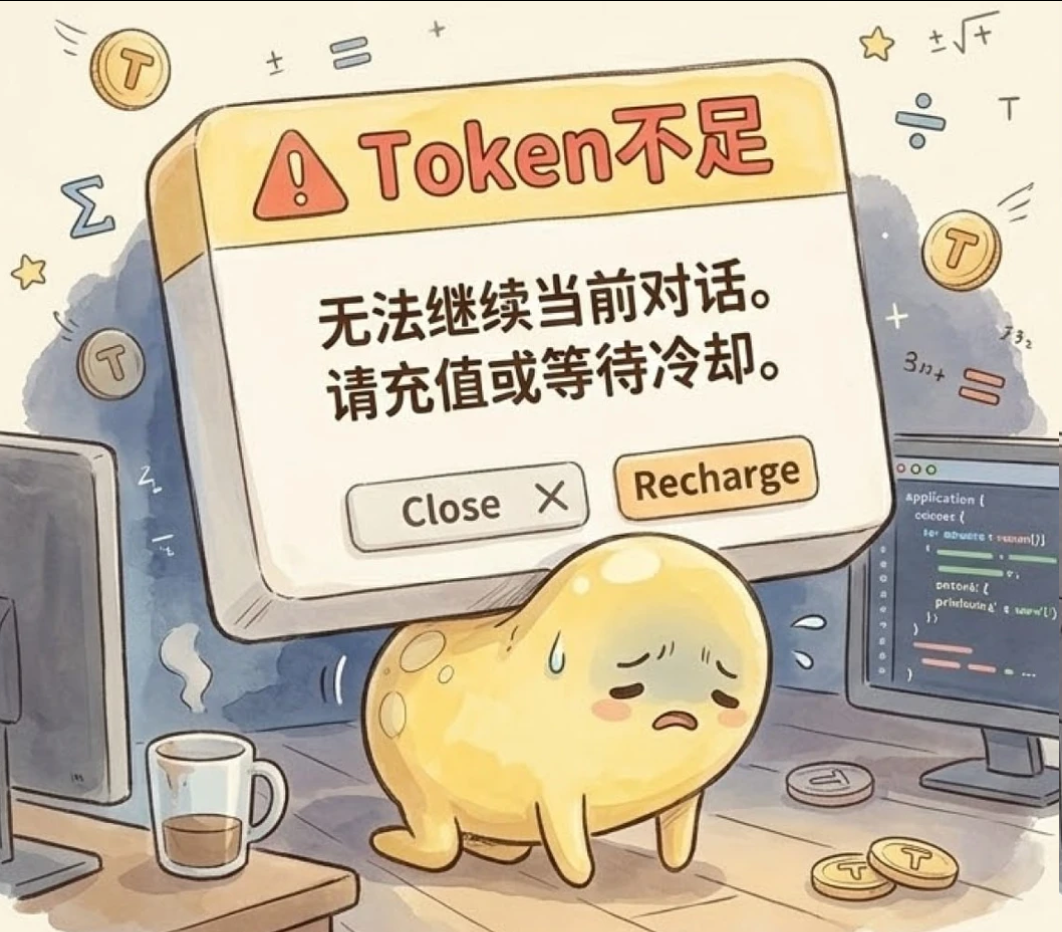
The "Three-Tier Game" of Computing Power Price Hikes and Industrial Value Chain Reconstruction
The surge in Token prices is a monetized expression of computing power supply-demand imbalance. This price hike is not uniform but triggers chain reactions and value restructuring across three tiers: infrastructure, orchestration, and application ecosystems.
Infrastructure Tier: The Arms Race for "Engines" and "Blood Vessels"
This is the most direct beneficiary tier—and the bottleneck.
Computing Power Chips: NVIDIA's Blackwell and next-gen architectures are the core engines of the "Token printing press." Driven by the imperative for self-sufficiency, domestic chipmakers like Hygon Information and Cambricon face not just orders but a historic opportunity to define domestic Token cost benchmarks.
Interconnect and Optical Communications: Within data centers, the flow of massive Tokens demands wider "highways." 800G optical modules are now standard, with 1.6T and CPO (co-packaged optics) technologies shifting from futuristic to essential. Leading players like ZTE and InnoLight are deepening their moats.
Cooling and Power: High-density computing power brings daunting energy and heat dissipation challenges. Liquid cooling solutions (e.g., Goaland) have shifted from "optional" to "survival-critical." Data centers are increasingly relocating to energy-rich regions, with smart grid management becoming a core competitive edge.
Orchestration and Operations Tier: The Rise of "New Oil Giants" and "Computing Power Brokers"
Stacking hardware cannot address elastic, heterogeneous, and global computing power demands. Orchestration capability itself has become a high-premium commodity.
Cloud Providers: Global public cloud giants like Alibaba Cloud, Tencent Cloud, and AWS, with their vast computing pools and networks, are the largest Token spot suppliers. They are setting Token "wholesale prices."
Computing Power Operators: For enterprises prioritizing data privacy or specific chip architectures, hybrid/private computing power operation services (e.g., Volcano Engine, Huawei Cloud) gain prominence. They "refine" and manage computing power. More notably, emerging "computing power brokers" aggregate dispersed resources (including idle enterprise GPUs) via technical means, virtualize and standardize them, and lease them to SMEs through flexible Token packages, profiting from the spread. This could be the next platform-level opportunity.
The Ultimate Test of "Value Proof"
The visibility of Token costs imposes a ruthless filter on the application layer: applications must generate commercial value sufficient to cover Token consumption.
The Golden Age of Vertical-Domain Agents: In fields like finance, law, R&D, and high-end customer service, agents capable of replacing human experts earning thousands of yuan per hour will shrug off Token costs. A Legal Agent automating contract review and risk flagging consumes far fewer Tokens per task than a lawyer's hours of work. Here, the payment logic shifts from "paying for functionality" to "paying for saved high labor costs."
The Commercialization Paradox and Path for Open-Source Agents: OpenClaw is open-source, but its ecosystem's prosperity hinges on sustainable commercial incentives. Enterprise support, security audits, industry plugin markets, and high-availability hosting services around it will become more profitable than the agent itself. Open-source frameworks aggregate traffic and innovation, while commercial services harvest high-value clients.
Is Token a Currency or a "Means of Production Ration Coupon"?
Tokens exhibit characteristics of value measurement, circulation, and scarcity, resembling currency. Enterprises can use Tokens to precisely measure the "power consumption" of intelligent labor for internal settlement and incentives. However, declaring "Token as world currency" is premature; its essence has clear boundaries.
Non-Sovereignty and Circulation Limits: Tokens are "digital commodities" issued by private enterprises, lacking state credit backing and legal tender status. They cannot buy bread or pay rent; their circulation is strictly confined to specific AI productivity ecosystems. They resemble "means of production ration coupons" or "internal settlement units."
Legal and Ethical Risks in Salary Structures: If enterprises excessively replace cash wages with Tokens, they face severe challenges. Historical lessons from "company scrip" show this could decouple salary purchasing power from the external economy, triggering labor disputes. A healthy model might be "cash for basic living, Tokens for sharing growth dividends," with Tokens serving as bonuses or long-term incentives.
Technological Inflation and Value Volatility: Tokens' "store of value" function is fragile. On one hand, algorithmic optimizations (e.g., more efficient attention mechanisms, model distillation) could drastically reduce per-task Token consumption, boosting real purchasing power (deflation). On the other, explosive growth in computing power supply could depress prices. Token prices will forever oscillate violently between technological efficiency gains and computing power demand growth.
The Ultimate Yardstick and Future Map of AI Commercialization
The hallmark of mature AI commercialization is not Token becoming currency but a simpler formula: Token consumption cost < replaced human labor cost. When this inequality holds across enterprise processes, AI's large-scale substitution becomes truly irreversible.
Currently, this inflection point is arriving first in programming, customer service, junior content creation, and data labeling. Next will be mid-level design, routine legal documents, and standardized financial analysis—white-collar roles.
More profoundly, this will reshape enterprise organizational forms: when Tokenized "digital employees" can be invoked on-demand and paid by volume, corporate core competencies will shift from "managing large human teams" to "precisely defining tasks" and "efficiently orchestrating computing power (Tokens)." Corporate boundaries may blur, with a "small core human team + massive elastic agents" model becoming feasible.
Token monetization is a seismic "pricing revolution" in AI productivity liberation. It transforms abstract intelligence into divisible, tradable commodities, establishing a clear economic cycle for the entire AI industry. This revolution is reshaping every link of the value chain, from hardware and software to compensation. It will not create a utopia but will ruthlessly reward players who maximize Token output efficiency (chips, algorithms) and Token utilization value (killer apps).
We are not entering a world where Tokens equate to currency but an era where all commercial decisions must think in "Token standard" terms. Enterprises' balance sheets may soon feature a new key asset: Token reserves. And that is the strongest signal yet that AI has transitioned from a technological wave into an economic foundation.
-
![]()
AI Giants Start Borrowing to Fuel Computing Power Race
-
ByteDance Initiates Largest B2B Structural Adjustment, This Time It's Truly Different
-
![]()
Let's Talk About Kingsoft Office's Mid-Year Outlook and the True Strength of Its AI-Powered Office Solutions
-
Despite 150 Million Users, Struggles Persist: AIShige Faces Tough Competition from Seedance and Kling in AI Video Monetization
-
![]()
Ensuring Safe Gear Shifting in the Automotive Industry: Transitioning from 'Product Oversight' to 'Full-Chain Governance'
-
![]()
Net Profit Soars to $133.7 Billion! Azure Revenue Tops $100 Billion, with AI Fueling Microsoft's Growth
-
![]()
Before 6G Hits the Market, the U.S. Forges a 'Rules Alliance': What Challenges Await Chinese IoT Enterprises?
-
![]()
Intelligent Driving's 'Little Blue Light' Faces Ban: Night Glare and Cut-in Risks Prompt Official Action