The Final Battle of Large Models
 08/03 2026
 431
431
Liang Sheng finally released the official version of DeepSeek v4 on the last day of July, reversing its reputation. Xingkongjun declared that July 31st is in the latter half of July, and nothing can change that, not even the king of heaven.
Considering the recent recovery of the NASDAQ, it feels like Liang Sheng is just waiting to strike. The semiconductor sector will likely be in disarray on Monday.
A few days ago, rumors of a technological breakthrough in China caused ASML to drop about 7% on July 27th and 4.37% on the 28th; the Philadelphia Semiconductor Index fell about 2%-2.23% on the 28th. This would have been unimaginable in the past: a technological breakthrough in China causing tremors in the world's largest capital market!
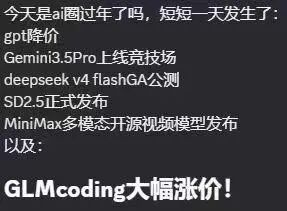
In the past two days, open-source and closed-source models have been engaged in a relentless "price war."
Many people think this is a technical issue, about efficiency improvements and capital competition. But Xingkongjun believes these are just superficial; ultimately, competition at the model layer will boil down to one question: who has cheaper electricity and cheaper computing power.
At this stage, cards are important, but in the future, once China achieves a breakthrough in lithography technology, the essence of cards will also be electricity.
I. The Irreversible Trend of "Converging Model Capabilities"
Whether open-source or closed-source, the ultimate capabilities of large models will inevitably converge.
This doesn't mean OpenAI and some open-source model are equally strong now, but rather that when a new architecture, training method, or data filtering technique is invented, it cannot remain closed-source indefinitely. The open-source community will quickly replicate, fine-tune, retrain, and release it for free.
Models are not designer bags; they are infrastructure. The level of infrastructure capabilities will soon cease to be a barrier and instead become a "kill zone."
II. The Last Laugh Belongs to Cloud Providers Who "Collect Electricity Fees"
Converging model capabilities mean customers will no longer pay for a model itself but for comprehensive services that connect to the model, such as cloud computing, storage, data, security, office collaboration, customer service systems, and app marketplaces—everything you can't build yourself.
So Xingkongjun says the last laugh will be had not by model companies but by cloud computing giants. Google, Alibaba, Microsoft, Amazon—these companies have one thing in common: they don't sell models; they place models in data centers and charge you a monthly cloud service fee.
Ultimately, large models will cost customers next to nothing because they'll be wrapped into that monthly cloud service bill.
III. ByteDance, Alibaba, and Tencent: Models Given Away with Office Fees
Two interesting pieces of news emerged recently: one is ByteDance merging Doubao with Feishu, and the other is Alibaba renaming DingTalk as "Qianwen Office." On the surface, these are product integrations, but in reality, they're doing the same thing: turning large models into "freebies" with office packages.
In the future, when you buy an annual Feishu membership, Doubao's capabilities will already be included; when you buy DingTalk enterprise services, Qianwen's functions will already be there. It's not that Doubao and Qianwen are worthless, but that they can't be sold separately. If they were, customers would ask, "Why not use an open-source model for the same capability?"
IV. AI Agents Are the Real "Comfort Zone"
After large model capabilities converge, ordinary users won't compare which model is stronger. Except for a few obsessive coders, most people won't actively open a chatbox to ask questions; they'll use functions that help them write emails, assistants that automatically schedule meetings, and systems that answer customer service inquiries. Users don't care what model powers these capabilities.
This is the value of AI agents. Models are engines; agents are cars. Users don't buy engines; they buy cars. Google, Alibaba, Tencent, and ByteDance are competing to see whose car drives better and can enter more office scenarios.
While Tencent is a step behind in large model fundamentals, when it comes to agent applications, this is its comfort zone. WeChat Work, the countless workflows within it, collaboration tools, customer service systems, and mini-program ecosystems are all natural growth areas for agents. Tencent hasn't missed the boat; it's waiting to pick the fruit.
Here's a spooky story: Tencent's WorkBuddy already has higher monthly active users than Codex.
Remember Xingkongjun's mantra? When you don't know what to buy, buy 00700.
V. America's Dilemma: Lack of a Unified Agent Application
The US isn't short on models; what it lacks is an agent application that can penetrate various office and living scenarios.
The US market has too many startups exploring agent directions, but they lack the traffic entry points and business integration capabilities of "super apps" like those in China. Without a national-level collaboration entry point like WeChat, Feishu, or DingTalk, agents can only serve as plugins and struggle to grow into platforms.
VI. Altman Finally Figures It Out: Closed-Source Can't Sell, Might as Well Reduce Prices for Better Books
Altman previously had an "optimistic illusion" about closed-source model pricing, thinking enterprises and individuals would pay for superintelligence. But the market has proven this business model doesn't work. While closed-source models may lead in capabilities, that lead isn't enough to form a barrier. When open-source models can achieve 90% for free, why should customers pay several times more for the remaining 10%?
So Altman's current strategy is clear: reduce prices, attract more customers, explore more application scenarios, and then—whether acquired by Google, Microsoft, or another giant—sell at a good price.
Models can't sell, but customers and scenarios can.
Xingkongjun believes the future of large models lies not in the models themselves but in whether they can integrate into products people are already used to.
In the future, no one will pay separately for large models because models will be wrapped into larger services, like apps, just as electricity and data are.
You might spend thousands or even tens of thousands tipping livestream hosts on an app, while the value of electricity and data is negligible.
The same goes for large models: don't sell the model; sell the package that includes the model.
Of course, domestic models have even more room for price reductions because China's computing power and labor costs are cheaper. The more intense the price reductions, the faster the market will be educated, but it will also reveal who has the advantage in "selling electricity fees."
Let the price reductions come more intensely!
-
![]()
Did the US Really Film Its Moon Landing in a Studio? 57 Years On, Doubts Persist, but the Irrefutable Evidence Lies Beyond the Photos
-
![]()
The Final Battle of Large Models
-
![]()
Battle of Defense and Offense Between Xiaomi and Li Auto in the Cooling Extended-Range Market
-
Top 10 AI Application Enterprises: Fast Growth & High Profitability
-
![]()
Thousands Rally as Audi’s Flagship Plant Faces Threat of Closure Amid Volkswagen Criticism
-
![]()
State-Owned Capital Makes Exclusive Foray into Bluetooth Satellite Sector, Propelling ‘Lanling Xingtong’ to Secure Key Financing for Large-Scale Network Deployment!
-
![]()
A Deluge of New Cars Leaves Consumers Overwhelmed
-
![]()
Analysis of Service Reputation Index in the First Half of 2026