Analysis of Service Reputation Index in the First Half of 2026
 08/03 2026
 483
483
Not long ago, after the release of Qichemen.com's "2026 First Half Automobile Reputation Index Analysis Report," we further analyzed the body electrical reputation index, which had the most problem feedback. In this article, we continue to analyze the service reputation index, which also has a high rate of problem feedback.
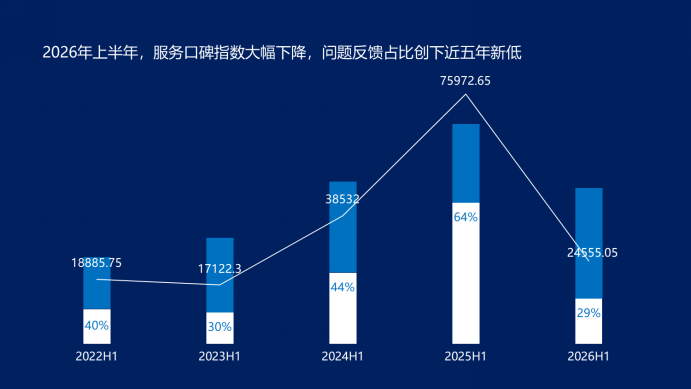
In the first half of 2026, the service reputation index of Qichemen.com declined significantly, reaching a new low in the past three years, while the proportion of problem feedback hit a new low in the past five years. Data feedback indicates that there were no large-scale service problem feedback events similar to BYD's incident early last year in the first half of this year. On the other hand, service problem feedback from leading automakers such as BYD decreased overall in the first half of this year, and the concentration of problem feedback also decreased. Meanwhile, the significant increase in the body electrical reputation index in the first half of this year further reduced the proportion of the service reputation index.
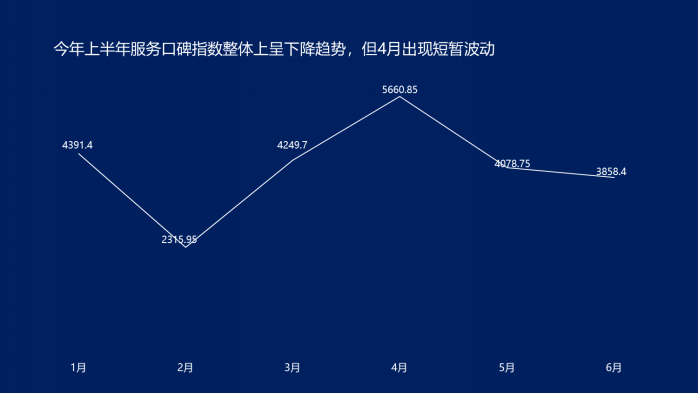
From a monthly trend perspective, the service reputation index of Qichemen.com ran smoothly in the first half of this year, with few large-scale concentrated problem feedback events. Excluding February, which consistently had the lowest values, the service reputation index showed an overall downward trend in the first half of this year. However, in April of this year, the service reputation index experienced a noticeable increase, as service problem feedback surged due to the replacement of new force (new energy vehicle) models.
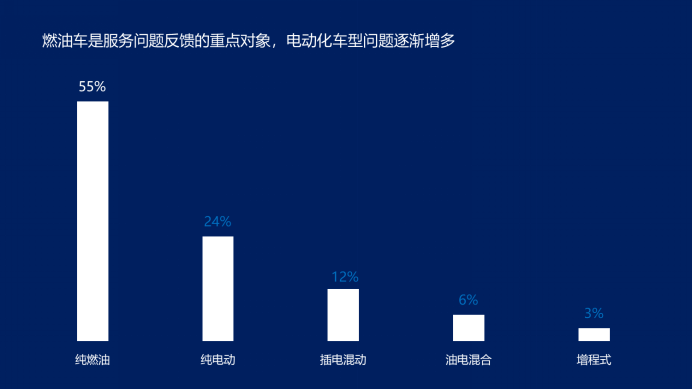
From the perspective of the powertrain types of problematic vehicle models, fuel vehicles were also a concentrated Explosion point (outbreak point) for service-related problems, accounting for more than half of the problem feedback. Meanwhile, the combined problem feedback for pure electric vehicles and plug-in hybrid models also exceeded one-third, indicating that problem feedback is becoming increasingly common.
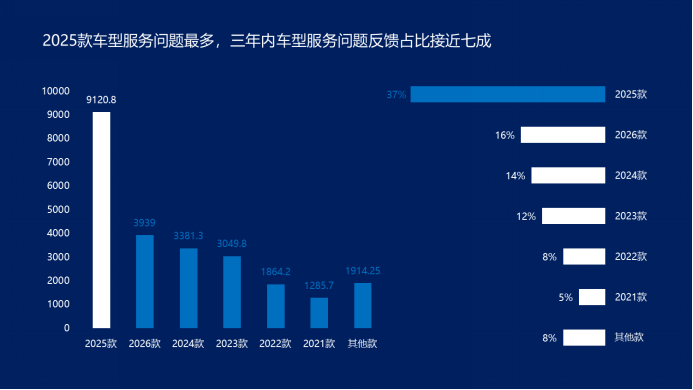
From the perspective of the model years of problematic vehicles, the 2025 model year became the biggest target of complaints regarding service issues. According to problem feedback, frequent iterations of local models have become the main trigger for service problems. The combined service reputation index for the 2026 and 2024 model years also reached 30%. Behind this, deposit disputes and unfulfilled promises have become two major points of contention.
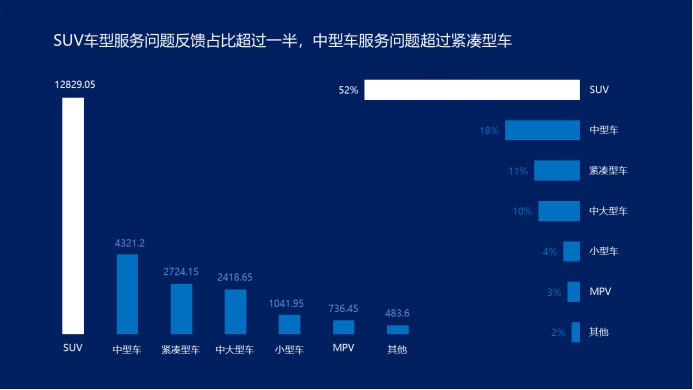
From the perspective of vehicle model categories, SUVs, which have the largest ownership, had the highest rate of problem feedback, accounting for more than half. Mid-size cars, compact cars, and mid-size cars also had relatively high rates of problem feedback. This reflects the current market popularity and market share of various vehicle segments in the market.
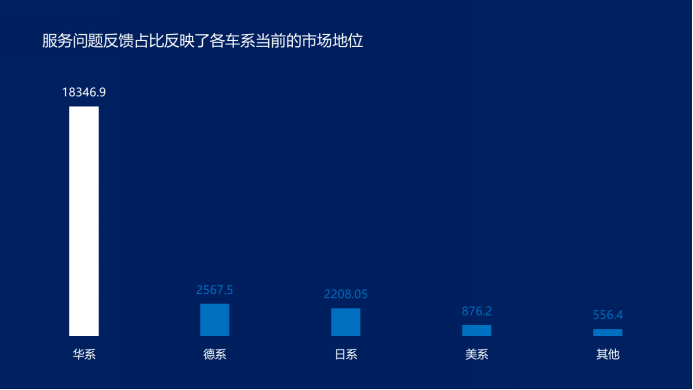
From the perspective of vehicle lineups, service problems mainly came from Chinese brand vehicles, with problem feedback accounting for as high as 75%. German and Japanese vehicles also accounted for around 10% of service feedback, while other vehicle lineups had minimal problem feedback. The proportion of problem feedback also reflects the current market positions of each vehicle lineup.
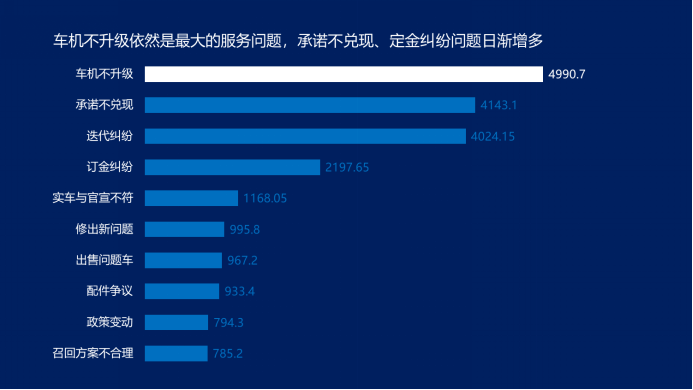
From the perspective of specific feedback issues, in-vehicle system non-upgrades and iteration disputes remain the two most frequently reported service problems. Meanwhile, unfulfilled promises and deposit disputes have increasingly become focal points of user feedback. In addition, unreasonable recall plans have become a key issue in user feedback, with some automakers' handling of product quality issues after they arise being criticized by users.
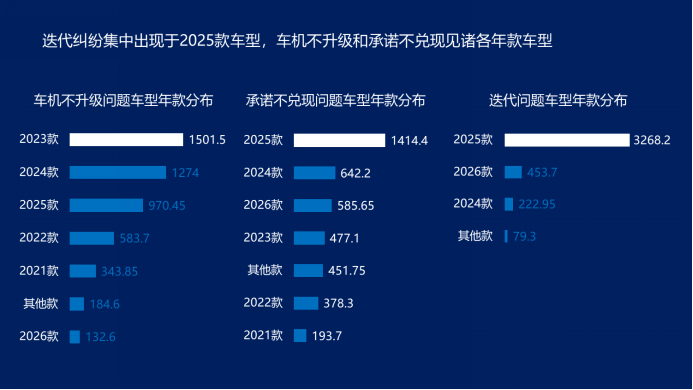
From the perspective of the model years of problem feedback, in-vehicle system non-upgrade issues have many cases across multiple model years. Among them, the 2023, 2024, and 2025 model years had higher feedback rates, with outdated versions and inability to function properly being the main points of contention. Unfulfilled promises were relatively evenly distributed across model years, with the 2025 model year receiving the most feedback. Users mostly complained about unfulfilled Equity Commitment (rights and benefits promises), while many users of older models reported inconvenience in subsequent maintenance. Iteration disputes were concentrated in the 2025 model year, all due to new model facelifts and added features.
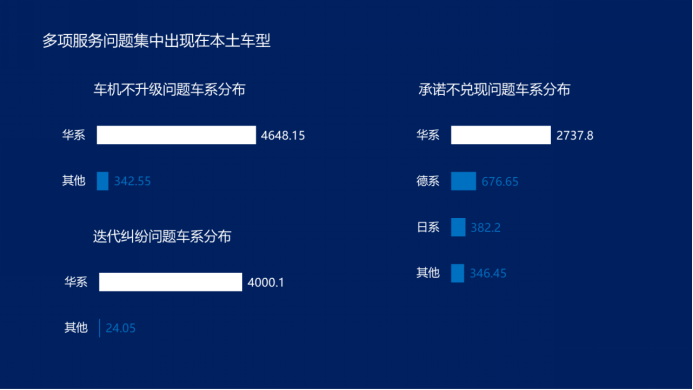
From the perspective of the vehicle lineups of problematic models, the aforementioned three issues mainly appeared in Chinese brand vehicles. Firstly, Chinese brand vehicles have the largest ownership, naturally leading to a higher "incidence rate" and service problems. Secondly, under fierce market competition, local automakers have Coincidentally, at the same time (in unison) engaged in price competition, configuration matching, and frequent new model launches to cope with competition, while dealers have tried every means to attract users to sell cars. These actions have further increased the incidence of service problems. It is also worth noting that unfulfilled promises are relatively common in German and Japanese vehicles. According to feedback, a significant proportion of issues were caused by dealership closures.
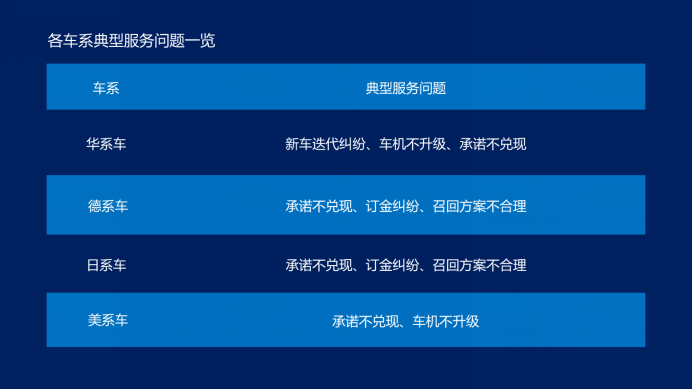
Based on the above data analysis, the following conclusions can be drawn:
In the first half of 2026, Chinese local models became the vehicle lineup with the most service problem feedback, with German and Japanese vehicles having a much lower proportion of problem feedback. This also indirectly reflects the current market popularity of each vehicle lineup.
It is worth mentioning that under fierce market competition, service problems caused by stacking configurations, price competition, frequent iterations, and dealer customer acquisition processes are becoming increasingly prominent. During this process, Chinese brand vehicles have a higher rate of problem feedback, especially regarding in-vehicle system non-upgrades and iteration disputes. Meanwhile, fierce market competition has led to many brand dealers withdrawing from the network, making after-sales maintenance increasingly inconvenient for users.
For more details, please visit Qichemen.com.
(Image source: Internet, removed if infringing)
-
![]()
Did the US Really Film Its Moon Landing in a Studio? 57 Years On, Doubts Persist, but the Irrefutable Evidence Lies Beyond the Photos
-
![]()
The Final Battle of Large Models
-
![]()
Battle of Defense and Offense Between Xiaomi and Li Auto in the Cooling Extended-Range Market
-
Top 10 AI Application Enterprises: Fast Growth & High Profitability
-
![]()
Thousands Rally as Audi’s Flagship Plant Faces Threat of Closure Amid Volkswagen Criticism
-
![]()
State-Owned Capital Makes Exclusive Foray into Bluetooth Satellite Sector, Propelling ‘Lanling Xingtong’ to Secure Key Financing for Large-Scale Network Deployment!
-
![]()
A Deluge of New Cars Leaves Consumers Overwhelmed
-
![]()
Analysis of Service Reputation Index in the First Half of 2026