Thousands Rally as Audi’s Flagship Plant Faces Threat of Closure Amid Volkswagen Criticism
 08/03 2026
 485
485

Source: Zhiche Technology, Publicly Available Online Information
On July 29, approximately 6,000 Audi employees took to the streets in Neckarsulm, Germany, brandishing banners and clashing tambourines in a fervent protest against parent company Volkswagen’s potential plan to shutter the core factory. This event marks the largest and most contentious labor-management dispute amid the recent wave of layoffs in Germany’s automotive sector.
Just two days prior, Audi released a dismal Q2 financial report, revealing a 12.5% year-on-year revenue decline and a profit margin of a mere 3.6%, significantly below the target range of 5% to 7%. From bold electrification pledges to the stark reality of mass layoffs, Audi is navigating its darkest hour since the transformation began.

6,000-Strong 'Survival Protest'
The Neckarsulm plant stands as one of Audi’s most vital production hubs in Germany, employing around 15,000 individuals and manufacturing flagship luxury sedans such as the A5, A6, and A8. It also handles small-batch production of the all-electric performance vehicle, the e-tron GT.
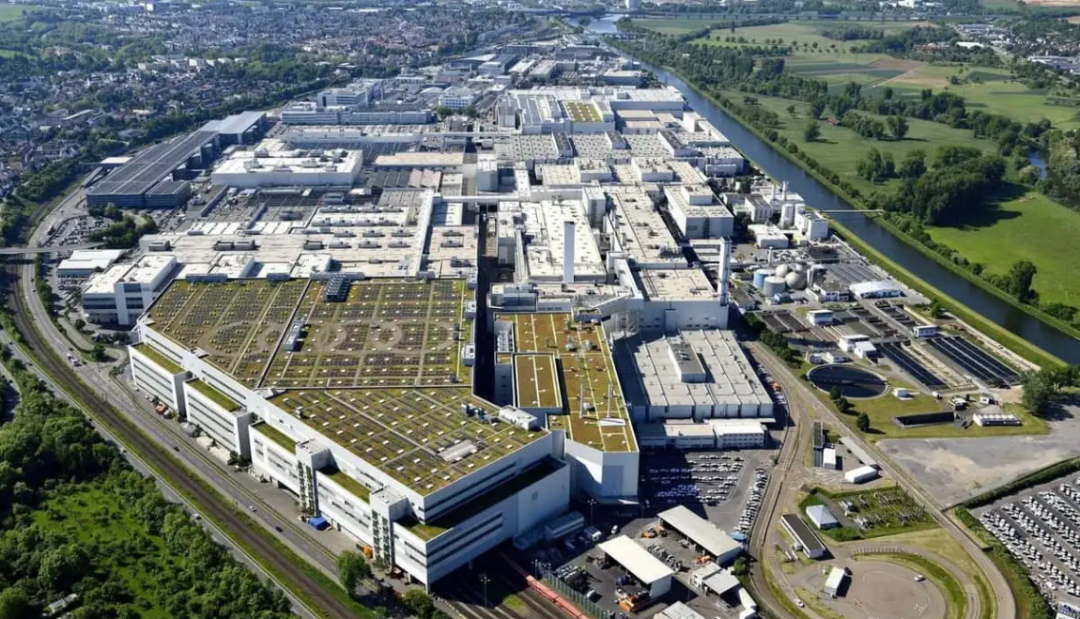
Image Source: Automotive News Website Motor1
The immediate catalyst for the protest stemmed from Volkswagen Group CEO Oliver Blume’s public warning—Neckarsulm is among four German factories that could face closure post-2030, with the others being Hanover, Emden, and Zwickau. According to Volkswagen’s board plans, the group intends to halt production at these facilities in batches starting from 2031, maintaining only existing model lifecycles without continuous operations thereafter.
Workers are demanding clear answers from Volkswagen’s management. Alexander Reinhardt, chairman of the Neckarsulm factory worker committee, emphasized that securing a high-volume electric vehicle model for the plant is crucial for its future. Steffen Hertwig, the mayor of Neckarsulm, cautioned that closing the factory would have a “catastrophic” impact on Baden-Württemberg in southwestern Germany, potentially triggering a domino effect in the region.
Blume has proposed alternative strategies—such as defense cooperation projects and producing Volkswagen models not currently sold in Europe, like those from China, at German factories. However, none of these proposals have materialized yet, with multiple rounds of tense negotiations with labor representatives expected in the latter half of the year.

From 'Global Car' to 'Admitting Defeat'
A year ago, Audi’s CEO confidently declared, “We will fully transition to electric vehicles, and customers will witness the last new internal combustion engine model released in 2026.”
Yet, the harsh reality soon shattered this vision.
In July 2026, Audi Chief Technology Officer Ruben Moor admitted to foreign media that the era of attempting to satisfy all global markets with a single model has ended. This signifies Audi’s official abandonment of its long-standing “global car” strategy.
Historically, the “global car” strategy, rooted in economies of scale, proved successful during the internal combustion engine vehicle era. However, with significant divergence in consumer preferences across global markets, this approach has become unsustainable.
Chinese consumers’ demand for large screens, intelligent cockpits, and advanced driver-assistance systems starkly contrasts with that in European or North American markets. Audi’s past rigid global R&D system, characterized by lengthy decision-making chains and centralized core R&D in Germany, resulted in excessively long cycles from market feedback to product implementation, often missing market opportunities.
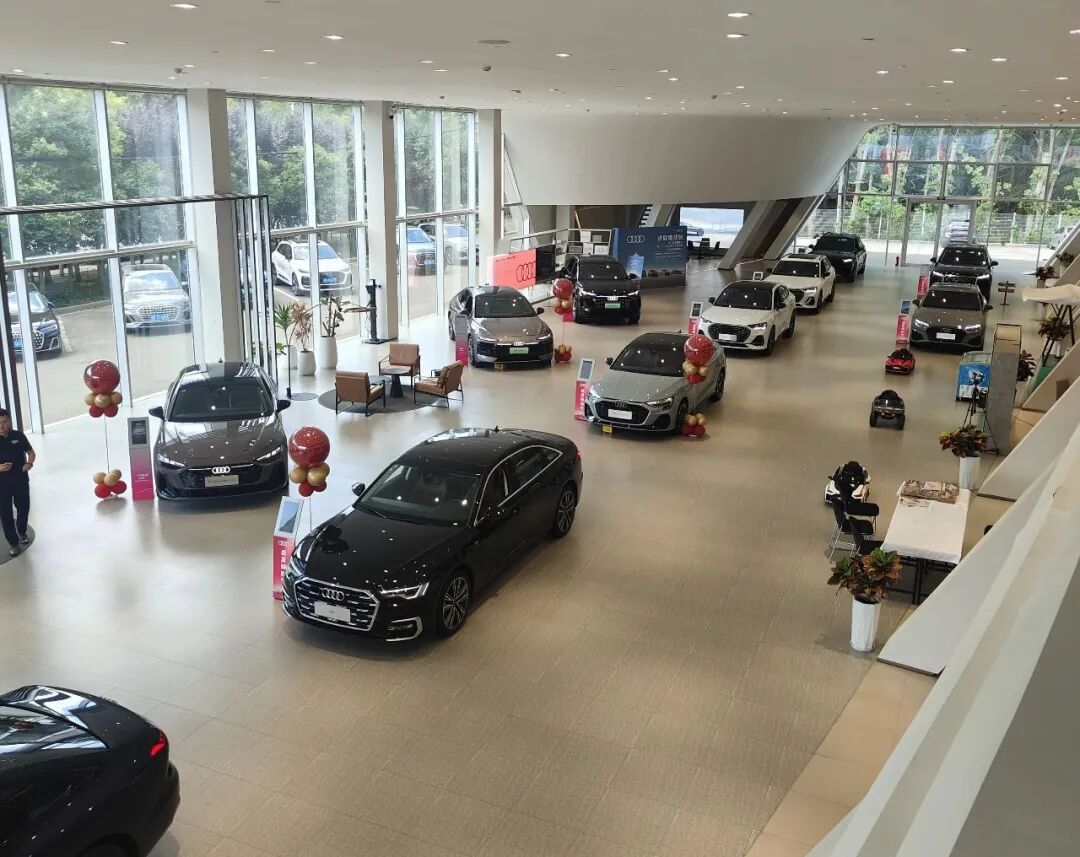
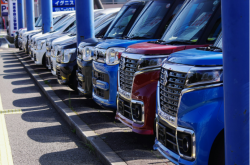
Image: Sparse customer traffic at an Audi dealership on a Saturday morning
Audi and SAIC Motor launched a new brand, “AUDI,” in China specifically to develop models tailored to the Chinese market. However, the reality remains unforgiving—the letter-branded Audi E5 averages fewer than 1,000 units per month, necessitating terminal price cuts of 30,000 yuan to boost sales. The root cause of this failure lies in its contradictory positioning of “resembling new energy brands while clinging to outdated thinking.” In the 300,000-yuan market segment, brand premium cannot justify pricing, while cost structure cannot win price wars, ultimately leaving it trapped in a dilemma.

Global Giants Under Collective Strain
Globally, leading automakers are grappling with significant profitability challenges. Among the top 10 global automakers, only BMW and Hyundai achieved profit growth, with all others experiencing declines.
Volkswagen Group’s 2025 financial report revealed a slight 3.4% revenue increase but a staggering 32.7% profit plunge, indicating severe profitability pressure. Toyota also saw revenue rise 6.7% but profits fall 18.3%. General Motors and Mercedes-Benz faced dual declines in both revenue and profit—General Motors’ profit plummeted 55.1%, while Mercedes-Benz’s profit dropped 48.8%.
The shadow of losses continues to loom large. According to the 2026 Fortune Global 500 list, 35 vehicle and parts companies made the ranking this year, with nine incurring losses. The automotive industry has become a major epicenter of losses. Europe’s Stellantis Group topped the loss list with over $25.2 billion in losses; Ford incurred $8.182 billion in losses, with profits down 239.2% year-on-year; Honda reported a net loss of $2.813 billion in FY2025, down 151.3% year-on-year.
Tesla has not been spared either. As a former steadfast leader in global new energy vehicles, Tesla experienced its first-ever annual revenue decline in 2025, with vehicle deliveries falling year-on-year for two consecutive years. It ultimately ranked 116th, missing the top 100 and sliding 10 positions from last year’s 106th place. Under performance pressure, Tesla is accelerating its strategic transformation, fully committing to the new sector of AI-powered intelligent mobility.
Overall, while the 1.5% average return rate for Chinese automakers is very low, it remains roughly in line with the global industry average of 1.7%, with no significant weakness gap. This confirms a harsh reality: the global automotive industry is currently in the throes of electrification and intelligent transformation, with all automakers bearing profit pressure from technological iteration and intensified market competition.

Volkswagen Group’s '100,000-Person' Layoff Plan
Audi’s predicament is merely a microcosm of Volkswagen Group’s overall crisis.
Volkswagen Group CEO Blume confirmed in an internal memo that the group may need to cut an additional 50,000 jobs, meaning the total global layoff scale will double from the previously announced 50,000 to 100,000. Ten thousand employees represent approximately 15% of the group’s global workforce of 680,000—if implemented, this would become the largest one-time layoff in global automotive industry history.
Blume bluntly stated that calculations show Volkswagen has a 20% cost disadvantage compared to similar competitors. The group plans to cut investments by about 15% over the next five years to just over €130 billion, while gradually halving its vast model lineup.
This will mark Volkswagen Group’s largest-ever restructuring.
Layoffs will involve Volkswagen, Audi, Porsche, and software subsidiary CARIAD. Production cuts will occur in two steps: first, reducing output by 1 million units each in China and Europe, followed by an additional 500,000-unit reduction in each region. Audi had previously announced plans to lay off up to 7,500 employees in Germany by 2029, primarily in administrative and R&D areas.
But 7,500 is clearly insufficient. With the Neckarsulm factory facing closure risks, more jobs hang in the balance.
Audi’s situation reflects the structural crisis of Germany’s entire automotive industry. High manufacturing costs, intensifying Chinese competition, and U.S. tariff pressures are forcing painful restructuring across the sector.
Porsche plans to lay off another 5,000 employees in Germany by 2035; BMW also aims to cut thousands of jobs in Germany by the end of 2027. Baden-Württemberg, a traditional automotive manufacturing hub, sees Mercedes-Benz, Porsche, and supplier Bosch all under immense pressure.
The deeper issue lies in the fact that electrification transformation inherently means rewriting old production capacities and employment structures. Electric vehicles require 40% fewer components, and with manufacturing automation advancing, far less labor is needed compared to the internal combustion engine era.
While Audi is still studying how to transform, Chinese domestic automakers have already progressed from intelligent driving to ultra-fast charging.
The future of the Neckarsulm factory remains highly uncertain. Annual production capacity at the factory has already dropped to 225,000 units, down about 75,000 units from previous years, with the company agreeing to cut night shifts at the plant. It solely produces internal combustion engine vehicles—yet in Audi’s electrification blueprint, it has yet to secure allocation for any high-volume electric vehicle models.
Electrification requires not just new production lines but also the courage to completely bid farewell to the ‘Volkswagen system.’ And Audi, clearly, is not yet ready.
- End -
Disclaimer:
Any works marked as "Source: XXX (non-Zhiche Technology)" in this official account are republished from other media, with the purpose of transmitting and sharing more information. This does not represent this platform’s endorsement of their views or responsibility for their authenticity. Copyright belongs to the original authors. Please contact us for removal if there is any infringement.
-
![]()
Did the US Really Film Its Moon Landing in a Studio? 57 Years On, Doubts Persist, but the Irrefutable Evidence Lies Beyond the Photos
-
![]()
The Final Battle of Large Models
-
![]()
Battle of Defense and Offense Between Xiaomi and Li Auto in the Cooling Extended-Range Market
-
Top 10 AI Application Enterprises: Fast Growth & High Profitability
-
![]()
Thousands Rally as Audi’s Flagship Plant Faces Threat of Closure Amid Volkswagen Criticism
-
![]()
State-Owned Capital Makes Exclusive Foray into Bluetooth Satellite Sector, Propelling ‘Lanling Xingtong’ to Secure Key Financing for Large-Scale Network Deployment!
-
![]()
A Deluge of New Cars Leaves Consumers Overwhelmed
-
![]()
Analysis of Service Reputation Index in the First Half of 2026