ByteDance Restructures ToB Business: What New Roles Do Doubao, Feishu, and Volcano Play?
 08/07 2026
 513
513

By Dou Wenxue
Edited by Ziye
On July 30th, an internal email from ByteDance announced the 'grand unification' of its B-end business.
ByteDance declared the integration of the Feishu and Doubao product teams to form a new Doubao product team, led by Doubao's head, Zhao Qi.
Simultaneously, the Feishu GTM (Go-To-Market, encompassing marketing, sales, and customer service) team will merge with the Volcano Engine team to establish a new ToB GTM organization called the 'Creativity Service Platform,' headed by Volcano Engine's leader, Tan Dai.
After the restructuring, while maintaining the original Feishu products and services unchanged, Feishu will engage in deeper product collaboration with Doubao in productivity scenarios. The newly established Creativity Service Platform will integrate ByteDance's ToB service capabilities to better meet the AI needs of enterprise clients.
This marks ByteDance's largest ToB system restructuring since implementing business segmentation in 2021, involving comprehensive adjustments across products, sales, and marketing.

In fact, the adjustment centered around Feishu is not surprising, as rumors of its deep integration with Doubao had already circulated in the market.
As the AI market gradually enters the Agent era, the focus on 'task-oriented' capabilities by Agents is blurring the boundaries between ToC and ToB. Both domestic and international tech giants are initiating integrations of work, chat, and code functionalities. With its strong capabilities in large models, office products, and algorithmic recommendations, ByteDance is naturally poised to proactively make changes.
For ByteDance, this integration holds deeper significance.
In its early development, ByteDance, a company with a strong ToC heritage, had few standout ToB businesses.
However, in recent years, Feishu has capitalized on the market boom in office services, securing significant market share. Volcano Engine has also achieved success, becoming the market leader in public cloud MaaS (Model as a Service) by call volume in 2025.
The adjustment in the AI era is likely a crucial move for ByteDance to further strengthen the synergistic advantages of its ToC and ToB operations.
In the past, Doubao, Volcano Engine, and Feishu operated independently.
Doubao's large model has amassed a vast user base. As of June this year, Doubao's monthly active users (MAU) reached approximately 382 million, ranking first in the AI-native application rankings, with a daily average of over 180 trillion token calls for Doubao's large model.
Volcano Engine holds a significant share in the public cloud MaaS market. At the Volcano Engine FORCE conference in June this year, Liang Rubo clarified the strategic position of 'Volcano Engine's MaaS business becoming a fundamental part of ByteDance's operations.'
Feishu's commercial growth is also accelerating significantly. In the second quarter of 2026, over 90% of Feishu's new clients simultaneously purchased Feishu AI products. According to Caijing, Feishu's revenue growth rate exceeded 100% year-on-year in the second quarter of 2026.

However, the advent of the AI era has made collaboration among the three products both necessary and urgent.
While Feishu boasts rich office scenarios and enterprise data, including documents, meetings, and knowledge bases, it lacks native, deeply integrated AI agent capabilities. Doubao, despite its powerful large model capabilities, lacks direct access to enterprise users and enterprise data scenarios. Feishu and Volcano Engine, facing a large overlap in enterprise clients, maintain separate marketing, sales, and customer service teams.
ByteDance's adjustment can be understood as dividing its ToB business along two main lines: one focused on products and the other on commercialization.
These two main lines are interconnected through the overarching scenario of collaborative office, forming a cohesive whole. This aligns with ByteDance's stated purpose for the organizational adjustment: 'to strengthen product and service collaboration among Doubao, Feishu, and Volcano Engine in enterprise productivity scenarios.'
This division is clearer and more suitable for the AI era.
From available information, significant progress has already been made in the product-level collaboration between Doubao and Feishu in this adjustment.
As early as the end of June, Doubao was reported to be experimenting with social features through Feishu.
At that time, it was reported that users could directly log in to Feishu using their Doubao accounts, with their avatars, nicknames, and profiles displayed synchronously on the Feishu platform. Conversely, users could also log in to the enterprise version of Doubao using their Feishu accounts, with permission data such as Feishu names, organizational structures, documents, and chat messages synchronized to Doubao.
Although the relevant Doubao executive denied the so-called social feature plans at the time, they emphasized that Doubao and Feishu were making 'some collaborative attempts in enterprise office scenarios and would cooperate more closely in the future.'
In June this year, Doubao Professional was officially launched, and this new product may become a key element in the integration of Feishu and Doubao. When officially launched, this product already embedded some Feishu capabilities.
Now, ByteDance has officially integrated the product teams of Feishu and Doubao. From available information, subsequent collaboration between Feishu and Doubao will increasingly focus on a new product—the enterprise version of Doubao.
Multiple media outlets reported that ByteDance disclosed that the enterprise version of Doubao, developed with deep involvement from Feishu, has already begun internal testing among some Feishu clients.
This product possesses the capabilities of a general-purpose AI productivity tool and natively integrates the Feishu ecosystem. Users can seamlessly access all office scenarios, including Feishu documents, spreadsheets, meetings, and group chats, without the need for additional deployment. It also supports precise Q&A and intelligent creation based on the enterprise's proprietary knowledge base.
Furthermore, the enterprise version of Doubao is equipped with comprehensive enterprise-grade data isolation, permission control, and security audit capabilities.

Image source: Feishu official website
In contrast, there has been less information disclosed regarding the integration of the Feishu GTM (marketing, sales, and customer service) team with the Volcano Engine team.
However, market predictions suggest that ByteDance may subsequently establish a unified sales system, promoting bundled sales of MaaS and SaaS to avoid internal competition and resource wastage between Feishu and Volcano Engine.
Previously, Feishu and Volcano Engine each had their own sales teams. When clients had office collaboration needs, they would approach Feishu's sales team. When they required large model deployment and cloud services, they would turn to Volcano Engine's sales team. If the enterprise version of Doubao gains traction, ByteDance would need to establish another sales system, which is clearly not the optimal solution. The current Creativity Service Platform aims to meet enterprise needs for office, AI, and cloud computing with a single team.
In this adjustment, Feishu's positioning is worth discussing.
While maintaining its original products and services unchanged, Feishu is simultaneously supporting Doubao's development and enriching Volcano Engine's service ecosystem.
In other words, Feishu has become a capability that serves as a link between products and commerce in ByteDance's ToB business.
Why Feishu?
For a long time, Feishu has established its advantage through an efficient collaborative product system. Its core functionalities, such as communication, documents, and multi-dimensional tables, have become the foundation of Feishu's commercialization before the AI era.
According to data first disclosed by Feishu in February 2023, its core business metric—the 2022 ARR (Annual Recurring Revenue)—reached $100 million, a 2.7-fold increase from 2021.

Image source: ByteDance official website
Perhaps due to the solid foundation laid by these collaborative office functionalities, Feishu has navigated the critical period of AI transformation in collaborative office platforms from 2024 to 2026 relatively smoothly.
Its AI strategy can be summarized as 'native AI Agent integration' and 'deep fusion with business scenarios.' By embedding large model capabilities into basic office suites and workflows, AI is transformed from a mere 'content generation tool' into a 'digital employee' capable of directly operating the system.
For example, it has successively launched products such as Feishu Daily (intelligent assistant), intelligent meeting minutes, document and multi-dimensional table AI, Feishu CLI (AI agent operation tool), and CodeM (AI research and development agent).
Entering 2025, Feishu has acquired more enterprise clients. With a monthly active user base only 15% that of DingTalk, it achieved revenue exceeding 3 billion yuan. In the second quarter of 2026, its revenue growth rate exceeded 100% year-on-year. The revenue gap with DingTalk (4 billion yuan) has narrowed to its historical lowest level, sparking industry discussions on whether 'monthly active users represent revenue-generating capacity.'
Of course, the solid foundation laid by Feishu in the past is one of the reasons it has become the core of this adjustment. A more crucial factor lies in the changes in the collaborative office scenario it operates in during the AI era.
In the past, enterprises had relatively simple requirements for collaborative office software: communication, collaboration, and management capabilities were sufficient.
However, the situation has changed. Office work has become the primary scenario for users to employ AI. According to the National Cyberspace Administration's 'National Informatization Development Report (2025),' 92.2% of respondents in an online survey had used generative AI applications for intelligent office work.
Behind this data lies the phenomenon that many users switch to AI applications to complete key tasks after working on collaborative office or office software, and then return to the office software to continue working.
The essence of this phenomenon, besides highlighting the importance of AI in office workflows, also indicates that office software still plays an indispensable role in the current office processes.

Moreover, enterprise procurement demands for office software are shifting from 'decentralized procurement' to 'integrated solutions.'
A key data point to consider is that in the second quarter of 2026, over 90% of Feishu's new clients simultaneously purchased Feishu AI products.
In other words, when clients procure Feishu's services, they also purchase AI services. Enterprise clients have evolved from merely buying office software to purchasing a comprehensive AI solution.
In essence, this solution has become a new infrastructure that encompasses office software, AI, and cloud services.
When enterprise demands shift, ByteDance's current adjustment appears reasonable. Feishu has transformed from a standalone product into a key capability within this new infrastructure.
For ByteDance, this adjustment holds even deeper significance.
ByteDance has always been a company with a strong ToC heritage, excelling in user scale, product experience, and rapid iteration.
ToB business, on the other hand, tests a company's service capabilities, client relationships, and customized response abilities. ByteDance's ToB operations have often faced criticism for 'applying ToC thinking to ToB.'
However, in the AI era, ByteDance's ToC mindset may not necessarily have a negative impact on its ToB business.
As mentioned earlier, in the Cyberspace Administration's survey, 92.2% of respondents had used generative AI applications for intelligent office work.
This data also conveys another signal: the emergence of AI is blurring the boundaries between ToC and ToB business scenarios. While ToC and ToB traditionally target different user bases, AI technology is causing the usage of these two types of business to overlap in office scenarios.

Previously, ByteDance's Linkage (linked) strategies between ToB and ToC operations had often garnered attention. For example, ByteDance leveraged its significant market presence and brand advantage in the C-end (such as Doubao and Douyin) to directly drive attention and client trust for its B-end services (such as Volcano Engine).
This adjustment represents a deeper level of Linkage (linkage) between ByteDance's B-end and C-end operations at the organizational level.
This approach differs from the office product integration strategies of other internet giants.
Tencent and Alibaba have both positioned themselves with AI office agents or desktop entry points.
Previously, Tencent issued an internal organizational adjustment notice, transferring the QClaw product center's related businesses and some teams to the Cloud Product Division VI, placing them under the same management system as the AI office agent WorkBuddy.
Alibaba integrated three agent products—QoderWork, Wukong, and MuleRun—into 'Qianwen Office,' led by DingTalk's new CEO, Chen Yusen.
Kingsoft Office's strategy involves embedding AI agents into office functionalities. For example, it previously launched two agents—'Lingxi Professional' for individuals and 'WPS Comate' for organizations—emphasizing broad compatibility with mainstream large models and highlighting its advantage as an office entry point.
Amid intense competition as industry players ramp up their agent offerings, another industry trend presents an opportunity for ByteDance: most users are still confused about how to use agent products.
Previously, a set of user statistics widely circulated in the AI community showed that as of early 2026, 84% of the global population had never used any AI products; only 16% had used free chatbots; and a mere 0.04% of the total population had deeply used professional agent tools like programming agents.
While the source of this data is difficult to verify, some industry data can indirectly confirm the phenomenon that AI agent products have not yet become widespread.
For example, a report on desktop AI office agents released by Analysys previously calculated not based on user asset metrics like active users but on traffic metrics like monthly visits. Even then, the combined monthly visits of 17 mainstream desktop AI office agent products in June this year only reached over 60 million.

Image source: Doubao official WeChat public account
ByteDance's approach of integrating Doubao and Feishu products this time may enable it to develop simpler and more user-friendly products for office scenarios, thereby capturing the attention of more enterprise users amid widespread user confusion about agent products.
Judging from ByteDance's expectations for Doubao, Doubao is tasked with becoming the productivity foundation for the B-side market, while Feishu provides Doubao with key office scenarios. In the future, Doubao will become an AI assistant embedded in work processes. This is more imaginative and represents a new choice made by ByteDance in the new era of AI-powered office work.
In fact, this is not just ByteDance's judgment alone; it is a common choice among multiple major companies in the AI-powered office era. However, ByteDance's advantage lies in not having to build from scratch but instead directly reorganizing its business to pursue greater efficiency and a larger market scale.
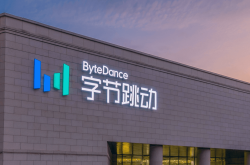
(The header image of this article is sourced from the official ByteDance website.)
-
![]()
Final Ruling: What’s Behind the Sluggish Sales of Domestic Cars?
-
![]()
ByteDance Restructures ToB Business: What New Roles Do Doubao, Feishu, and Volcano Play?
-
How Does Yusys Technologies Redefine the Banking Business with AI When Banks No Longer Just Purchase Systems?
-
Microsoft and Amazon Surge Over 20% in Three Days: Is AI Entering a Phase of 'Profit Rotation' Trading?
-
![]()
STO Express Stalls Amid Safety Concerns, Abandons 3 Billion Yuan Convertible Bond Plan
-
Two Battles Among Tencent, Alibaba, and ByteDance: Settling Past Coding Debts and Betting on the Future of Work
-
![]()
Is Blue Mountain Production Coming to an End? Wey CEO Zhao Yongpo Responds: No Discontinuation Plans, and It’s Thriving Overseas
-
![]()
Lexus, Eager to Keep Its Dealerships Afloat, Seeks Solutions in Audio Systems