Robam Appliances: Navigating Through 'Uneven Performance'
 02/02 2026
 494
494
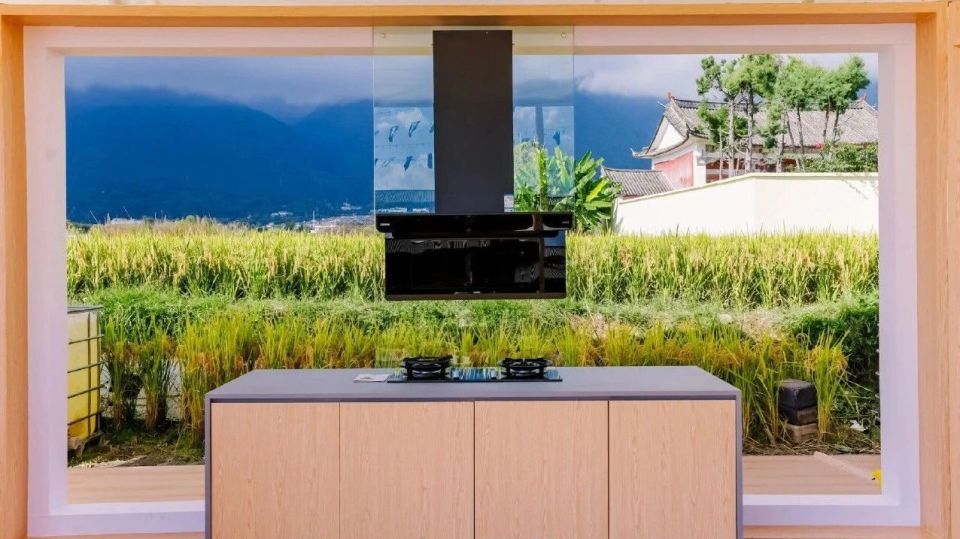
In early 2026, Robam Appliances made two significant announcements within a short span. The first, dated January 8, revealed the utilization of 150 million yuan in idle funds to invest in a bank financial product yielding a modest 3.3% annually. The second announcement disclosed the company's intention to inject 100 million yuan into Youte Zhichu, a burgeoning smart stir-fry robot enterprise.
On one hand, the company is channeling a portion of its funds into stable yet relatively conservative financial instruments. On the other, it is venturing into cutting-edge tech sectors brimming with uncertainty but emblematic of the future. This stark divergence in fund allocation underscores the complex predicament faced by this industry leader in kitchen appliances.
Currently, Robam Appliances is grappling with downward performance pressures. In the first three quarters of 2025, its revenue stood at 7.312 billion yuan, marking a 1.14% year-on-year decline. Net profit attributable to shareholders also decreased by 3.73% to 1.157 billion yuan.
In the first half of 2025, the two mainstay businesses of Robam Appliances—range hoods and gas stoves—accounted for over 70% of its total revenue. However, their revenues contracted by 2.36% and 1.11%, respectively. During the same period, eight out of the company's 13 product categories also witnessed year-on-year revenue declines.
Against the backdrop of a prolonged downturn in the real estate sector, safeguarding the core business while identifying growth opportunities poses a formidable challenge. It demands a comprehensive strategic transformation and a shift in product mindset for kitchen appliance companies.
I. The Making of a Leader
In 1979, in Luosiqiao Village, Yuhang County, Zhejiang Province, Ren Jianhua, then the director of a village-run hardware factory, spearheaded an initiative to raise 2,000 yuan among fellow villagers to purchase a tractor for the village. Utilizing three pairs of vise grips, they established the precursor to Robam Appliances—the Red Star Hardware Factory.
In its nascent stages, the factory grappled with a scarcity of funds, equipment, and technology. Hammers and vise grips were the sole production tools at their disposal, enabling them to manufacture only the simplest textile machine components.
A fortuitous observation paved the way for a new opportunity.
Upon returning home, Ren witnessed his wife coughing and tearing up from kitchen fumes while cooking. Every household cooks, and every household contends with fumes. At that time, only the Shanghai Radio Factory produced range hoods in the country, with limited suction power and a largely untapped market.
Thus, Ren took self-made samples to the Shanghai Radio Factory and, after multiple rounds of negotiations, secured a cooperation opportunity. He even pledged to deliver 95% of the produced goods to the other party, retaining only 5% for himself.
It wasn't until 1987, following a collaboration with the China Aerospace Science and Technology Corporation, that Ren's venture finally took a turn for the better. They successfully developed China's first-generation range hood and entered the range hood market.
However, the name 'Red Star' was too ubiquitous at the time. Ren, nicknamed 'Little Boss,' drew inspiration from his moniker and ultimately decided to brand it as 'Robam.'
But in the 1980s, the term 'boss' carried specific connotations, making trademark registration arduous. It wasn't until 1988 that Ren successfully obtained the 'Robam' trademark, which later became a cornerstone of brand communication.
By the early 1990s, the term 'boss' had gradually evolved into a symbol of success, wealth, and a new lifestyle.
Ren's 'Robam' brand capitalized on this shift in values. Later, through advertising on CCTV, the company imbued range hoods—upgrading from kitchen equipment to household necessities—with value recognition, completing the transition from a mere product to a status symbol.
From then on, consumers weren't just purchasing a functional machine but also a psychological promise and status label of 'being as successful and discerning as a boss.' This emotional value laid the foundation for Robam Appliances' premium and high-priced brand image.
The robust brand momentum also brought substantial profit returns to Robam Appliances. Ren reinvested these profits into sustained and high-intensity marketing activities, solidifying the consumer perception of 'Robam Appliances = High-End Kitchen Appliances.'
At the same time, Ren keenly seized the opportunities presented by China's golden era of real estate development. He positioned Robam Appliances in the showrooms and refined renovation lists of high-end real estate projects, achieving a deep integration between the brand's appliances and high-end properties.
For developers, incorporating Robam Appliances enhanced the sophistication of refined renovation projects. For Robam Appliances, the B2B engineering channel model brought stable orders and rapid scale expansion.
As brand recognition, profits, scale, and status gradually formed a self-reinforcing loop, Robam Appliances' development accelerated. By 2015, Robam Appliances' range hood sales had soared to the top globally.
II. Focus and Dependency
By 2020, Robam Appliances had forged strategic cooperation with over 200 branded real estate developers, covering more than 85% of the top 100 real estate enterprises nationwide. Its market share in the engineering channel had also ranked first for many consecutive years, making it almost the most 'concrete and steel' adhering believer in the kitchen appliance industry.
The deep integration with the real estate sector brought substantial returns to Robam Appliances. For instance, in 2017, Robam Appliances was selected as one of the 18 suppliers by Evergrande Group, reaching a cooperation framework of '1 billion yuan over five years.' That same year, the company's revenue and net profit growth both exceeded 20%, setting a historical record.
However, as the real estate industry entered a deep adjustment phase, Robam Appliances' substantial 'real estate' exposure ceased to be a boon.
After 2021, due to liquidity crises among some leading real estate developers, Robam Appliances consecutively set aside large provisions for bad debts totaling 778 million yuan. Among them, provisions related to Evergrande alone accounted for nearly half of the company's net profit that year. As of the first half of 2025, the balance of provisions for bad debts in Robam Appliances' accounts receivable still stood at 1.039 billion yuan.
Monitoring data from AVC Cloud Network showed that in the first half of 2025, new launches of commercial residential projects nationwide declined by 31.8% year-on-year, while new launches of refined renovation commercial residential projects decreased by 26.6% year-on-year. This indicates that the overall scale of the high-profit engineering channel, which Robam Appliances once heavily relied on, is rapidly contracting.
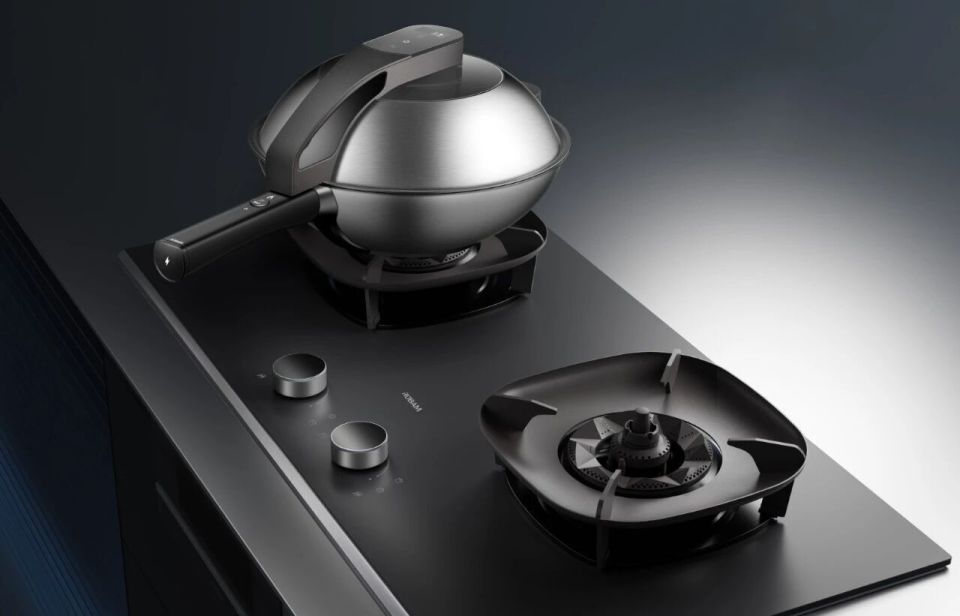
Affected by this, in the first half of 2025, range hoods and gas stoves, the two 'flagship products' of Robam Appliances, accounted for over 70% of total revenue, with revenues of 2.205 billion yuan and 1.156 billion yuan, respectively, declining by 2.36% and 1.11% year-on-year.
With the real estate dividend becoming a thing of the past, Robam Appliances needs to undergo a comprehensive transformation in the B2C retail market.
However, perhaps due to long-term service in the engineering channel, which has accustomed the company to relatively standardized and centralized developer needs, its main products have primarily focused on essential items like range hoods and gas stoves for property handovers. This has limited the company's motivation and pressure to innovate diversified and forward-looking products for end consumers.
Although the company's strategic level has long proposed expanding into new categories, in 2024, the two core products, range hoods and gas stoves, still accounted for 73.42% of Robam Appliances' total revenue, with no significant decline in this proportion over the past five years.
The dependency on the main business is, to some extent, an inertial continuation of the successful experience of 'focusing on the main business' from the founder's era in the new era.
In the 1990s, Robam Appliances vigorously pursued diversification, but the aftermath of blind expansion caused the company's sales to plummet from a peak of over 400 million yuan to just 80 million yuan, with market share dropping out of the top 10 nationwide.
Facing the crisis, Ren decisively retracted, cutting off all non-core businesses and proposing a new mission of 'Focusing on Kitchen Appliances, Enjoying Life,' putting Robam Appliances back on track.
However, in the current environment, this successful experience may cause the company to appear somewhat slow and hesitant in responding to the emerging category trends directly driven by consumer demand.
For example, after the significantly innovative integrated stoves entered the market in 2003, they directly challenged the market position of traditional range hoods and gas stoves. From 2015 to 2019, the integrated stove industry entered a rapid growth phase, with a compound annual growth rate of retail sales reaching 34.98%. By 2021, the market size had reached 25.6 billion yuan.
During this industry development period, professional brands such as Mars Man, Zhejiang Meida, Shaifeng, and Yitian seized market opportunities through early strategic positioning, but Robam Appliances observed for nearly 20 years before officially launching its first integrated stove product in March 2022.
However, having missed the golden cultivation period of the integrated stove market, although Robam Appliances' products have made breakthroughs in performance, such as incorporating innovative technologies like a 23° smart control panel and a self-cleaning system, pioneers have already established strong brand recognition and channel advantages in the market. As a latecomer, Robam Appliances finds it difficult to change the market landscape in a short time.
In the first half of 2025, Robam Appliances' integrated stove revenue was approximately 100 million yuan, accounting for 2.18% of total revenue, a year-on-year decline of 45.24%, failing to provide substantial support for the company's performance.
When the external driver of real estate weakens and the internal growth engine fails to update timely, the overall growth rate experiences a certain degree of decline.
In the first three quarters of 2025, Robam Appliances achieved revenue of 7.312 billion yuan, a year-on-year decrease of 1.14%. Net profit attributable to shareholders was 1.157 billion yuan, a year-on-year decrease of 3.73%.
III. 'Reinventing Robam Appliances'
Facing growth pressure, Robam Appliances, under the leadership of successor Ren Fujia, regards AI and smart hardware as breakthrough paths to overcome dependency and create new growth curves.
In June 2024, Robam Appliances launched the industry's first AI cooking model, 'Shishen.' According to official introductions, 'Shishen' can not only recommend recipes and manage healthy diets but also achieve automated cooking by linking and controlling hardware such as range hoods, gas stoves, and steam ovens.
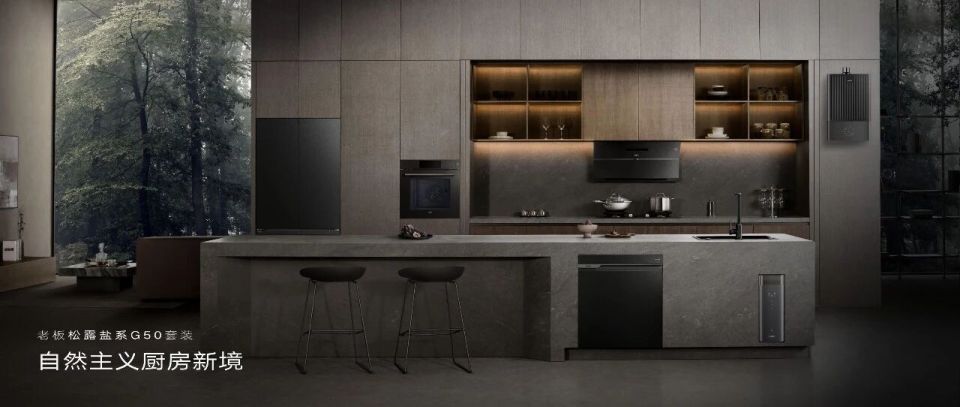
Additionally, the company introduced the ROKI digital kitchen appliance 'Creator i1,' equipped with the world's first AI cooking assistant, 'Mr. ROKI,' which connects kitchen devices for intelligent collaborative work. This is seen as an important attempt by the company to reconstruct traditional kitchen appliances.
The 2025 semi-annual report shows that sales of Robam Appliances' digital kitchen appliances equipped with AI technology increased by over 56% year-on-year in the first half of 2025, with the number of 'Shishen' APP users exceeding 5.4 million.
However, Robam Appliances' highly anticipated transformation still faces numerous challenges. Firstly, whether AI kitchen appliances meet genuine demand remains to be seen.
Currently, many products' AI features are criticized as 'smart for the sake of being smart,' failing to fundamentally address core pain points in the cooking process. Instead, they increase costs and push up prices, creating a certain contradiction with the current consumer market's general pursuit of practicality and cost-effectiveness.
Secondly, the AI smart kitchen appliance market is no longer a blue ocean. Midea and Haier Smart Home have proposed whole-house smart strategies and possess larger user bases and data ecosystems. Professional kitchen appliance brands like Fotile are also advancing in smartification. Robam Appliances' 'Shishen' model needs to prove its unique value to gain a foothold in the market.
Notably, the contrast between Robam Appliances' 414 million yuan in research and development expenses and 3.079 billion yuan in selling expenses in 2024 highlights a disparity. From this perspective, the long-term low proportion of R&D investment may lead to insufficient momentum for AI innovation, which requires substantial and potentially risky investments.
Especially in the context of a prolonged downturn in the real estate sector, safeguarding the core business and identifying growth opportunities, while continuing to explore new paths based on the pragmatic style inherited from previous generations, requires Robam Appliances not only to deepen the AI capabilities of its products but also to shift from an engineering mindset to a user mindset. It must demonstrate a firmer determination to transform by creating products that genuinely address usage pain points rather than merely pursuing parameter leadership.
-
![]()
Hardware is the skeleton, AI is the soul, and data integrates the two
-
![]()
China’s AI Industry: A Unified Pivot Towards Monetization?
-
![]()
New Progress! Infineon Completes Acquisition of ams OSRAM's Non-Optical Sensor Business
-
![]()
35 Million Bet on an Optical Future! Tengjing Technology Makes a Move in AR
-
![]()
Why World Models Get Stuck on Construction Roads in Autonomous Driving Applications
-
Alibaba Initiates Cultural Transformation: Is Jack Ma Making a Strategic Comeback?
-
Tianfeng Heads to Hong Kong for IPO with RMB 3.8 Billion in Funds: Xingyu's Cross-Border Foray into Embodied AI Faces Uncertain Future
-
![]()
Mengshi Auto’s High-End Aspirations Dashed: Huawei Partnership Fails to Revive Sales, New Model’s Entry Price Dips Below 300,000 Yuan