Can the Decline of Tesla’s Electric Vehicle Business Be Reversed Through Musk’s Heightened Investment in AI?
 02/02 2026
 605
605
Author: Chen Jia
Produced by: Insight Auto
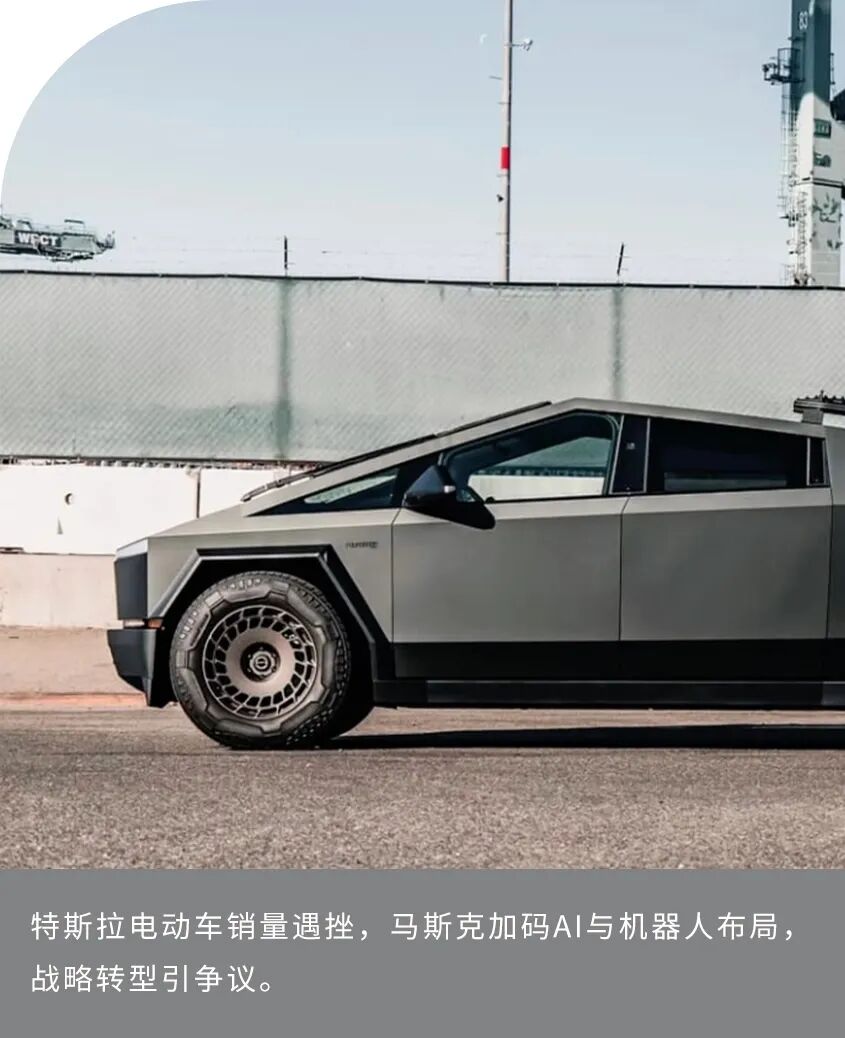
On January 28, 2025 (local time), Tesla released its financial report for the fourth quarter of 2025, delivering a sobering blow to the market. Revenue fell by 3% year-on-year to $24.9 billion, net profit plummeted by 61%, and annual electric vehicle (EV) sales dropped by 9% to 1.64 million units. This performance lagged far behind Chinese rival BYD, which sold 2.26 million units, casting doubt on Tesla’s global dominance in the EV market.
Simultaneously, Tesla announced a $2 billion investment in Elon Musk’s AI startup, xAI, and plans to halt production of its premium Model S and Model X vehicles, redirecting production capacity toward its humanoid robot, Optimus.
This series of strategic moves has been interpreted as Tesla’s pivot from being primarily an EV manufacturer to positioning itself as an AI and robotics company. Musk stated, “We’re moving toward a future centered on autonomous driving.”
Behind this “elephant turning” lies Tesla’s proactive adaptation to the fading market dividends (or benefits) in the EV sector. Alternatively, is this another expansion driven by Musk’s personal ambitions? The answer may lie in Tesla’s financial details, strategic layouts, and shifts within the industry.

EV Business Slowdown: From Growth Myth to Growth Dilemma
The financial report reveals that Tesla’s EV sales in the fourth quarter of 2025 declined by 16% year-on-year, with full-year sales down by 9%—marking the first annual sales drop since 2020.
More critically, profitability collapsed. Net profit in the fourth quarter fell by 61%, and the gross margin dropped from 17.6% in the fourth quarter of 2024 to 12.4%, marking its lowest level since 2019.
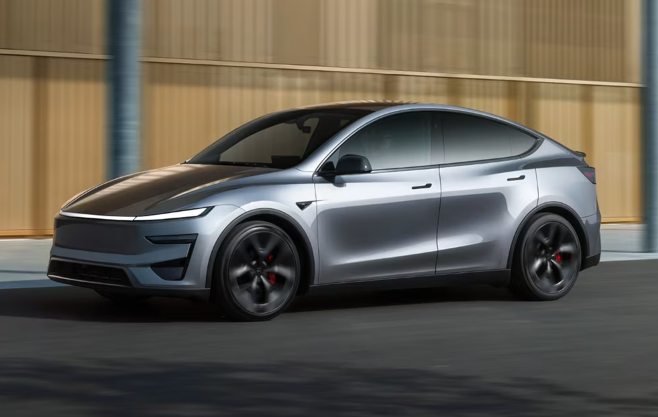
The direct cause of the sales decline is intensified competition. In China, BYD leveraged its cost advantages and vertically integrated supply chain to sell 2.26 million EVs in 2025, 1.38 times Tesla’s volume. In Europe, traditional automakers like Volkswagen and BMW accelerated their electrification efforts, eroding Tesla’s market share. In the U.S., Ford, Rivian, and legacy players like GM and Toyota launched aggressive EV offensives, squeezing Tesla from both sides.
Tesla’s predicament stems from an imbalanced product portfolio. For years, the company relied on the mid-range Model 3 and Model Y for sales, while its premium models, the Model S and X, struggled due to high prices and slow updates. Financial data shows that the Model S and X accounted for less than 5% of 2025 sales, with a continuous downward trend.
During the earnings call, Musk announced that Tesla would halt production of the Model S and X in April 2025 and repurpose the Fremont factory’s capacity for Optimus production. This decision was interpreted as a “sacrifice for survival”: abandoning inefficient premium models to focus resources on future sectors.
However, Tesla’s lower-priced models also failed to drive growth. In fall 2024, Tesla launched “stripped-down” versions of the Model Y and Model 3 to attract price-sensitive buyers. But limited price cuts and reduced government EV subsidies in multiple countries weakened their competitiveness.
Market analysts note that Tesla lacks a true affordable bestseller (e.g., a model priced under RMB 200,000), leaving it at a disadvantage against Chinese brands like BYD and Wuling in the mass market.
Tesla’s struggles are also tied to shifting global policy environments. Starting in 2025, major markets like the U.S., China, and Europe slashed EV subsidies, raising consumer costs and dampening demand.
In China, for example, the 2025 phaseout of new energy vehicle tax incentives, coupled with rising battery material costs, further eroded the price advantage of Tesla’s Model 3 and Model Y.
On the supply chain front, Tesla faced challenges. Despite cost reductions via 4680 batteries and integrated casting, global chip shortages and rising logistics costs squeezed profit margins. Free cash flow in the fourth quarter fell by 30% year-on-year to $1.4 billion.

AI and Robotics: Musk’s “Second Growth Curve”
Amid the EV slowdown, Tesla accelerated its push into AI and robotics. On January 28, it announced a $2 billion investment in Musk’s xAI for its Series E funding round.
xAI, valued at $230 billion after multiple funding rounds, granted Tesla a minority stake (less than 1%) but with strategic significance. Founded in 2022, xAI competes with OpenAI, featuring its flagship chatbot, Grok. Under the agreement, Tesla will integrate Grok into select EV infotainment systems, enabling in-car AI services for owners.
This investment sparked controversy. In June 2024, Tesla shareholders sued Musk, alleging that he diverted AI resources, talent, and opportunities from Tesla to xAI, breaching his fiduciary duties. Although the court has not yet ruled, the investment was seen as “Musk’s power expansion.”
Market analysts believe that Tesla’s deepening ties with xAI could pave the way for synergies in AI technology (e.g., autonomous driving, robot control) but may exacerbate tensions between shareholders and management.
Tesla’s robotics strategy is equally ambitious. Musk revealed plans to convert the Fremont factory’s Model S and X production lines into Optimus production, targeting an annual output of 1 million robots in the long term.
Currently, Optimus has entered “functional verification,” handling material handling and assembly tasks in Tesla factories with efficiency nearing that of human workers.
Optimus’s mass-production logic mirrors Tesla’s automotive approach: scale to reduce costs, aiming for a sub-$20,000 (RMB 140,000) price point for consumer markets. Musk predicts that Optimus’s market size will dwarf that of EVs, becoming a core business for Tesla.
Autonomous driving is another pillar of Tesla’s AI strategy. Financial data shows that subscriptions for Full Self-Driving (FSD) software surged by 38% year-on-year to 1.1 million users, becoming a key recurring revenue stream.
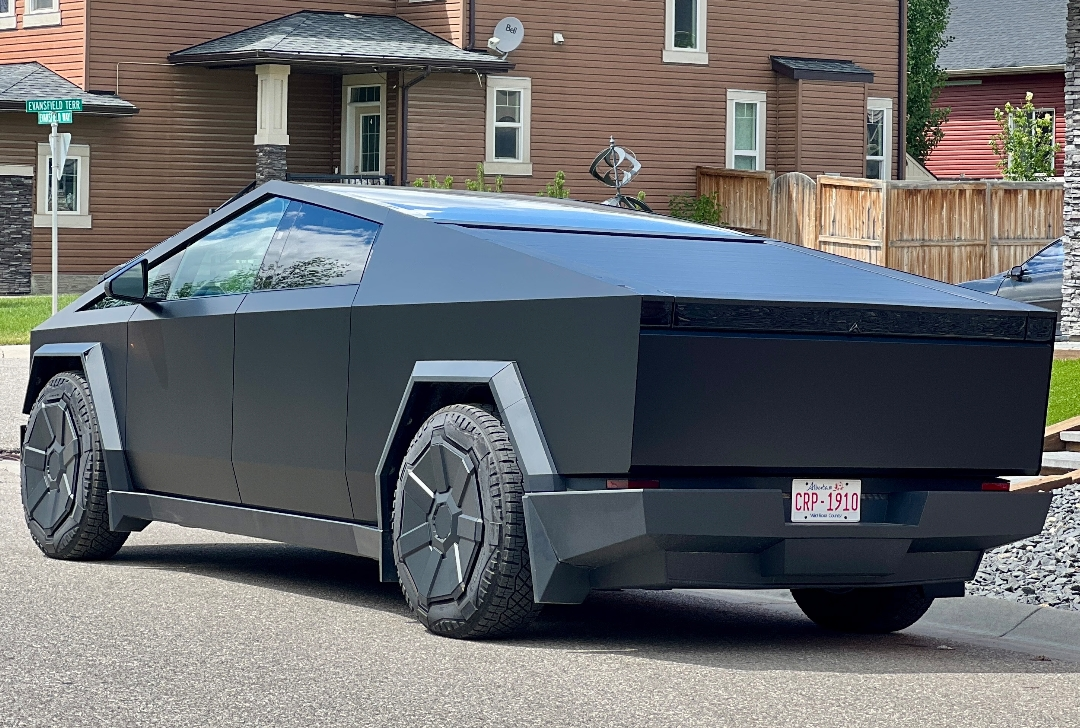
Musk announced that Cybercab production would begin in April 2025—a fully autonomous, steering wheel/pedal-free two-seater—with long-term output expected to exceed that of all current Tesla models combined.
Additionally, Tesla is testing Robotaxi services in Austin, Texas, and San Francisco (with safety drivers), planning a shift to fully driverless operations.
Company executives emphasized Tesla’s pivot from “selling cars” to “selling services,” building new profit ecosystems via autonomous taxis and robot delivery.

Tesla’s Future: Successful Transformation or Self-Disruption?
Tesla’s strategic shift has divided market opinion. Optimists argue that Tesla is positioning itself for the “next decade” through AI and robotics, leveraging its technological and brand strength to dominate new sectors. Pessimists warn that EVs remain Tesla’s foundation, and declining sales and profits could strain cash flows, while AI and robotics commercialization require long-term investment unlikely to offset EV losses soon.
After the earnings release, Tesla’s stock fell by over 5% in after-hours trading, reflecting concerns about transformation risks. Morgan Stanley noted that Tesla must prove the commercial potential of Optimus and FSD by 2026 to avoid stagnation.
Musk’s ambitions extend beyond cars. He has repeatedly stated that Tesla’s goal is to accelerate the world’s transition to sustainable energy, requiring synergy across EVs, energy storage, AI, and robotics.
From this perspective, Tesla’s pivot is logical: as the EV market becomes increasingly competitive, AI and robotics offer new growth frontiers. Tesla’s automotive technology, data, and supply chain advantages could secure a leading position in these sectors.
However, history shows that tech giants’ transformations often involve pain. GM’s shift from fuel-powered vehicles to EVs failed due to strategic inconsistency and poor execution; IBM’s transition from hardware to software and services succeeded but took nearly two decades.
Tesla’s ability to break the “transformation curse” depends on balancing EV declines with investments in new businesses and convincing markets of its future vision.
From rockets to tunnels, EVs to brain-computer interfaces, Musk has always aimed to reshape human civilization. Tesla’s current pivot is both a commercial expansion and a high-stakes bet on future productivity.
If a million Optimus robots exit factories, FSD becomes standard for global drivers, and Cybercab redefines mobility, Tesla may—like it disrupted the automotive industry with the 2012 Model S—redefine the boundaries of tech companies once again.
END
-
![]()
Enflame Tech's IPO Journey: Navigating Over 5.9 Billion Yuan in Losses and Soaring Debt in Q1 This Year
-
![]()
Trillion-Yuan Giant Li Shufu 'Streamlines': Could Levc Be the Casualty?
-
![]()
AI Competes for Electricity and Generates Power in the Gobi Desert
-
![]()
The First Batch of Victims of the AI Bubble: Programmers
-
![]()
ByteDance, DJI, and Xiaohongshu Secure Top Three Positions Among China’s Fastest-Growing Unicorns
-
Tesla's in-car voice system in China is finally learning to 'understand human language'
-
![]()
Foreigners Are Amazed: Chinese Electric Vehicle Drive Systems Unveil Innovative 'Poses'
-
![]()
700,000 Brothers and the Future of Robots: Behind JD.com's 'Nirvana Plan'