Mid-Range Phones Revisit 2021: Dewdrop Displays and 8GB RAM Make a Comeback, Can These Drastic Changes Keep Users?
 04/02 2026
 472
472
There's no need to rush; let's observe how the situation evolves.
In recent years, the smartphone market has been embroiled in intense "involution," especially in the mid-range segment (priced between 1500 and 3000 yuan), which has become a fiercely contested arena for manufacturers. From incremental upgrades to 1080P screens and then to 2K displays, the introduction of 100W fast charging, and the availability of up to 16GB or even 24GB of RAM, users have grown accustomed to enjoying near-flagship experiences at mid-range prices.
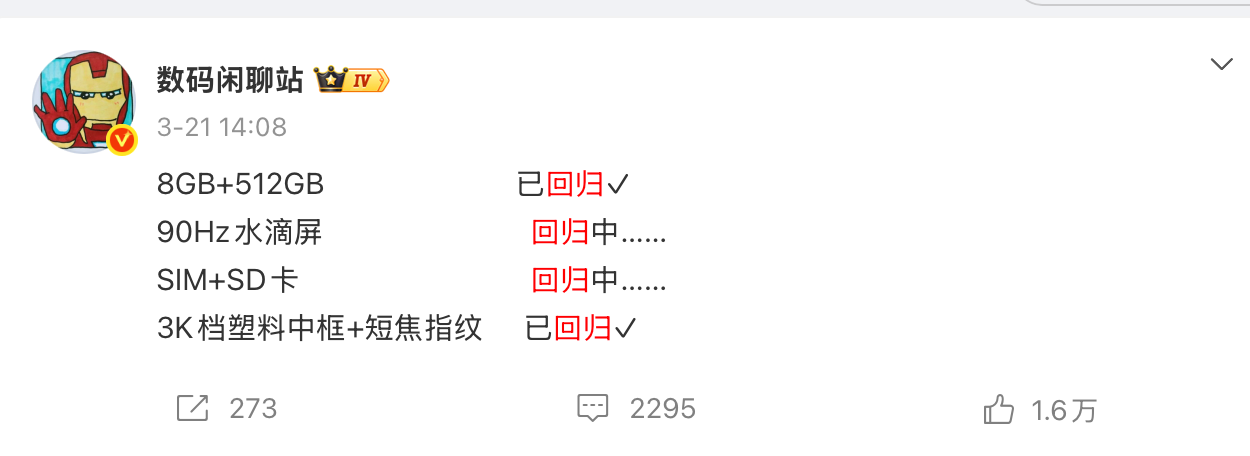
(Image source: @Digital Chat Station)
However, according to the renowned tech blogger "Digital Chat Station," the upcoming mid-range phone market is poised to enter its "darkest period ever." With supply chain costs soaring across the board, mid-range phones will not only halt their "leapfrogging" in specifications but may even witness a comprehensive downgrade, reverting to the levels seen in 2021.
Faced with this sudden industry downturn, how should manufacturers navigate their way to survival?
A Nostalgic Journey Back to 2021: How Preposterous Is This "Regression"?
If the leaks prove accurate, the first casualty will be the screens we interact with daily. In an era where punch-hole displays and ultra-narrow bezels have become the visual norm, "dewdrop displays" and uneven four-sided bezels—relics of a bygone era—are likely to make a comeback to drastically reduce panel customization and packaging costs.
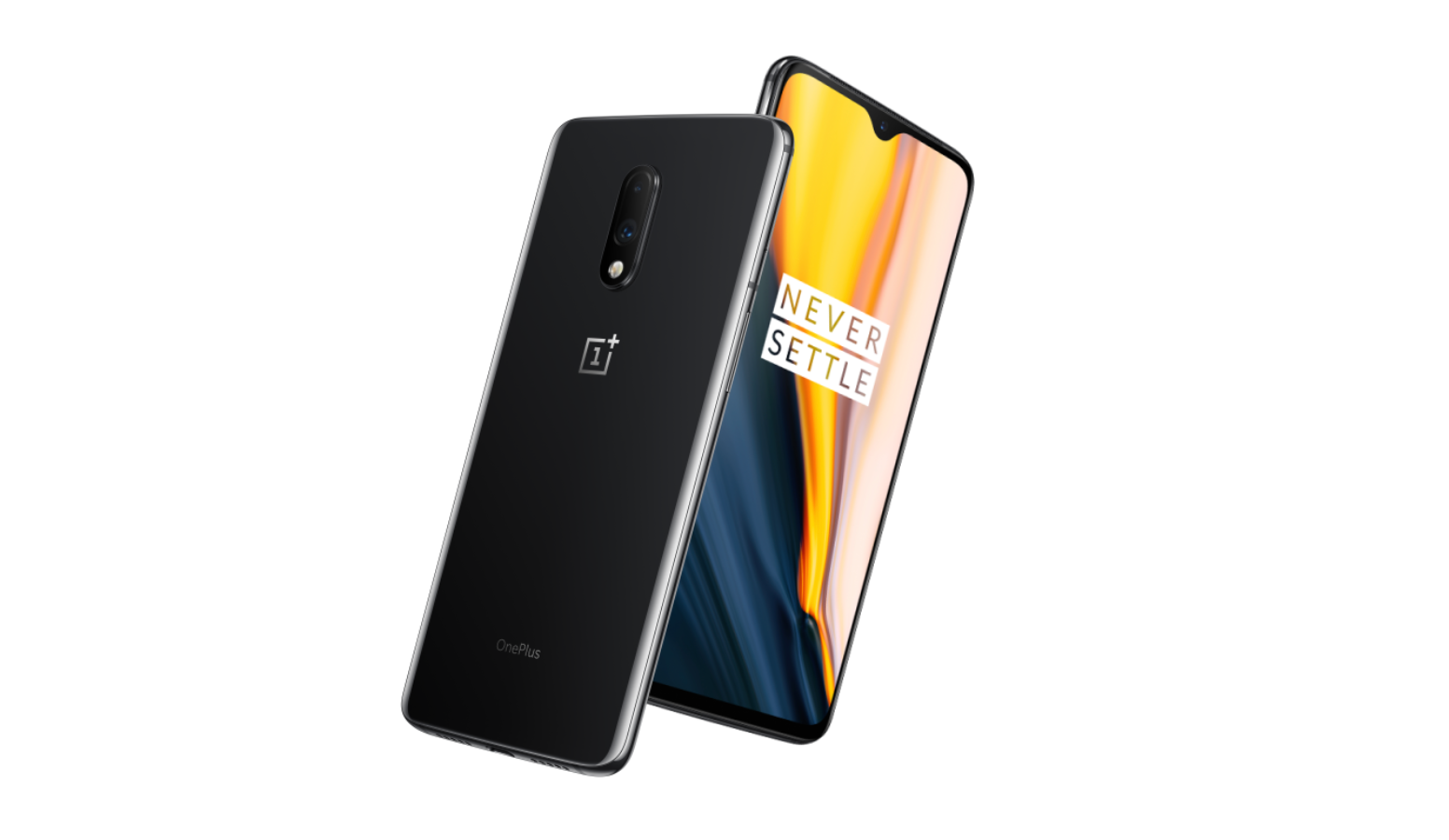
(Image source: OnePlus official)
This may be followed by reduced screen resolutions and eye-straining low-frequency PWM dimming—a visual "renaissance" that represents the most visible compromise under the pressure of supply chain costs.
Yet, compared to aesthetic downgrades, the regression in storage combinations may evoke a deeper sense of disappointment. The reason mid-range phones were able to offer large memory configurations in previous years, even providing 24GB+1TB combos, was essentially due to a global oversupply of memory chips leading to fire-sale pricing.
Today, however, with major upstream memory giants collectively cutting production and aggressively maintaining prices, procurement costs for RAM and storage have doubled or even tripled. Faced with these surging costs, mid-range phones may well revert to starting at 8GB of RAM. In today's Android ecosystem—where apps are becoming increasingly bloated and system mechanisms more complex—8GB means users will need to frequently clear background processes, heralding a return to the era of "opening the camera restarts WeChat."
As for storage, manufacturers might even resurrect the long-dormant SIM+TF card combo design, attempting to alleviate user storage anxiety through this archaic physical expansion method.
Some readers might view this as a positive—after all, doesn't it save money on high-spec configurations? However, TF cards fell out of favor in phones for good reason. Firstly, their read/write speeds (150-300MB/s for mainstream cards) are significantly slower compared to modern phone speeds (2000-4000MB/s), meaning app launches, gallery access, and file transfers could slow down severalfold. In other words, even if used solely as "extra" photo storage, the experience suffers when accessing files.
Secondly, most SIM+TF card designs back then offered only an "either/or" choice—you could use two SIM cards or one SIM plus one TF card. For users with two or even three phone lines today, this severely limits practicality.
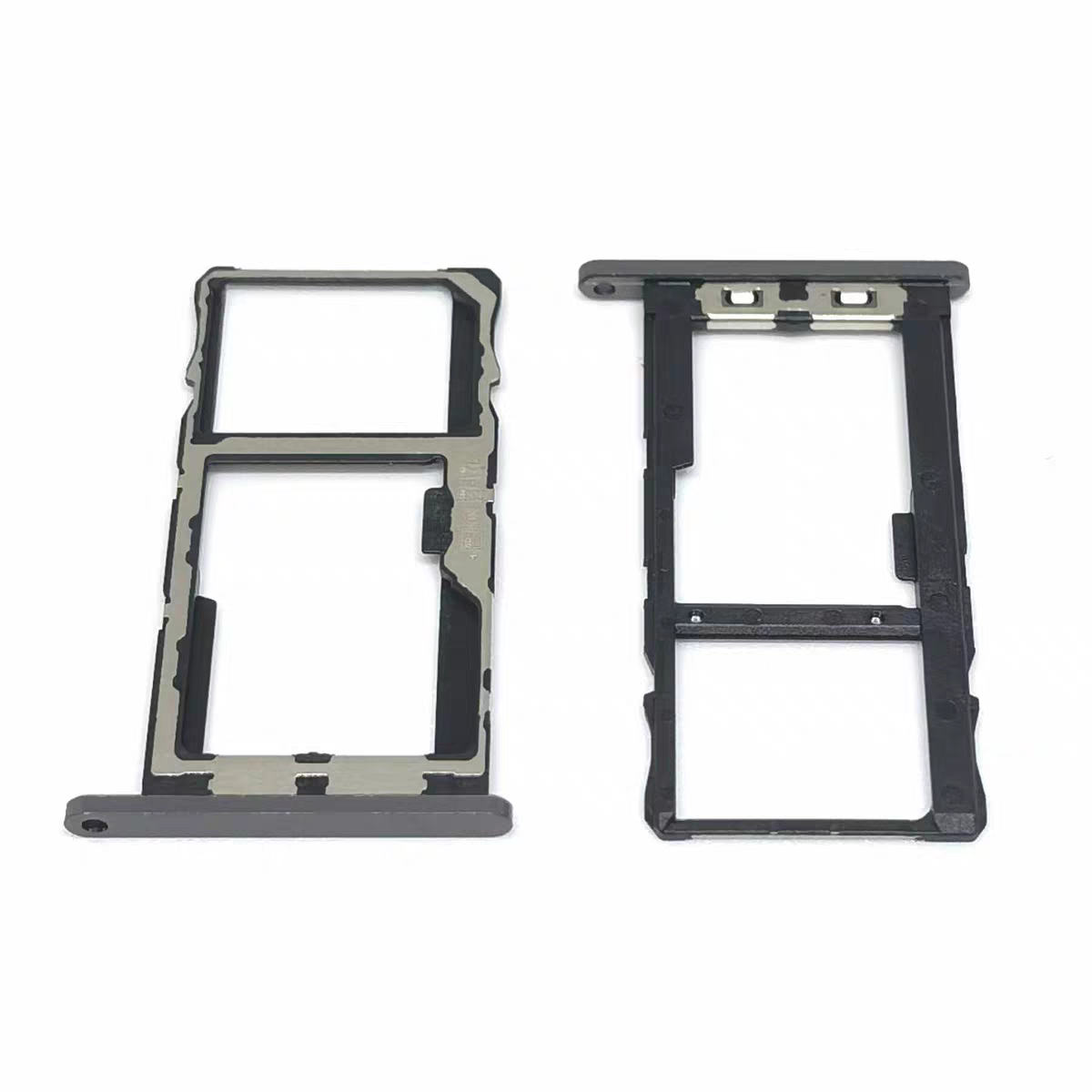
(Image source: Taobao)
Configurations once used to enhance the overall device's premium feel will also face ruthless cuts. For instance, sleek glass backs and attractive metal frames may be replaced by cheap-feeling plastic; large, vibrant linear motors might degenerate into loose small-sized linear motors or even rotor motors; even under-display fingerprint sensors could be sacrificed to save a few dollars, replaced by side-mounted physical sensors.
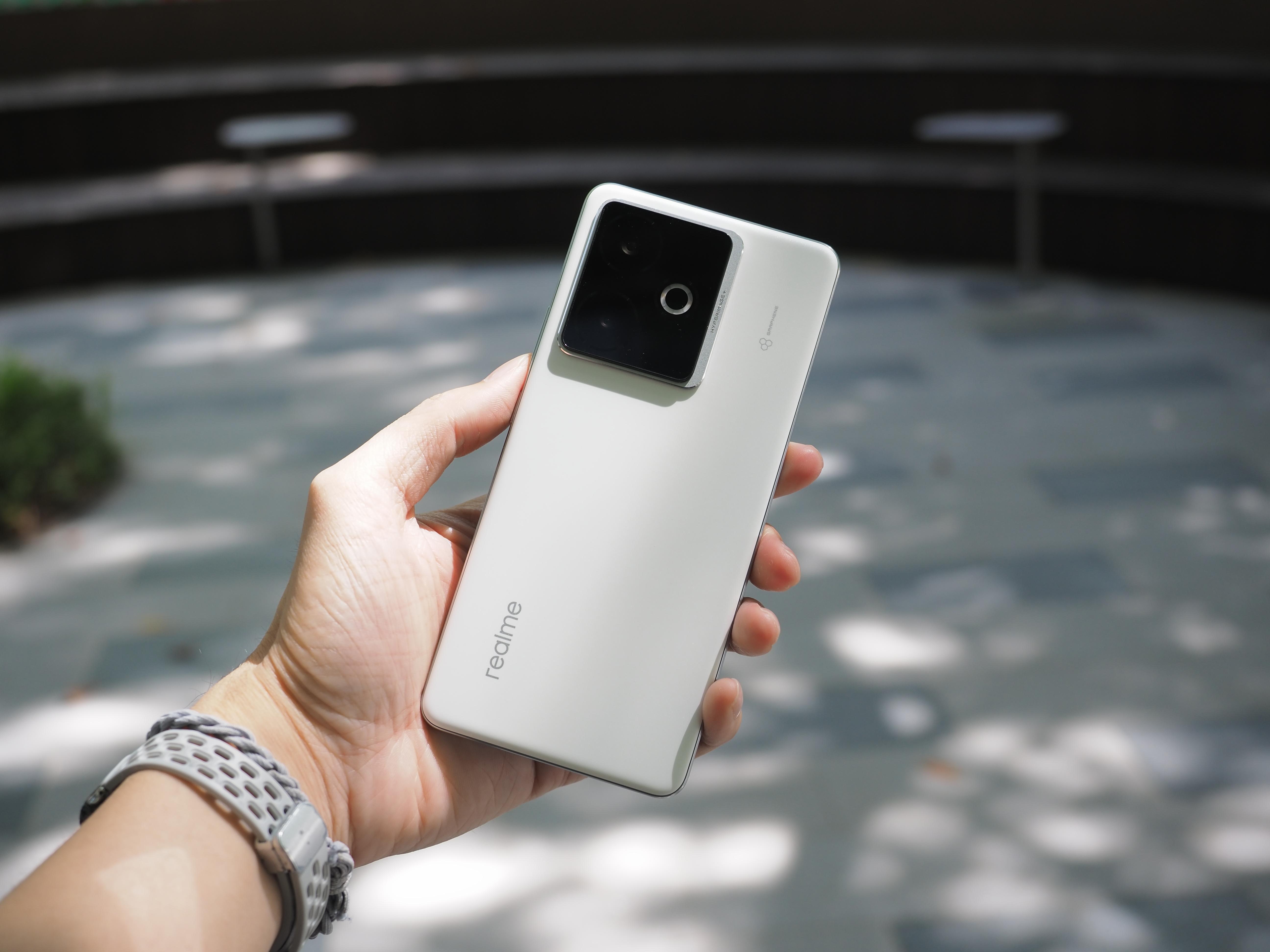
(Image source: Leikeji photography)
This regression isn't due to manufacturer arrogance but rather reflects a harsh reality: with processor foundry fees hitting record highs and screen/storage prices remaining elevated, profit-marginal mid-range phones have no choice but to self-cannibalize without raising prices.
How Can Manufacturers Break Through When Forced to "Amputate for Survival"?
This passive regression spells disaster for phone makers, as mid-range devices are their bread-and-butter for maintaining market share and amortizing R&D costs. If new mid-range models "regress" in specifications, users will either cling to their old devices or flood the secondhand market for previous-gen flagships, dealing a devastating blow to manufacturers' cash flow and inventory.
A collapse in the mid-range market would trigger an "earthquake" across the entire phone industry ecosystem.
Thus, at this critical juncture, intelligent compromise has become a survival imperative for all manufacturers.
First, they must understand that while specifications may shrink, the user experience's bottom line cannot: texture and peripheral features can downgrade, but core smoothness and battery life must remain intact. Even with a plastic body, as long as a flagship-grade or sub-flagship processor or a sufficiently large battery remains, the phone retains competitiveness. For most mid-range users, as long as daily use remains lag-free and battery life lasts a full day, other shortcomings can be forgiven.
When it comes to experience, since hardware must now shrink, software optimization becomes crucial. Faced with RAM reductions, manufacturers must deliver more aggressive memory management algorithms to minimize background app kills. With imaging hardware downgrades, they must delegate flagship-exclusive computational photography techniques to mid-range models, using algorithms to compensate for optical hardware shortcomings.
In other words, deeper optimization equals higher survival odds at this unique juncture.
From a reader's perspective, if you urgently need a new phone this year, your selection strategy must adapt.
First, abandon the "buy new, not old" mindset entirely. Previous-gen flagships or excellent mid-range models released six months ago (now at rock-bottom prices) may prove wiser choices. After all, older models benefited from better supply chain conditions, featuring sturdier builds, more generous memory, and superior screens.
Alternatively, if you must buy a newly released mid-range phone, insist on two points: first, the processor—no matter how peripheral specs are cut, the chip determines a phone's usable lifespan, so prioritize Qualcomm or MediaTek mid-to-high-end chips. Second, never compromise on RAM—even if it means sacrificing unnecessary fast charging or gimmicky camera features, allocate your budget to 12GB or higher RAM versions. Identify your core needs and spend wisely; that's the sole truth in phone purchasing today.
No Rush, Let the Dust Settle
Ultimately, this mid-range spec regression isn't anyone's deliberate sabotage but an inevitable reality of soaring supply chain costs forcing manufacturers and consumers to adapt. Over the past two to three years, industry involution spoiled us, accustomed to near-perfect experiences for around 2,000 yuan. Now that the tide has suddenly receded, the psychological gap is inevitable.
But precisely when manufacturers face this dilemma and products enter a transitional lull, we must keep perspectives balanced. A phone is ultimately a tool for communication, recording, and killing time—it should serve our lives, not create config anxiety. If your old device merely suffers slight lag or battery degradation, spend around 100 yuan on an official battery replacement and clear space-hogging WeChat chat histories. You'll find it can comfortably last another year or more.
For ordinary users, the key is to stay grounded, clarify your actual phone usage priorities, and avoid being swayed by flashy marketing gimmicks. Use the money saved on phones for a nice meal or family outings—far happier than obsessing over specs. With patience, once production cycles recover and costs drop, truly good, affordable machines will return.
Mid-range phones, OPPO, Realme, Vivo, Xiaomi
Source: Leikeji
Images in this article from: 123RF Royalty-Free Library Source: Leikeji
-
![]()
Smartphone Prices Surge Amid Manufacturer Anxiety
-
![]()
Orbbec Soars to Record Heights, Eyes Further Capital Influx of 980 Million!
-
![]()
Tongding Interconnect Sets Up Shop in Shaoguan with 800 Million Yuan in Registered Capital
-
![]()
Before Kimi’s A-Share Debut, Zhipu Aims to Secure More 'Strategic Funding'
-
![]()
Innovative Leap | Fiber-Pluggable 1470nm Laser Source: Revolutionizing Precision Laser Weeding
-
![]()
73-Day Rapid Listing: Where Does Unitree's Wang Xingxing's 'Sense of Urgency' Come From?
-
![]()
AI Project Mindverse, Backed by Meituan, Faces Data Inflation Allegations Over Its Macaron Product
-
![]()
3000-word In-Depth Analysis | What Makes Physical AI So Magnetic? It Has Captivated Masayoshi Son, Jensen Huang, and Justin Sun All at Once