From a Junior High Graduate and Foxconn Factory Worker to the Head of a Multi-Billion-Dollar Empire: How Did She Achieve It?
 04/28 2026
 375
375

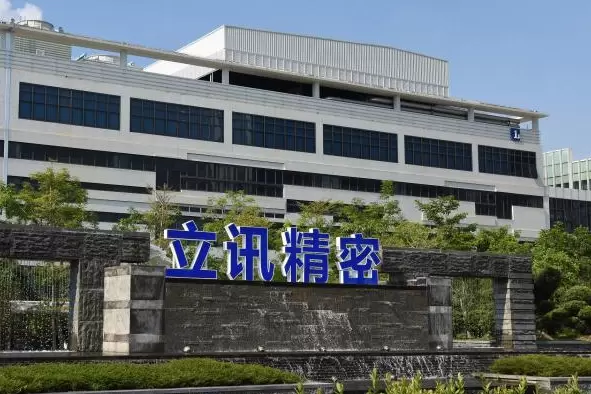
Sweat is the most precious fragrance that nourishes the soul, and this Chaoshan native has been drenched in it for three decades.
In the vast expanse of China's manufacturing sector, the name Wang Laichun may not immediately resonate. But what if I told you that a rural Chaoshan girl, armed with only a junior high school diploma, rose from an ordinary Foxconn assembly line worker to helm a listed company with a staggering market capitalization of 300 billion yuan? Would you dismiss it as just another rags-to-riches tale?
Don't be hasty in your judgment—this is no mere motivational fable; it's a bona fide business saga.

1988: Among 149 Girls
In 1988, in the bustling city of Shenzhen, 21-year-old Wang Laichun found herself among 149 female workers, marking her as one of the inaugural batch of employees recruited by Foxconn in mainland China.
How grueling were the conditions back then? The five-story factory building housed workshops on the lower four floors, with the top floor converted into dormitories. Over a hundred people were packed into large communal beds, so close that turning over meant brushing against the person next to you. Summers were sweltering, with only a few noisy, rickety fans in the dormitories. Bathing was a luxury unless done in groups, with someone keeping watch at the door.
The worst ordeal was the power outages. The factory rule was simple: 'Work when the power comes on, stop when it goes off.' If the power suddenly returned in the middle of the night, everyone had to rise and resume work.
Many couldn't endure it and left. But Wang Laichun persevered. Not only did she stay, but while others were shopping or sleeping, she secretly returned to the workshop to tinker with the machines, studying how to enhance efficiency.
For a full decade, she toiled her way up from an assembly line operator to a 'section chief,' the highest position a mainland employee could attain at Foxconn at the time, managing thousands of workers.

1999: At 32, Resigning to Forge a New Path
In 1999, at the age of 32, Wang Laichun made a decision that left everyone baffled: she resigned from her position as section chief to embark on her own entrepreneurial journey.
By then, she had already hit the 'glass ceiling' for mainland employees at Foxconn, managing thousands as a section chief, with a promising future ahead. Why give up a secure, well-paying job to dive into the uncertain waters of entrepreneurship? Many thought she had lost her mind.
But Wang Laichun knew in her heart that after spending a full decade at Foxconn, ascending from the assembly line to the pinnacle, she had gleaned all she could and amassed sufficient experience. It was time to take a leap of faith.
She and her brother, Wang Laisheng, emptied their savings and borrowed additional funds to acquire Hong Kong-based Luxshare Company. They continued in the same vein: contract manufacturing of electronic cables and connectors.
This choice sparked considerable debate at the time. Some accused her of 'poaching from Foxconn,' while rumors swirled that Luxshare was a 'front' for Terry Gou, a 'shadow company' established by Foxconn to lay out its A-share market strategy. Even more exaggerated claims suggested that Gou had funded her venture to support a 'second Foxconn.'
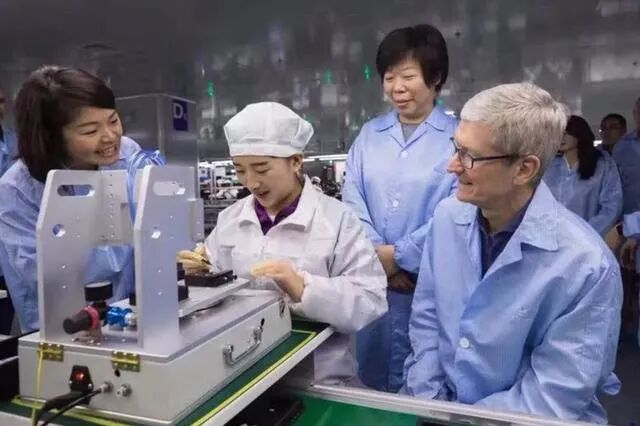
Wang Laichun never directly addressed these rumors. But one thing is certain: during its nascent stages, Luxshare's biggest client was Foxconn.
According to Luxshare Precision's prospectus from that year, from 2007 to 2009, revenue from sales to Foxconn accounted for as much as 47.73%, 56.46%, and 45.38% of the company's total revenue, respectively. In other words, during the critical startup phase, Foxconn alone supported nearly half of Luxshare's business.
But there was much more to it than just 'fulfilling orders.'
Wang Laichun's strategic vision was crystal clear: she provided 'seamless supporting services' to Foxconn. Wherever Foxconn had a factory, she established her own nearby—in Shenzhen, Kunshan in Jiangsu, Yantai in Shandong... Every Luxshare outpost was intricately aligned with Foxconn's布局 (layout). The logic was straightforward: be where the customer is, so service is swiftest and communication costs are lowest.
Some dubbed her 'Terry Gou's protégé,' and she didn't take offense—instead, she openly acknowledged it. Her management style was heavily influenced by Foxconn, characterized by strict discipline, strong execution, and a hands-on approach. She often worked on the production line alongside workers, leading by example during overtime shifts.
But others argued she was more than just a 'protégé.' While she relied on Foxconn's overflow orders to stay afloat, she secretly honed her own technology and production capacity, biding her time for a bigger opportunity.
And it was during this phase that the seeds of her later famous quote were sown: 'Those who can soar with the phoenix must be exceptional birds.'
At the time, Wang Laichun may not have been an 'exceptional bird.' But she knew: as long as she could keep pace with Foxconn, the 'phoenix,' one day she too would take to the skies.

2010: Going Public, Then Betting Big on Apple
In 2010, Luxshare Precision went public on the Shenzhen Stock Exchange. After the IPO, Wang Laichun embarked on a frenetic 'acquisition spree.'
In 2011, she made a move that could be described as 'going all-in.' Luxshare Precision, with just over 80 million yuan in cash on hand, acquired Kunshan LianTao, a company that manufactured connection cables for iPads, for 1.077 billion yuan.
With a 248% premium, many criticized her as 'reckless' at the time. But what transpired? This acquisition flung open the door to Apple's supply chain for Luxshare Precision. Though initially only handling peripheral small components, the company's revenue soared to 2.556 billion yuan in 2011, 2.5 times higher than the previous year.
From then on, Wang Laichun seemed unstoppable—acquiring an acoustic component factory to secure AirPods orders; buying Wistron's Kunshan plant to become the first mainland iPhone assembler.
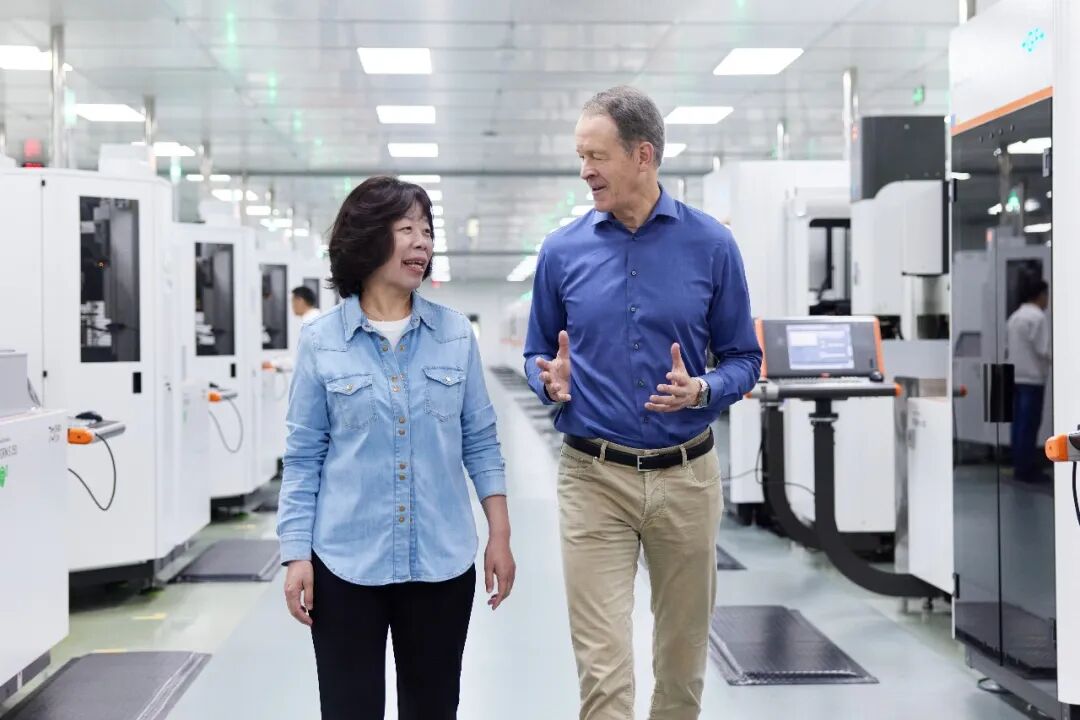
In 2017, Apple CEO Tim Cook made a special trip to Kunshan to visit Luxshare Precision's AirPods production line. Afterward, the discerning CEO remarked, 'What impressed me most was the passionate and driven team here.'

2024: Net Worth 85.5 Billion, But She's Starting to 'Diversify' Away from Apple
As Luxshare Precision delved deeper into Apple's supply chain, a problem emerged: over-reliance on a single major client.
In 2023, Apple alone accounted for over 70% of Luxshare Precision's revenue. What did that signify? If Apple sneezed, Luxshare Precision might catch a cold.
Wang Laichun was acutely aware of the risks involved. As early as 2021, she proposed the 'Three Five-Year Plans,' with a core message: don't put all your eggs in one basket. How to break free?
First, dive into the automotive sector. In 2022, Luxshare Precision invested 10 billion yuan to acquire a stake in Chery Automobile, aiming to become a global Tier 1 automotive supplier. In 2024, it spent over 4 billion yuan to acquire Leoni, a century-old German automotive wiring harness giant.
Second, bet on AI. In the telecommunications sector, Luxshare Precision's 800G silicon photonics modules have entered mass production, with 1.6T products undergoing customer validation. AI giants like NVIDIA, Microsoft, and Google have become its clients.
Third, globally distribute production bases. Vietnam, Mexico, Germany... Wherever there are tariff advantages, factories are built, using a global production layout to hedge against geopolitical risks.
Today, the proportion of Luxshare Precision's revenue from Apple has declined somewhat, while automotive business revenue is growing at a rate of doubling annually.

In March of this year, Forbes China released its latest list, and Wang Laichun topped the 'China's Outstanding Businesswomen' ranking with a net worth of 85.5 billion yuan.
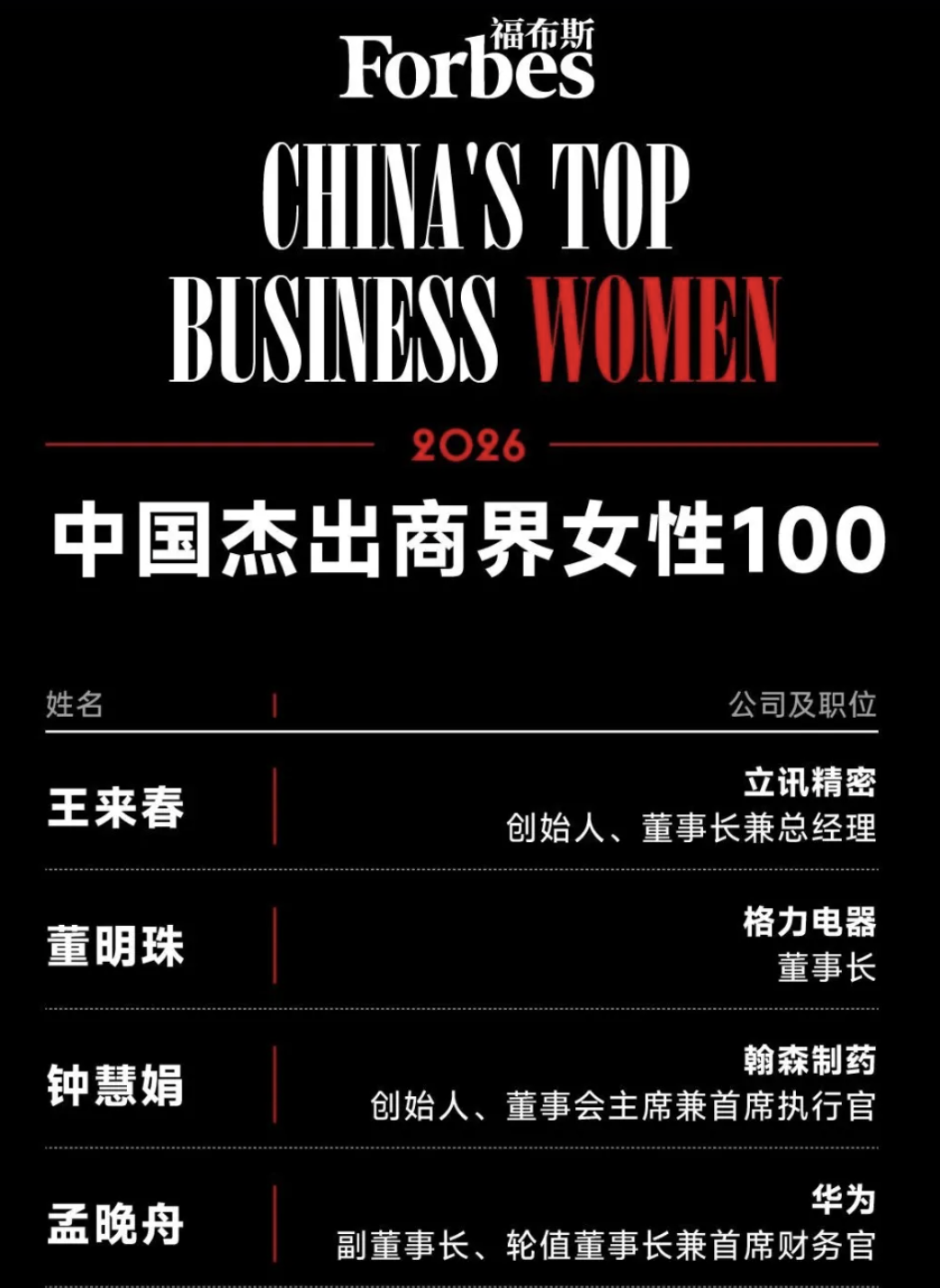
From the migrant worker crammed into a communal bed in 1988 to the billionaire female tycoon at the pinnacle in 2025, she has traversed this path for 37 years.
Some say she was fortunate, catching the wave of reform and opening up. Others say she was blessed to have met mentors like Terry Gou. Still, others dismiss her as just a contract manufacturing boss. But I pose the question: why was it her, among those 149 female workers at Foxconn, who broke through?
The answer may lie in those late nights when everyone else was sleeping, and she chose to return to the workshop to tinker with machines; in her ten-year odyssey at Foxconn, ascending step by step from the bottom to section chief; in her courage to spend 1 billion yuan when she had only 80 million in the bank, gambling on a future.
Terry Gou once uttered a phrase that Wang Laichun has cherished for a lifetime: 'Opportunities are always reserved for those who are prepared.'
She prepared for ten years, waiting for her chance to start a business. She prepared for another ten years, waiting for her opportunity with Apple. She prepared for five more years, waiting for her chances in AI and automotive.
Opportunities never favor anyone in particular. The difference lies in this: when the wind comes, are you ready to soar?

-
![]()
Q1 Color TV Summary: Five Major Trends Propel the Industry Towards High-Quality Development and Transformation
-
![]()
Revenue Hits 3.4 Billion, Non-Recurring Profit Rockets 52%! Yutong Optics Embarks on Its Second Growth Phase
-
![]()
Labubu Fridge Falls Short of Best-Seller Status
-
![]()
Large Models in Vehicles: Consumers Show Indifference
-
![]()
Seven Ways to Start a One-Person Company in the AI Entrepreneurship Era
-
![]()
400 Billion Market Cap Reversal: The Twilight of the AI Four Little Dragons and the Dawn of New Large Model Contenders
-
![]()
Insta360: The 'Hot Commodity' Being 'Hunted' by Everyone
-
![]()
SpaceX's $1.25 Trillion IPO Eve: Musk's Final Gamble Bets on a Full-Stack Space AI Ecosystem