The Evolution of Smartphones: How 'Android Phones' Transformed into 'Imaging Powerhouses' Over a Decade
 04/28 2026
 483
483
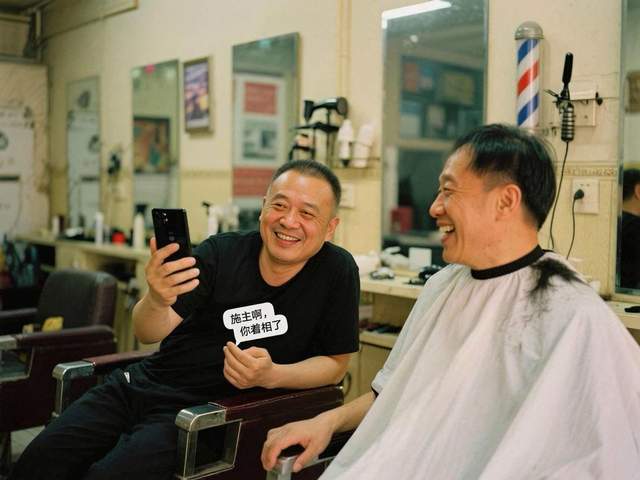
The story began a few days ago during a haircut session when I inadvertently overheard a conversation between two men seated beside me. Their exchange unfolded as follows:
"I saw your WeChat Moments; you made the switch from an iPhone to an imaging phone, didn't you? The pictures you've taken look stunning."
"Haven't you also switched recently? I opted for a vivo, and you went for a Huawei, right?"
"You used to shy away from posting photos, but now you're at it too. When are you going to start sharing selfies?"
"Hey, you're too fixated on appearances, monk."
A particular detail in their conversation caught my attention—the term 'imaging phone.' For a considerable period, such devices were simply referred to as 'Android phones.' The typical remark would be, 'Hey buddy, downgrading from an iPhone to an Android, huh? Saving some bucks?'
At some juncture, things took a turn. The term 'imaging phone,' once dismissed as pretentious, mere marketing hype, or a pseudo-concept, gradually gained acceptance and became a common, albeit widespread, term. This transformation occurred amidst fierce competition in the smartphone market. Over the past decade, global smartphone shipments have been on a decline annually, with Chinese brands in the Android camp, including Huawei (which transitioned to HarmonyOS), emerging as the main contenders. The lightweight, somewhat artistic, and elusive term 'imaging' became a lifeline for Chinese phones in a market characterized by intense competition for existing users.
Seizing this opportunity, Chinese phones embarked on a transformative journey. Philosophically speaking, every grand endeavor has humble beginnings. Everything that transpired in the past paved the way for the present. The decade-long struggle among Chinese phone manufacturers might have been to make that man in the conversation 'attached to appearances' just once.
Perhaps this is a bit self-indulgent, but I find this narrative quite appealing.

Even today, many firmly believe that iPhones reign supreme over other phones. For instance, a certain influencer once stirred controversy by referring to 'iPhone people' and 'Android people.' Preferences for a particular phone are shaped by a myriad of factors, including usage habits, needs, and brand trust, rendering them inherently subjective. However, few would argue today that iPhones possess superior imaging capabilities compared to other phones.
Yet, a decade ago, it was a consensus that iPhones outperformed Android phones in photography and videography. Many even believed that Android phones lacked imaging prowess altogether.
Back then, Android phones commonly suffered from overexposure in photos. Scenes like low light, backlighting, and telephoto were challenging to handle. This was because Apple not only had its proprietary operating system but also advantages in self-developed imaging hardware like ISPs. In 2016, Android phones generally relied on the stock ISPs that came with Snapdragon processors. Manufacturers could only make superficial adjustments, unable to deeply optimize capabilities like focusing, imaging, and video processing. Consequently, the imaging capabilities of Android phones were uniformly weak.
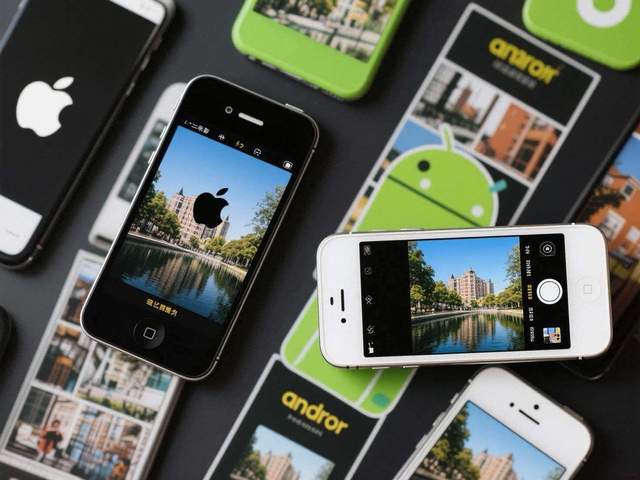
During that era, iPhones consistently topped the DXOMARK rankings. The iPhone 6s Plus and iPhone 7 Plus were the imaging kings of their time. When Android flagships were released, they would always include a photo comparison with the iPhone in their presentations. However, after much praise during the launch events, they would face widespread ridicule online, reinforcing the industry perception that 'Apple sets the standard for mobile imaging, and others are just trying to catch up.'
The situation was even more dire for video recording. The tech community at the time said, 'There are only two types of mobile videos: those shot on iPhones and everything else.' The iPhone 6s series was the first flagship to support stable 4K 30fps recording, while most Android flagships of the same period were still at 1080P 30fps. A few models labeled as 4K had issues like false labeling, frequency reduction, and inability to record for extended periods. Even at weddings or conferences, you could see photographers using iPhones to shoot videos. Event organizers considered it more professional and prestigious.
Overcoming deep-seated biases is an incredibly arduous task.

To break into the tightly controlled mobile imaging landscape, Chinese manufacturers needed a starting point. In 2016, that opportunity arose with the advent of multi-camera setups.
In 2016, Huawei's P9 series, in collaboration with Leica, introduced a dual-camera setup with a color + monochrome configuration. The significance of the P9 lay in its departure from the clichéd approach of competing with Apple solely on lens specifications and image clarity. Instead, it attempted to break free from Apple's technological framework and find a new focal point. Most importantly, the P9's dual-camera system indeed delivered clearer lines and shadows, evoking the 'German imaging' aesthetic beloved by photography enthusiasts. This demonstrated the necessity of multi-camera setups as a new innovation.
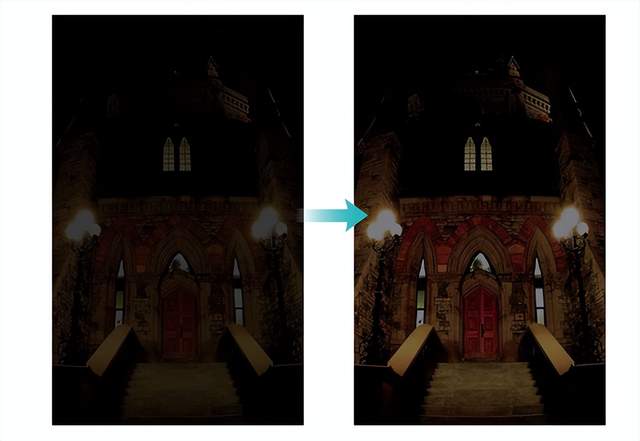
Shifting the focus from lens specifications to multi-camera collaboration laid the foundation for the subsequent development of mobile imaging in Chinese phones.
To put it bluntly, during that phase, the mobile imaging scene was largely sustained by Huawei's P series. Even Huawei's other flagship, the Mate series, lagged significantly behind the P series in imaging performance at the time. Fortunately, the rapid and positive market feedback from the P series indeed paved the way for imaging phones. The entire industry recognized this as a viable direction, rather than another fleeting innovation that would quickly fade into obscurity.
In 2018, Huawei's P20 series was released, featuring the Sony IMX600 1/1.7-inch sensor, marking a new era in smartphone sensor size—what manufacturers now refer to as 'a larger sensor dominates.' This generation achieved a qualitative leap in night photography, earning the nickname 'Huawei Night Vision.' From this point onward, the P20 series officially topped the DXOMARK rankings, initiating the era where Chinese imaging phones comprehensively surpassed Apple.
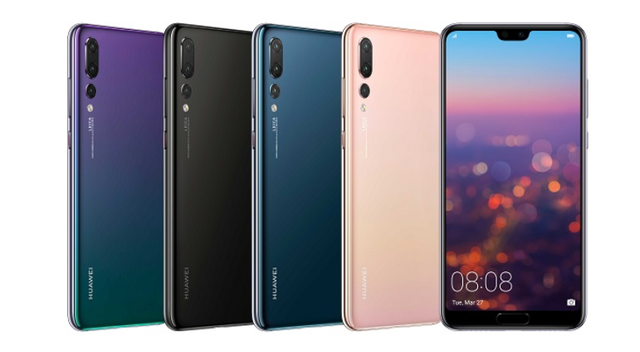
The subsequent P30 series introduced the RYYB ultra-sensitive sensor and 5x optical periscope telephoto lens, targeting low light and telephoto photography—two weak points in mobile imaging. The controversial 'Moon photography' feature propelled the P30 series into the spotlight, clearly demonstrating that Chinese phones could surpass Apple in imaging capabilities, or at least achieve unilateral dominance in certain aspects.
That same year, OPPO Reno introduced 10x zoom, vivo X30 Pro followed with a periscope telephoto lens, and Xiaomi CC9 Pro boasted a 108MP ultra-large sensor. The 'large sensor, multi-camera, full focal range' trifecta pioneered by Huawei's P series officially became the standard imaging configuration for domestic flagships. The iPhone 11 Pro series, released in the same year, introduced a triple-camera system for the first time but fell behind in imaging hardware specifications.
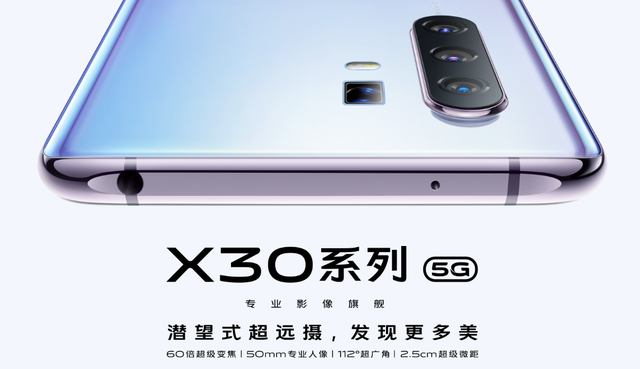
Bypassing Apple's mobile imaging system and instead collaborating with traditional camera manufacturers, exploring new AI+imaging solutions, and refining the software-hardware synergy of multi-camera systems paved an alternative path. Changing the landscape seemed less daunting.

In 2019, Huawei, having just become the world's top smartphone brand by shipments, suddenly faced U.S. sanctions. This temporarily halted its flagship models, including the P series. Fortunately, the path to imaging phones pioneered by the P series was not abandoned during this period. Instead, it was accelerated through the collective efforts of several major brands. The systematic surpassing of Apple by Chinese brands in mobile imaging gradually became a foregone conclusion.
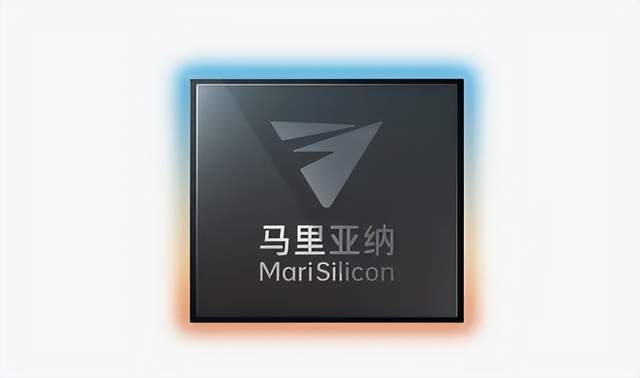
In this new phase, several key changes occurred. First, manufacturers realized that relying on stock imaging capabilities from SoC vendors and assembling innovations from the supply chain was a dead end. Having accumulated resources, OEMs began investing in self-developed mobile imaging technologies. In 2021, Xiaomi released the Surge C1 self-developed ISP, OPPO unveiled the MariSilicon X self-developed imaging NPU, and vivo launched the self-developed V1 imaging chip, driving innovation through proprietary technologies across multiple imaging capabilities. That same year, despite hardware limitations, Huawei introduced algorithmic breakthroughs with the optical computing system in the P50 series.
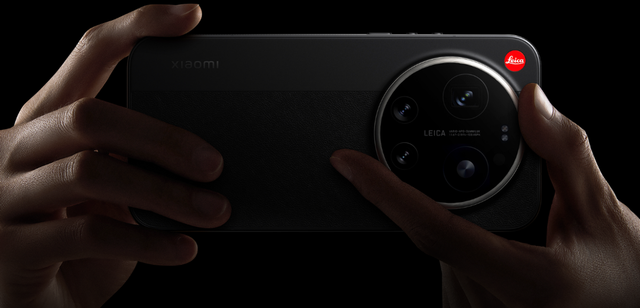
On the other hand, major phone manufacturers drew inspiration from Huawei's collaboration with Leica and began their own 'imaging partnerships.' After Huawei ended its partnership with Leica, Xiaomi became Leica's new partner. vivo and OPPO initiated optical collaborations with Zeiss and Hasselblad, respectively.
In the 2022 DXOMARK rankings, Chinese brands' flagships dominated the top positions. The path of imaging phones, initially explored by Huawei, had become a collective strength of Chinese phone brands.
Extreme mobile imaging demands, such as ultra-wide-angle, telephoto, night photography, and instant capture, were fully met during this phase. On one hand, the imaging capabilities and performances of domestic brands became more differentiated, enriching user choices. The earlier notion that 'Android phones only stack specs and have similar imaging capabilities' was completely discarded.
On the other hand, 'no weaknesses across all focal ranges and all times' became a unique hallmark of Chinese imaging phones. Features like all-primary cameras, AI, and optical algorithms, which Apple did not follow, formed a diverse arsenal, enabling Chinese brands to maintain strong and sustainable competitiveness in the global market.
From 2019 to 2022, the development of imaging phones can be summarized as follows: in static photography, Chinese brands achieved comprehensive leadership.

From 2022 to 2023, few still believed that Apple's imaging capabilities were comprehensively superior. However, a new viewpoint began to circulate: 'For photos, choose Android; for videos, choose iPhone.'
In other words, video capabilities might have been Apple's last stronghold in imaging. By 2024, this defense had largely been breached. That year, domestic phones vigorously competed in video capabilities. For instance, the vivo X200 series achieved 4K 60fps 10bit Log video recording, the OPPO Find X8 series enabled 4K 60fps video recording across all lenses, and domestic flagships comprehensively surpassed the iPhone 16 series in video stabilization, telephoto video, and night video capabilities. The video post-production ecosystems of Huawei, Xiaomi, and other brands developed rapidly, challenging the stereotype that only Apple had mature post-production software.

Starting that year, it seemed that no Chinese brand's main imaging phone considered comparing imaging capabilities with the iPhone a mandatory task at launch events. Instead, they collectively shifted to new tracks. Also around that time, domestic flagships uniformly introduced 'Stage Mode' and 'Concert Mode.' Capturing high-definition concert photos and videos from the top of a hill—a technically demanding and previously niche scenario—suddenly became a competitive focus. This exemplifies the extreme internal competition among Chinese imaging phones.
But it is precisely this intense competition that has consigned the dismissive term 'Android phone' to the trash bin.

Today, it is rare to hear someone specifically praise the iPhone's photography, and using an iPhone for mobile imaging creation seems less common. Some may still argue that Apple's imaging is more natural and pure, while brands like Huawei and vivo offer overly complex imaging capabilities. However, when it comes to choosing a phone for concert photography or landscape shots, or deciding which brand's photos to post on WeChat Moments or Xiaohongshu, users now make fair judgments.
The term 'imaging phone' has finally established itself in the Chinese market, becoming stable through word-of-mouth.
As we enter 2026, the thing that Chinese phone brands are increasingly riding on is DSLRs. A few years ago, claiming that phones could one day rival professional cameras would have been labeled as ignorant, paid promotion, or PR spin. However, on the path of imaging, frequent change seems to be the main theme.
vivo has unveiled a new product form featuring Zeiss teleconverter lenses, leveraging a combination of smartphone lens groups to break down the final barriers between imaging smartphones and DSLR cameras. Huawei Pura 90 Pro Max is equipped with a 1/1.28-inch sensor and a 200-megapixel telephoto lens, along with chip-level 200-megapixel RAW domain real-time processing technology, enabling high-definition video recording with 20x optical zoom. These advancements represent uncharted territory in the realm of smartphone imaging.

The inception of imaging smartphones might have been driven by a desire to shake off the label of being low-end products or to carve out a slice of the high-end market. This endeavor is highly pragmatic and result-oriented, far from being laid-back or carefree; instead, it is deeply "purpose-driven." However, after a decade of unwavering pursuit, significant transformations have indeed occurred. China has established itself as a trendsetter in the realm of imaging smartphones, particularly in areas such as AI-powered imaging, full-focal-length main cameras, and the development of independent supply chains. Imaging capabilities have started to permeate mid-range and even low-end smartphones through Chinese brands, making "capturing better photos" one of the few experiences that have become more accessible amidst a widespread surge in digital product prices. More crucially, imaging smartphones have yet to reach their limits and continue to infuse vitality into the core smartphone industry.
It has taken Chinese smartphones over a decade to reach a stage where users are enthusiastic about pressing the shutter button.
So, let's embrace our purpose-driven nature; being purpose-driven is the starting point for transcending our goals.

-
![]()
Q1 Color TV Summary: Five Major Trends Propel the Industry Towards High-Quality Development and Transformation
-
![]()
Revenue Hits 3.4 Billion, Non-Recurring Profit Rockets 52%! Yutong Optics Embarks on Its Second Growth Phase
-
![]()
Labubu Fridge Falls Short of Best-Seller Status
-
![]()
Large Models in Vehicles: Consumers Show Indifference
-
![]()
Seven Ways to Start a One-Person Company in the AI Entrepreneurship Era
-
![]()
400 Billion Market Cap Reversal: The Twilight of the AI Four Little Dragons and the Dawn of New Large Model Contenders
-
![]()
Insta360: The 'Hot Commodity' Being 'Hunted' by Everyone
-
![]()
SpaceX's $1.25 Trillion IPO Eve: Musk's Final Gamble Bets on a Full-Stack Space AI Ecosystem