Stagnant Growth Seen Among the Three Kitchen Appliance Titans
 05/14 2026
 462
462

Amidst an industry cycle shift, the market offers kitchen appliance companies little time for elaborate narratives. What truly determines survival is not the most glamorous concept, but the most robust and consumer-focused product.
Cover Source: Unsplash
Over the past year, Chinese kitchen appliance companies have faced significant challenges, with each encountering escalating "difficulties."
Recently, several kitchen appliance companies announced their 2025 financial results. Among them, Vatti experienced double-digit declines in both revenue and profit, with net profit attributable to shareholders plummeting by 37.90% year-on-year.
Robam Appliances delivered its poorest annual report since going public, with revenue declining year-on-year for the first time and net profit dropping by more than 20% for the first time. Fotile's revenue saw a slight year-on-year increase but still fell short of its 2023 income level.
More worryingly, by the first quarter of 2026, Robam and Vatti had not yet reversed their declining trends, with both revenue and profit scales continuing to decrease year-on-year.
In the past, the three kitchen appliance giants—Fotile, Robam, and Vatti—were brimming with ambition. In 2023, Ren Fujia, the head of Robam Appliances, vowed to "create a new Robam Appliances by 2025." In 2017, Pan Yejiang, chairman of Vatti, boldly stated ambitions of achieving "10 billion in three years, becoming number one in five years, and 20 billion in six years." Fotile even set a lofty goal of 100 billion.
Unfortunately, facing a market environment characterized by a real estate downturn and weak consumer spending, it is no easy feat for kitchen appliance companies to make a comeback during this challenging period.
However, the industry cycle is merely a superficial issue. The more pressing concern is how far kitchen appliance companies can progress independently after losing the strongest support from the real estate sector. The old era has ended. Are the new narratives ready to take center stage?
1
Industry Leaders Experience Performance "Derailment"
Earlier this year, Mao Zhongqun, chairman of Fotile Group, revealed that Fotile achieved revenue exceeding 17 billion yuan in 2025, representing a slight year-on-year increase. Although just a "slight increase," it made Fotile the only one among the three kitchen appliance giants—Fotile, Robam, and Vatti—to achieve positive revenue growth.
However, this achievement appears somewhat dubious. Since surpassing 10 billion yuan in 2017, Fotile has disclosed its revenue annually. But in 2024, Fotile only vaguely stated that its performance remained "largely stable."
Outsiders speculate that this might be because Fotile failed to maintain "growth" that year. After all, Fotile had already achieved revenue of 17.629 billion yuan in 2023, yet it only reported "exceeding 17 billion yuan" in 2025, suggesting that the company's performance may have stagnated.
The performance of Robam Appliances and Vatti is also far from optimistic.
In 2025, Vatti achieved revenue of 5.648 billion yuan, down 11.36% year-on-year. Net profit attributable to shareholders fell to just 301 million yuan, a 37.9% year-on-year decline. Both revenue and profit were under pressure, with revenue hitting a new low for the same period in nearly three years.
In the fourth quarter of the previous year, Vatti even reported a quarterly loss. Although it recovered in the first quarter of this year, it still did not escape the double decline in revenue and profit. First-quarter revenue was 1.186 billion yuan, down 5.86% year-on-year. Net profit attributable to shareholders was 101 million yuan, down 4.88% year-on-year.
Robam Appliances delivered its worst financial report since going public in 2010, with annual revenue of 10.116 billion yuan, down 9.78% year-on-year. Net profit attributable to shareholders was 1.256 billion yuan, a sharp 20.38% year-on-year decline.
This downward trend continued into the first quarter of 2026, with revenue of 1.963 billion yuan, down 5.46% year-on-year. Net profit attributable to shareholders was 307 million yuan, down 9.82% year-on-year.
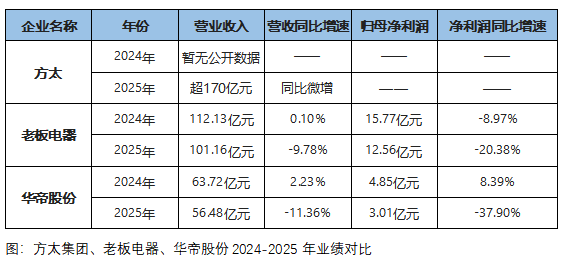
Compared to their past selves, the current three kitchen appliance giants appear somewhat disheveled. However, considering the entire kitchen appliance industry, their "loss of momentum" is not an isolated case.
According to data from Aowei Cloud Network, the total retail sales of kitchen and bathroom appliances reached 161.3 billion yuan in 2025, down 8.5% year-on-year. Retail volume was 89.77 million units, down 5.3% year-on-year. All categories showed a downward trend.
In addition to well-known factors such as the real estate market downturn and weak consumer market, the marginal effect of national subsidy policies has also begun to weaken. Without policy support, kitchen appliance companies are facing even tougher times.
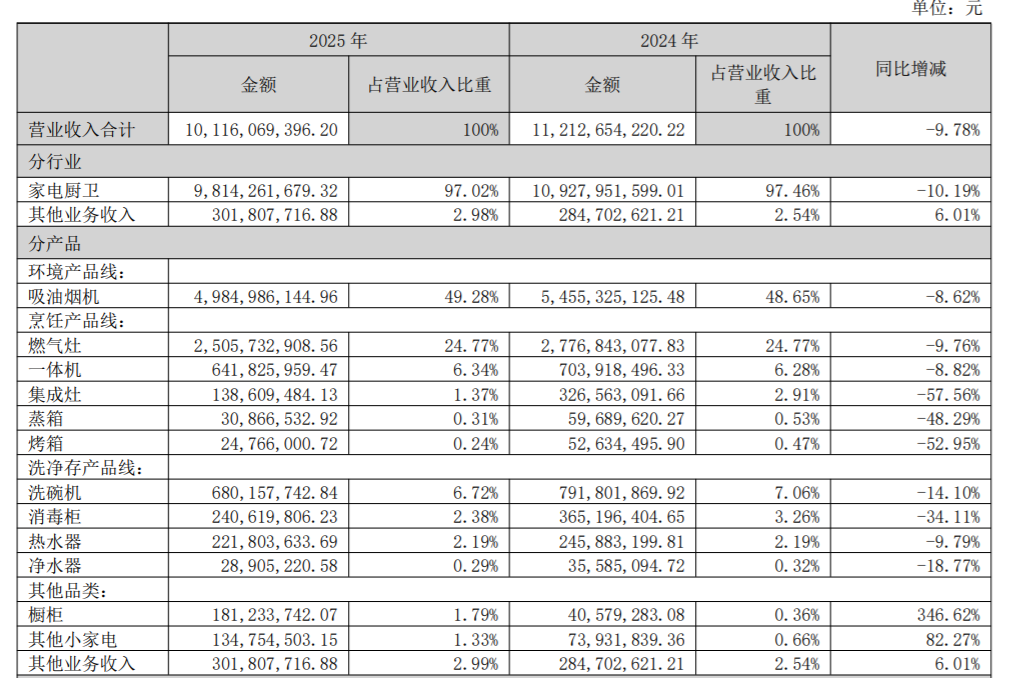
Take Robam Appliances as an example. Revenue from all its kitchen appliance categories has declined to varying degrees.
Not only have its main businesses, such as range hoods and gas stoves, failed to hold up, but its second growth drivers, such as dishwashers and disinfection cabinets, have also collapsed. Only peripheral businesses like cabinets and small appliances have managed to sustain growth.
Vatti is in a similar situation, with core categories like range hoods and cooktops declining. However, slightly better than Robam Appliances, Vatti's new kitchen appliance categories, such as dishwashers and electric ovens, have maintained positive growth.
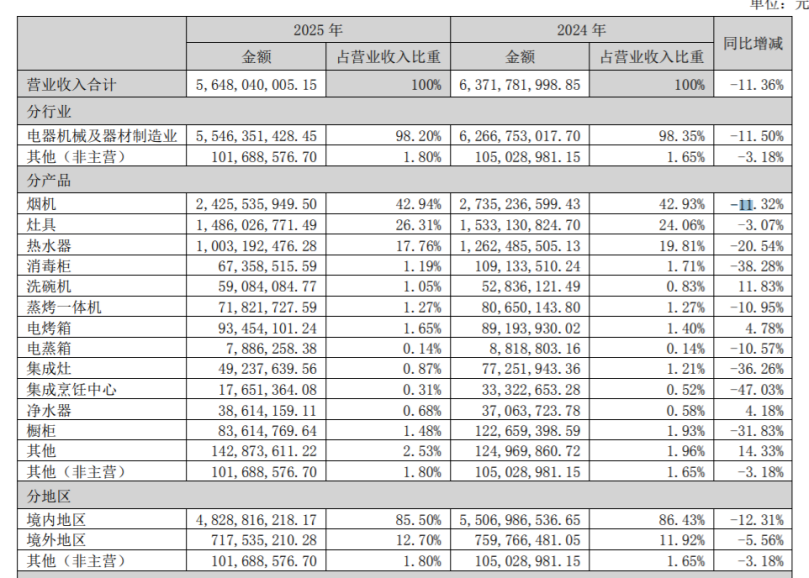
Additionally, overseas revenue for both Robam and Vatti has also come under pressure, declining by about 5% year-on-year and accounting for only about 11% of total revenue each.
With old businesses shrinking and new narratives failing to resonate, the days when kitchen appliance companies could "lie back and earn" from the real estate dividend are long gone.
2
Have Transformation Efforts Gone Off Track?
The pressure on the kitchen appliance industry did not start in 2025. As early as two or three years ago, the revenue growth of "Fotile, Robam, and Vatti" had already begun to slow, sounding early warning signals.
The kitchen appliance giants did not sit idly by and began exploring transformation routes such as high-end, smart, and whole-house customization. However, looking back, most of these transformations not only failed to cure the illness but, due to overexertion and misdirection, made the condition worse.
First, the high-end narrative lacks substance.
On the Black Cat Complaints platform, Fotile, Robam, and Vatti have accumulated thousands of complaints, with Vatti having over 3,000. Consumers widely report issues such as product quality problems, inadequate after-sales service, and false marketing.
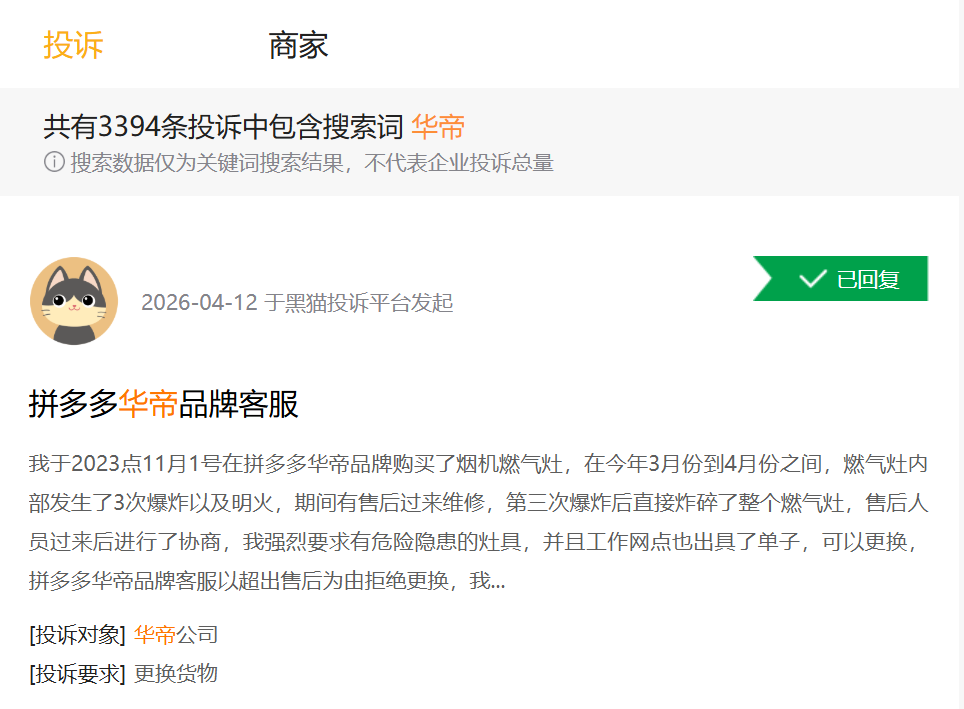
For example, in 2023, multiple consumers complained about Fotile's "air volume issue," stating that the actual airflow of their cooktops differed significantly from the advertised levels. Last year, Vatti's "Moore Series" range hoods faced complaints from multiple consumers for failing to extract steam.
Although "Fotile, Robam, and Vatti" all emphasize high-end transformation, high-end is not just a label but requires support in various aspects, from products and channels to service experiences. These frequent negative reviews are precisely the biggest obstacles on their high-end journey.
Currently, Fotile's high-end positioning is the most deeply rooted in consumers' minds. However, on Fotile's Tmall flagship store, its high-end refrigerators have only single-digit sales, forming a stark contrast with the tens of thousands of sales for its range hood and cooktop products.
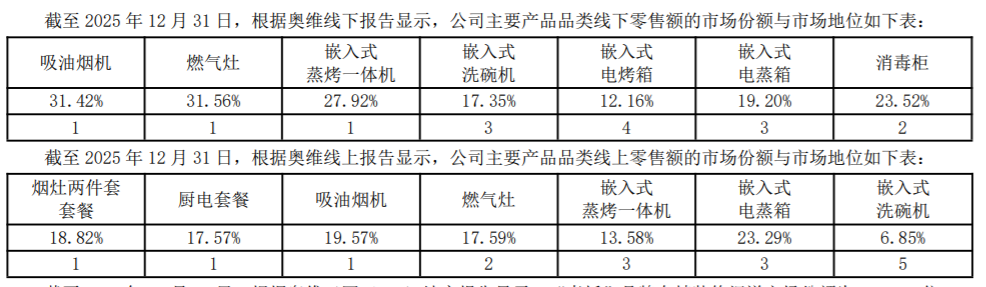
Although Robam Appliances still maintains a leading market share in range hoods and cooktops, it needs to catch up in high-end product lines such as built-in dishwashers and built-in electric ovens and has yet to conquer the high-end market.
Second, there is the issue of prioritizing marketing over R&D.
In 2025, Robam Appliances' selling expenses reached 2.923 billion yuan, accounting for 28.9% of revenue. However, its R&D expenses were only 368 million yuan, down 11.05% year-on-year. Selling expenses were about eight times that of R&D expenses.
The same is true for Vatti. In 2025, its selling expenses reached 1.488 billion yuan, while R&D expenses were only 233 million yuan. Selling expenses were about six times that of R&D expenses.
The significantly higher selling expenses than R&D expenses for both companies indicate that their marketing efforts are not hitting the mark and are also dragging down their high-end transformation process. High-end brands are not built through advertising but are based on product quality and differentiated technology. Without real capabilities, how can there be brand premium?
Finally, facing performance pressure, companies have lost sight of their core business.
Take Robam Appliances as an example. In 2025, the company reduced its workforce by 186 people, with technical staff decreasing by 179. Executives also experienced collective salary cuts.
Additionally, in January of this year, it announced plans to use no more than 6.5 billion yuan in idle funds to purchase wealth management products.
Under the intense competitive pressure in the kitchen appliance industry, Robam Appliances has to strive to "squeeze out profits." However, instead of investing idle funds in R&D, channels, or production capacity, it is keen on various short-term moves. Isn't this another case of "desperate measures"?
Admittedly, "Fotile, Robam, and Vatti" remain the absolute leaders in the kitchen appliance industry. However, a closer look at their financials reveals sluggish core businesses, weak new growth drivers, and profits relying on "cost-cutting." This is not a sustainable strategy.
3
Is the "AI" Kitchen the Cure?
As a result, almost simultaneously, "Fotile, Robam, and Vatti" have all bet on a familiar yet unfamiliar field—AI kitchens.
In recent years, the AI narrative has swept across various industries, and the home appliance industry is no exception. However, at the same time, AI kitchens remain a relatively unfamiliar concept. The industry is still exploring how AI and robots can enter the kitchen.
Robam Appliances has developed its proprietary "Food God" large model, enabling a closed-loop system for ingredient recognition, cooking guidance, and whole-kitchen appliance coordination. It has also released the world's first AI glasses for cooking, providing first-person guidance throughout the cooking process.
Fotile introduced the world's first robot head chef, COOK, capable of independently completing complex cooking operations with robotic arms. Its smart fresh-keeping refrigerator, equipped with the Zhiwei large model, can customize meal plans based on family members' data.

Vatti's AI layout focuses on addressing the pain points of cooking fumes and cleaning in Chinese kitchens, enabling kitchen appliances to have proactive service awareness.
Home appliance giants like Haier and Midea are also creating smart kitchens. For example, Haier released its AI Smart Grand Kitchen, offering a seamless experience from ingredient storage to cooking and cleaning.

Robam Appliances mentioned in its financial report that AI digital kitchen appliance sales reached 2.35 billion yuan in 2025, up 36% year-on-year. Currently, the "Food God" APP and mini-program have over 7.5 million registered users, with active users increasing by 70% year-on-year.
However, although AI has driven sales of kitchen appliances, pain points and complaints still exist. For consumers, the current AI kitchen is more hype than experience.
For example, Fotile's robot "head chef" can only clumsily stir-fry ingredients, and Fotile has not disclosed any plans for mass production of robot kitchens. Robam Appliances' AI cooking glasses suffer from information delays and inaccurate ingredient recognition.
Vatti's smart kitchen appliances with AI functions have been criticized by consumers as "pseudo-smart." For example, Vatti's VCOO system claims to connect more home appliances but often fails to do so. Features like smart voice and gesture control also frequently malfunction.

More importantly, most smart home appliances are priced at least 50% higher than ordinary models. Many consumers believe that AI functions are just a gimmick used by companies to raise product prices, with the actual experience not justifying the premium.
Moreover, looking at the entire home appliance industry, a more concerning trend emerges for traditional kitchen appliance companies. Today, not only traditional home appliance giants like Midea and Haier are delving into AI kitchens, but tech players like Xiaomi and Dreame are also accelerating their布局 (layout).
According to data shared by Yu Hao, founder of Dreame, in the first quarter of this year, Dreame's large kitchen appliances
For consumers, opting for a kitchen appliance that seamlessly integrates with the entire smart home ecosystem is undoubtedly more appealing than choosing one that is confined solely to the kitchen environment.
In the short term, it's challenging for brands like "Fotile, Robam, and Vatti" to swiftly overcome this ecological limitation. Their endeavors to breakthrough growth bottlenecks through AI might be akin to "trying to quench one's thirst with water from a far-off well"—a solution that is not immediately accessible or effective.
-
![]()
Stagnant Growth Seen Among the Three Kitchen Appliance Titans
-
![]()
My New Perspectives on Alibaba's Future
-
![]()
Samsung Home Appliances Exit China: 34-Year Journey from Market Dominance to 0.38% Share—What’s the State of Domestic Brand Advancement?
-
"Vanishing Profits" – Peering Through Q1 Earnings of Listed Automakers, Who’s Quietly Fortifying Their Defenses?
-
![]()
Is VLA Dead? This Company Wants to Equip Robots with 'Physical Intuition' Using VLOA
-
![]()
The Valuation Logic of AI Companies Needs a Complete Update in the DAA Era
-
![]()
AI Revenue Accounts for Over 30% for the First Time! Alibaba's Financial Report Sends Strong Signal
-
![]()
The Sports Camera and Recording Glasses Market Booms Amid Universal Content Creation Surge