199 RMB! Nokia Small-Screen Phone Review: WeChat Video Calls Add a Quirky Twist
 06/11 2026
 529
529
Toy-like pricing, real phone functionality.
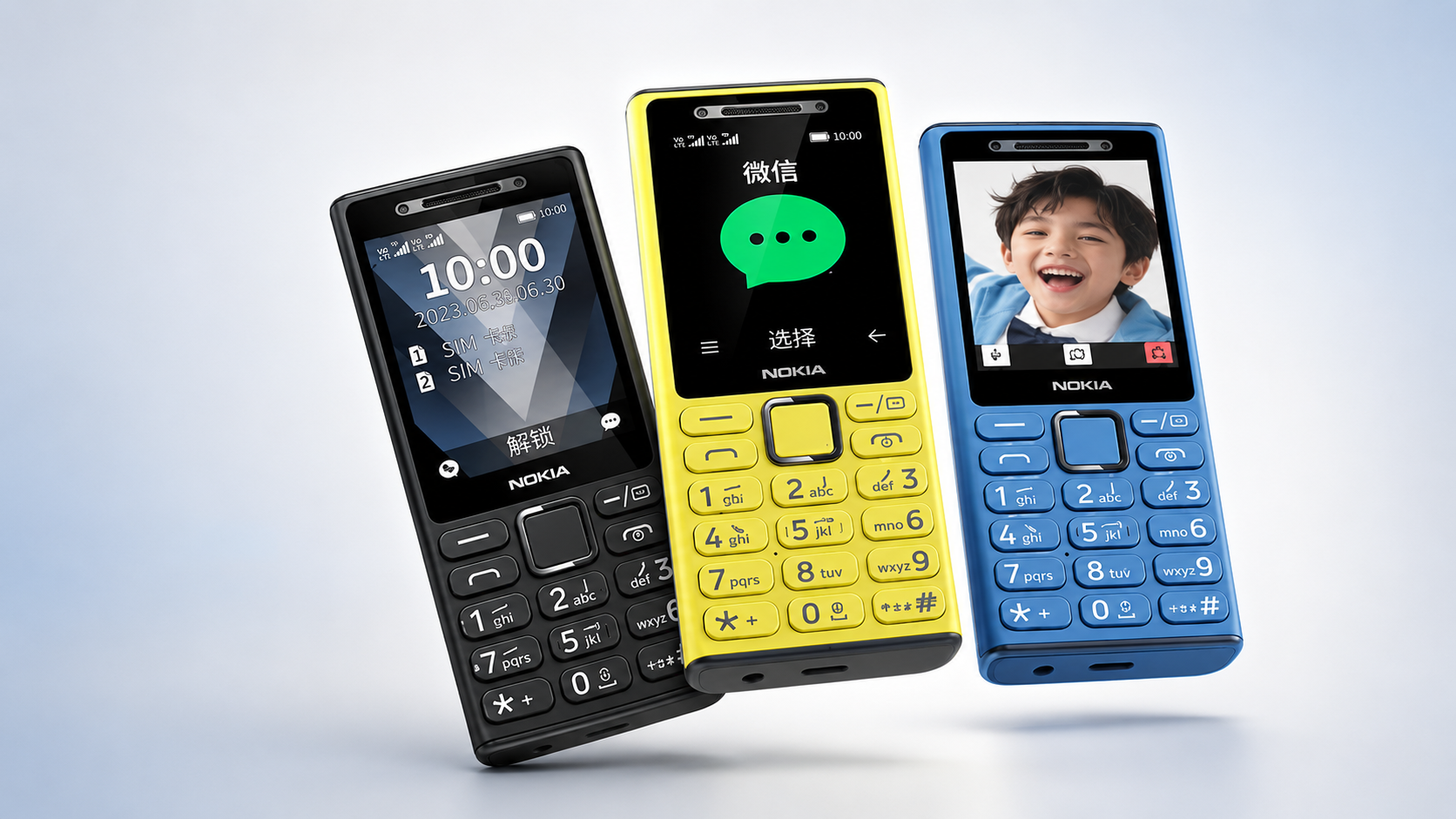
Nokia has once again unveiled a new phone. Not long ago, HMD, having secured the Nokia brand license, launched its inaugural "WeChat Lite Phone" in China—the Nokia 200 4G. Priced at just 199 RMB at its debut, this phone supports full-network 4G connectivity and is tailored for students, elderly users, and those seeking a secondary phone.
(Image source: Leitech)
The combination of these keywords piques curiosity.
On one hand, there's Nokia, a brand once nearly synonymous with mobile phones; on the other, there are tags like 199 RMB, feature phone, student phone, and senior phone, evoking a sense of nostalgia. What's even more intriguing is the inclusion of WeChat Lite, attempting to bridge the gap between traditional button phones and today's smartphone ecosystem.
The question arises: In an era dominated by WeChat, mobile payments, short videos, and a plethora of apps, what can a 199 RMB Nokia button phone actually do? Xiaolei (ID: leitech) purchased one and gave it a whirl. Here's the scoop.
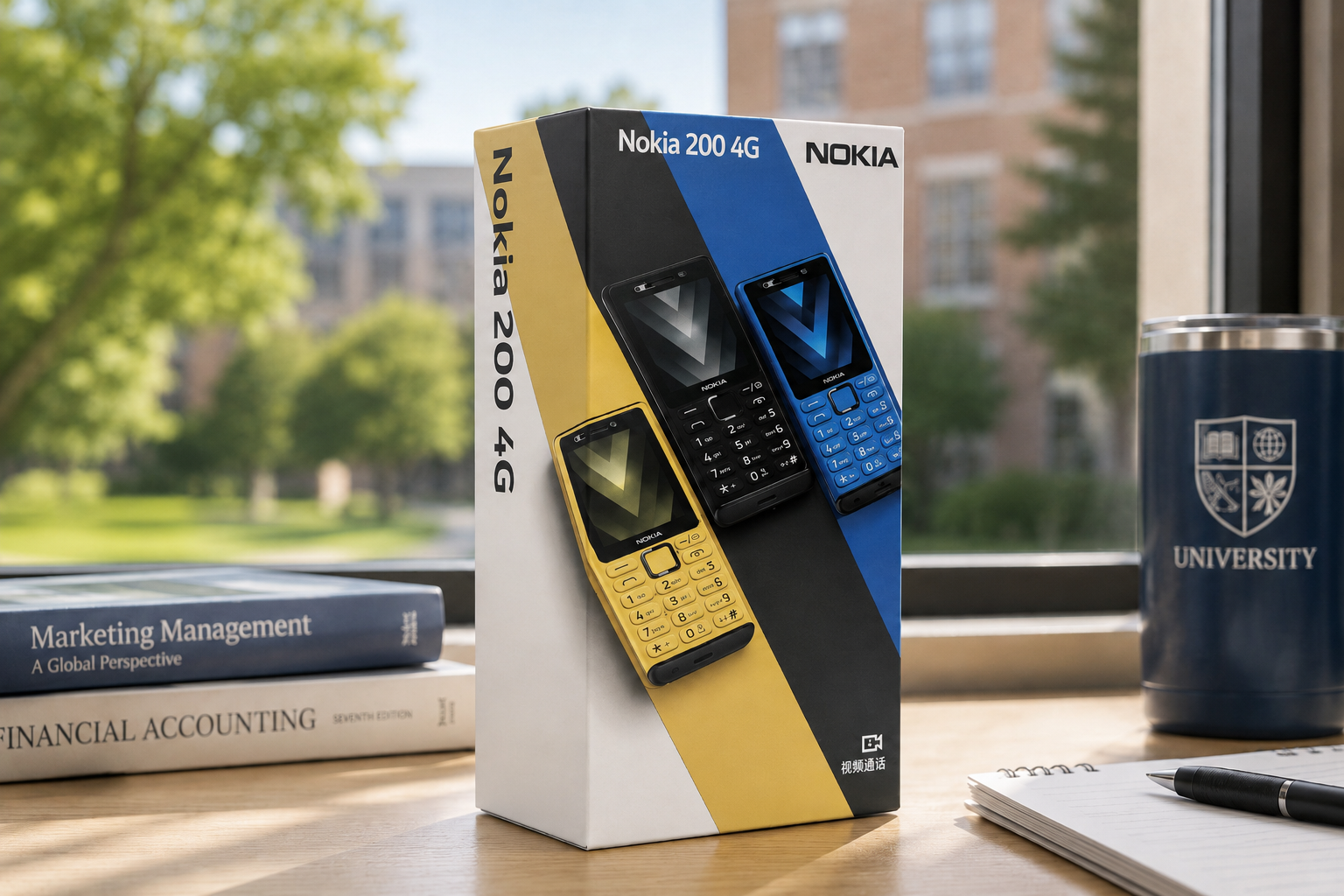
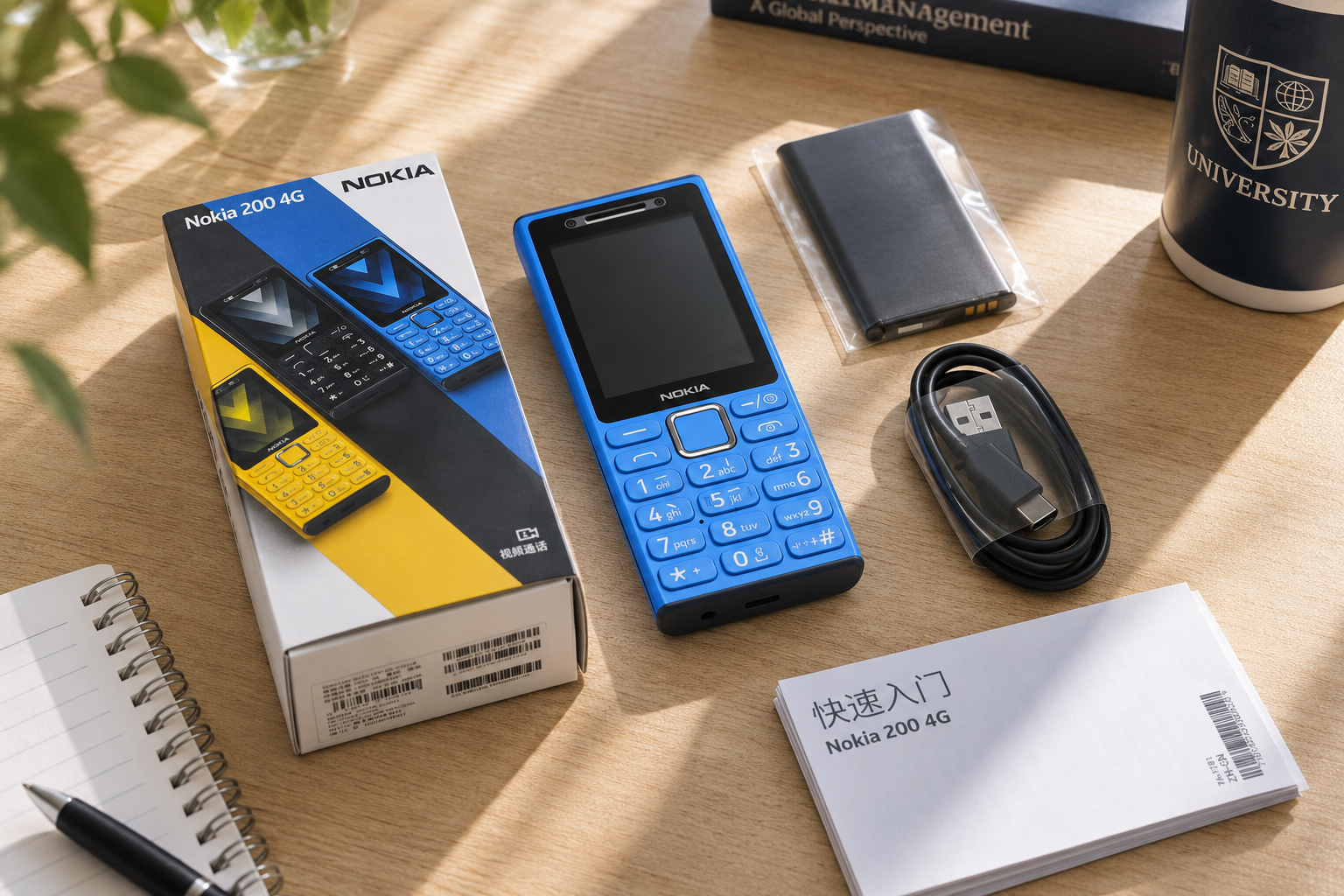
I must admit, in an age where even product packaging leans towards minimalism, the Nokia 200 4G's packaging truly stands out.
Three color variants of the Nokia 200 4G are neatly presented, with distinct and layered color blocks that give the illusion that feature phones can also exude a modern vibe, making one eager to unbox and hold it in their hands.
(Image source: Leitech)
The moment I opened the package, it felt like a blast from the past.
The packaging is straightforward—just the phone, battery, charging cable, and instruction manual, which is pretty much what you'd expect at this price point.
(Image source: Leitech)
But this simplicity has its charm.
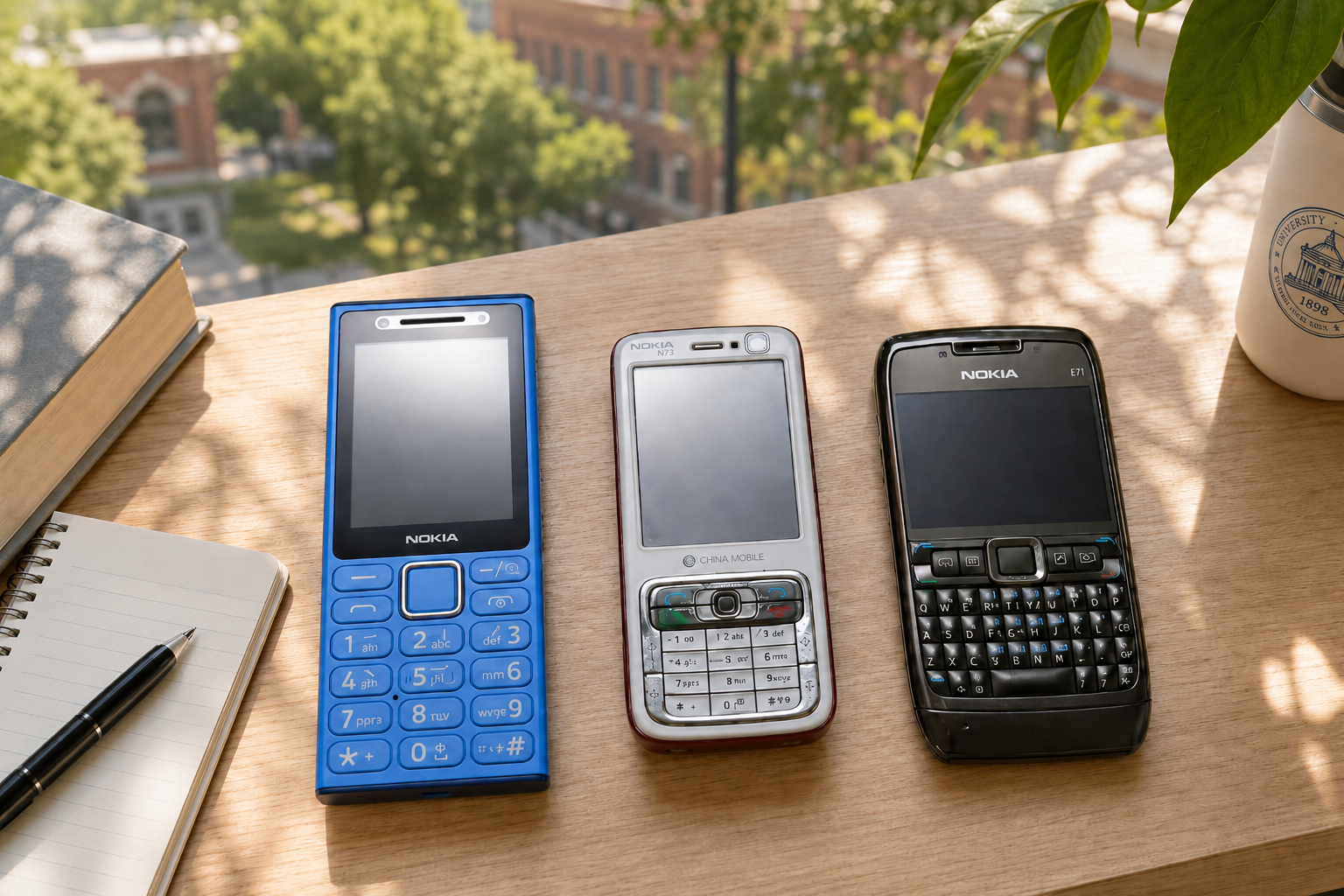
Picking up the phone, my first impression was how lightweight it is. It lacks the heft of smartphones with their glass, metal, and large screens. Its compact size makes it easy to grip with one hand, and you might even forget it's in your pocket.
The design is straightforward, perhaps even more outdated than classic Nokia models.
(Image source: Leitech)
The front features a 2.4-inch screen with a standard numeric keypad below. The screen is small, with low resolution and noticeable color distortion. One shouldn't judge it by smartphone standards; its tasks are simple: displaying contacts, messages, menus, time, and incoming calls.
I'd say the buttons might be the most tangible aspect of this device.
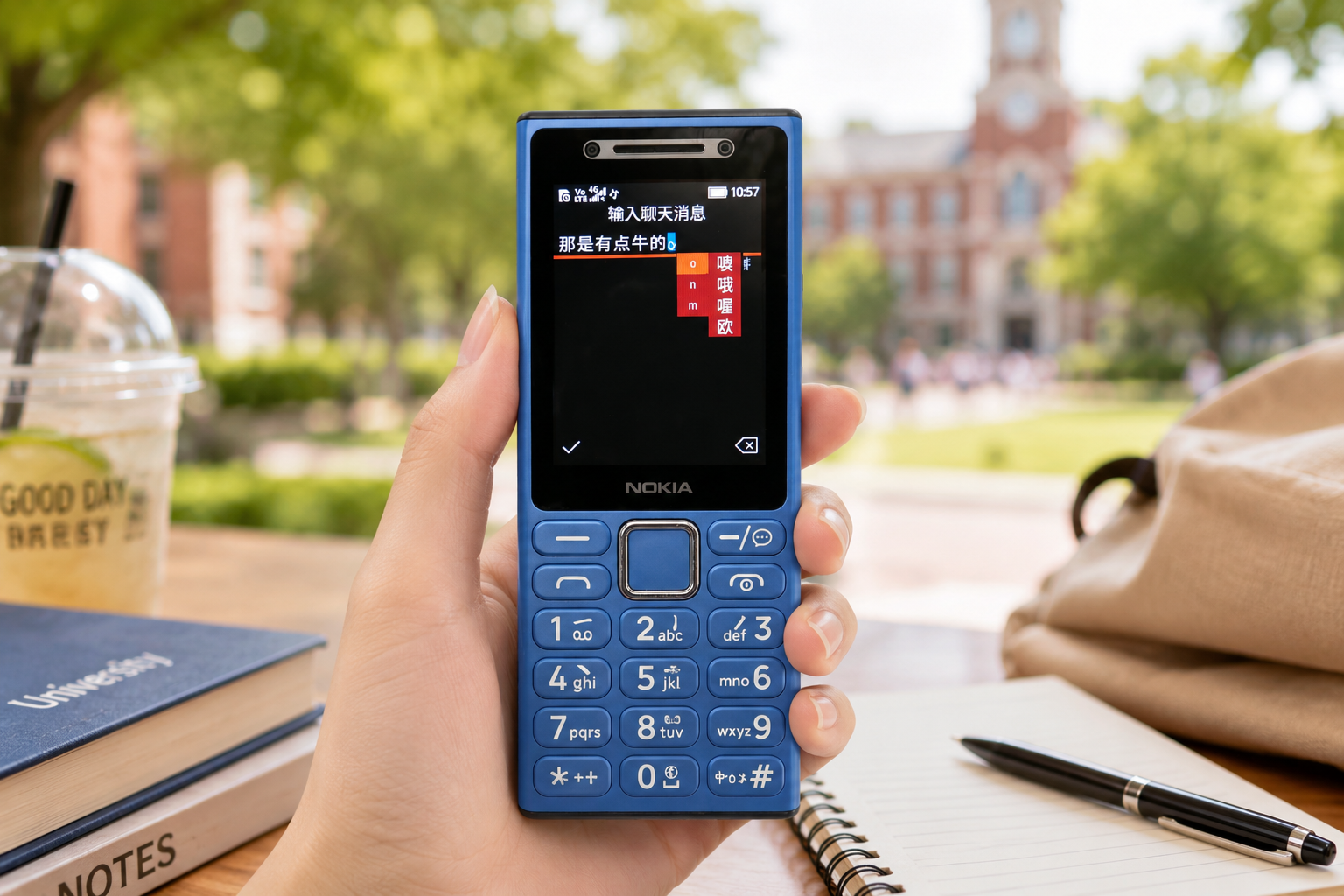
The buttons are large, with crisp tactile feedback, making blind typing much more comfortable than touchscreens and less prone to accidental presses for the elderly.
Dialing, returning, confirming, and navigating up, down, left, and right follow a very traditional logic, requiring almost no learning curve. If you've used old Nokias, Motorolas, or Sony Ericssons, you can seamlessly pick this up.
(Image source: Leitech)
As for drawbacks... I can only say that the input efficiency of a button phone is somewhat torturous by today's standards.
Typing a few words is manageable, but for lengthy chats, the numeric keypad input will make you rethink what "slow living" means. It forces you to be concise and not constantly check for messages.
I wonder, is this an inherent trait of feature phones?
The system menu is straightforward: phone, messages, contacts, camera, radio, music, tools, settings—basically the traditional feature phone lineup.
A basic test of call functionality revealed that the Nokia 200 4G supports 4G networks and VoLTE calls. Daily signal reliability is decent, the speaker volume is loud, and ringtone visibility is sufficient, making it less likely for the elderly to miss calls. However, the microphone quality is mediocre, lacking call noise reduction, and occasional crackling sounds can occur.
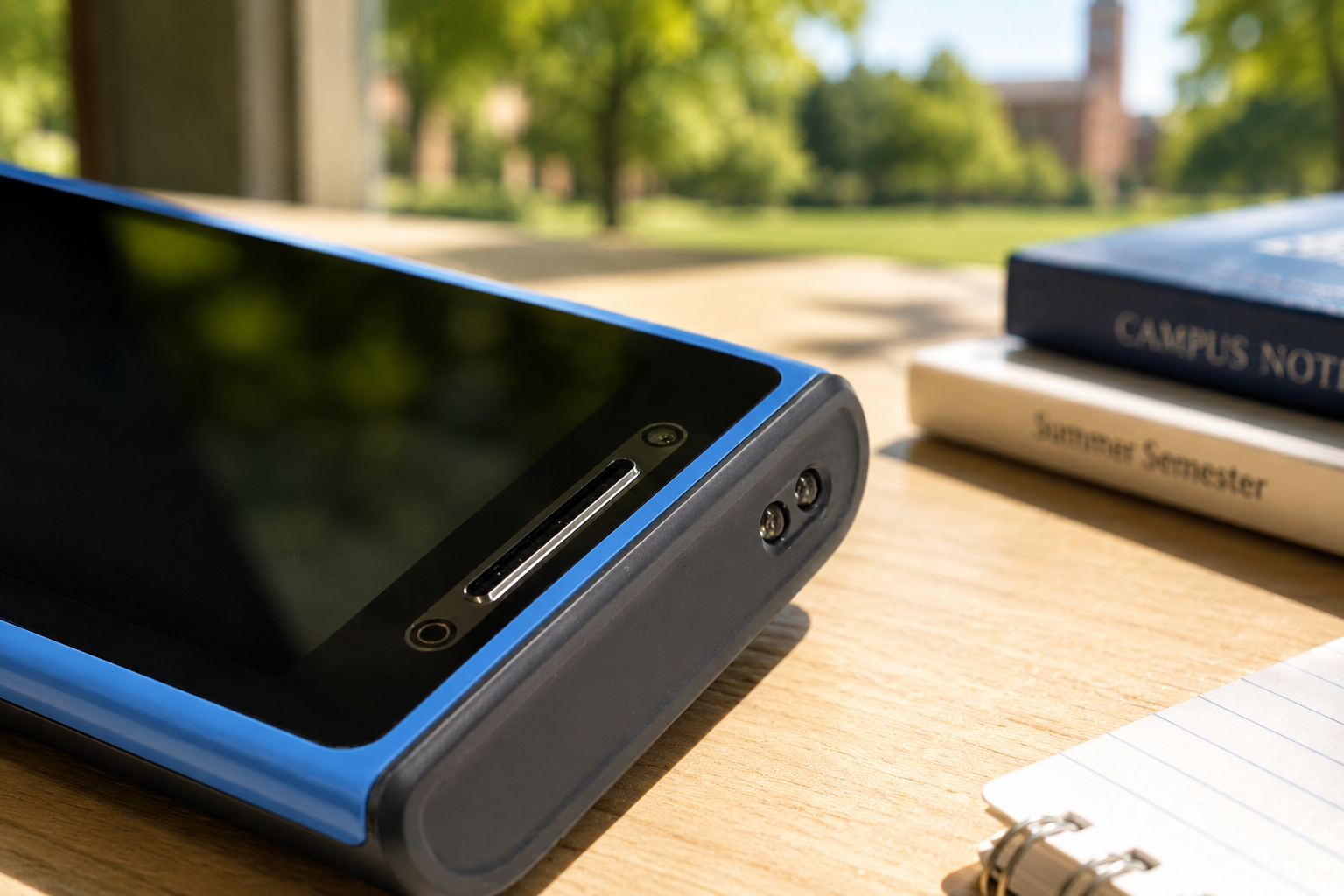
And what about the universally loved flashlight?...
(Image source: Leitech)
It comes with dual LED flashlights, which look quite impressive, but the actual brightness is barely adequate, even inferior to a regular smartphone's flash. It might suffice for finding things at night, illuminating stairwells, or emergencies, but walking alone at night with this is not advisable.
Who said feature phone flashlights must be bright? This is purely a myth.
Of course, the most noteworthy feature of this device isn't making calls or the flashlight, but "WeChat Lite."
This is the biggest difference between the Nokia 200 4G and ordinary senior phones.
Despite what some self-media claim, the Nokia 200 4G cannot make WeChat video calls. Simply put, you can think of WeChat Lite as a communication solution for feature phones. Smartphone users can interact with it through a WeChat mini-program, enabling text, voice, video, picture, group chat, location sharing, and electronic fencing capabilities.
Doesn't that sound similar to a children's watch? Actually, the experience is quite alike.
Right-clicking on the Nokia 200 4G's desktop enters the "HMD WeChat Lite" app. From a cold start, opening this app generally takes over 30 seconds to load.
It's a feature phone; we'll tolerate it!
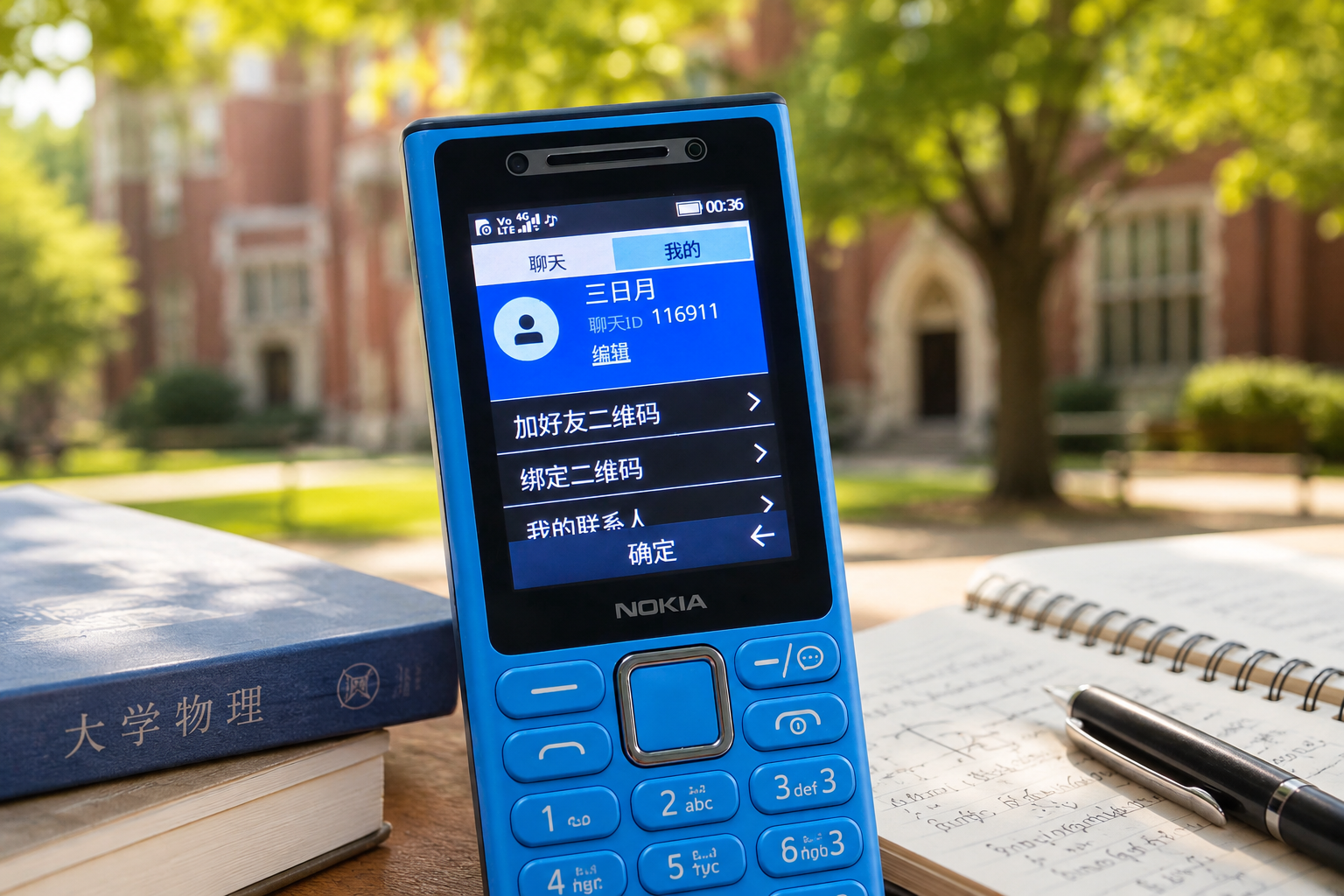
After a simple account registration, you can see the main interface of "HMD WeChat Lite" on the feature phone. The design is very clean, with only two tabs: a "Chat" interface listing added friends and a "My" interface containing almost all functional settings.
(Image source: Leitech)
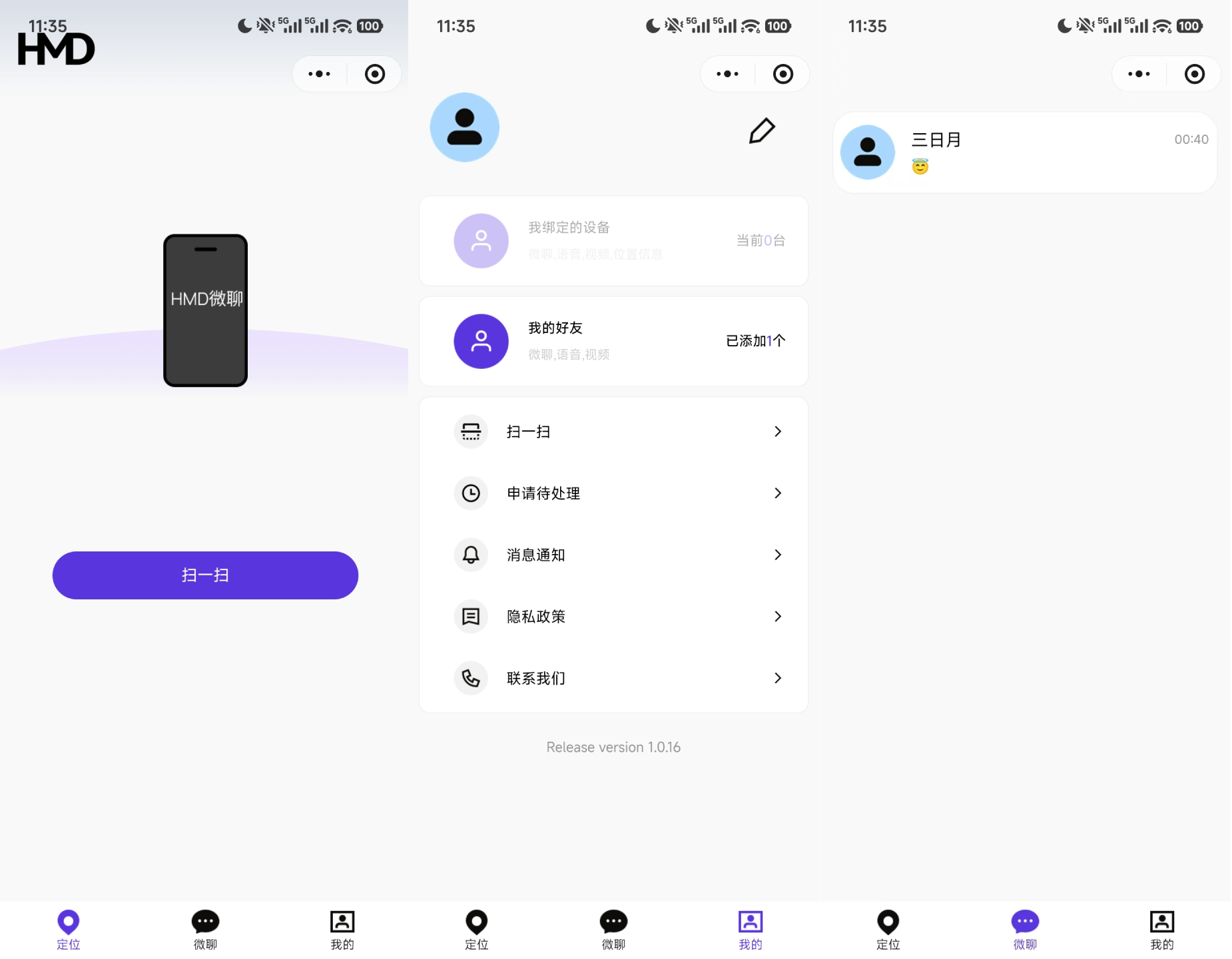
Chatting with this phone is simple: search for the "HMD WeChat Lite" mini-program on WeChat and scan the QR code to add friends.
In terms of design simplicity, the mini-program is no slouch either. Besides the "Chat" and "My" tabs present in the feature phone version, the mini-program only adds a "Location" tab for real-time monitoring of the bound device's location, enabling fuzzy positioning based on communication base stations.
(Image source: Leitech)
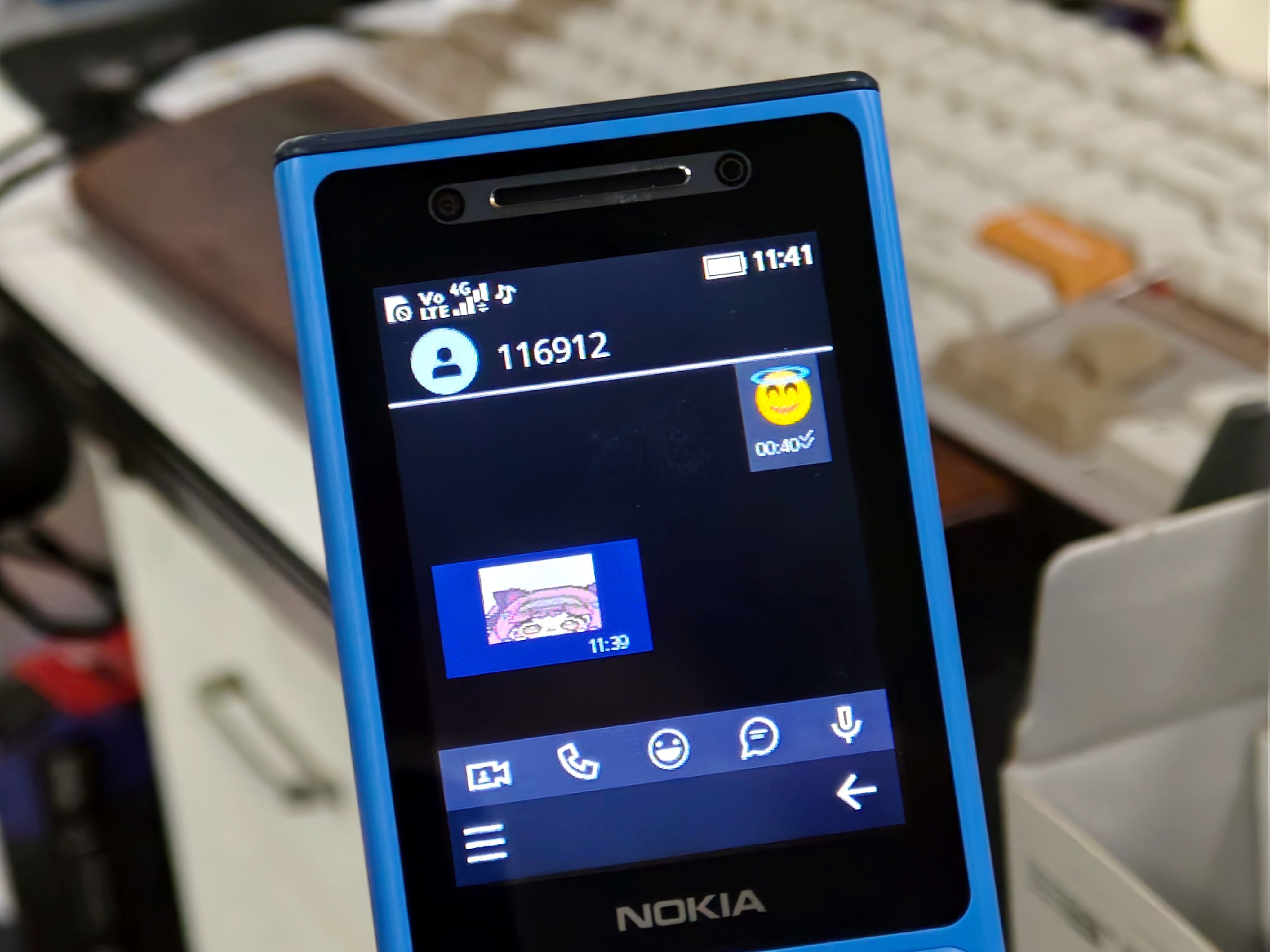
Testing the chat functionality, text and emojis work fine, but images sent from the mini-program are highly compressed, creating a unique visual effect.
(Image source: Leitech)
Fortunately, you can still open the original image using the confirm button.
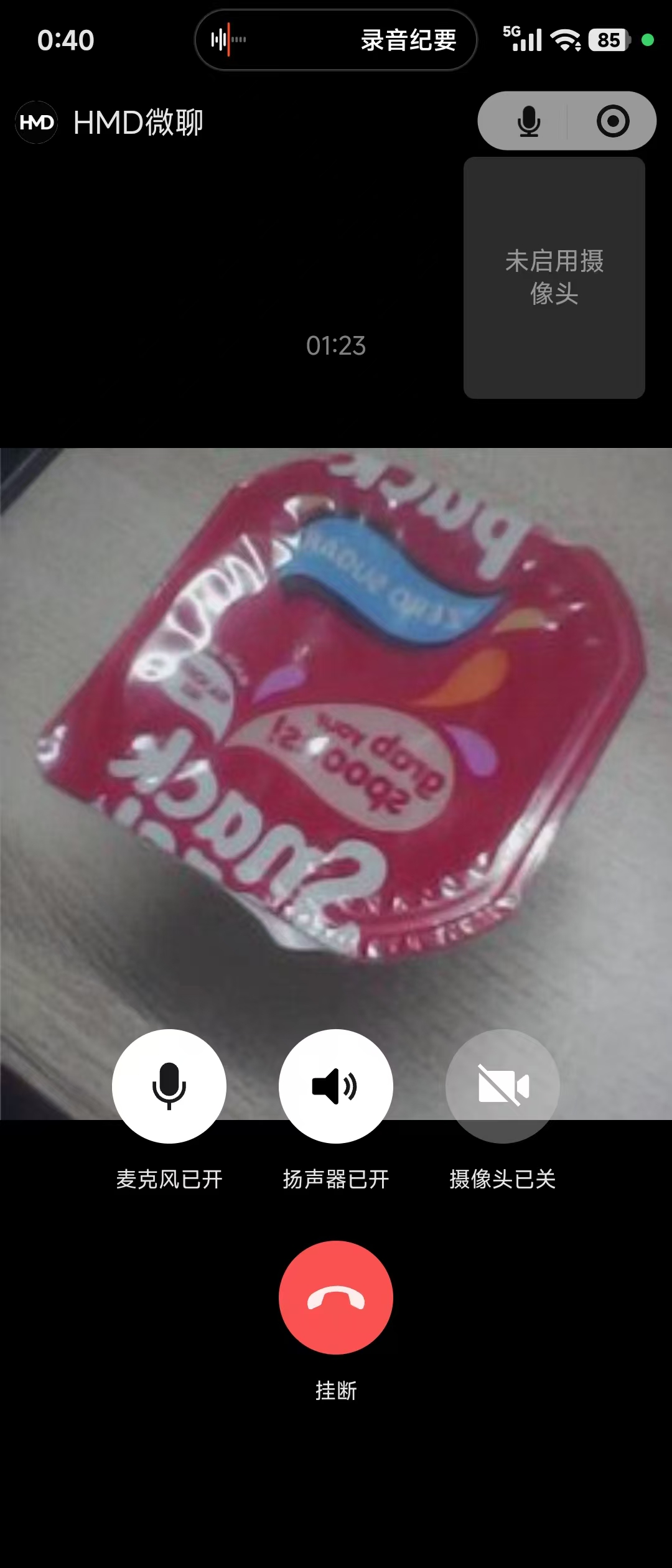
As for video calls... the good news is they work, and the mini-program can properly utilize WeChat's notification capabilities, making missed calls unlikely.
The bad news is that the video quality is truly terrible. At first glance, I thought it was filmed with my door lock.
(Image source: Leitech)
The phone's call quality is already mediocre, and without Wi-Fi support, video calls not only increase latency but also worsen audio distortion, making listening for more than two minutes unbearable.
Ultimately, its core logic isn't to provide a full WeChat experience but to enable basic communication between feature phone users and smartphone users. For example, an elderly person using the Nokia 200 4G can receive messages, make voice calls, and share locations with family members using the WeChat mini-program. Or a child carrying this phone can be contacted and roughly located by their parents.
This concept is valid.
Especially for student and senior phones, WeChat Lite fills the most awkward gap in traditional feature phones: they can only make calls and send texts, lacking modernity.
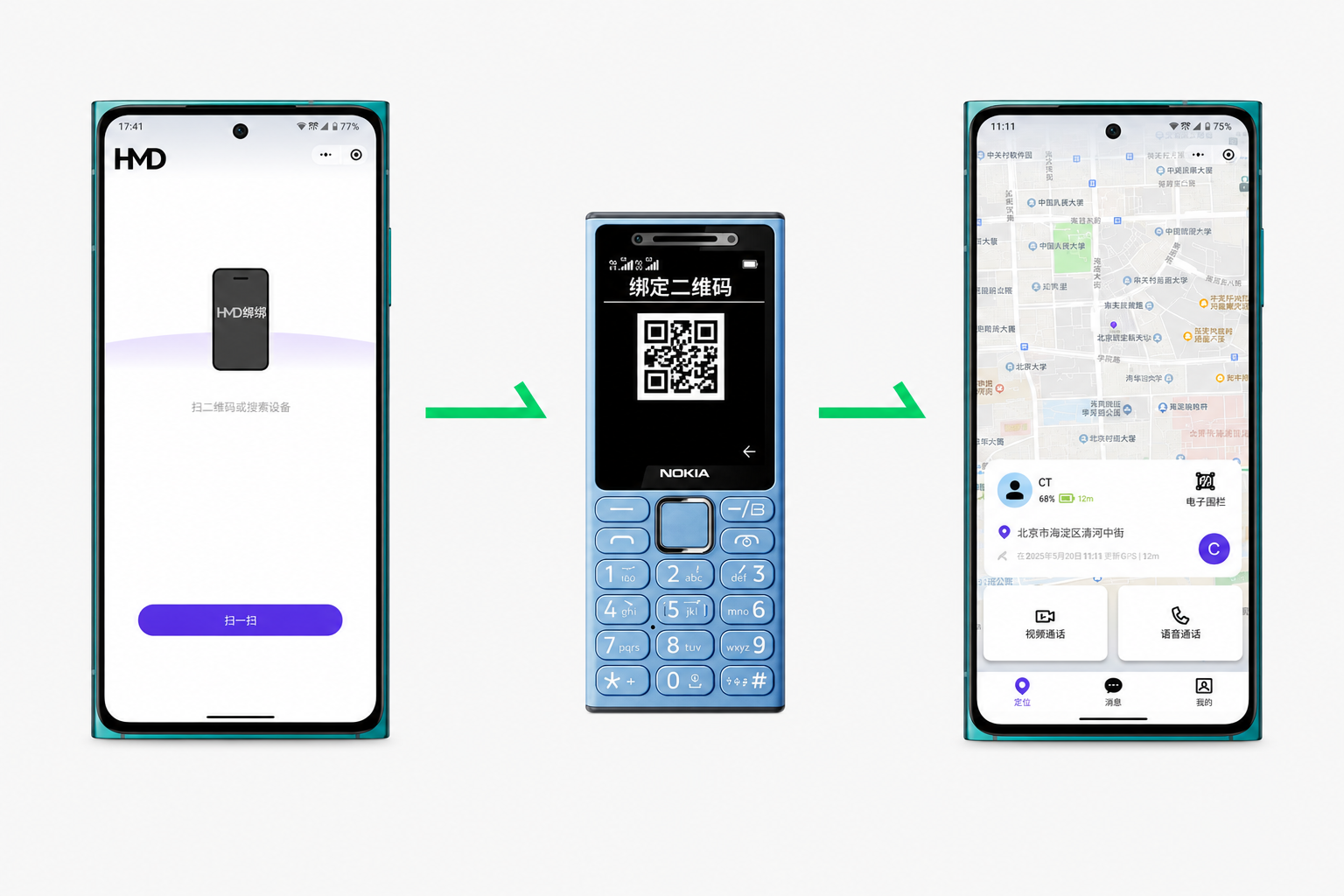
(Image source: JD.com)
However, the actual experience can only be described as usable, not enjoyable.
Typing on a feature phone today truly requires patience. Sending voice messages might be more comfortable, but currently, "HMD WeChat Lite" on the feature phone doesn't support voice messages, making usage feel awkward.
Most ridiculously, the Nokia 200 4G lacks payment functionality.
In contrast, last year's Nokia 220 4G supported payments, indicating that this isn't a technical limitation but likely a strategic choice based on different market positioning.
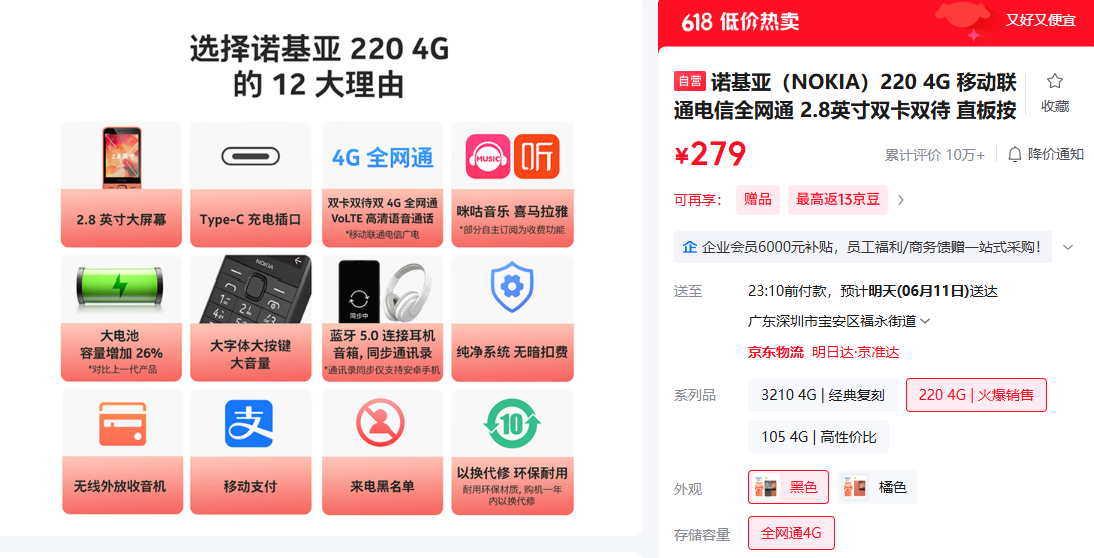
(Image source: JD.com)
This is highly detrimental for Chinese users today.
Without WeChat Pay or Alipay, it cannot truly function independently outside. You can make calls, contact family, listen to books or music, but for purchasing water, riding buses, scanning for meals, or picking up packages, a smartphone is still indispensable.
Thus, it can serve as a secondary phone but struggles as a primary device.
In terms of entertainment, it's not entirely boring. It can play audiobooks and MP3s and has an FM radio. For young people, these features might seem outdated, but if you genuinely want to reduce time spent on short videos, they're quite suitable.
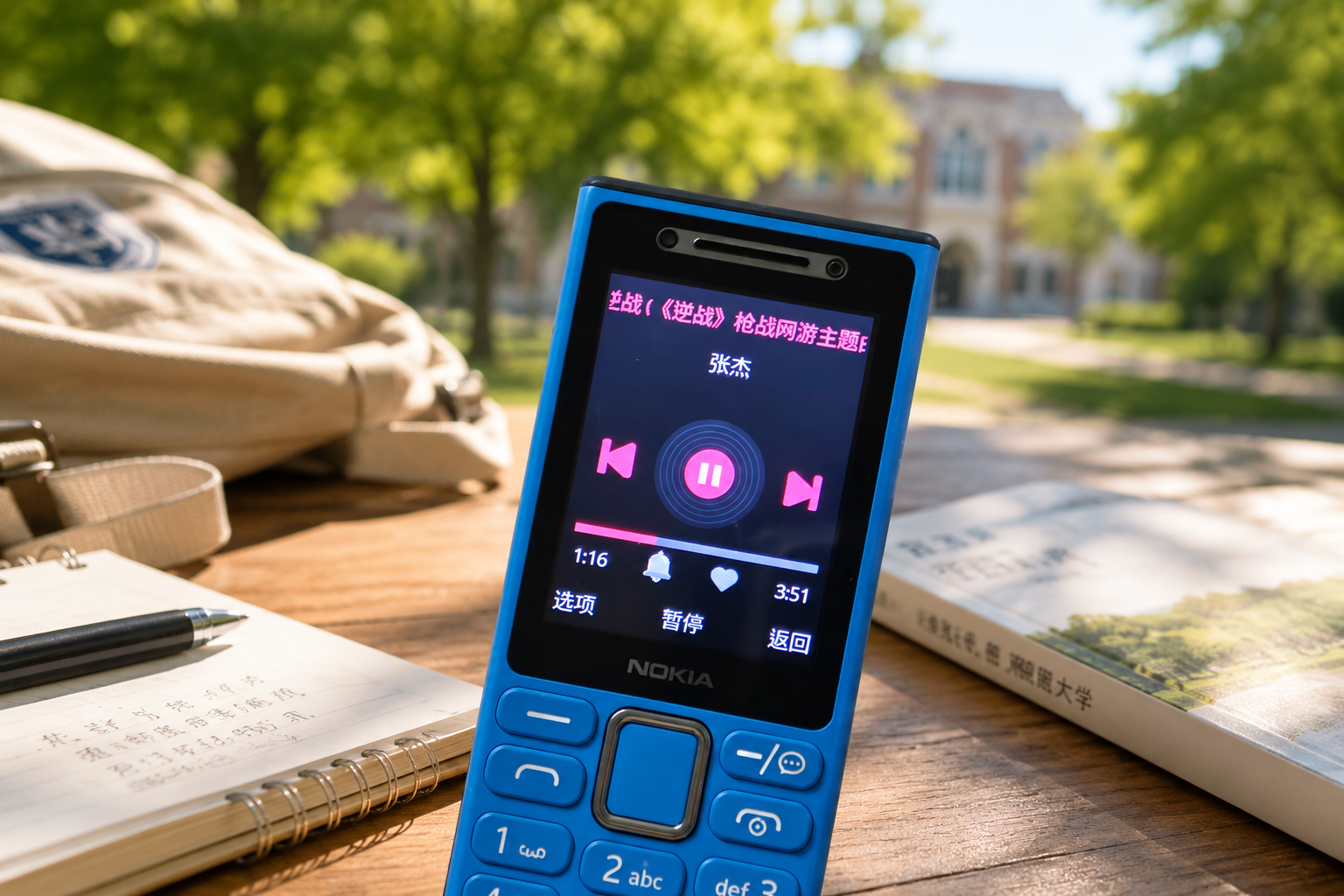
(Image source: Leitech)
But in 2026, will anyone still have the patience for this?
So, is the Nokia 200 4G worth 199 RMB?
My answer is: Yes.
Some time ago, when buying a Children's Day gift for a relative's child, I found that decent toy phones (which can't do anything except have a cartoon design) on JD.com cost over a hundred RMB... So this Nokia device is quite decent for kids or elderly individuals who can't use smartphones. After all, at this price point, it offers video calls and even a removable, replaceable battery. What more could you ask for?
If you're Jiahao and want to try something different, engaging in a "digital detox" away from information streams, it's quite interesting.

(Image source: Leitech)
Its biggest strength is its simplicity.
Simple packaging, simple design, simple menu, simple functions. It doesn't pretend to be advanced or forcefully cram unsuitable smart features into a feature phone. WeChat Lite is its most modern part, but it only supplements basic communication, not transforming it into a small-screen smartphone.
Its biggest drawback also stems from this simplicity.
The lack of payment functionality makes it hard to rely on for outings; no Wi-Fi limits internet connectivity; slow button input makes chatting unsuitable for high frequency; the small screen and basic performance restrict it to lightweight tasks.
But perhaps this is precisely its purpose—
Not to make you use your phone more, but to make you use it less.
Nokia WeChat Lite Phone Review
Source: Leitech
All images in this article are from 123RF Royalty-Free Image Library. Source: Leitech
-
![]()
Why Do All Cars Look Alike These Days?
-
Don't Just Focus on Financing Amounts—Look at the 'Order Truth' Behind the Commercialization of Embodied AI
-
![]()
Are Traditional Fuel Cars Really Losing Their Market?
-
![]()
Comprehensive PPT Guide to Understanding CAAM Production and Sales Data: Auto Production and Sales Declines Narrow Again in May; New Energy Vehicle Market Share and Auto Exports Reach New Monthly High
-
![]()
Chinese Cars Seize Overseas Markets: The Advent of a Winner-Takes-All Era
-
![]()
Will WeChat Start Charging Fees?
-
![]()
Cross-border 'Golden Window' in 2026: Chinese Products Sweep Across Southeast Asia
-
![]()
BIWIN Storage, Betting 20 Billion on the Future with Hundreds of Billions in Market Cap