Insta360 Leads Global Market, Yet Profit Signals Remain Subdued
 06/12 2026
 516
516

Consumer Finance Perspective
In-Depth Analysis | Consumption Trends | Value Insights
See More, Understand Deeper
>>>>
According to data from AVC Online Monitoring, during the initial phase of the 2026 618 shopping festival, Insta360, a prominent player in China's smart imaging device industry, demonstrated outstanding performance. From May 18 to May 31, Insta360 dominated the domestic traditional e-commerce market for panoramic cameras, capturing 81.4% of sales and consistently leading the rankings across multiple e-commerce platforms.
This success was no fluke. In 2025, the International Data Corporation (IDC) released the 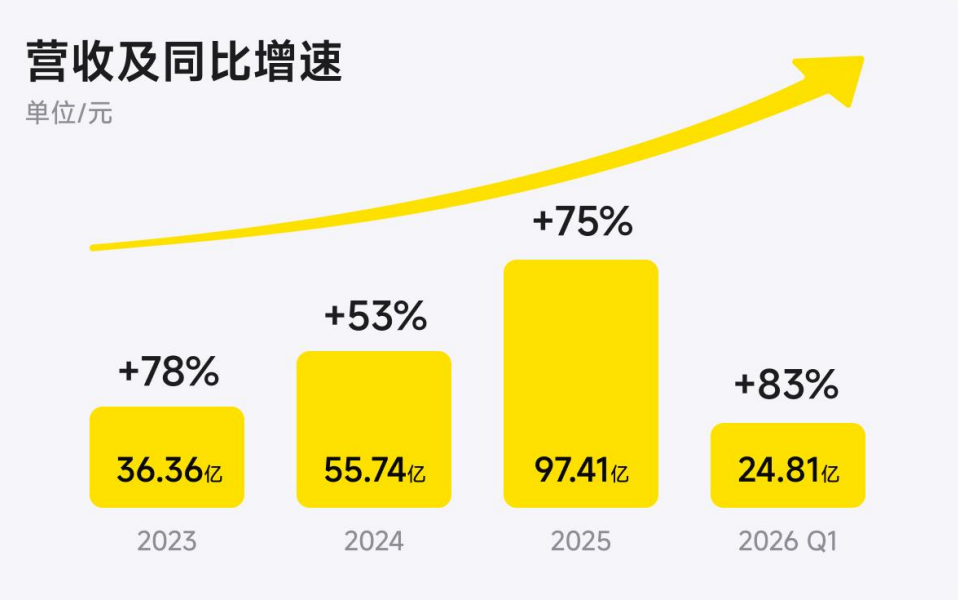
Source: Insta360 Innovation 2025 Annual Report
01 ■ Record Revenues and R&D Investment, Yet Profit Concerns Persist
As competition in the action and panoramic camera sectors intensifies, Insta360 has chosen to escalate its investments rather than retreat.
Reported by AVC Online and various industry media, during the first round of the 2026 618 shopping festival, Insta360 not only dominated the domestic online market but also continued to expand its global footprint. Through a "technology-driven + global market penetration" strategy, the company has elevated the voice of Chinese brands in the smart imaging sector to unprecedented levels.
In 2025, Insta360's R&D expenditure surpassed 1.5 billion yuan, exceeding the total of the previous three years. Founder Liu Jingkang candidly stated in a letter to investors that high-intensity strategic investments are crucial for the company's long-term development, albeit at the expense of short-term profit metrics. Additionally, in 2025, the company strategically invested in the development of two drones (including the Yingling panoramic drone), gimbal cameras, wireless lavalier microphones, and three other new product categories, along with the custom development of three chips. The strategic investment amounted to 762 million yuan in 2025 and 262 million yuan in the first quarter of 2026, roughly equivalent to 80% and 300% of the same-period net profit attributable to shareholders, respectively.
This indicates that Insta360's phased profit adjustments are indeed part of a strategic plan to actively trade short-term gains for long-term growth. However, the company must address underlying issues. Given that the divergence between revenue and profit is not an occasional fluctuation in a single quarter—such as the 6.64 percentage point decline in gross profit margin throughout 2025 and the 50% year-on-year drop in net profit attributable to shareholders in the first quarter of this year—does this suggest that the costs of the company's scale expansion are eroding profitability faster than anticipated? 
Currently, Insta360 has been listed for just over a year. While the capital market may tolerate phased "revenue growth without corresponding profit growth," capital is ultimately profit-driven, and the tolerance window may be shorter than management anticipates.
02 ■ Liu Jingkang's Second-Half Challenge Has Just Begun
Liu Jingkang, a tech prodigy from Nanjing University, founded Insta360 at the age of 24 in 2015. A decade later, he took the company public, becoming the first post-90s founder on the STAR Market. Now leading a global first-tier smart imaging device company, Liu remains pivotal to Insta360's success.
Faced with industry imitation, Liu responded by investing heavily in R&D to build technological barriers. His "obsession" with technology was commendable during the startup phase. However, after transitioning from a startup to a publicly listed company, Liu's challenges extend beyond technology. After Insta360's stock price peaked at 377.77 yuan in September 2025, it gradually declined to 160 yuan by the market open on June 11, 2026, significantly reducing the company's market capitalization. June 11 marked the lifting of the lock-up period for 227 million shares, accounting for 56.50% of the total share capital and approximately 40 billion yuan in market value. Consequently, Insta360's free float surged nearly sevenfold from 32.8 million shares, subjecting the stock price to more complex market dynamics. Lock-up expirations are a standardized institutional arrangement in the A-share market, designed to provide early investors with a compliant exit channel and reflect a healthy innovation ecosystem. Early shareholders like IDG Capital and Qiming Venture Partners, which supported Insta360 through its startup phase, have reaped substantial paper gains, recognizing the capabilities of Liu's team. However, with the free float significantly expanded, Insta360 must demonstrate more robust profitability and a clearer growth path to earn the long-term trust of new shareholders. This is a genuine challenge, marking the beginning of the second half for Liu, the post-90s founder of a listed company. 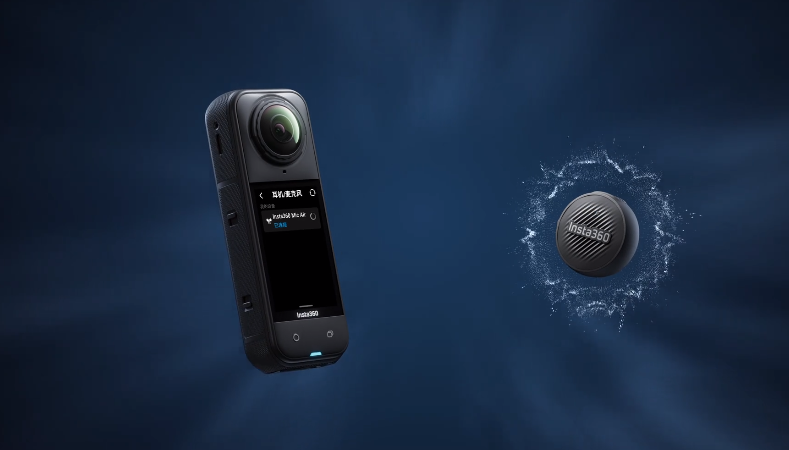
Source: Insta360 Official Website
03 ■ Intensifying Sector Competition Requires New "Coexistence" Strategies for Insta360
Since 2025, DJI's aggressive entry into the action and panoramic camera sectors with product benchmarking and competitive pricing has accelerated industry innovation.
Previously, Qianzhan Consulting's
Thus, DJI's entry is seen as a "catfish effect," compelling Insta360 and other companies to shorten product update cycles but also increasing R&D and supply chain pressures.
This competition can be viewed from two perspectives.
The first is collective victory. In October of the previous year, the STAR Market Daily reported that by the end of the third quarter of 2025, Chinese brands led by DJI and Insta360 had captured 79% of the global action camera market. This demonstrates a united front among Chinese enterprises in the global action camera market, marking a collective victory for domestic brands.
The second is profit pressure. In March, DJI and Insta360 disputed certain patent ownerships, with the case now accepted by the court. Regardless of the outcome, such patent disputes will consume additional legal and management resources, further straining profit margins. 
More importantly, the smart imaging device sector has shifted from a "blue ocean" to a "red ocean." Amid intensifying competition, some companies may become obsessed with "defeating rivals," neglecting their original focus on "winning users.", Thus Insta360's ability to maintain reverence for product experience and avoid overexertion in defensive maneuvers tests Liu's business acumen.
04 ■ How Can Insta360 Transcend "Scale Narratives"?
Insta360 now faces not only external competition and an expanding free float but also profound internal governance adjustments. After going public, Insta360 transformed from a private company into a STAR Market star, necessitating comprehensive upgrades in information disclosure, investor relations, and compliance governance.
Previously, founder Liu Jingkang stated in a shareholder letter after Insta360's listing that the company was exchanging short-term profit pressures for long-term technological barriers. Such candor is commendable, but capital markets ultimately judge by results, not explanations.
During the initial phase of this year's 618 shopping festival, Insta360's panoramic cameras ranked first globally in market share, perhaps signaling to the market that the company can sustain scale expansion while maintaining technological leadership. However, investors truly care about two questions: When will profit growth catch up to revenue growth? When will the "harvest period" arrive?
Liu must prove that Insta360's global leadership is supported not just by shipment volumes but also by profitability, technological moats, and user reputation. By staying true to its technological roots, stabilizing profitability, and maintaining dignity amid competition, Insta360's global leadership can undoubtedly achieve a new qualitative leap.
—— End ——
Consumer Finance Perspective
Insight into Consumption Trends, Decoding Business Strategies
-
![]()
Insta360 Leads Global Market, Yet Profit Signals Remain Subdued
-
Marketing and Transaction Growth: Entering the Age of the Agent
-
![]()
Dongfeng’s Solid-State Batteries Set for Mass Production and Vehicle Integration in H2 2026
-
Marketing and Transaction Growth: Entering the Age of Agent
-
![]()
Stock Prices Hit Rock Bottom & Regulatory Interviews Raise Dual Alarms in Auto Industry
-
![]()
Can the Hongqi G919 Surmount the Challenge Posed by the Mengshi 917?
-
![]()
AI Gaokao Evaluations Plagued by Chaos: Full Marks Awarded for Incomplete Questions
-
![]()
For Two Straight Months, No BBA Model Has Exceeded 10,000 Monthly Sales in the Chinese Market