Agent OS is Here! HarmonyOS 7 Unveiled, Huawei Redefines OS
 06/15 2026
 359
359
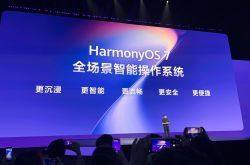
On June 12th, the Huawei Developer Conference 2026 (HDC 2026) opened at Songshan Lake, Dongguan, with Leikeji invited to provide on-site coverage throughout the event. This year's HDC featured numerous key topics, such as HarmonyOS 7, openPangu 2.0, edge 30B models, Harmony Intelligence Framework 2.0, DevEco Code, and more. When viewed collectively, the core message is clear: Huawei is advancing Harmony from a 'native AI OS' to an 'Agent OS.'
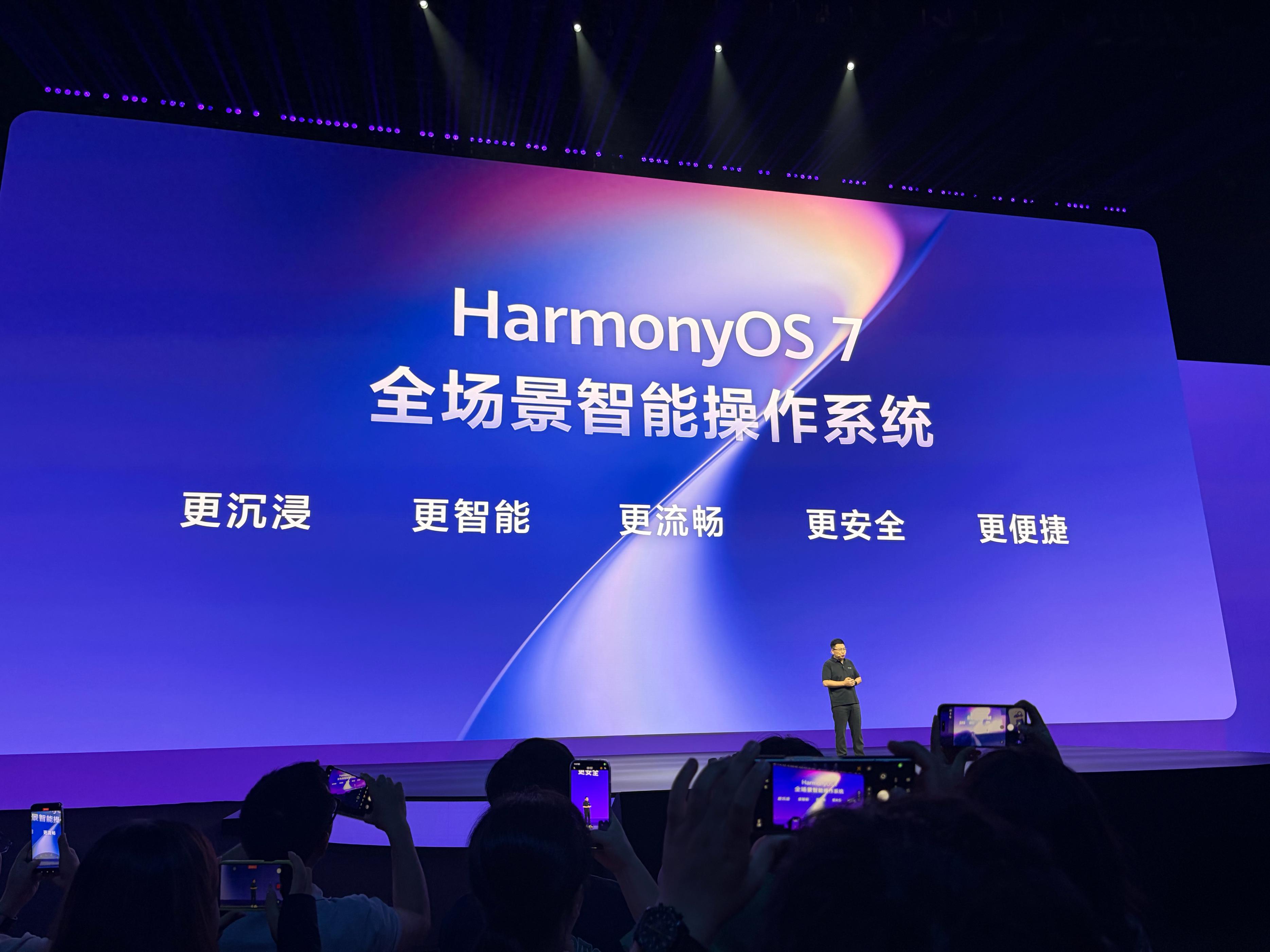
(Image source: On-site photography by Leikeji)
The concept of an Agent may still be unfamiliar to the general public, but its widespread adoption is inevitable. When AI Agents become the new interaction gateway, can operating systems merely run applications, manage hardware, and connect devices? Huawei's answer is clear: the new Harmony OS will not only make smartphones smoother, safer, and more visually appealing but also understand user intentions, orchestrate application capabilities, execute tasks across multiple devices, and reorganize developers' services into system-callable Skills and Agents, achieving 'Agent affinity.'
Many Harmony users anticipated that HarmonyOS 7 would introduce innovations in individual features, such as some particularly interesting small functions. While these are indeed present, more importantly, Huawei has fundamentally transformed the relationship between applications and the system for the Agent era.
In the past, applications were independent entry points. Users had to open separate apps for food delivery, music, maps, shopping, and schedules, completing operations step-by-step within each app. The logic of Agent OS is entirely different: users state their goals, the system understands the tasks, and then invokes the appropriate application capabilities. For an operating system, this means it must know not only 'which apps are installed on the phone' but also what each app can do, which capabilities can be invoked, which data requires authorization, and which tasks can be completed across devices.
Therefore, Huawei has placed the 'Agent-affinitive system architecture' at the core.
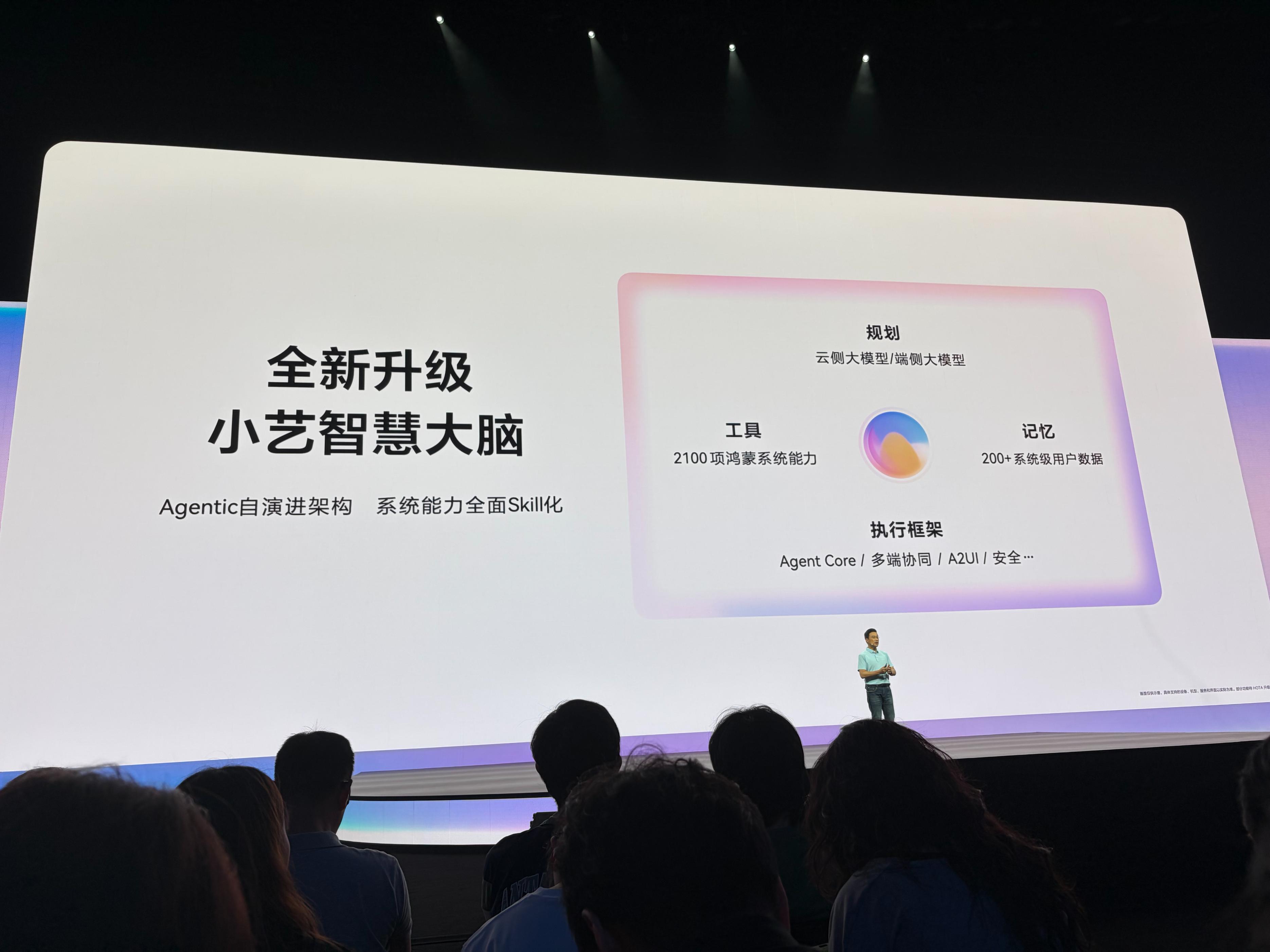
In this architecture, application intelligence, application Agent-ization, and application Skill-ization are aligned in the same direction. On the HarmonyOS side, there is the HMAF Harmony Intelligence Framework, Ark Agentic Framework, Xiaoyi System Intelligence, Intelligence Hub, and edge large models; on the cloud side, there is the Xiaoyi Open Platform, Agent Core JiuWen, and cloud-side large models. In other words, Huawei aims to do far more than make Xiaoyi a better conversationalist—it hopes Harmony applications themselves can be dissected, understood, and orchestrated.
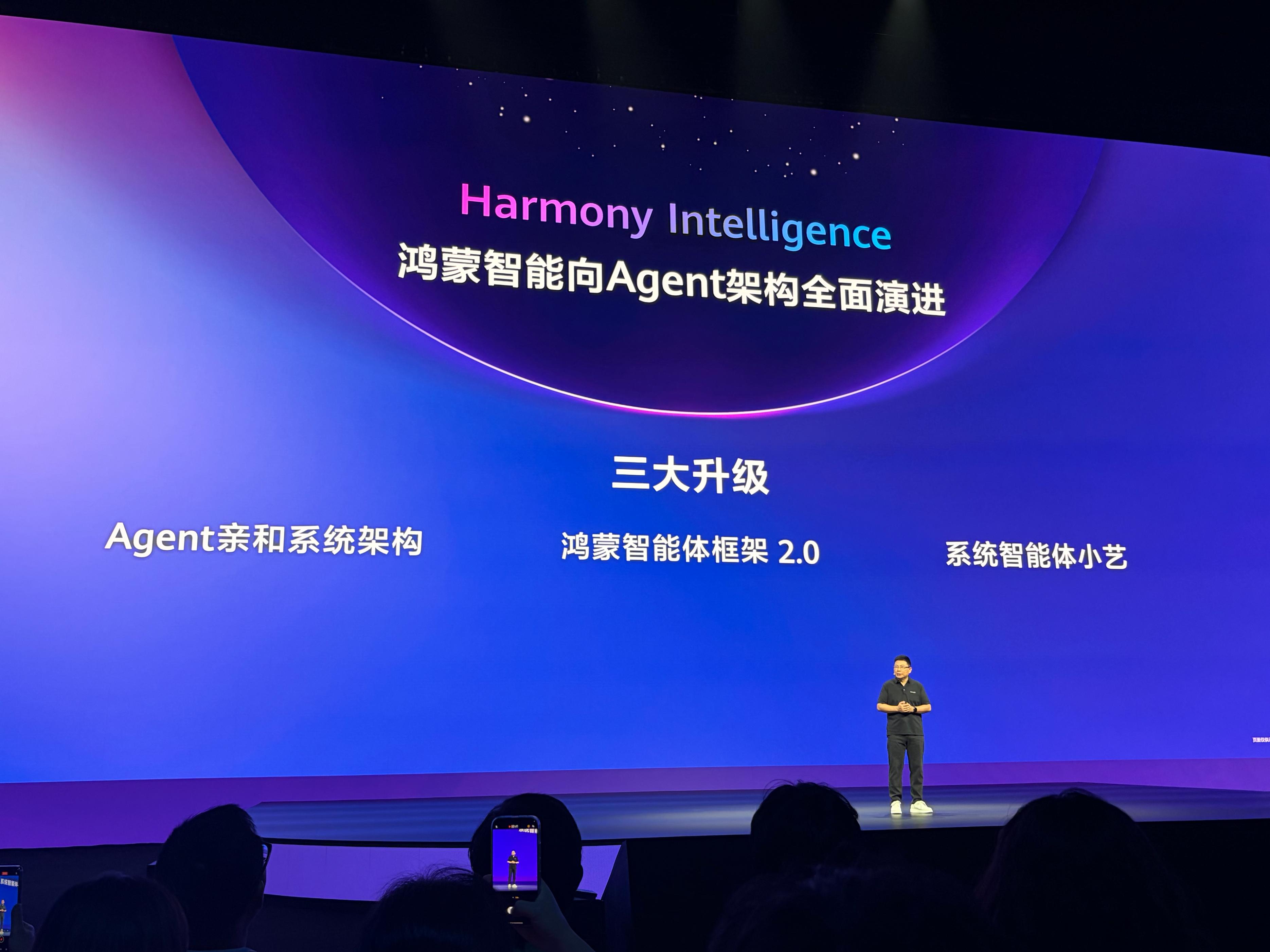
(Image source: On-site photography by Leikeji)
Xiaoyi is no longer just a voice assistant. According to Huawei's official data, Xiaoyi is activated 3 billion times daily, with 180 million daily active users. It answers 270 million calls, saves 6.77 million hours, and performs 3.9 billion translations. Meanwhile, Xiaoyi already possesses 2,100+ system capabilities, 500+ partner-selected Skills, and 2,000+ Harmony Intelligence Agents. For Huawei, these high-frequency touchpoints form the entry basis for a system-level Agent.
In fact, at the recently concluded WWDC26, Apple was doing something similar. Apple introduced Siri AI and incorporated iOS 27, iPadOS 27, macOS 27, watchOS 27, and visionOS 27 into a new round of upgrades under Apple Intelligence. Apple also emphasized App Intents, screen awareness, personal context understanding, and agentic coding in Xcode 27.
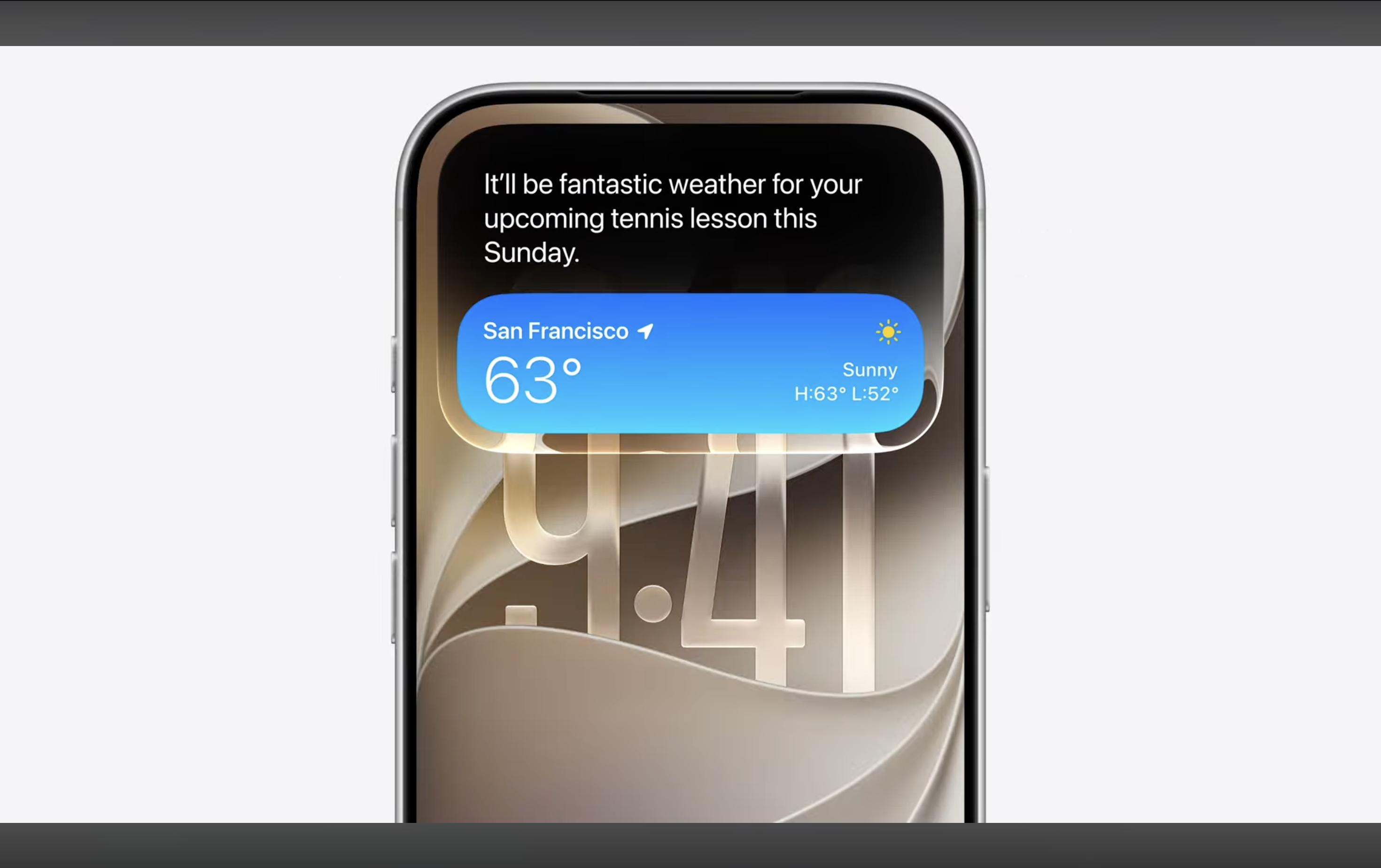
(Image source: Apple)
Both Huawei and Apple share a common vision: AI cannot remain confined to chatboxes; it must integrate into system entry points, application invocation layers, and developer toolchains. The difference lies in their approaches: Apple is embedding Agent capabilities within its mature App Store, Siri, and Apple Intelligence ecosystem; Huawei, on the other hand, is directly incorporating application Agent-ization, Skill-ization, and system-level data into the operating system framework during a phase where the Harmony ecosystem still needs expansion.
Today, iOS 27 resembles integrating AI Agents into an existing ecological order, while HarmonyOS 7 is reorganizing the Harmony ecosystem order through Agents.
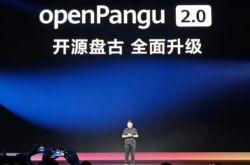
Of course, for Agents to truly function, the model foundation must keep pace. At HDC 2026, Huawei unveiled openPangu 2.0, offering two versions: Pro, with a total parameter count of 505B and 18B activated parameters, and Flash, with a total parameter count of 92B and 6B activated parameters, supporting 512K long contexts. Huawei also plans to gradually open-source seven major components starting from June 30th, including pre-training code, post-training code, and training operators.
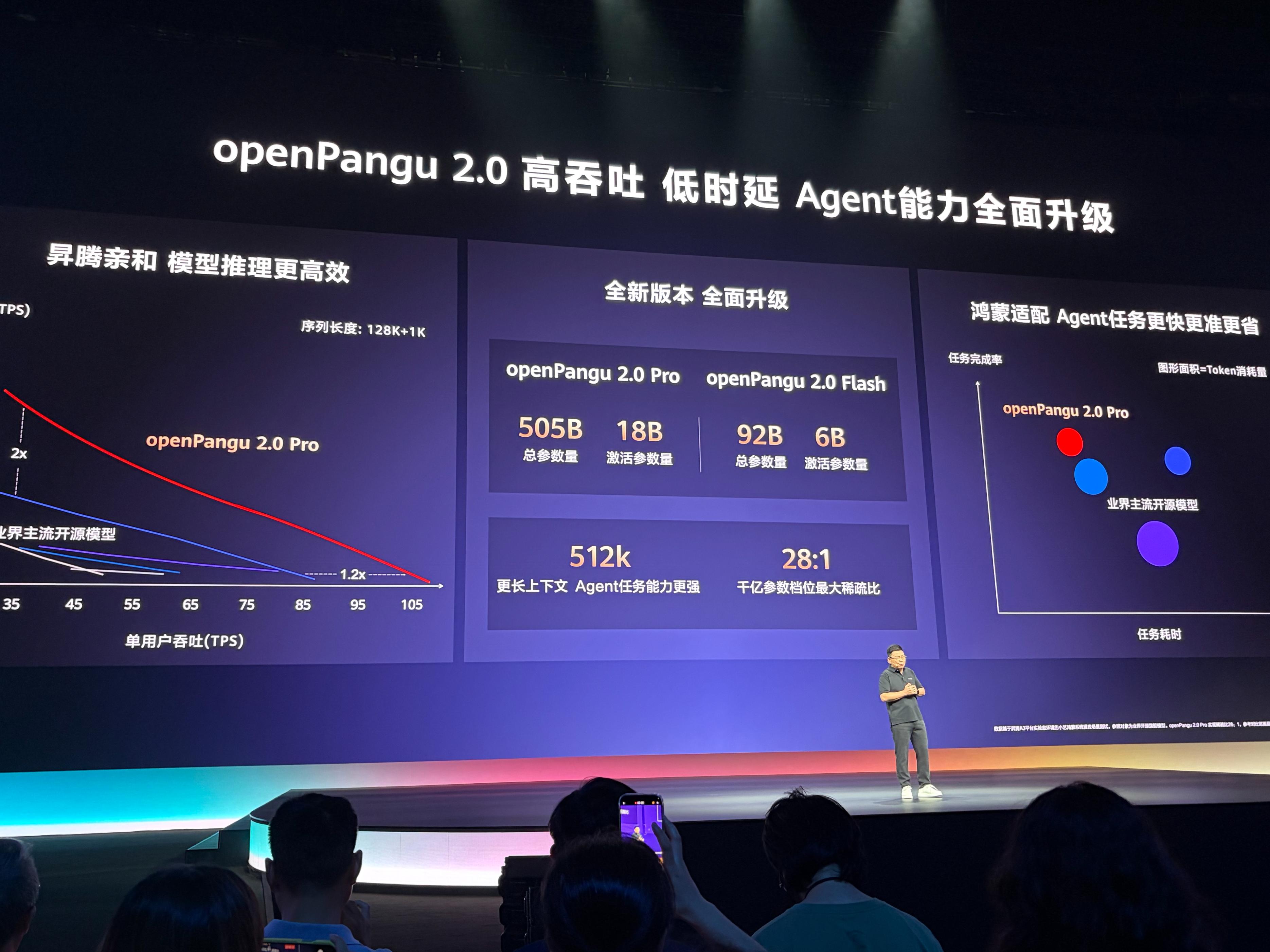
(Image source: On-site photography by Leikeji)
openPangu 2.0 is integrated with Harmony Agent tasks, Ascend computing power, edge models, Xiaoyi, and developer tools. On the edge side, Huawei showcased the 'Kirin chip-affinitive, native 30B edge model': with a total parameter count of 30B and 2B activated parameters, it enhances inference efficiency through quantization pruning, expert reuse, and activated expert prediction.
This indicates that Harmony's AI transformation is not merely about 'integrating large models into the system' but also emphasizing edge-cloud collaboration. Cloud-side models handle complex reasoning and Agent tasks, while edge-side models manage local perception, privacy protection, low-latency responses, and high-frequency small tasks. For an Agent OS to be truly functional, it must dynamically allocate between privacy, speed, cost, and task complexity.
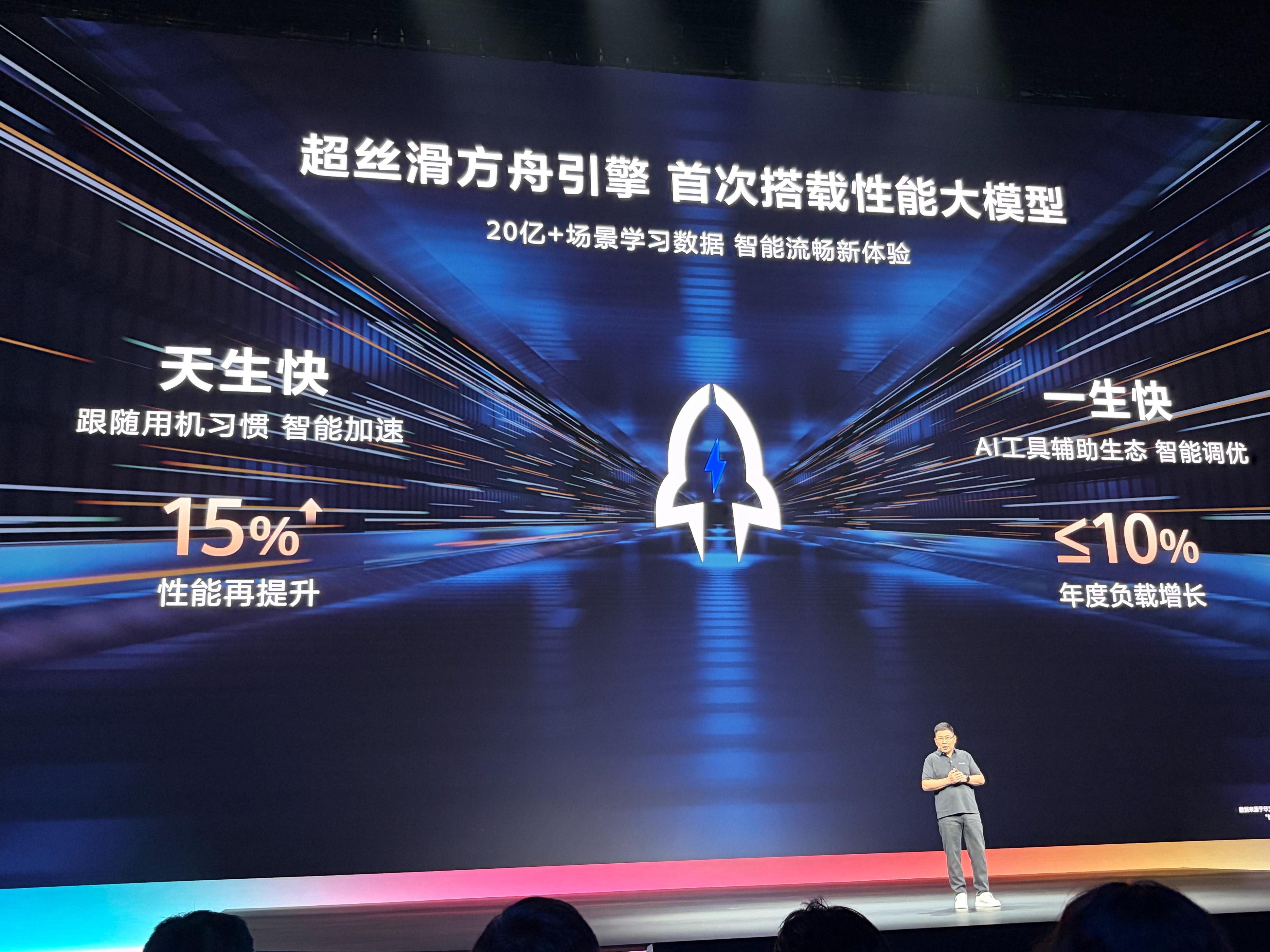
HarmonyOS 7 also integrates AI into traditional system capabilities. For example, the ultra-smooth Ark Engine now incorporates a performance large model based on over 2 billion scenario learning data points, delivering an intelligent and smooth experience. Compared to HarmonyOS 6, HarmonyOS 7 achieves a 15% performance improvement, with annual load growth below 10%. Application transitions, check-ins, key application retention, and gaming frame rate stability have also seen improvements.
(Image source: On-site photography by Leikeji)
In terms of security, Harmony Xingdun Security emphasizes being 'smarter and more proactive,' covering capabilities such as AI voice alteration detection, webpage content recognition, QR code risk identification, application impersonation risk identification, Alipay fund security collaboration, and defense against script fraud. Especially in collaboration with Alipay, the Harmony Xingdun Anti-Fraud Platform, combined with Ant Group's risk control capabilities, has improved anti-fraud metrics by 35.8% and anti-theft metrics by 42.3%.
This holds significant importance for an Agent OS. As the system begins to understand user intentions, invoke services, and execute actions on behalf of users, risks shift from 'users making mistakes' to 'the system making mistakes on behalf of users.' The greater the convenience, the more critical the security boundaries become.
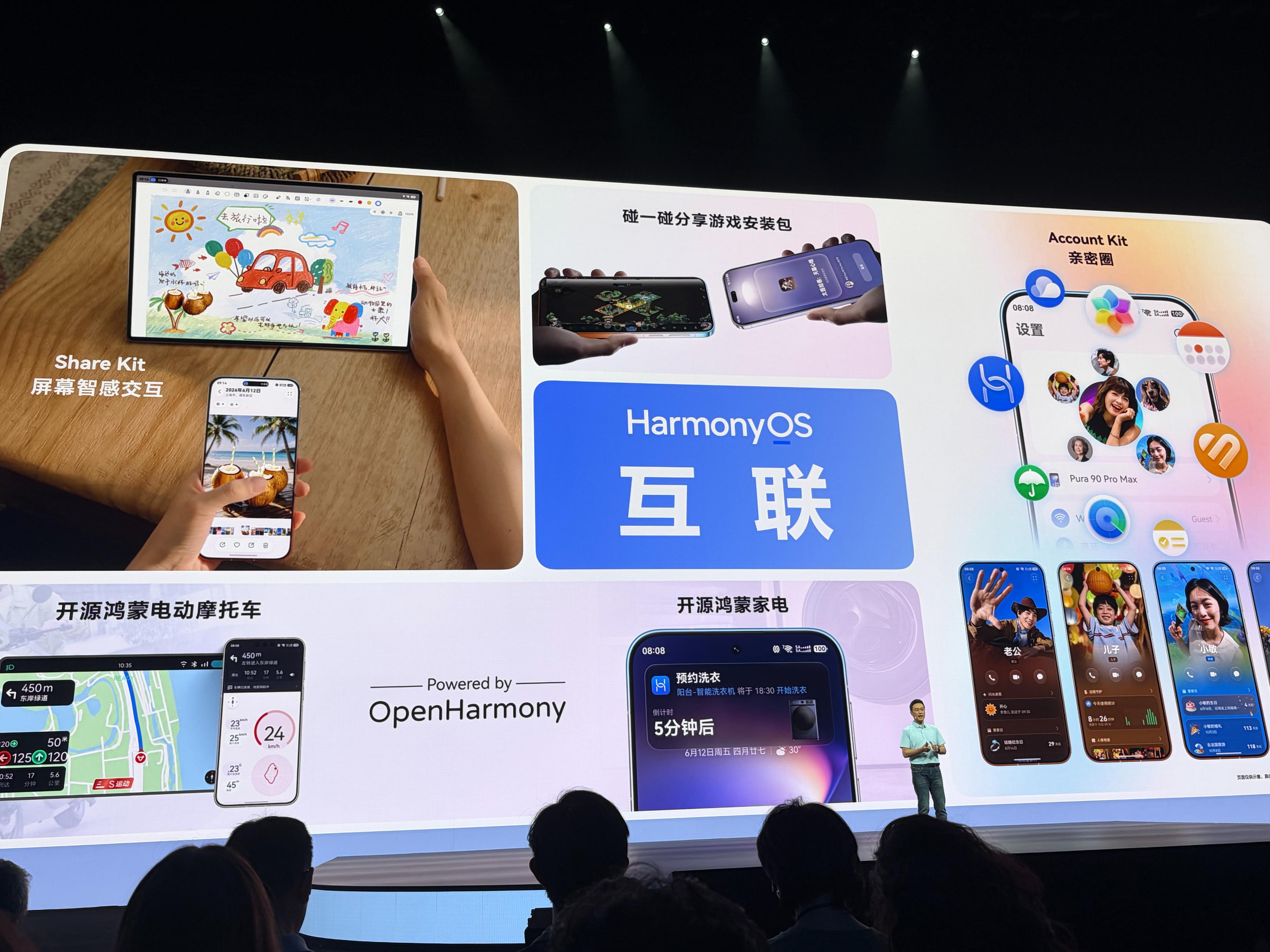
Additionally, Harmony's traditional interconnection advantages remain intact. Harmony Xinghe Interconnection emphasizes faster, smarter, and more open connectivity, with multi-path concurrent aggregation rates reaching 250MB/s. Xiaoyi can directly facilitate multi-device collaboration with a single command, extending interconnection to OpenHarmony, iOS, and more third-party systems. An Agent that can only answer questions on a single smartphone is unlikely to become a true new entry point; it must complete task flows across smartphones, tablets, PCs, in-vehicle systems, wearables, and even third-party systems.
(Image source: On-site photography by Leikeji)
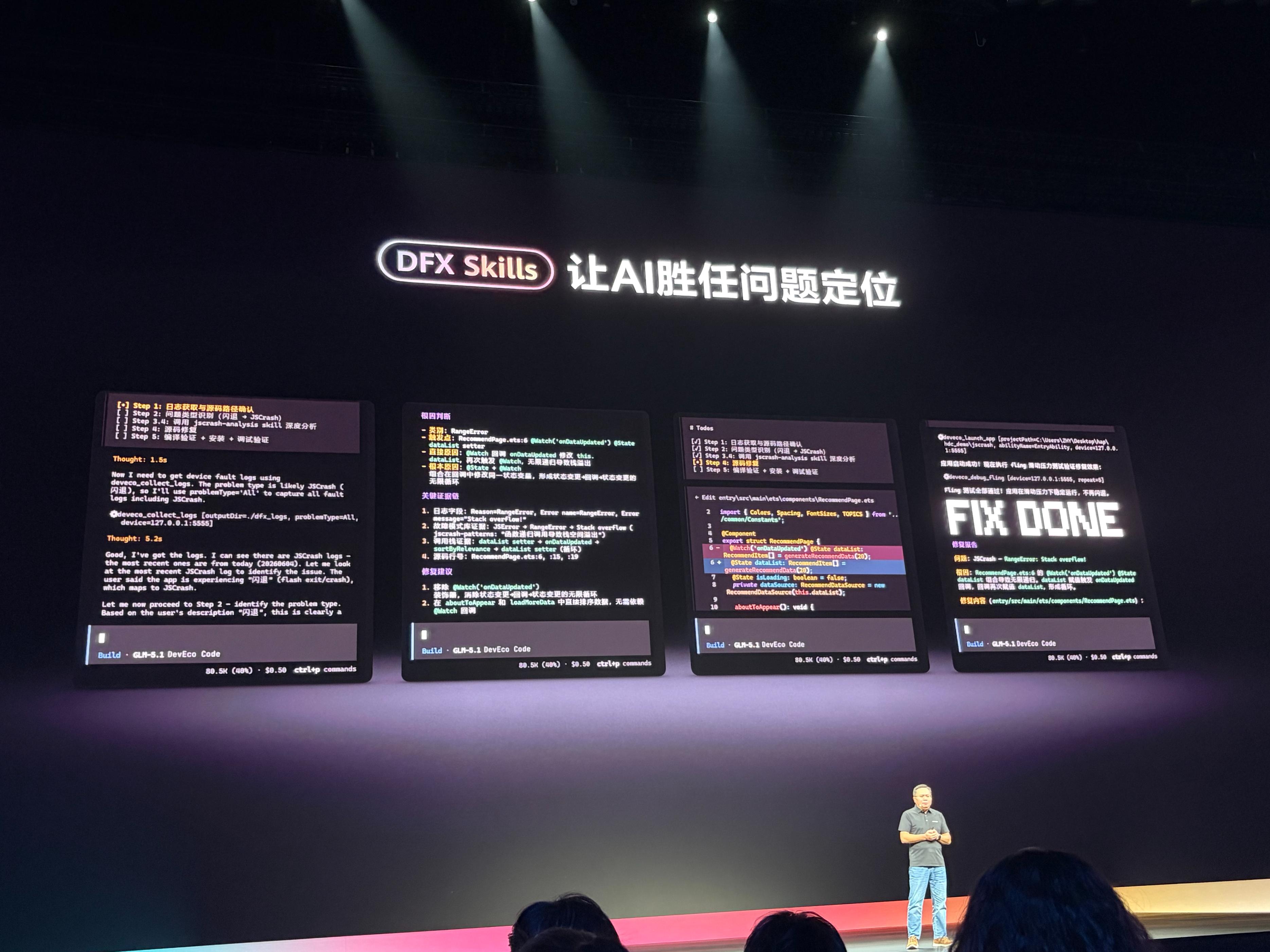
To support the growing Harmony application ecosystem, Huawei has also upgraded its developer tools. The launched Harmony Programming Intelligence includes 70+ Skills, a knowledge base of 20 million words, and 10+ tools, available in product forms such as DevEco Code and DevEco CLI. These tools not only enhance coding efficiency but also help developers understand how to Skill-ize and Agent-ize application capabilities. In the future, Harmony application development will require developers to consider not only pages and functions but also how their capabilities can be discovered, understood, and invoked by the system.
(Image source: On-site photography by Leikeji)
Overall, the main trajectory of HarmonyOS 7 is clear: using Xiaoyi as the entry point, organizing capabilities through HMAF 2.0 and the Agent-affinitive system architecture, providing an AI foundation with openPangu 2.0 and edge models, ensuring system reliability with the Ark Engine, Xingdun Security, and Xinghe Interconnection, and bringing developers into a new development logic with DevEco Code/CLI.
The significance of HarmonyOS 7 extends beyond 'improved system experience.' The more profound change lies in Huawei's initiative to rebuild the operating system's value chain around Agents.
In the past few years, smartphone system competition has primarily focused on smoothness, application ecosystem, privacy security, multi-device collaboration, and imaging experience. With the rise of large models, the industry has begun integrating AI assistants, AI photo editing, AI summarization, and AI search into systems. However, for users, the true value often lies in taking fewer steps rather than having yet another entry point.
For example, before a business trip, can the system automatically understand flights, hotels, schedules, ride-hailing, and reimbursements? Before shopping, can it understand budgets, inventory, discounts, and shipping addresses? Before exercising, can it understand physical conditions, training plans, and schedule conflicts?
These tasks cannot be completed by a single app. They require the system to understand user context, models to interpret intentions, applications to expose capabilities, security systems to assess risks, and multi-device collaboration for execution. Whoever can organize these elements will be closer to the new entry point in the AI era.
(Image source: On-site photography by Leikeji)
This is particularly crucial for Huawei.
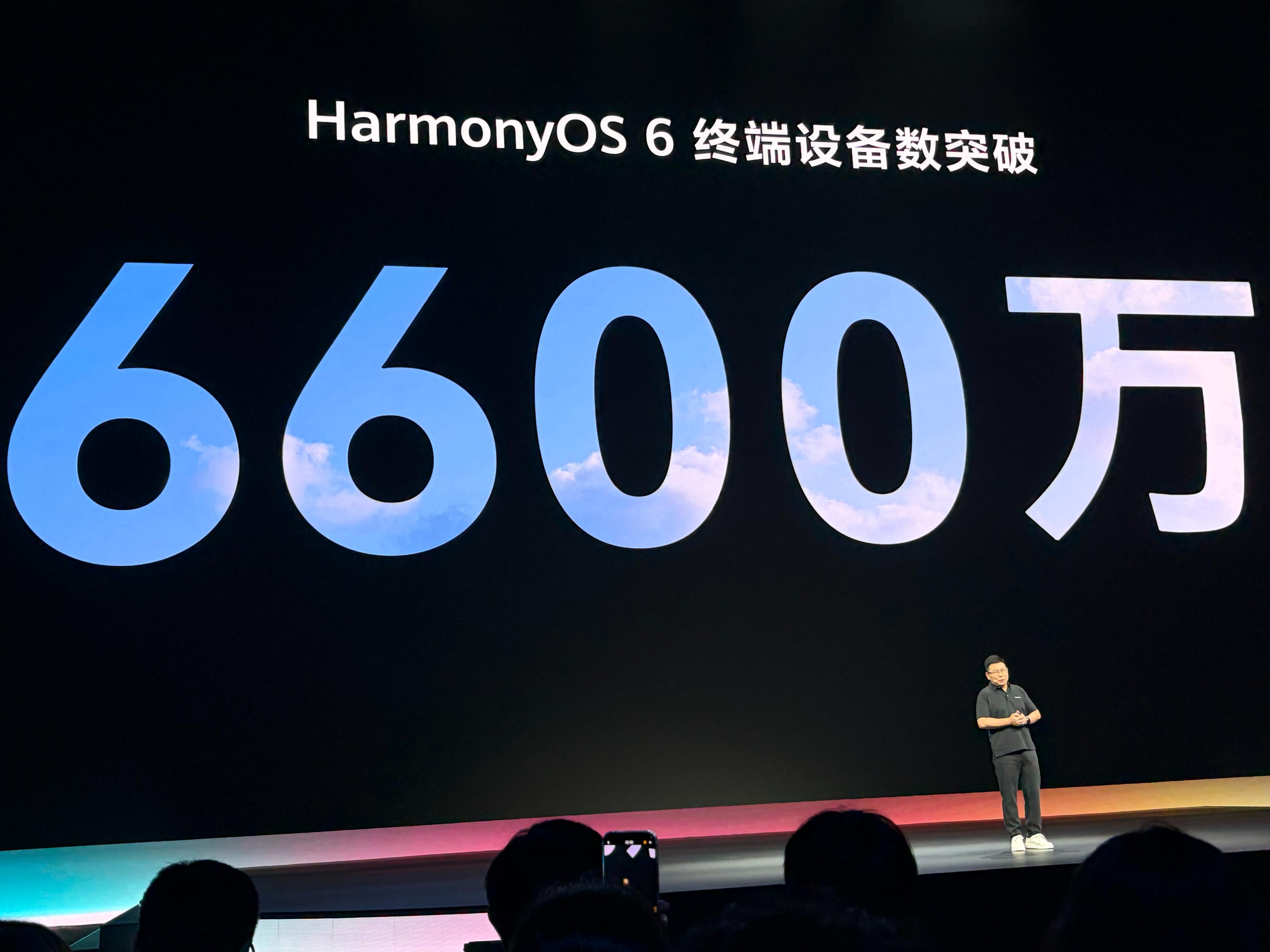
The Harmony ecosystem has progressed beyond its initial stages. HarmonyOS 6 has surpassed 66 million terminal devices, with over 1.3 billion Harmony ecosystem devices. This scale indicates a solid user and device base for Harmony, but the next phase of ecosystem competition will not solely depend on 'how many devices' or 'how many apps' are available. As AI Agents transform service entry points, the system's ability to organize application capabilities may become more critical than merely accumulating app quantities.
(Image source: On-site photography by Leikeji)
The opportunity lies in the fact that Agent OS may allow Harmony to bypass some traditional application ecosystem catch-up logic. In the past, system ecosystem competition required users to open specific apps and developers to compete for desktop positions, push permissions, and in-app retention. Agent OS competition will focus on which application capabilities can be understood by the system, invoked by Xiaoyi, and participate in cross-application tasks. For Harmony, still rapidly expanding its ecosystem, Skill-ization and Agent-ization may reduce user reliance on traditional app entry points.
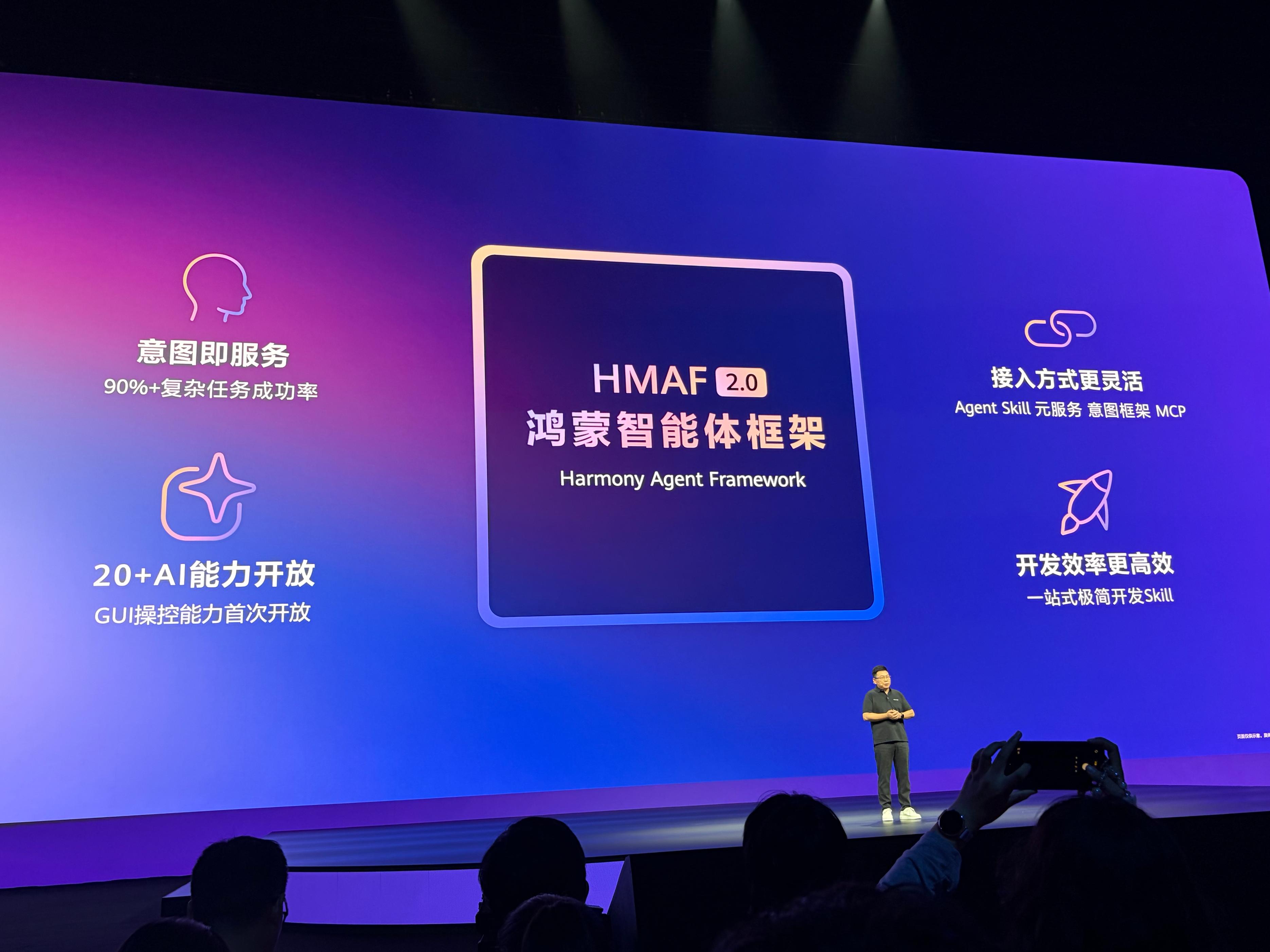
However, the pressure is undeniable. With 500+ partner-selected Skills, 2,000+ Harmony Intelligence Agents, 70+ programming Skills, and 20+ AI capabilities opened up, Huawei has made a start. Yet, truly changing user habits will require more headline applications, more stable invocation success rates, and clearer development guidelines.
Developers may experience even greater changes than imagined. For instance, future Harmony application development will require considering not only 'how to design app pages, implement functions, and optimize performance' but also 'how the system can invoke their capabilities.' Food delivery apps will need to expose order, address, discount, and delivery status information; music apps will need to expose playback, playlists, scene recognition, and spatial audio capabilities; local lifestyle apps will need to enable the system to understand restaurants, routes, queuing, reservations, and 3D real-world capabilities.
(Image source: On-site photography by Leikeji)
In the short term, users will initially perceive HarmonyOS 7's smoothness, security, interconnection, and spatial experiences: faster app transitions, more stable gaming, proactive fraud prevention, smoother multi-device collaboration, and more immersive weather apps and spatial wallpapers. However, if Agent OS truly takes hold, the relationship between users and systems will shift from 'searching for functions' to 'delegating tasks.' Users will no longer need to know which menu level a function is hidden in within an app; they can simply tell Xiaoyi what they want to accomplish, and the system will understand the context, invoke Skills, execute tasks across devices, assess risks, and deliver results.
Apple has a strong ecosystem and privacy system, but the regional availability, model capabilities, and depth of developer access for Siri AI still require observation. Huawei has a full range of scene devices, end-cloud-chip coordination, and determination in building the Harmony ecosystem, but it also needs to prove that its Agent architecture can be truly utilized by more developers.
Spatial capabilities represent another blueprint Huawei has presented to the market and developers this time.
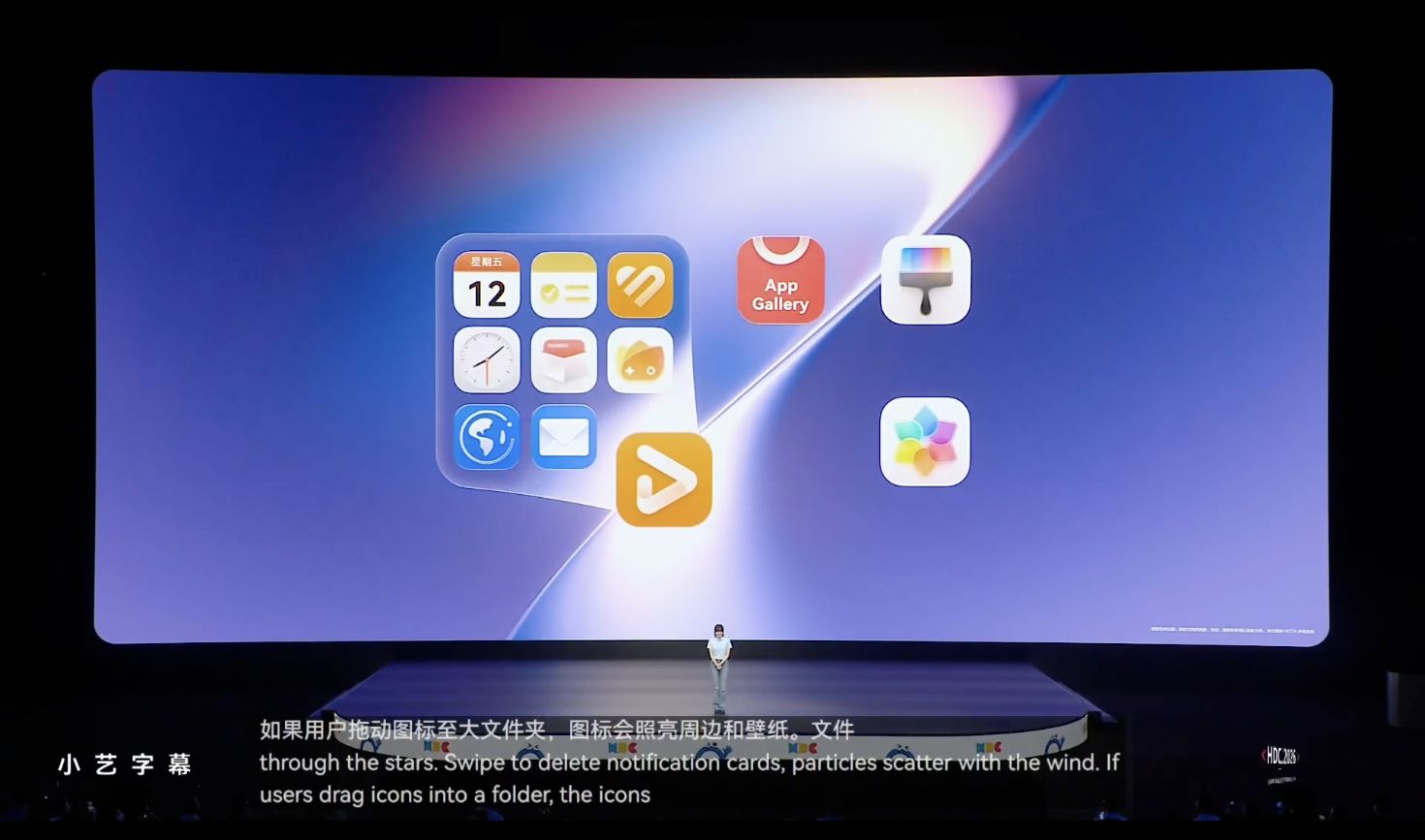
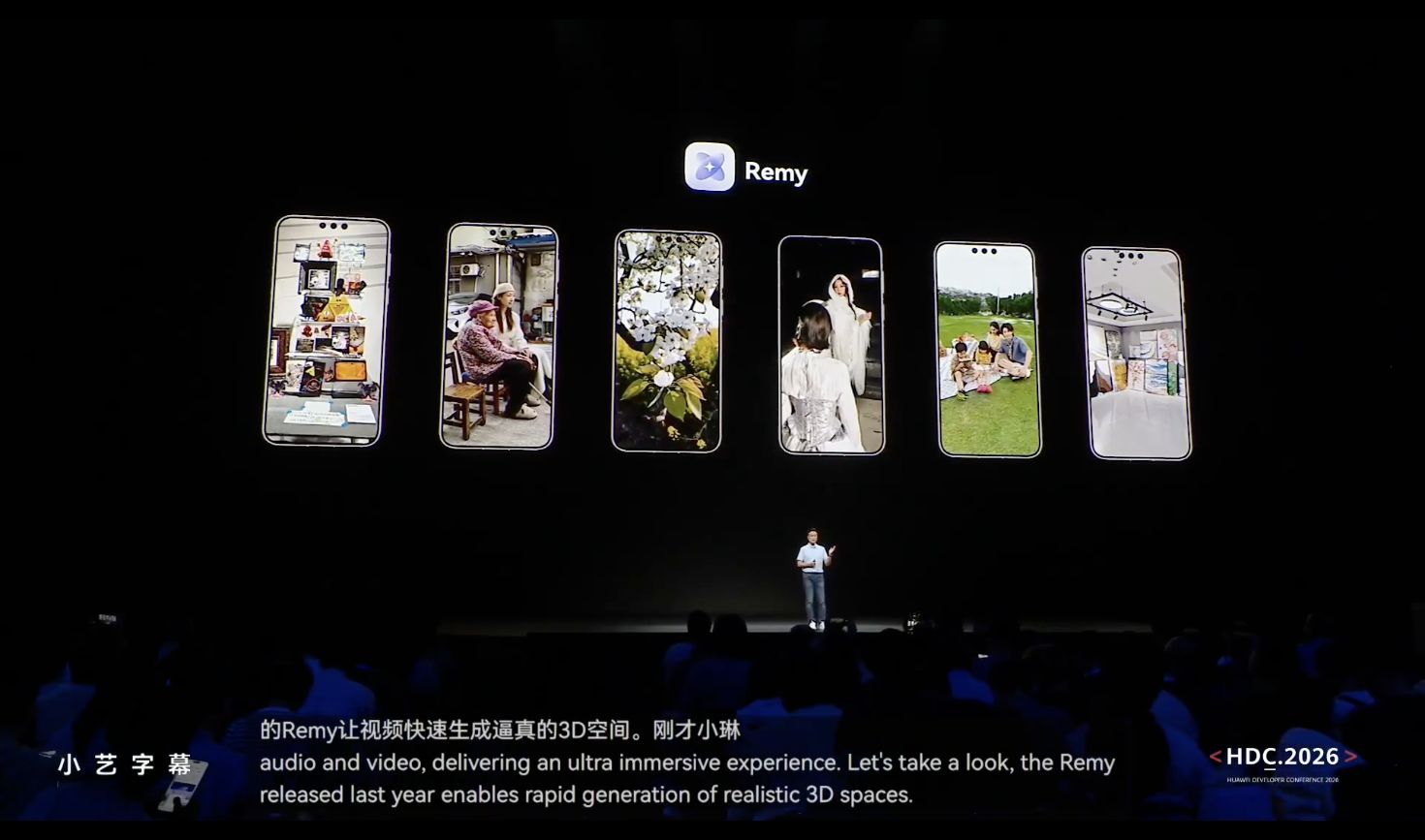
Huawei began with spatial design, covering desktop icons, folders, cards, the Weather app, and 3D spatial wallpapers. Subsequently, Remy demonstrated the rapid generation of realistic 3D spaces from videos. V2Fun/ArkGraphics 3D can create 3D models from a single photo. Dianping's 3D real-world restaurant views now cover more cities and 1,000 restaurants. JD.com's Product 3D Shadow showcases 3D live streaming, 3D product details, and AR size-fitting, providing data that HarmonyOS 3DGS reduces 3D modeling costs for products by 90% and shortens the cycle from 2-3 weeks to just 0.5 hours.
(Image source: Huawei)
For the market, this means that competition for Harmony is no longer confined to the mobile system itself but extends to merchant content production, platform service presentation, developer toolchains, and multi-device scenarios. For Huawei, this helps establish a differentiated narrative for Harmony distinct from Android and iOS. For developers, it offers new functional interfaces and commercial entry points. For users, the truly valuable aspects will ultimately translate to fewer operations, stronger understanding, more natural cross-device experiences, and content expression closer to the real world.
The core message of HDC 2026 is clear: Huawei does not want Harmony to remain just a "native system" but hopes it will become the task gateway, capability gateway, and scenario gateway in the AI era, transforming it into a full-fledged AgentOS.
However, to be honest, this path is somewhat challenging. A true Agent OS cannot merely showcase architecture diagrams at press conferences or rely solely on model parameters and assistant demonstrations. It requires a sufficient number of application Skills, stable intent recognition, reliable end-cloud coordination, explainable user authorization, developers willing to open up capabilities, and users genuinely willing to delegate tasks to the system.
Fortunately, Huawei now offers a relatively complete framework: Xiaoyi as the gateway, HMAF 2.0 as the intelligent agent framework, openPangu 2.0 and on-device 30B models as the AI foundation, Ark Engine, Star Shield Security, and Star River Interconnection for system assurance, DevEco Code/CLI as developer tools, and spatial computing and third-party cases for scenario implementation.
(Image source: Huawei)
As for how well this solution performs in the future, it mainly depends on the adaptation speed after the HarmonyOS 7 Developer Beta, whether leading apps truly adopt Skill-based approaches, whether the open-source ecosystem of openPangu 2.0 remains active, and, most importantly, the willingness of users to embrace it.
Regardless of the outcome, HDC 2026 has brought the issue to the forefront: in the AI era, the value of operating systems is changing. Clearly, HarmonyOS 7 is betting on this transformation. Huawei aims to firmly grasp the new era's operational gateways and control the definition of AI-era operating systems in its own hands.
-
![]()
The World's First Trillionaire Emerges: Is SpaceX's $2 Trillion Valuation Justified?
-
Volkswagen to Implement 19,000 Job Cuts in Germany This Year
-
![]()
Tremble, Humans: AI Continues to Accelerate at Breakneck Speed
-
![]()
A Strategic Vision: Taking a Leaf Out of Apple’s Book in China’s Operation-Intensive Auto Market
-
![]()
Yu Chengdong Declares, ‘Only First Place Exists in My Lexicon.’ Is This Bold Claim or a Promise of Excellence?
-
![]()
Agent OS is Here! HarmonyOS 7 Unveiled, Huawei Redefines OS
-
![]()
Agent OS is Here! Huawei Unveils HarmonyOS 7, Redefining Operating Systems
-
DingTalk’s Evolution and the Dilemma Facing Alibaba