A Strategic Vision: Taking a Leaf Out of Apple’s Book in China’s Operation-Intensive Auto Market
 06/15 2026
 422
422
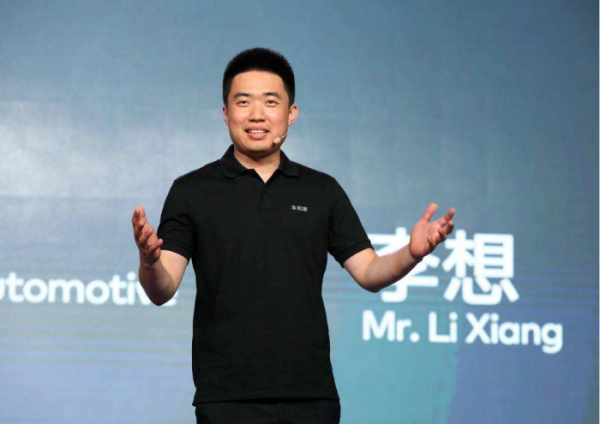
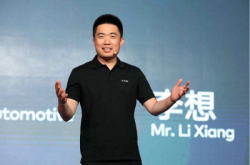
According to a report by 21 Auto·Yijian Auto, Li Auto (hereafter referred to as "Li") held a small-scale shareholder meeting at 10 a.m. on May 29, with fewer than 20 participants. Li Xiang, the founder and CEO of Li Auto, attended in person and addressed a series of pointed questions raised by shareholders.
At the meeting, Li Xiang openly acknowledged his lack of expertise in refined operations and expressed his ambition to build a company akin to Apple. In my opinion, this statement is a clear signal from Li Auto to the market amid short-term profit pressures and a period of strategic transformation. It represents not just an admission of operational challenges but a proactive strategic choice and gamble.
We can comprehensively analyze this statement from the following three dimensions:
1. Admitting Weaknesses: A Realistic Acknowledgment of Refined Operations Challenges
Li Xiang's admission of his lack of expertise in refined operations is a candid acknowledgment of Li Auto's current operational pain points. In the first quarter of this year, Li Auto shifted from profit to loss, with a net loss of RMB 2.28 billion and a significant decline in vehicle gross margin. The profit collapse exposed several shortcomings in refined operations:
① Supply Chain and Delivery Forecasting Miscalculations: The unexpected surge in orders for the pure electric model i6 led to cross-year deliveries for some owners. Li Auto had to cover over RMB 500 million in purchase tax differences for these owners, directly impacting current profits.
② Cost Absorption and Product Transition: During a period of soaring raw material prices, such as lithium carbonate, Li Auto chose to maintain original prices across its lineup, absorbing costs internally. Simultaneously, it proactively discontinued its mainstay older models, resulting in a months-long delivery gap and severely dragging down gross margins in the short term.
Li Xiang's candor indicates that Li Auto has indeed struggled with accounting inaccuracies in price wars, model replacement cycles, and refined cost control. From my observation, he is a product strategy-oriented founder, strong in defining products, grasping trends, and top-level design, but relatively weak in execution-level details such as cost control, channel management, supply chain control, and daily organizational efficiency.
2. Emulating Apple: The Underlying Logic of Transitioning from Component Assembly to Full-Stack Self-Development
While acknowledging operational shortcomings, Li Xiang's proposed solution is not to emulate traditional automakers in refined operations but to pursue a more resource-intensive "Apple-style vertical integration" approach. He explicitly stated that Li Auto would not assemble products to cater to the market (e.g., "using BMW's exterior with Mercedes' interior") but instead seek closed-loop control across the entire chain. This approach has two layers of meaning:
① Breaking Single-Point Competition and Pursuing Hardware-Software Integration: Li Xiang believes that Apple's core strength lies not in having the strongest single technology but in its autonomous design across the entire chain, including self-developed chips, operating systems, hardware, and cloud services. In the AI era, the focus has shifted from competing for single-point excellence to system-level capabilities across multiple dimensions.
② Heavy Investment in Foundational Technologies: To replicate Apple's closed-loop path, Li Auto is constructing a full-stack self-developed system encompassing "chips-operating systems-large models-applications." For example, the new L9 is equipped with Li Auto's self-developed Mach M100 chip and Xinghuan OS. Despite significant capital consumption and a longer time horizon for results, Li Auto has chosen to increase R&D investment even amid declining profits.
3. Strategic Gamble: Trading Short-Term Profits for Long-Term Technological Barriers
Li Xiang's logic essentially addresses the question of how to sustain profitability after selling cars, bringing two major benefits:
① Escaping Homogenized Competition: The first-mover advantage in the current extended-range electric vehicle market is rapidly eroding, with "fridges, TVs, and sofas" becoming standard features. Continuing to compete on refined operations and configurations will only lead to endless price wars.
② Reshaping Competitive Dimensions: Through self-developed chips and operating systems, Li Auto aims to transform cars from passive tools into proactive service-providing intelligent entities. Once this hardware-software integrated foundational technology is operational, Li Auto can reduce reliance on external supply chains and establish genuine technological moats.
To be frank, Li Auto's ambition to emulate Apple is undoubtedly a strategic gamble. The reason is simple: Apple's success is difficult to replicate, and many companies often learn only the superficial aspects without grasping the essence. Apple's strength lies not only in hardware-software integration but also in its brand moat and global scale effects, which allow it to thrive on brand premium without relying on price wars or channel competition.
In other words, Apple enjoys high gross margins, a strong brand, and weak price competition, enabling it to profit sustainably through its ecosystem. However, Li Auto operates in China's highly competitive new energy vehicle market, where price wars, channel battles, and supply chain competitions are fierce. Without refined operations (cost reduction, efficiency improvement, quality control), automakers cannot survive. This core contradiction places Li Xiang in a dilemma:
Focusing solely on product strategy while neglecting operations may result in idealistic product plans but poor execution, characterized by high costs, slow deliveries, and unstable quality. Conversely, focusing entirely on operations may lead to getting bogged down in trivialities and losing focus on product strategy. While Li Auto's strategic alignment with the premium segment is correct in direction, its success hinges on whether Li Xiang can maintain the core of product strategy while building a professional team capable of strong refined operations without being overwhelmed by operational details.
Overall, Li Xiang's statement reflects Li Auto's shift from seeking short-term explosiveness to pursuing long-term value. His admission of weakness in refined operations tells the market, "Don't measure me by past standards," while emulating Apple represents a bet on allocating limited resources to a grander vision. In Li Xiang's words, "We are not building cars for the next quarter but for the next decade."
Although this strategic transformation entails significant financial risks and uncertainties, it is a necessary path for Li Auto to establish core barriers in the intelligent era's second half. In short, Li Auto's Apple dream is appealing, but it must first overcome the critical challenge of refined operations. Only by passing this test can it potentially become the "Apple of the automotive world"; otherwise, it risks becoming just another failed imitator of Apple. What do you think?
-
![]()
The World's First Trillionaire Emerges: Is SpaceX's $2 Trillion Valuation Justified?
-
Volkswagen to Implement 19,000 Job Cuts in Germany This Year
-
![]()
Tremble, Humans: AI Continues to Accelerate at Breakneck Speed
-
![]()
A Strategic Vision: Taking a Leaf Out of Apple’s Book in China’s Operation-Intensive Auto Market
-
![]()
Yu Chengdong Declares, ‘Only First Place Exists in My Lexicon.’ Is This Bold Claim or a Promise of Excellence?
-
![]()
Agent OS is Here! HarmonyOS 7 Unveiled, Huawei Redefines OS
-
![]()
Agent OS is Here! Huawei Unveils HarmonyOS 7, Redefining Operating Systems
-
DingTalk’s Evolution and the Dilemma Facing Alibaba