Can Siri AI Rescue Apple from Its Slump?
 06/18 2026
 547
547
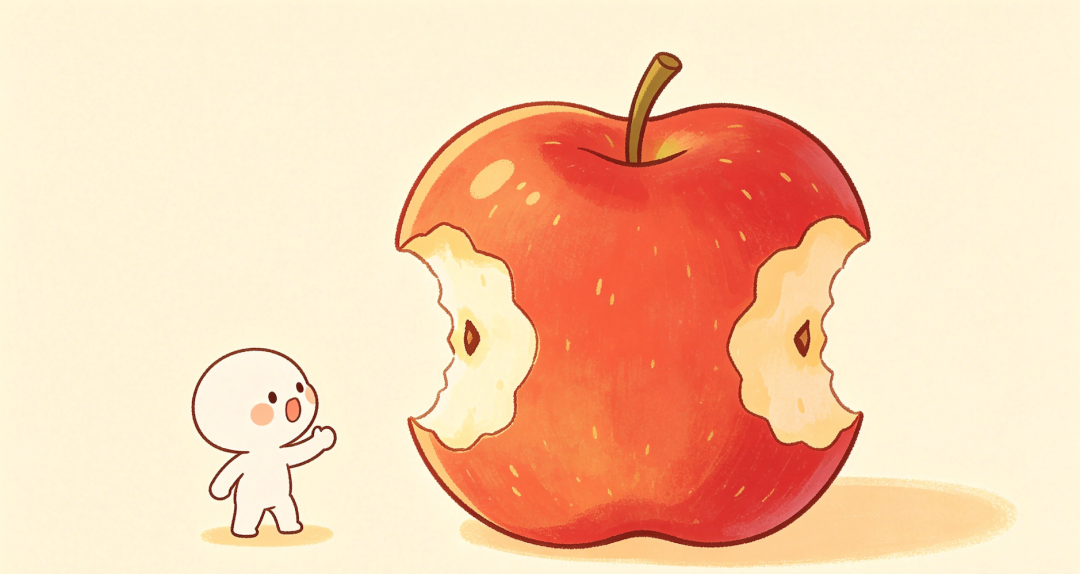
When was the last time you used Siri?
Editor: Wen Ruyan
If you're an Apple enthusiast, chances are you've vented frustration at Siri at some point in recent years.
What can it actually do now? Sure, it can set alarms and check the weather—those basic functions still work fine. But the moment you pose a slightly complex question, the responses often veer into the realm of the absurd. Over time, many users have effectively "given up" on Siri; at best, they might bark out a command like, "Hey Siri, wake me up at 7 tomorrow," and then abandon any further expectations.
This is a profound irony. When Siri made its debut alongside the iPhone 4S in 2011, Apple's ambition was to "enable seamless, natural communication between humans and devices." Yet, more than a decade later, Siri remains mired as a mere "voice command tool," showing little real evolution.
That is, until 2026.
At WWDC 2026, Apple finally rebranded Siri as "Siri AI" and integrated Google Gemini, positioning it as an AI assistant capable of going head-to-head with ChatGPT.
This marks the most significant overhaul of Siri since its inception.
However, the capital markets greeted this news with a mix of subtlety and skepticism.
Apple's stock price initially soared by over 3% on the day of the announcement but then plummeted, closing down roughly 1.9% and erasing over $85 billion in market value overnight.
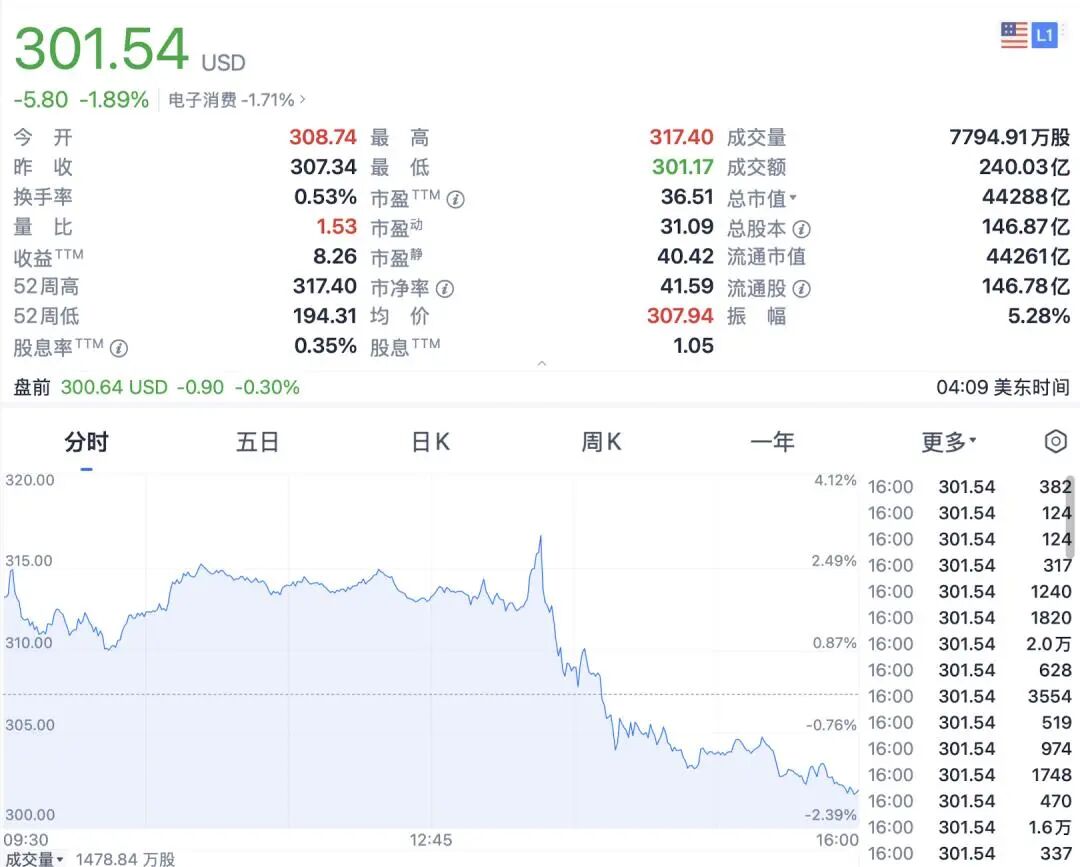
Apple's Stock Price
So, the crux of the matter remains: Can Siri AI truly revive Apple's fortunes?
01 When the iPhone Loses Its "Wow Factor," Siri Misses an Era
Apple's challenges extend beyond Siri's limitations. The real issue is that Apple has been coasting on inertia in recent years.
Apple users have grown accustomed to its stable ecosystem, smooth system performance, and familiar operations—all advantages built up over years. However, when a company's products rely more on "inertia" than on delivering "new experiences," the growth ceiling becomes glaringly apparent.
Take the iPhone's design, for instance: since the iPhone X introduced the full-screen display in 2017, its core form factor has seen little change. The Dynamic Island replaced the notch, a minor tweak, but the overall shape, feel, and rear camera module remain highly reminiscent of models from three or four years ago.
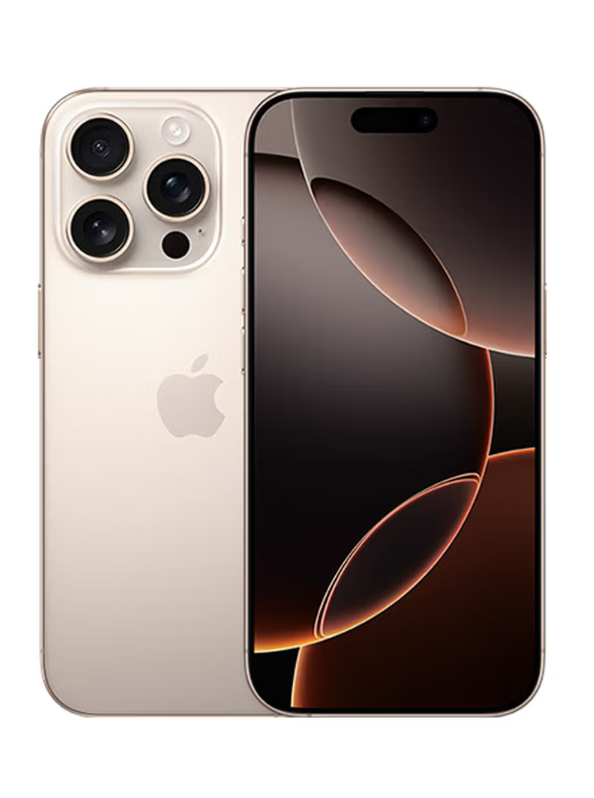
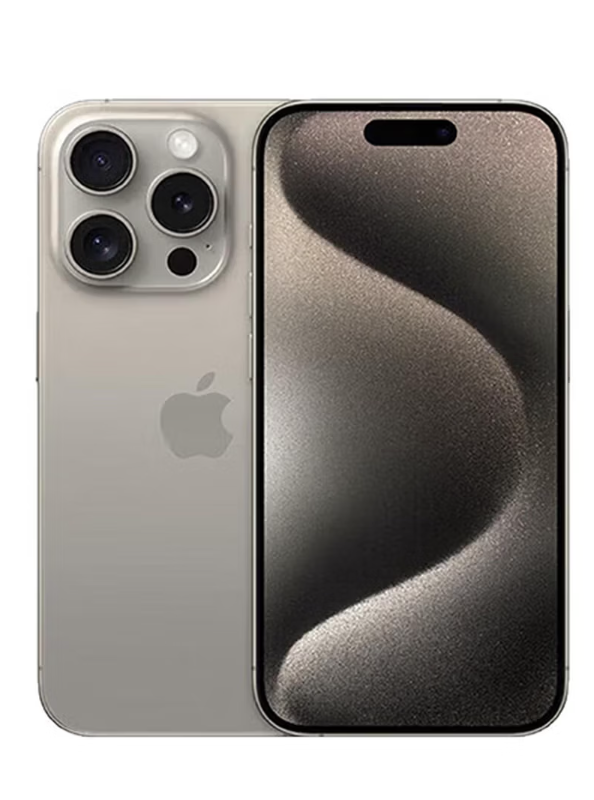
Chips improve annually, cameras get better each year, but users find fewer compelling reasons to upgrade because the "new" and "old" models look so similar.
This "incremental" iteration might have sufficed in the past, given iOS's ability to retain users. But in recent years, Chinese flagship phones have rapidly evolved, comprehensively improving in areas ranging from imaging and screens to memory and system experiences. iPhone growth in China has come under significant pressure, prompting Apple to even slash prices across the iPhone 17 lineup to boost sales.
For a company built on brand premium, resorting to discounts during promotional seasons is a telling sign.
Now, consider AI. By late 2022, ChatGPT had emerged, and AI capabilities quickly became a new gateway for interaction. Google and Microsoft swiftly followed suit, embedding large models into search, office systems, and operating systems, transforming intelligent assistants from mere "tools" into "gateways."
What about Apple? In June 2024, it belatedly showcased an AI-powered Siri, promising a slew of features that were repeatedly delayed in 2025 and remained unfulfilled by 2026.
In two years, how far had competitors surged ahead while Apple stood still? Users took notice.
As users grew accustomed to AI assistants for searching, writing, and even collaborative work, Siri remained stuck at the "voice command" stage. This gap is no longer just an experience issue—it's a generational disconnect.
More pragmatically, users' "intelligent assistant" gateways have already been claimed by other products.
Whether it's Doubao, Qianwen, Kimi, Deepseek, or ChatGPT, users have formed new habits: asking AI first, not Siri.
This means Apple isn't just "a little behind"—it's losing a critical gateway.
Does Siri AI's launch offer a chance to reclaim this gateway?
02 Spending $1 Billion on Google: Pragmatism or Admission of Defeat?
The new Siri AI will be powered by Google's Gemini as its underlying model.
As early as 2025, Apple signed a multi-year licensing agreement with Google, paying roughly $1 billion annually to use Gemini's technology to drive Siri AI's core capabilities.
This is highly unusual in Apple's history.
Apple is renowned for its independence—self-developed chips, operating systems, and maps. It would rather spend five or six years creating a lesser product than use someone else's. This is part of Jobs' legacy and the core logic of Apple's ecosystem: controlling everything ensures a consistent experience.
So, when Apple announced Gemini's integration, many's first reaction was: "This would never happen if Jobs were alive."
Jobs and Google had a bitter falling-out later in their careers. He viewed Android as a "rip-off" of the iPhone and vowed a "thermonuclear war." Letting Google's technology power the iPhone's core functionality would likely have been a humiliation to him.
But Cook chose a different path. Instead of spending three to five years catching up, he opted to buy time with money. From a business perspective, this logic holds.
If the new Siri AI significantly improves in capability—beyond just being an advanced voice command executor—then Google helped Apple achieve in one year what it couldn't in two. While efficient, this raises a structural issue: Apple spent $1 billion on Google's technology, not its own moat.
Apple once outpaced competitors with unique strengths: A-series chip performance, smoother iOS experiences, and deep hardware-software integration. These were Apple's own, impossible for rivals to replicate quickly.
But Gemini isn't like that. Today, Apple uses Gemini; tomorrow, any Android vendor can too. By relying on others to fill its gaps, Apple abandons differentiation in this area.
A more pressing issue is the Chinese market. Gemini is unavailable in China, a well-known fact. What model powers the domestic version of Siri AI, and whether it can match the experience, remains unclear.
03 What Trump Cards Does Apple Still Hold?
Admittedly, Apple has always managed to stabilize itself, not by luck but by holding several highly valuable trump cards.
An unparalleled terminal ecosystem closed loop. To date, Apple still controls one of the world's strongest terminal ecosystems. The seamless collaboration among iPhone, Mac, iPad, and Apple Watch remains unmatched by any other vendor at 100% fidelity. This is an absolute barrier built over a decade with countless user habits and massive data.
Self-developed chips for underlying computing power. At the core technology level, the performance and efficiency advantages of the A-series and M-series chips remain leading for now. This is why Apple dares to run more computations locally, protecting privacy and reducing cloud dependency—a logic that only works because its local chips are powerful enough.
Ultimate system experience. iOS 27 delivers peak sensitivity performance upgrades at the system level. iPhone and iPad app launch speeds are 30% faster, photo loading after capture is 70% quicker, AirDrop transfer speeds are 80% higher, and file transfer speeds between external hard drives and iPads are up to 5x faster.
With these trump cards, Apple still achieves high sales and maintains its core market position.
In Q1 FY2026, Apple's Greater China revenue surged 37.9% YoY to $25.53 billion, with iPhone revenue up 23.3%. IDC data also shows Apple ranked second in China with a 16.2% market share in 2025.
AI tech self-media "Houchangcun" argues that if we look at Apple's shipments in China over the past five years, it remains firmly at the main table. But this doesn't mean Apple can rest easy. In the next round, the key chip will be "AI."
To win the era's game, Apple must eventually play its own ace.
04 Conclusion
Ultimately, Siri AI is not Apple's salvation—it's merely Cook's hasty patch to catch up with the AI wave. By relying on Google's Gemini model, Apple quickly closes the capability gap in intelligent assistants but entirely abandons autonomous differentiation in AI. It also faces immense challenges adapting models for the Chinese market.
In the short term, Siri AI may slightly slow Apple's user attrition and stabilize its ecosystem advantages but cannot reverse industry passivity. Long-term, if Apple keeps depending on external AI technologies without building its own large model capabilities, it will forever follow industry rhythms, unable to redefine next-gen human-computer interaction. A return to high-growth glory remains distant.
-
![]()
Xiaomi and Others Boost Old Smartphone Battery Capacities, Power Banks Face Uncertain Future
-
![]()
Zhipu Soars to New Heights, MiniMax Faces Pressure: The Diverging Trajectories of the 'Dual Titans in Large Models'
-
AI Asset Spin-offs at Major Companies: Is Kling Paving the Way for ByteDance and Alibaba?
-
![]()
AI Agent Security Firm NewCore Raises $66 Million in Seed Funding, Achieves $300 Million Post-Money Valuation
-
From Pessimism to Optimism: China’s Hydrogen Fuel Cell Vehicles Set for Expansive Growth
-
The Race Against Time for Survival of Unitree and Its Peers
-
Dream Weaver in the Eye of the Storm: Elon Musk's Business Empire and SpaceX's IPO Moment
-
![]()
From 'Daydream' to 'Trillions in Wealth': Is SpaceX Really That 'Sci-Fi'?