Insta360 Fights Back! Standing Up to Black PR Operations", "Insta360 Innovation, Black PR Operations, Patent Litigation, Market Competition, Financial Performance", "Insta360 Innovation, targeted by b
 06/22 2026
 392
392
Even more aggressively, Insta360 announced a reward for clues, offering 666 RMB to 10,000 RMB for valid leads, with the ultimate prize being a pure gold slipper worth 100,000 RMB.
The slipper meme—those who get it, get it.
The story began a few days earlier. On June 10 and 11, DJ filed two patent lawsuits against Insta360 in the U.S. District Court for the Eastern District of Texas, alleging that Insta360's newly launched Luna series handheld gimbal cameras in the U.S. infringed on two of its design patents and four invention patents.
Insta360 swiftly countersued, bringing five patents into play and extending the battle to DJ's gimbal cameras, handheld stabilizers, and panoramic camera product lines.
Four days, one round.
But what truly angered Insta360 was not the courtroom clash but the public opinion warfare (public opinion battle) outside the courtroom.
In his long articles, Yuan revealed that within 24 hours of the patent infringement lawsuits being filed between the competitors, over 1,490 abnormal accounts emerged across major content platforms, mass-posting highly similar negative comments.
These accounts shared identical IP locations, had similarly structured profiles, posted in highly concentrated time frames, and used nearly identical negative rhetoric.
One user even went undercover in a black PR group for a week. According to the chat records he provided, the pay for posting a designated comment was a mere 6 RMB, and joining the group required a 20 RMB agency fee first.
The group admin would require newcomers to post two videos first to disguise (disguise) as genuine accounts, then share the unification (unified) script for bashing Insta360 in the group, which members would simply copy and paste.

6 RMB per black post. For the price of a cup of Mixue Ice Cream & Tea, you could buy a carefully crafted negative comment.
This wasn't Insta360's first rodeo.
In December 2025, just two weeks after the launch of Insta360's first panoramic drone, the 'Yingling A1,' it faced over 2,500 organized fake negative reviews.
Over the past three years, Insta360 has pursued criminal liability against six to seven related individuals through legal means. Since December 2025, multiple black PR groups have been under investigation, with over 2,000 black PR accounts identified, multiple suspects arrested and subject to criminal coercive measures, and cases transferred for prosecution.


The industrial chain (industry chain) behind a 6 RMB post
From 'spamming' in forum days to today's AI-generated mass content, online black PR has evolved into a sophisticated money-making machine. Criminals use AI to grab hot topics and generate 'black articles' with one click, manipulating countless accounts to hype them up simultaneously.

According to monitoring data, from January 2024 to April 2025, topics related to 'online water army' and 'black PR' saw over 210,000 pieces of content spread. Behind the rumors, smears, and malicious hype lies a black industry chain that profits hugely by forging materials, manipulating water armies, and manipulating ratings through fake engagement.
Digital hardware isn't the only victim. In 2025, at least eight tech companies publicly accused of facing 'organized public opinion attacks and smears,' with the automotive industry being hit even harder.
Insta360's 'golden slipper reward' move, while seemingly playful, actually strikes at the heart of the water army industry chain, exposing gray transactions to the light.
Why is Insta360 taking such a hard stance now? A look at its financials explains it.
In 2025, Insta360's revenue reached 9.741 billion RMB, up 74.76% year-on-year, just shy of the 10 billion RMB mark. IDC data shows Insta360's global market share reached 66% in panoramic cameras, 57% in thumb cameras, and 37% in broad motion cameras.
For every three panoramic cameras sold globally, two come from Insta360.
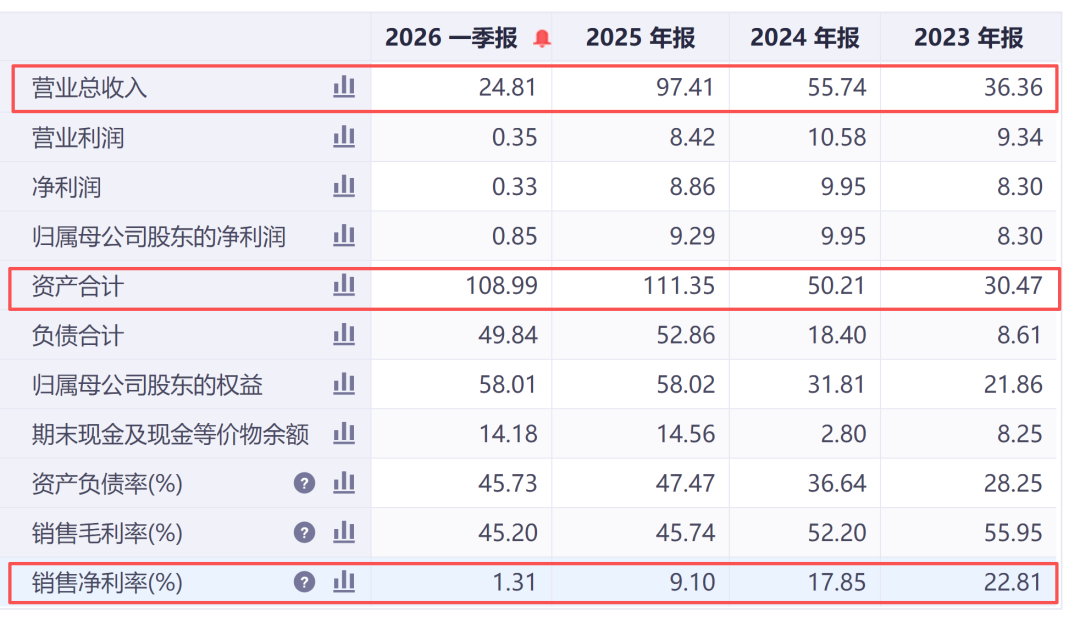
But the flip side is less flattering. Net profit attributable to shareholders was 929 million RMB in 2025, down 6.62% year-on-year. By Q1 2026, revenue grew 83.11% year-on-year to 2.481 billion RMB, but net profit attributable to shareholders plummeted 52.02% year-on-year to just 84.62 million RMB.
Revenue up, profits down—and the gap is widening.
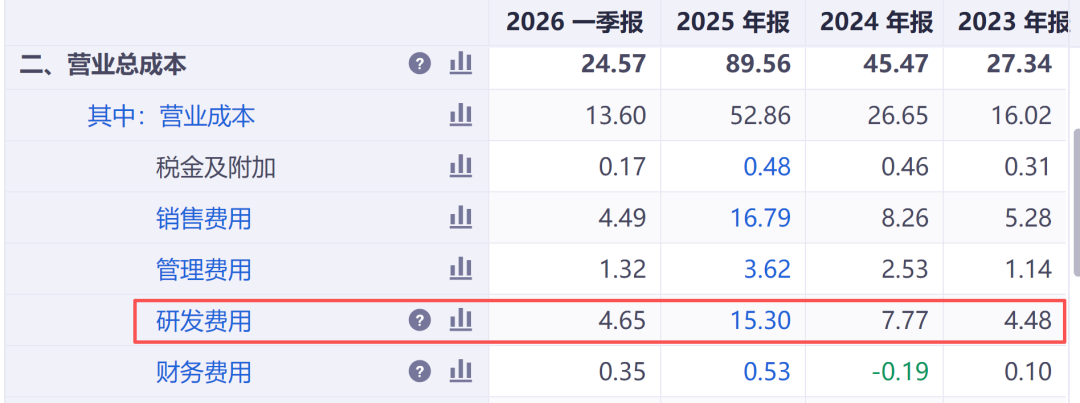
Where did the money go? R&D.
Insta360's R&D expenses reached 1.530 billion RMB in 2025, up 96.95% year-on-year, exceeding the total of the previous three years (2022-2024). In Q1 2026 alone, R&D investment was 465 million RMB, up another 101% year-on-year—more than five times the net profit attributable to shareholders for the quarter.
Founder Liu Jingkang admitted in his shareholder letter that the company has strategically invested in new categories like two drone models, gimbal cameras, wireless lavalier microphones, and even custom-developed three chip models, beyond its existing business.
These strategic projects alone cost 762 million RMB in 2025, equivalent to 80% of the net profit attributable to shareholders for the same period; in Q1 2026, they cost 262 million RMB, three times the net profit attributable to shareholders for the quarter.
Gross margins are also declining. In 2025, gross margin was 45.74%, down 6.46 percentage points year-on-year. By Q1 2026, it fell further to 45.2%. Liu explained that rising storage chip prices and intensifying market competition were the main reasons.
Inventory is also piling up rapidly. Inventory stood at 2.919 billion RMB at the end of 2025 and surged to 3.794 billion RMB by the end of Q1 2026. Consumer-grade smart imaging device inventory grew 122% year-on-year, exceeding 1.29 million units. Operating cash flow was -1.471 billion RMB in Q1, worse than -381 million RMB a year earlier.
This is a company trading short-term profits for long-term potential. The books don't look pretty now, but the ambitions for the future are grand.
Why is Insta360 being so aggressive? Because the competitive landscape has changed.
Before 2025, the panoramic camera market was virtually Insta360's solo act. In H1 2025, Insta360 once held 91% of the panoramic camera market. But on July 31, 2025, DJ officially entered the fray with its first panoramic camera, the Osmo 360.
The market landscape was rewritten within months. Less than three months after launch, DJ's Osmo 360 captured 49% of the Chinese e-commerce channel market share and climbed to 43% globally. Insta360's share in the Chinese e-commerce channel shrank from dominant to 47%. By H2 2025, Insta360's panoramic camera share had fallen from 91% in H1 to 53%.
IDC data shows global shipments of handheld smart cameras reached 16.65 million units in 2025, up 83% year-on-year; market revenue exceeded 46.1 billion RMB. In this rapidly expanding market, DJ ranked first with a 62.4% shipment share, Insta360 second at 20.4%, and GoPro left with just 10.8%.

The former motion camera pioneer, GoPro, is under immense pressure. In 2025, its full-year revenue was just $651.5 million, down nearly 19% year-on-year, with a net loss of $83.3 million. Cash reserves plummeted from $102.8 million a year earlier to $49.7 million. This marked GoPro's fourth consecutive year of declining performance.
Auditing firm PwC has emphasized in its audit opinion 'significant uncertainty about GoPro's ability to continue as a going concern.'
Rising storage chip prices became the final straw that broke GoPro's back. Exploding demand for AI computing power has led to high-bandwidth memory capacity being heavily diverted, causing a sharp drop in consumer-grade storage supply and prices soaring by 80% to 115%. GoPro, with limited pricing power, could neither lock in costs nor pass them on to consumers.
Chinese brands are devouring the global handheld smart imaging market. DJ and Insta360 together account for over 80% of shipment shares. But this 'devouring' process is never gentle—DJ and Insta360 have gone from competing in different niches to clashing head-on.
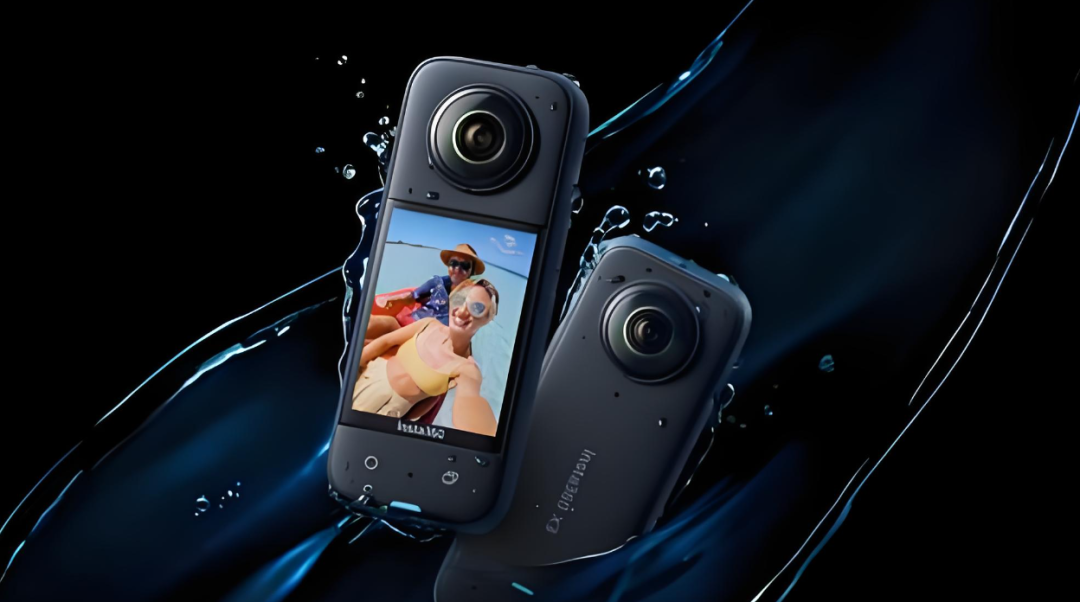
DJ entered the panoramic camera market with the Osmo 360, stepping into Insta360's familiar territory. Insta360 struck back with the Luna Ultra, invading DJ's home turf of handheld gimbal cameras. Priced starting at $769.99, the Luna Ultra goes straight for the high end, featuring a 1-inch 8K main camera, Leica collaboration, and three-axis stabilization.
No more comfort zones.
Patent lawsuits, public opinion battles, market share grabs—all three fronts are ablaze.
Back to the 'golden slipper reward'
The brilliance of Insta360's move lies in how it transformed a passive public opinion battle into an active brand narrative.
A 100,000 RMB pure gold slipper is both a reward and an attitude. Exposing the 6 RMB per black post reveals to the public how cheap and dirty the water army industry chain is. The activity of collecting 6 RMB red envelopes at offline stores turns 'justice' into a tangible interaction. Yuan Yue's line, 'It used to be AIGC, now it's AI Generated Comments,' is both self-deprecating and sharp.
More importantly, Insta360 has tied this to the 'Qinglang Action' (a national campaign to clean up online spaces).
This is no longer just corporate self-defense but a response to a broader social issue.
From a business perspective, Insta360 is at a delicate inflection point—revenue surging but profits under pressure, market expanding but competition intensifying, short-term pain but long-term potential. After listing on the STAR Market in 2025, its stock price fell from a historic high of 377 RMB to around 168 RMB, erasing over 80 billion RMB in market cap. 56.5% of restricted shares will be unlocked on June 11, 2026.
With strong external rivals and internal transformation pains, Insta360's choice to confront black PR head-on at this moment is a gamble not just for legal victory but for shaping public perception—who is seriously making products and who is resorting to underhanded tactics. Market and time will tell.
Liu Jingkang wrote in his shareholder letter: '2025 was the year Insta360 grew its capabilities the fastest and most comprehensively since its founding.' With revenue nearing 10 billion RMB, global market share leadership, doubled R&D investment, and dense ( dense ) new category launches, these are not the actions of a 'defender' but an 'attacker.'
The golden slipper reward to catch water armies may seem like a PR event, but it's essentially a tech company in fierce competition drawing a clear line in the most direct way possible: You can compete with me for market share, but you can't destroy the market with unsportsmanlike tactics.

This line is worth defending for all companies.
The rivers and lakes (business world) isn't just about fighting—it's about human connections.
",
-
![]()
Insta360’s Post-Lockup Period Begins: Employees Suspected of Selling Shares, Institutions Biding Their Time—Is a Major Storm on the Horizon?
-
![]()
Are Houses Getting 'ID Cards' Now? In the Future, House Decorating, Renting, and Buying Will All Be Possible with a Simple Scan!
-
![]()
Where Should the Senior Citizens in County Towns Go?
-
![]()
【OFweek Weike Cup】Santec Officially Enters for the 2026 Optical Industry Annual Innovation Product Award
-
![]()
Anhui’s Taihu County Establishes a Project with an Impressive Annual Production Capacity of 850 Million Square Meters of Optical Film, Along with Supporting Rollers!
-
![]()
The AI Unicorn Valued at 960 Billion is Raising Funds Again
-
![]()
Unveiling the Strategy: The RMB 11.5 Million Deal of MLOptics
-
![]()
Qingtian Lease Hits 7 Billion Valuation in Six Months, Coexistence of Robot Leasing Bubble and Reality