Mega Review of 2026 Mid-Range Smartphones: Post Price Hikes, Which Model Reigns Supreme Among vivo, OPPO, Honor, and Xiaomi in the 3000 Yuan Bracket?
 06/22 2026
 377
377
Imaging capabilities are paramount, but so is the overall user experience.

In the past, when purchasing smartphones within the 3000 Yuan price range, consumers primarily focused on a few key aspects: screen quality, battery life, photo quality suitable for social media sharing, and system smoothness. As long as these fundamental experiences were satisfactory, combined with a reasonable price, the phone had the potential to become a market hit.
However, the scenario has shifted somewhat this year. Due to escalating costs of core components such as storage, mid-range smartphones have inevitably witnessed a wave of price increases. The crux is that the 3000 Yuan segment is already fiercely competitive, with users being highly sensitive to price fluctuations. Manufacturers are acutely aware that "competitiveness dwindles post-price hike."
Consequently, it's evident that this year, numerous mid-range phones have shifted their focus from merely stacking specifications to enhancing software algorithms and real-world experiences. For instance, imaging is no longer solely about the sensor but also encompasses portrait algorithms and AI retouching; systems are not just about feature-richness but also about smoothness and stability; battery life is not just about capacity but also about power management and charging strategies.
(Image source: Leitech)
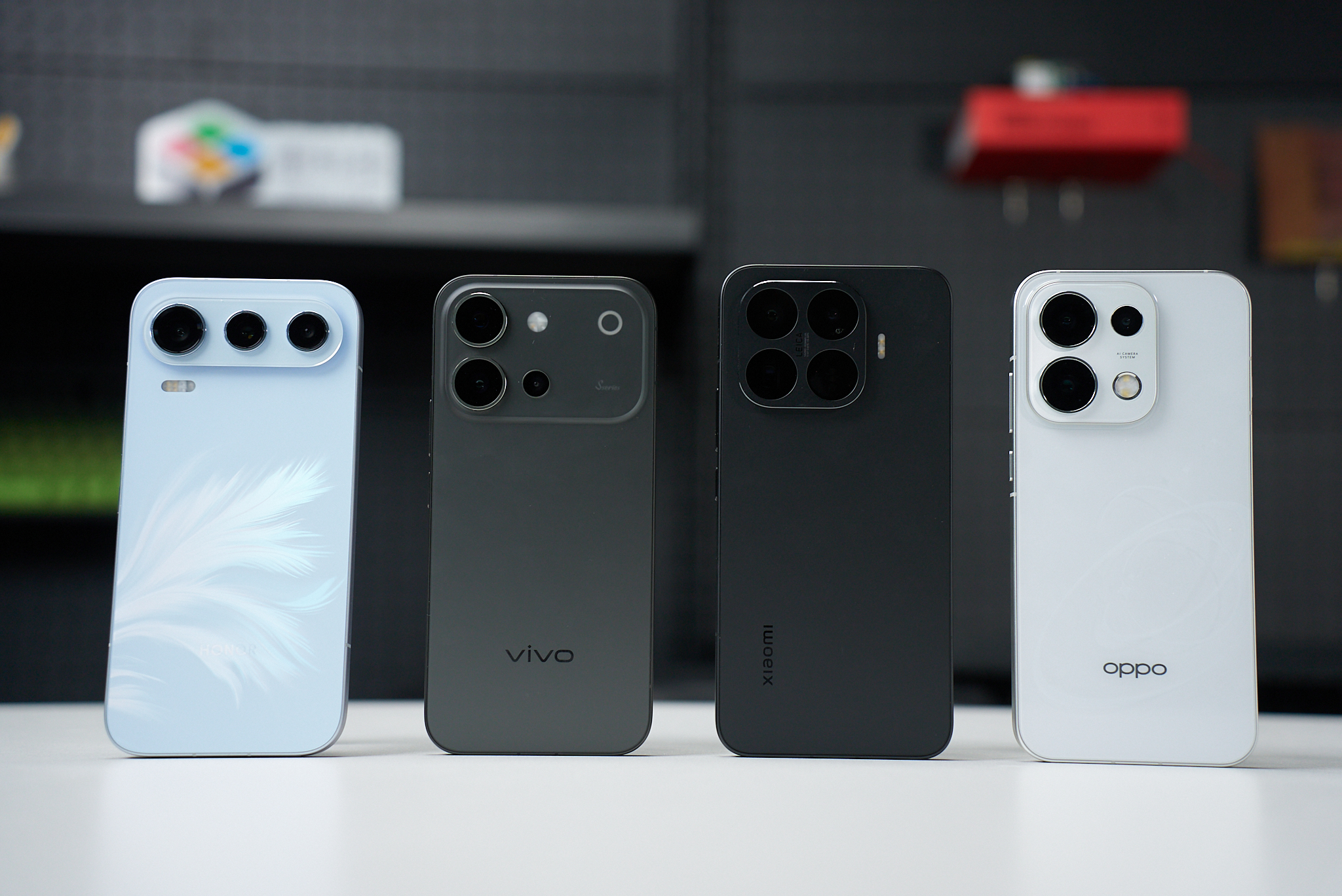
So, how do this year's mid-range smartphones fare in terms of user experience? Some users have requested the Leitech (ID: leitech) editorial team to conduct a review. After careful selection and deliberation, Xiaolei ultimately zeroed in on the vivo S60, OPPO Reno 16 Pro, Honor 600 Pro, and Xiaomi 17T Pro (Note: vivo's standard version is referred to as the Pro).
Without further ado, let's commence the testing (Note: This article is devoid of any advertising content).
All priced above 3000 Yuan, the most visually appealing model is surprisingly the vivo?
It's widely acknowledged that these mid-range smartphones are primarily geared towards offline sales, with appearance being the foremost concern for offline users. If a phone doesn't look good or feel comfortable in hand, users are unlikely to purchase it.
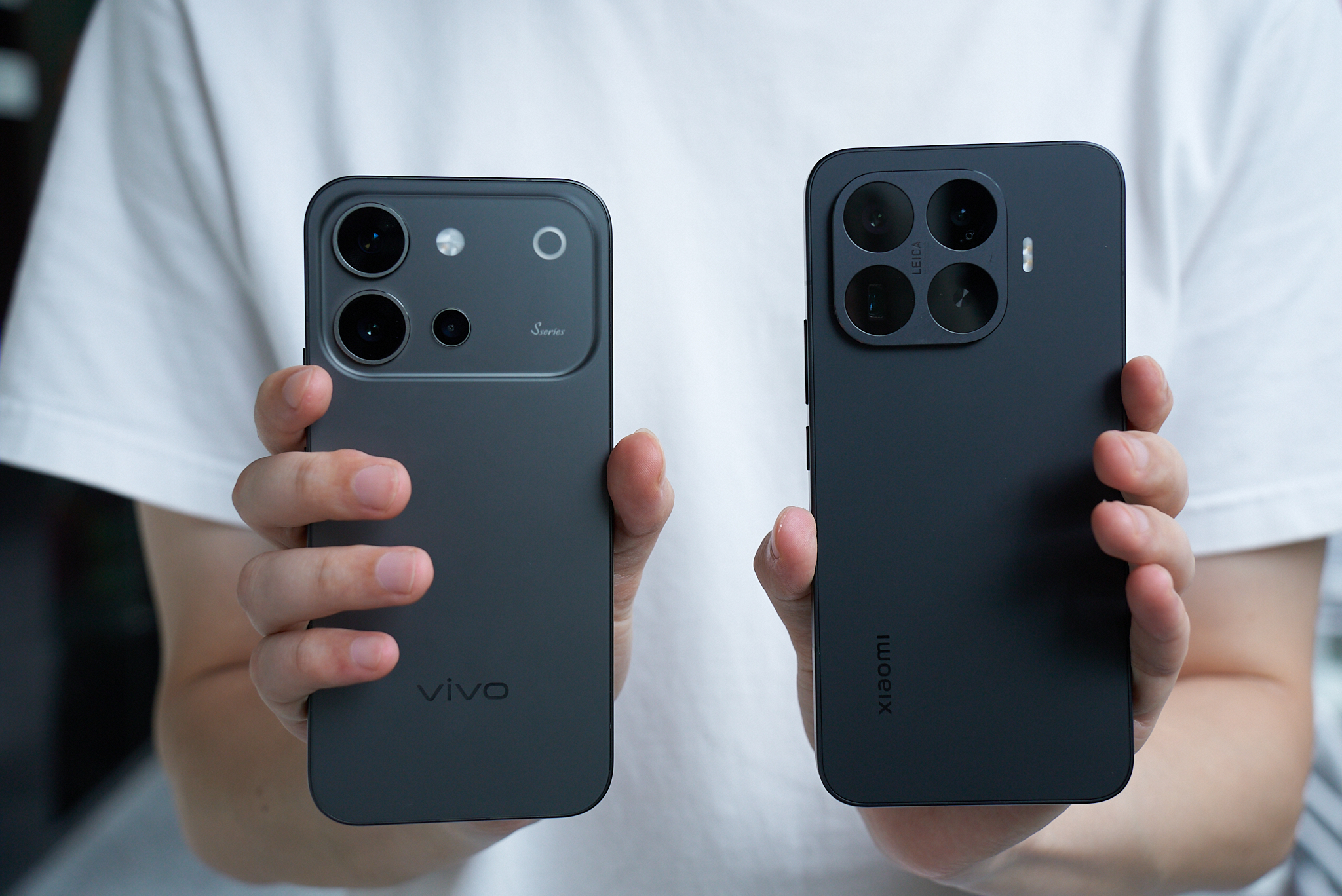
Let's begin with the vivo S60, which garnered the highest internal score at Leitech. Despite receiving the less visually appealing gray-black variant, its build quality and texture are undeniably superior among the four. The smooth and silky back panel craftsmanship, the well-executed metal frame with painting, and the evenly distributed center of gravity contribute to a grip and texture that even surpass some flagship phones. Of course, this is also partly attributable to its smaller body size, as small-screen phones generally offer a better hand feel.
(Image source: Leitech)
The camera Deco design is also relatively aesthetically pleasing. Although it adheres to the current mainstream large matrix design, the placement of the camera, flash, and fill light is reasonable, avoiding the uncoordinated feel of "designing a matrix for the sake of a matrix" akin to the iPhone.
Next up is the Xiaomi 17T Pro, which stands out as the least representative of an offline mid-range phone among the four. Its design language leans more towards performance and tech-savviness, with more direct body lines and less emphasis on softness and refinement in the back cover treatment. If vivo and Honor are striving to cater to offline users, the Xiaomi 17T Pro seems to be conveying the message: "I don't rely on appearance; I rely on specs."
However, this doesn't imply that the Xiaomi 17T Pro looks unappealing; it's just that its target audience is more selective. Those who appreciate Xiaomi's design will find it simple, neat, and devoid of flashiness; others may perceive it as lacking a touch of refinement. Especially when placed alongside the vivo S60, the Xiaomi 17T Pro exudes a stronger "tech geek" vibe.
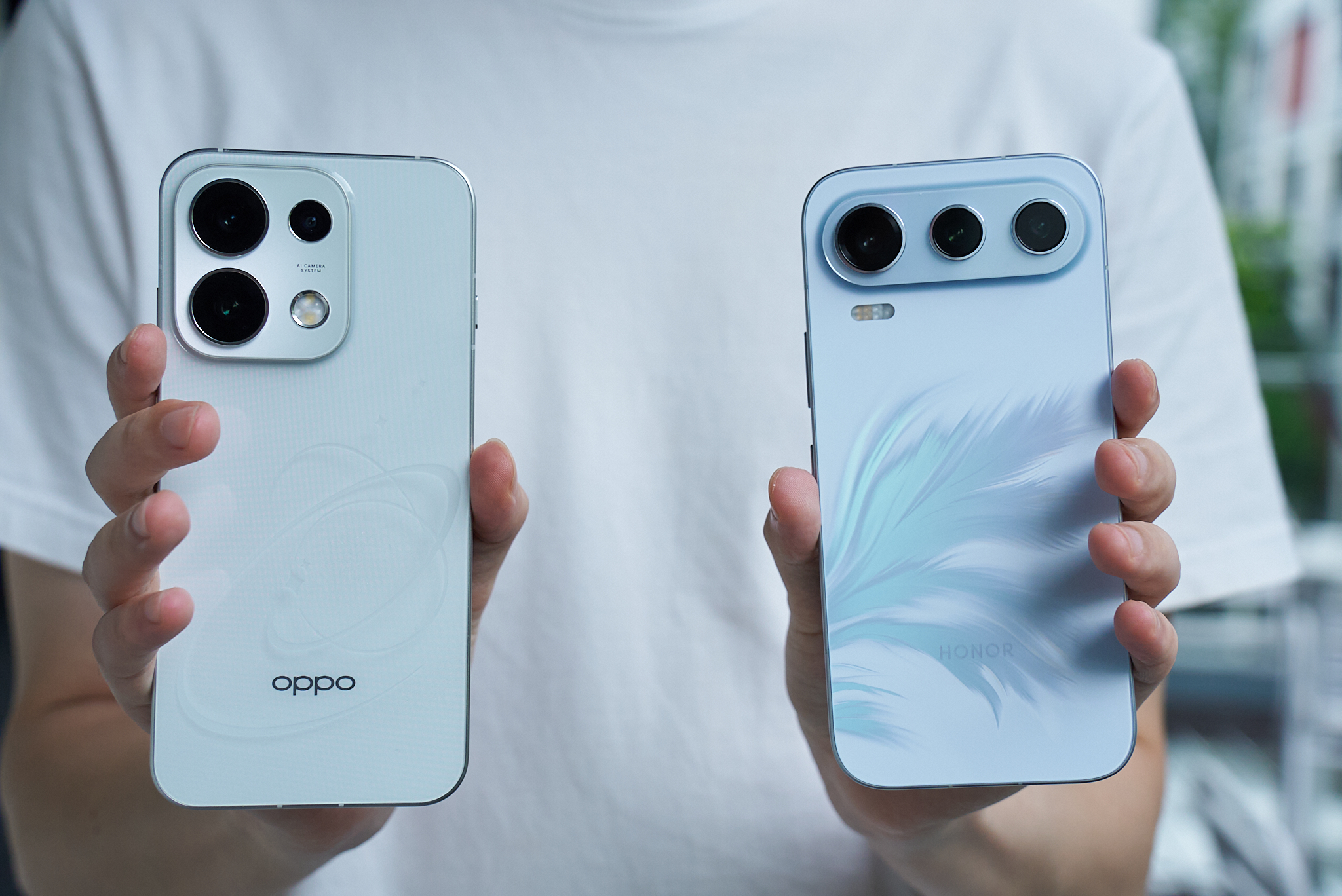
Then there's the Honor 600 Pro, which is also a small-screen phone. Its build quality and texture are equally commendable. Its design clearly caters to the aesthetic preferences of offline users, with a lighter and thinner body and more flamboyant back panel colors. It's immediately apparent that it's not a phone solely focused on performance. The transitions between the phone's back cover, frame, and camera module are gentle, indicating thoughtful design considerations.
(Image source: Leitech)
Nevertheless, its sense of refinement does fall short of the vivo S60. The Honor 600 Pro is more akin to "looking good but not offering a particularly surprising hand feel." Of course, for the average user, this isn't a significant issue, as mid-range phones often compete on first impressions.
As for the OPPO Reno 16 Pro, its appearance aligns most closely with the Reno series' typical positioning. Its back panel craftsmanship and color schemes remain among the more recognizable of the four, especially with subtle layering effects that emerge with changing light.
The issue, however, is that the Reno 16 Pro's sense of refinement largely remains at the visual level. When held, it doesn't feel as refined as the vivo S60 or as compact as the Honor 600 Pro. It gives the impression of being a phone that "looks good in photos" rather than one that "feels particularly comfortable in hand."
Therefore, in terms of appearance and feel, my personal ranking is: vivo S60 first, Honor 600 Pro second, Xiaomi 17T Pro third, and OPPO Reno 16 Pro fourth.
Night Imaging Showdown: OPPO Emphasizes Atmosphere, Xiaomi Preserves Texture
If we solely consider static photography, the gap between 3000 Yuan range phones has significantly narrowed in recent years. Under well-lit conditions, all four phones perform admirably, with good detail and image texture; portrait modes, after years of algorithm enhancements, rarely exhibit the early issues of poorly edited edges around hair, glasses, or shoulders.
The true differentiator remains nighttime photography.
Night scenes pose the most complex and error-prone challenges in mobile imaging. Daytime photography tests resolution, color, and exposure; at night, issues multiply: whether signage is overexposed, whether dark areas become indistinct, whether the sky appears dirty, whether ghosting occurs around streetlight edges, whether glass reflections spiral out of control, whether moving objects blur, and whether the entire photo appears overly processed by algorithms.
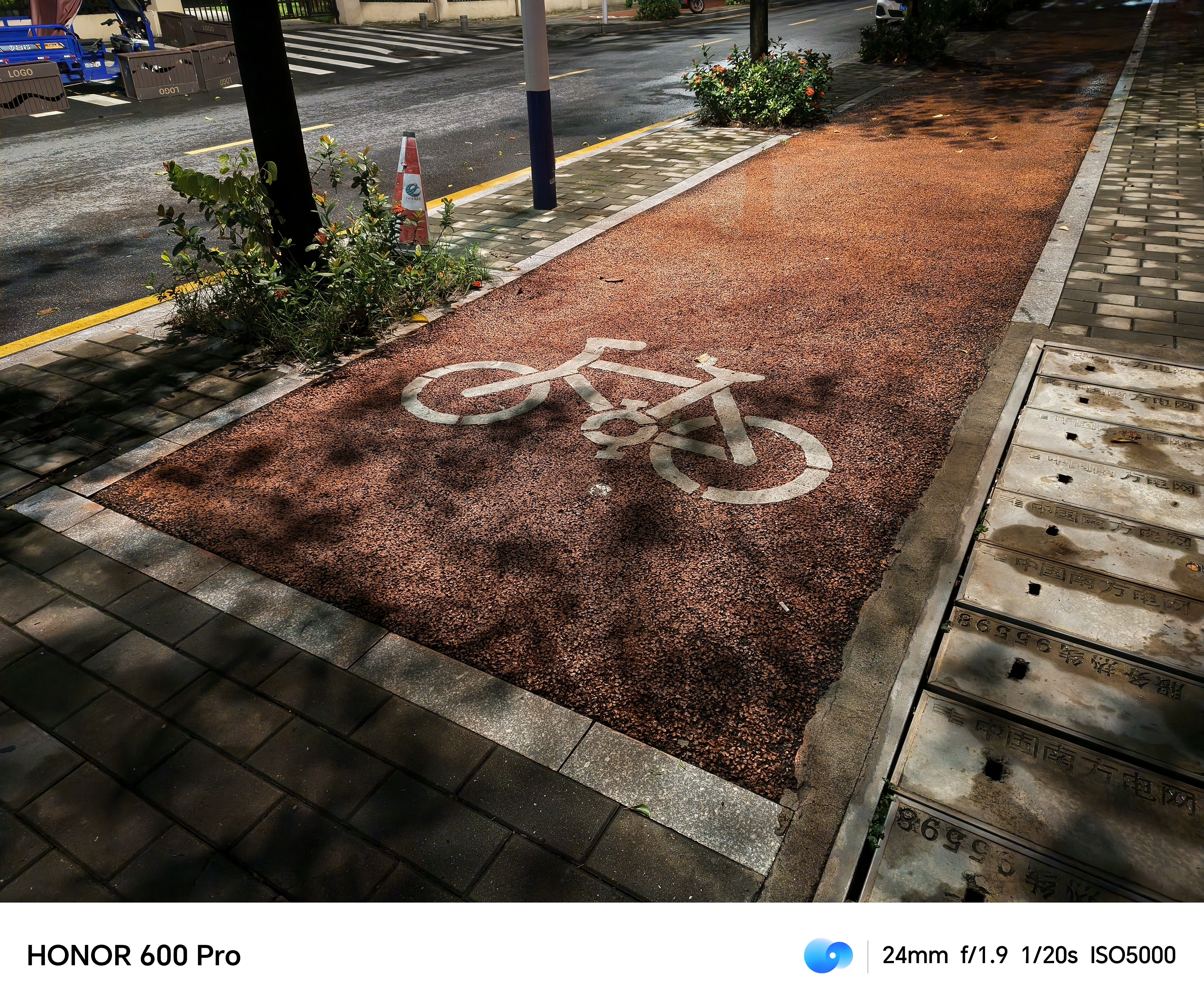
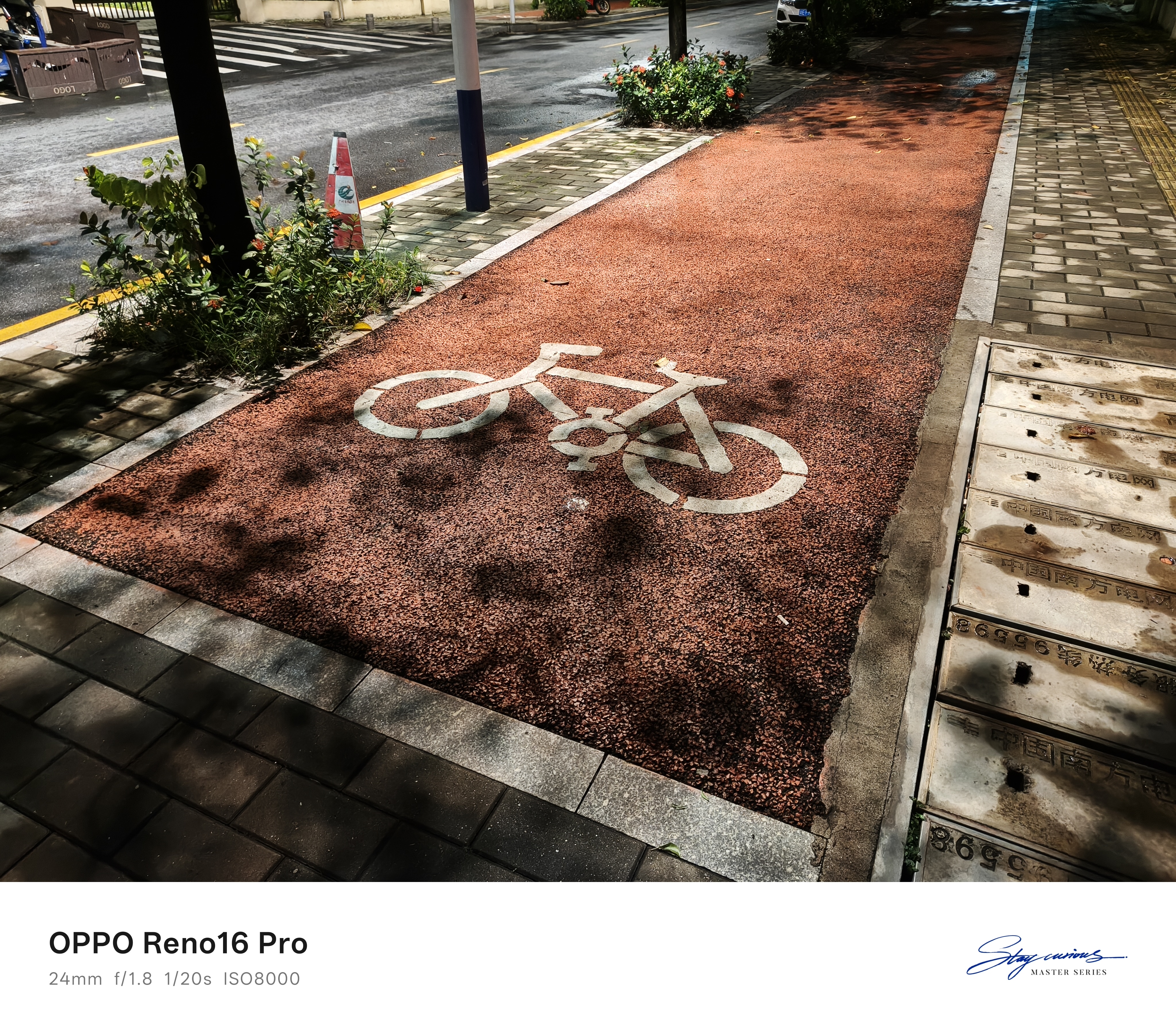
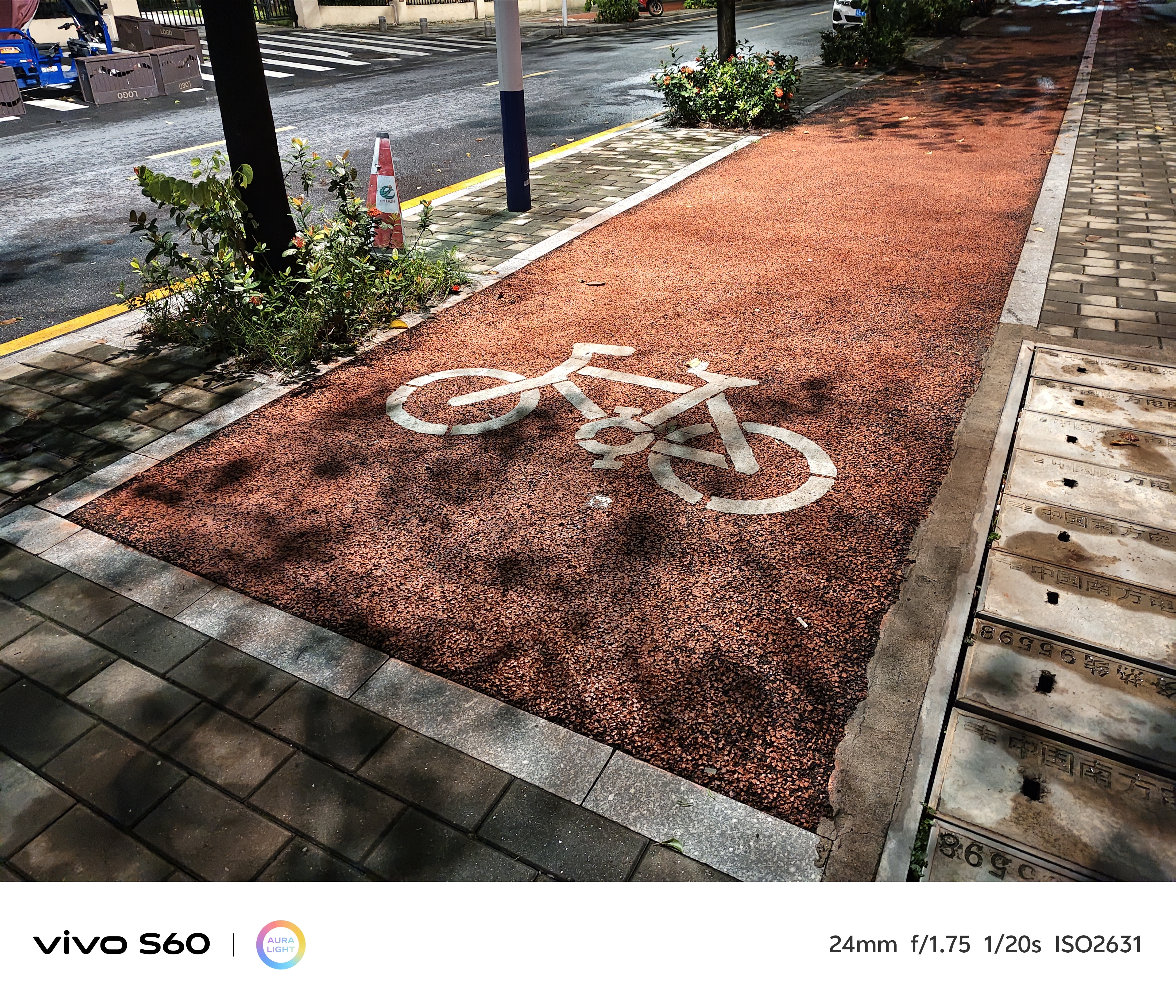
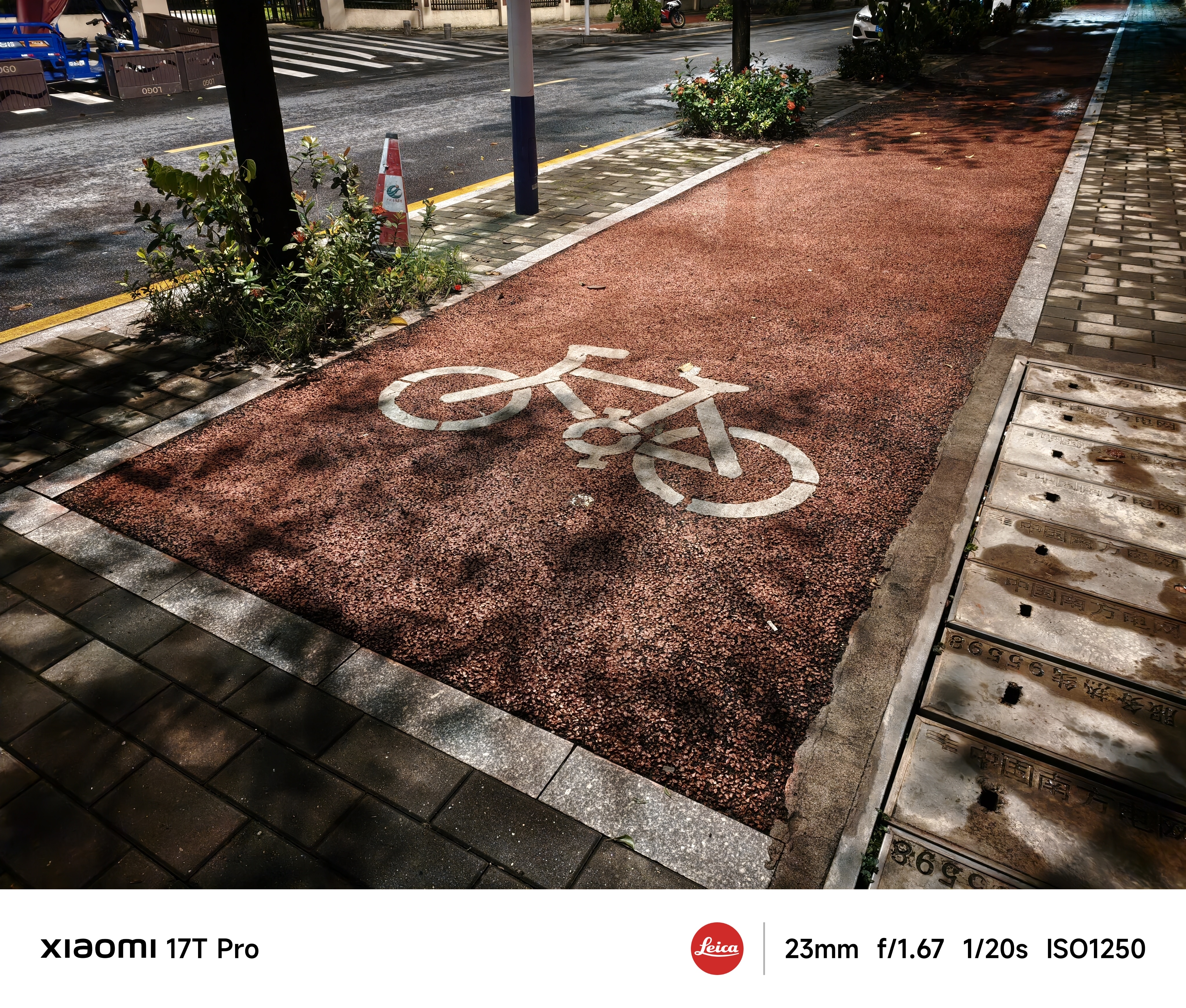
The first scenario involves capturing signs under dim streetlights and tree shadows, accurately testing how the phone's night algorithm handles brightness, smudging, and dimensionality.
Let's commence with Honor. Its overall image brightness is relatively high, with the red pavement, white bicycle sign, right-side tiles, and manhole cover all clearly visible. Highlights and shadows are also controlled within a relatively safe range.
(Image source: Leitech)
However, the overall image lacks strong light and shadow layers and doesn't possess a particularly distinct style. For everyday recording, this is acceptable; but if you desire a more atmospheric night scene, some post-processing and filter application may be necessary.
OPPO's performance is more to my liking. The red of the bike lane is more intense, the ground contrast is higher, and the contrast between tree shadows and streetlights is more pronounced. It's more eye-catching at first glance and aligns with the Reno series' typical aesthetic preferences.
(Image source: Leitech)
It may not be the most accurate representation of the scene, but it's the one more likely to make average users think, "This looks good."
Vivo's performance is also commendable. The overall image is very clean, with the red bike lane and white signs standing out prominently. The right-side tiles, manhole cover, and distant pavement are also highly visible. For most users, this type of photo can be shared directly without any post-processing.
(Image source: Leitech)
The only downside is that the image is slightly too bright, lacking a bit of the atmospheric feel of a night scene.
Finally, there's Xiaomi, which preserves the layers between tree shadows, wet ground, and streetlight reflections. The red pavement isn't as vibrant as vivo's or OPPO's, but the ground texture, shadow variations, and reflection quality are more pronounced.
(Image source: Leitech)
It may not be the brightest in every shot, but the image possesses more texture. The downside is that for casual sharing, Xiaomi's style might not be as immediately appealing as vivo's.
So, in this set of samples, vivo is the brightest, OPPO has the most striking colors, Honor is the most stable, and Xiaomi boasts the best texture and contrast.
For the second scenario, I selected a courtyard streetlight scene, which poses an even greater challenge for nighttime low-light algorithms.
The Honor 600 Pro immediately impresses with its brightness. It significantly elevates the overall image brightness, with the ground, grass, leaves, and building all clearly visible. The sky is also considerably brightened. The advantage is that there's plenty of information, and dark areas don't blur into a mess, which average users will find "very clear."
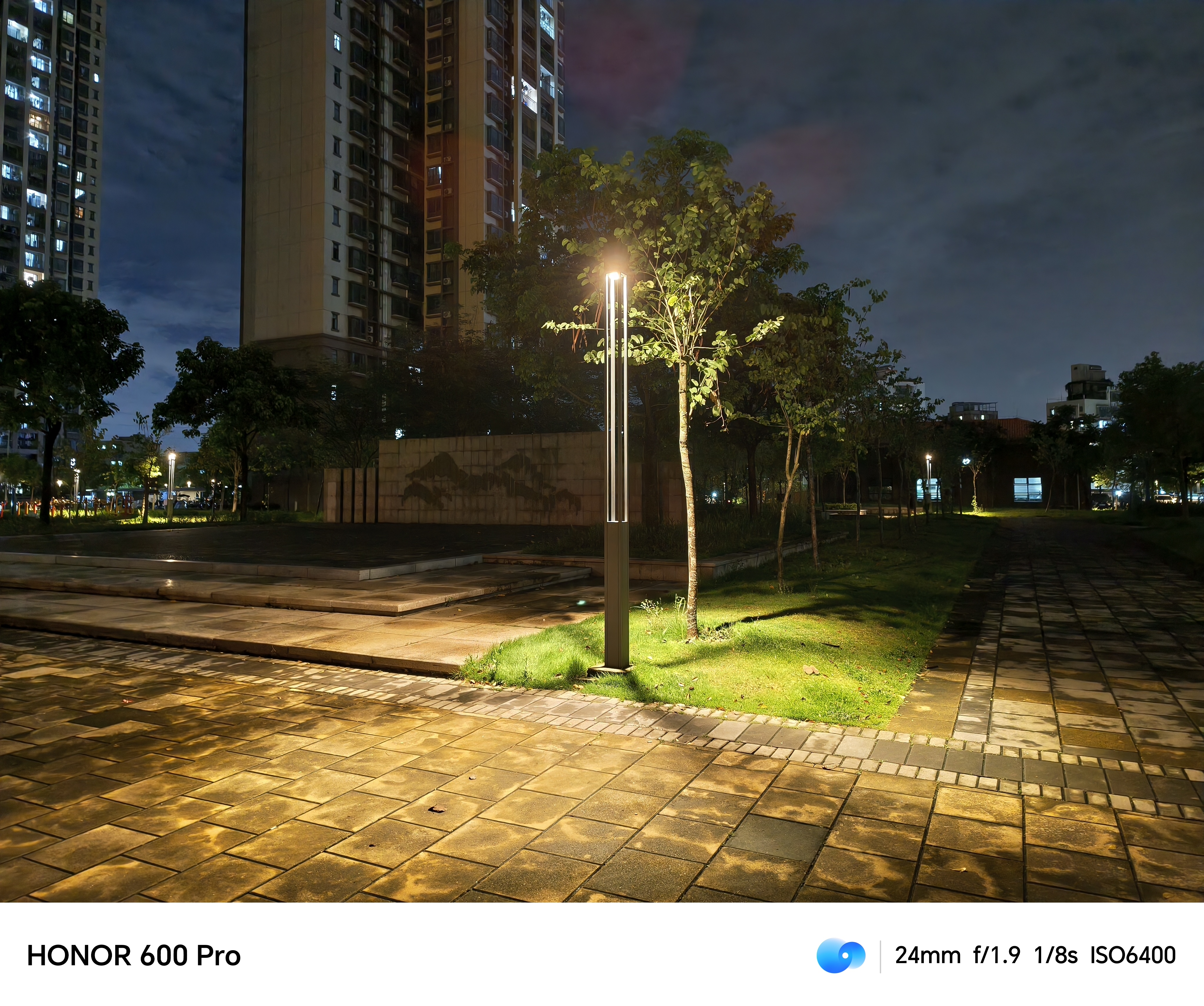
(Image source: Leitech)
However, for some reason, there's a noticeable red ghosting next to the streetlight. Normally, ghosting from this type of light source should be green, so it's likely a minor issue with Honor's night algorithm.
The OPPO Reno 16 Pro doesn't brighten the dark areas as much as Honor, preserving a stronger sense of nighttime in the sky and building. The grass and ground reflections illuminated by the streetlight stand out more, and the light layers in the center of the image are more concentrated.
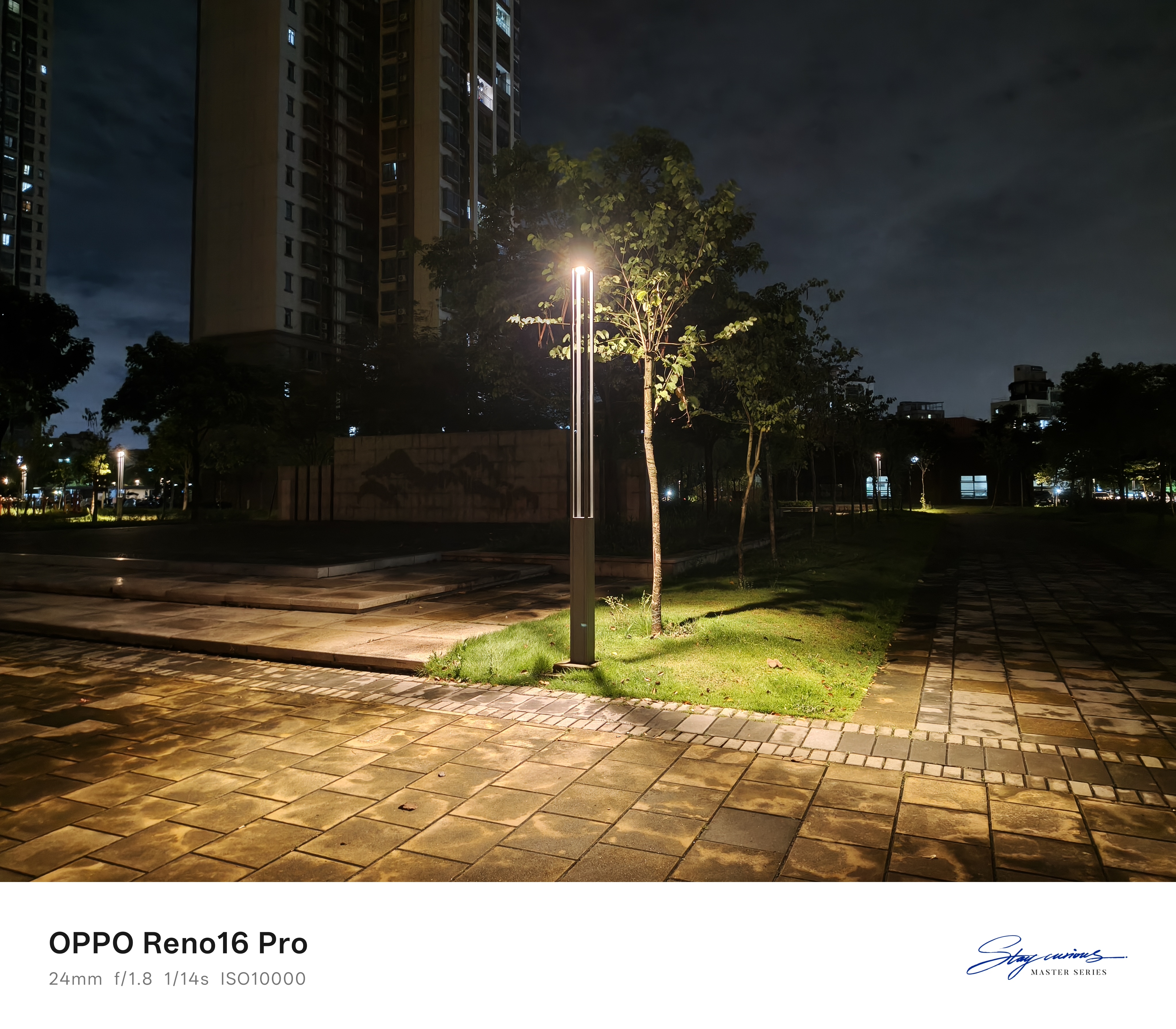
(Image source: Leitech)
The downside is that the dark area information isn't as rich as Honor's, with the right-side bushes and building shadows appearing darker.
Vivo's performance is intriguing—it falls somewhere between OPPO and Honor. It doesn't elevate the overall image as brightly as Honor, nor does it suppress it as darkly as OPPO.
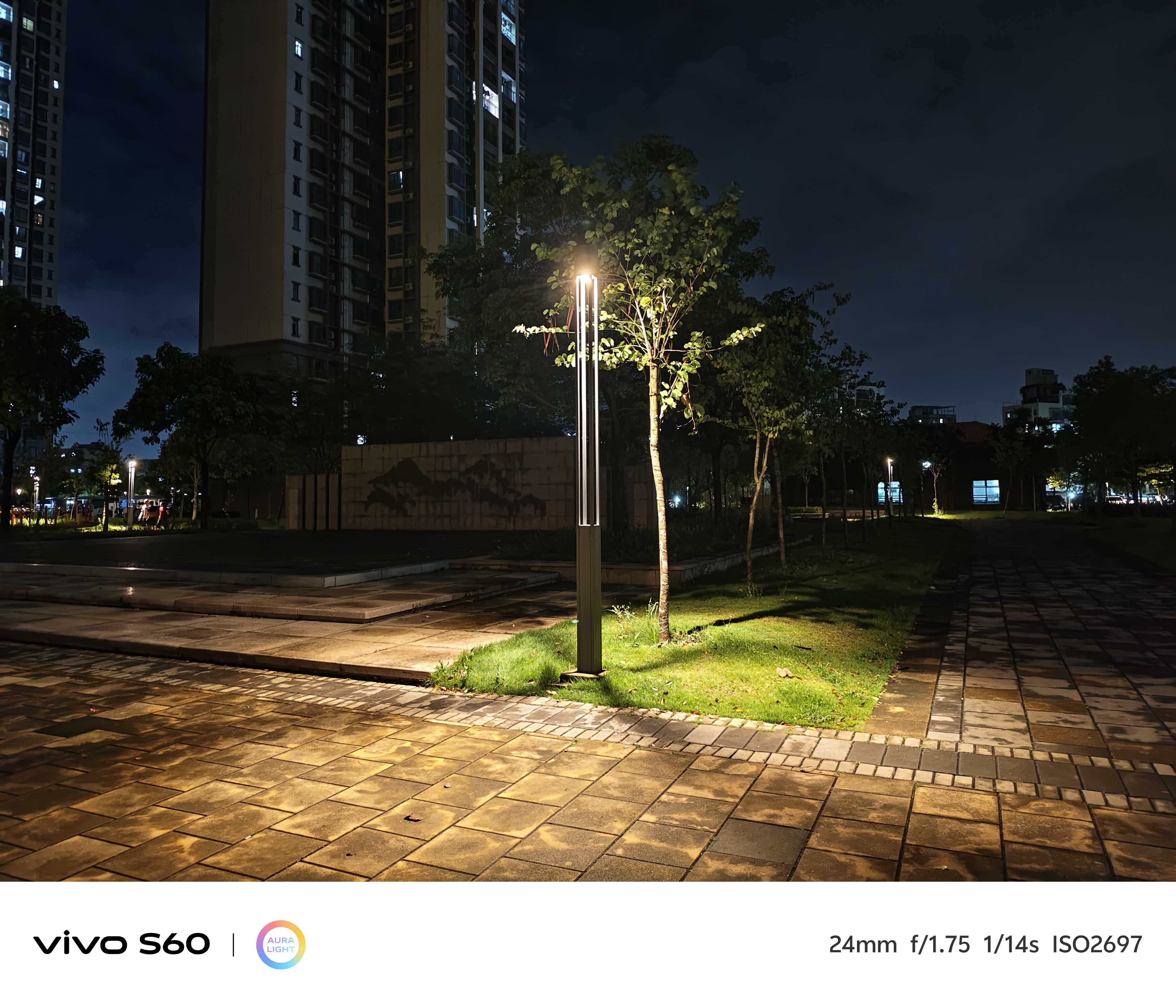
(Image source: Leitech)
The grass, leaves, and ground reflections under the streetlight are all clear, while the sky still retains some dark layers. The overall look is very good, clearly indicating night mode without feeling out of place.
The Xiaomi 17T Pro suffers a bit from its tonality. It doesn't forcibly brighten all the dark areas but preserves more pronounced light and dark contrast. The layers between the streetlight, grass, ground reflections, and distant building are more distinct, giving the image a stronger nighttime atmosphere.
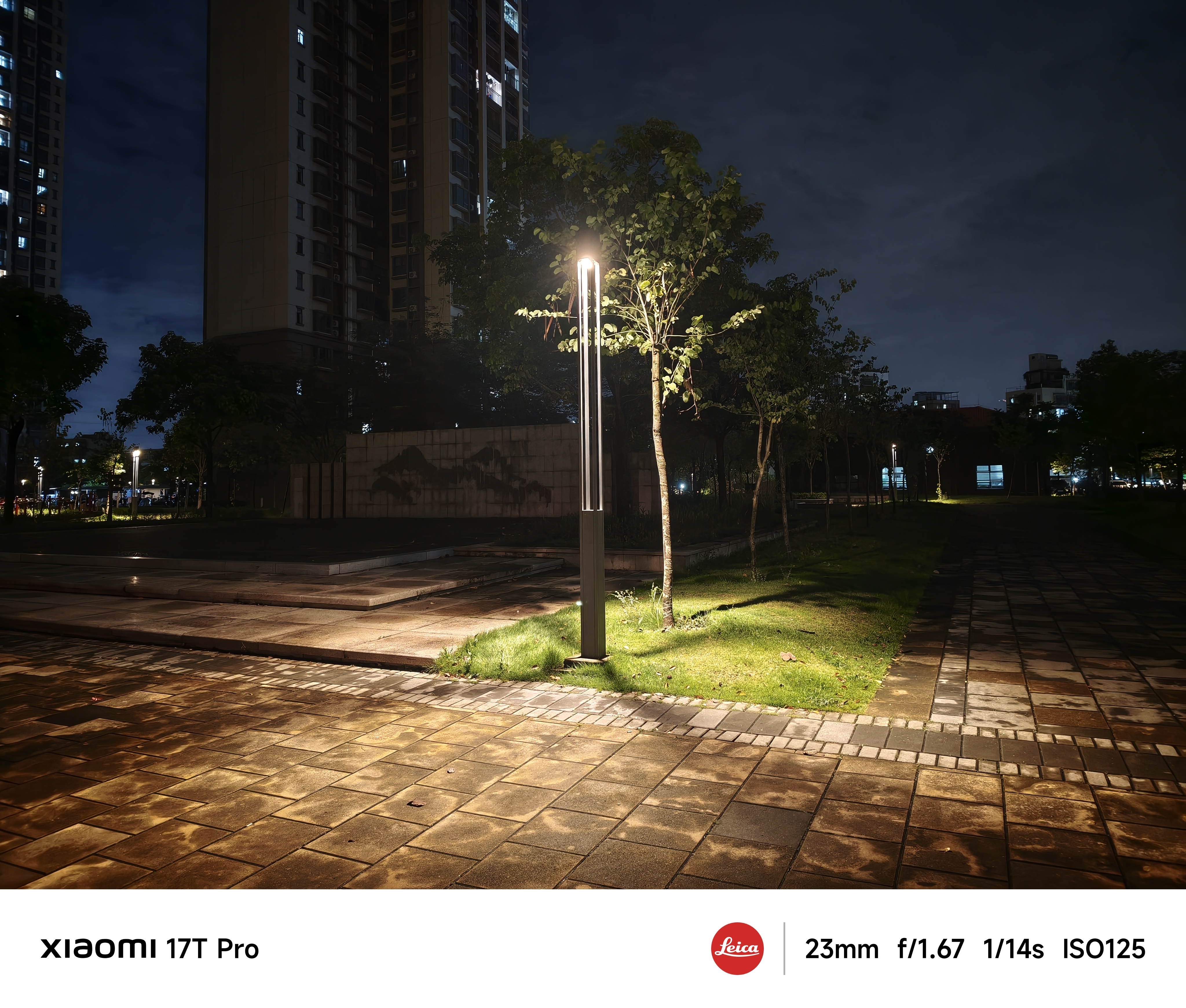
(Image source: Leitech)
If users prefer brighter night photos, Xiaomi's image might be the least appealing of the four.
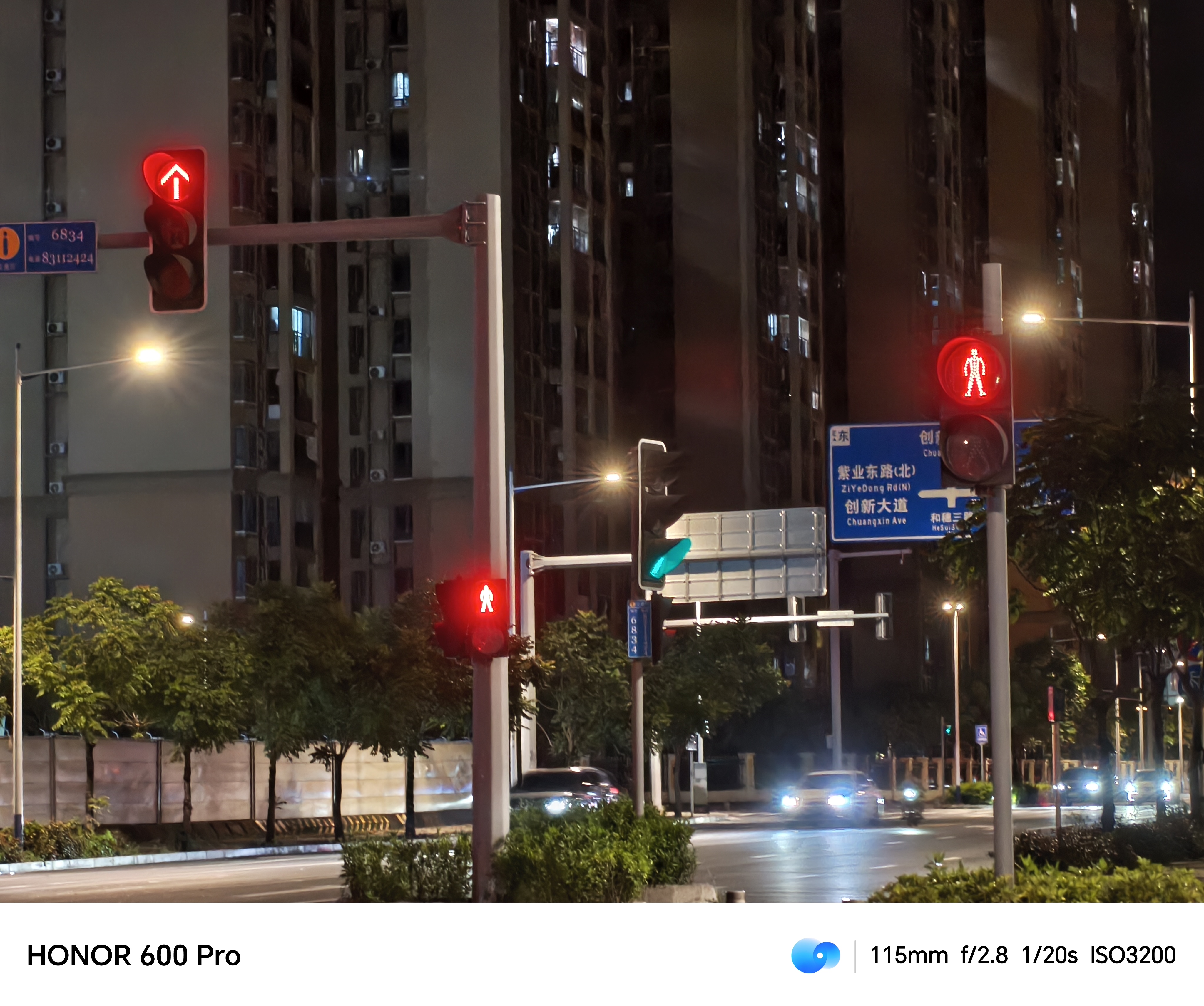
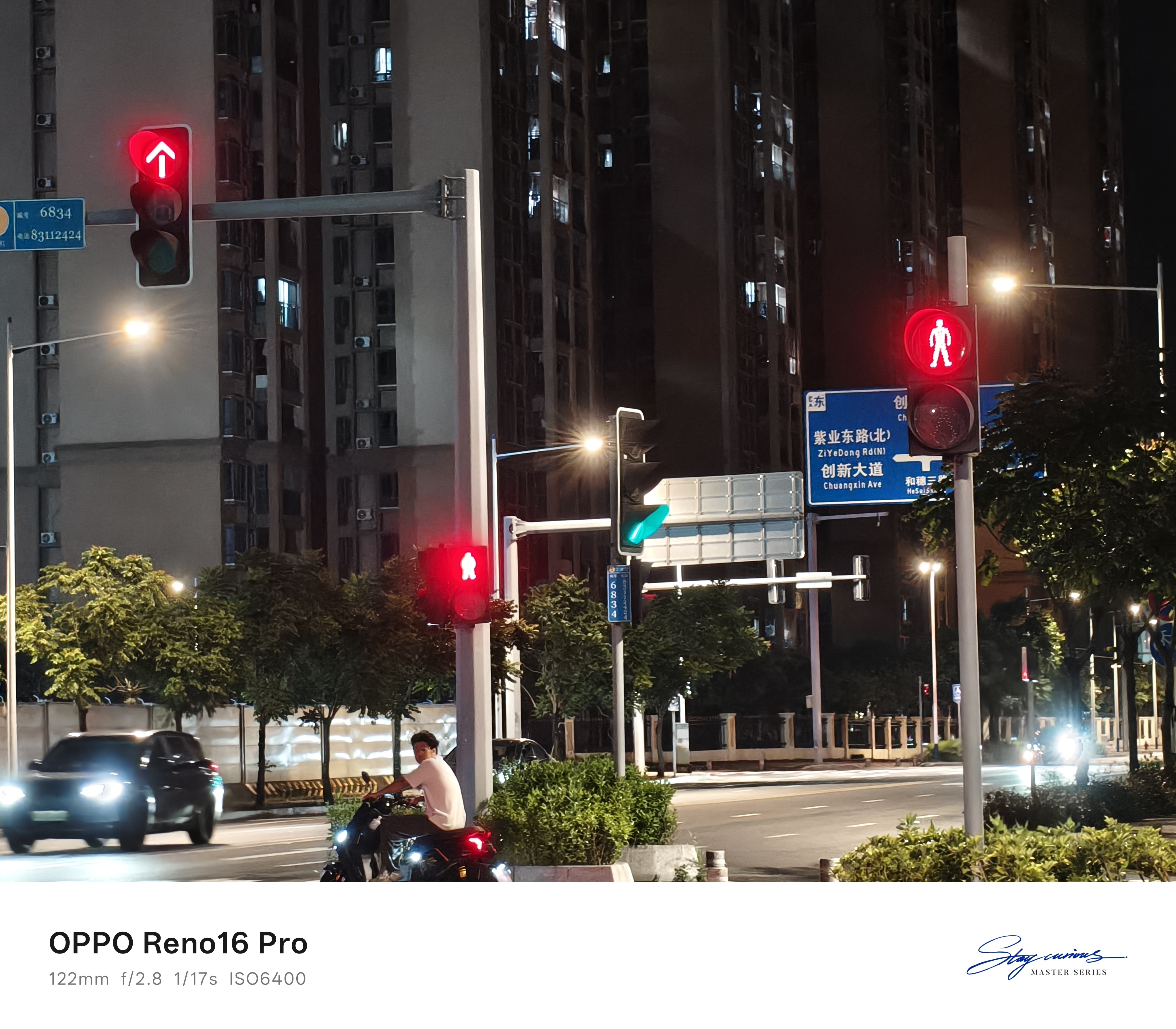
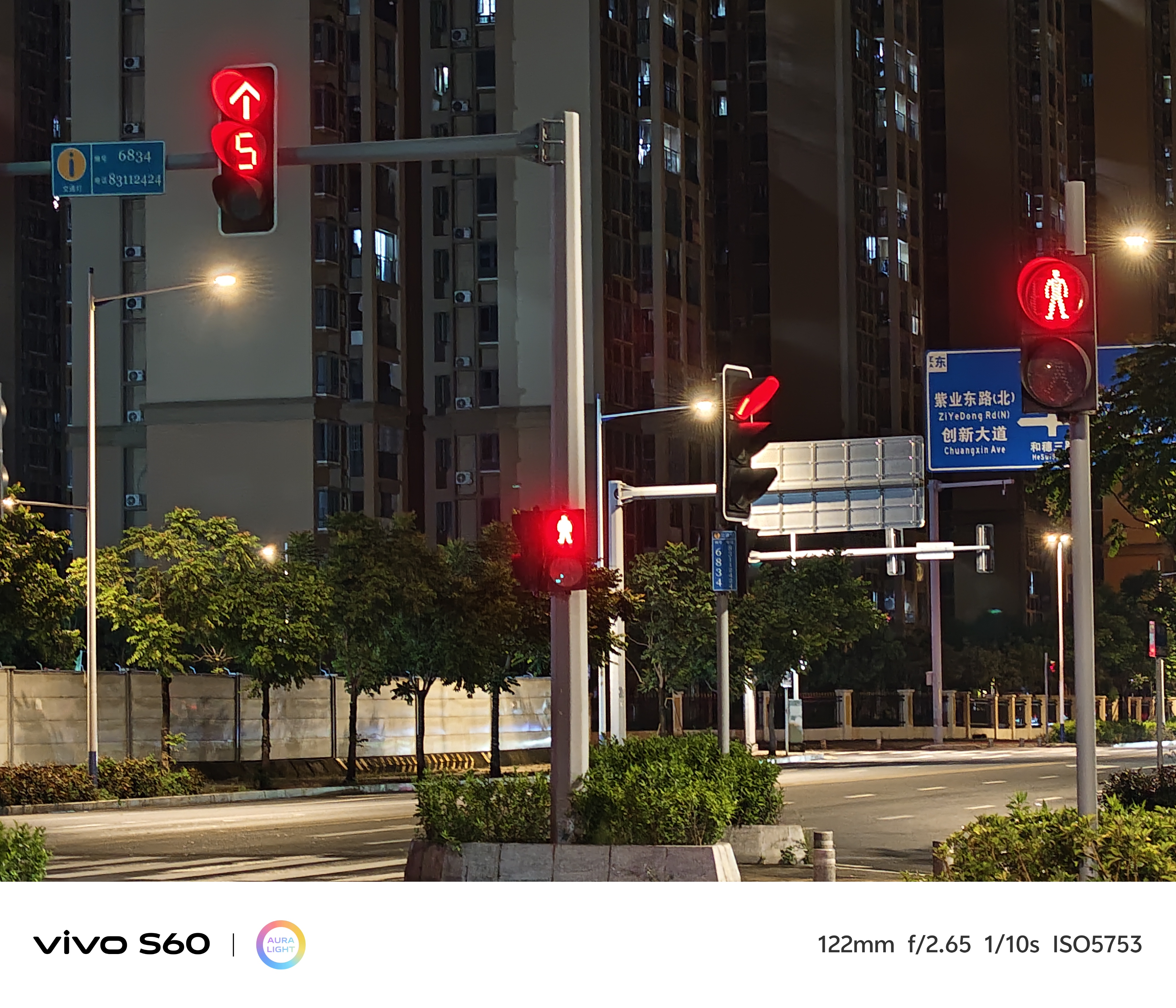
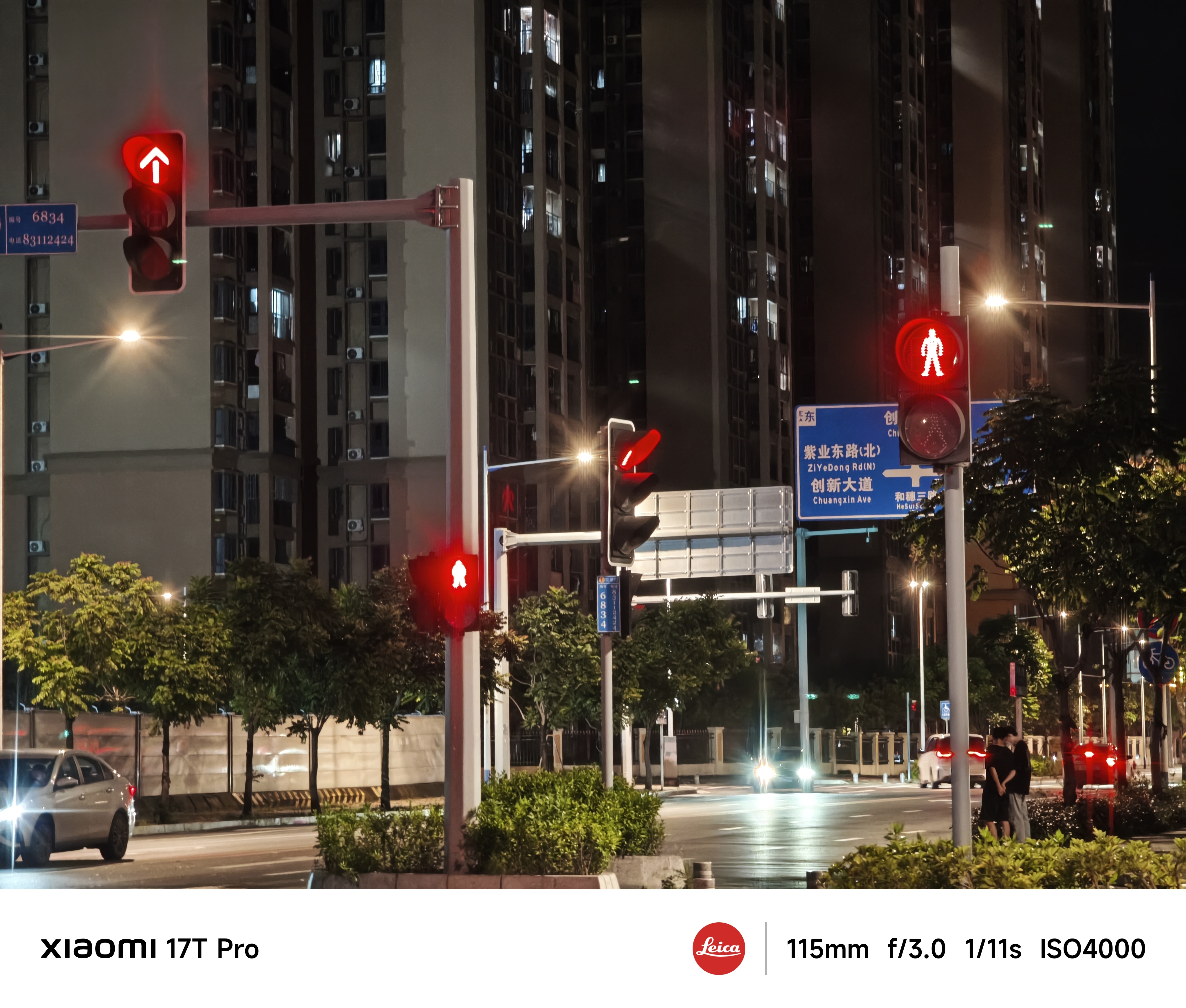
Finally, there's the most complex light source scenario: a traffic light intersection, with traffic lights, car lights, street signs, building windows, and leaves all in the frame. For a phone, this means not only preserving distant subjects but also controlling the highlights of red lights and car lights while avoiding smudging details into a blur—a highly challenging task.
(Image source: Leitech)
The Honor 600 Pro's performance in this round can be described as a "comeback." Its control over red lights and car lights is relatively stable, with no completely uncontrolled highlight blowouts. The street signs and building windows are also discernible. It prioritizes image stability before considering whether to render the entire photo sharper.
(Image source: Leitech)
The OPPO Reno 16 Pro's highlight control is noticeably more aggressive, with the red traffic lights and distant car lights showing more pronounced diffusion, and some areas of the image appearing brighter.
(Image source: Photographed by Leitech)
Vivo's performance in this round is rather average, with its algorithm traces being very evident. Noticeable processing marks can be seen at the edges of red lights, bright areas, and building edges. The image appears to be optimized solely for "clarity." If you prioritize a natural and authentic look, vivo's performance is indeed the least impressive among the options.
(Image source: Photographed by Leitech)
Finally, there's Xiaomi, which continues to maintain a stable style. It
Live Photo Becomes a Standard Feature: Honor Excels in Peace-of-Mind Photography, vivo Captures Life's Moments, OPPO Leads in Portrait Photography, Xiaomi Sets the Mood
Beyond traditional photography, another notable trend among smartphones in the 3000 yuan price range this year is the growing prominence of Live Photos. Nearly all four smartphones have made Live Photos a key selling point. It's no longer just about "capturing a short video clip alongside a photo" but has begun to integrate with various camera functions and even reflect brand identities.
In other words, Live Photo is no longer a standalone feature but has become an integral part of each manufacturer's imaging ecosystem.
From an activation standpoint, all four smartphones prominently feature dynamic photos in their camera interfaces, no longer relegated to secondary menus as before. This indicates that manufacturers are genuinely treating it as a high-frequency feature rather than just a marketing gimmick.
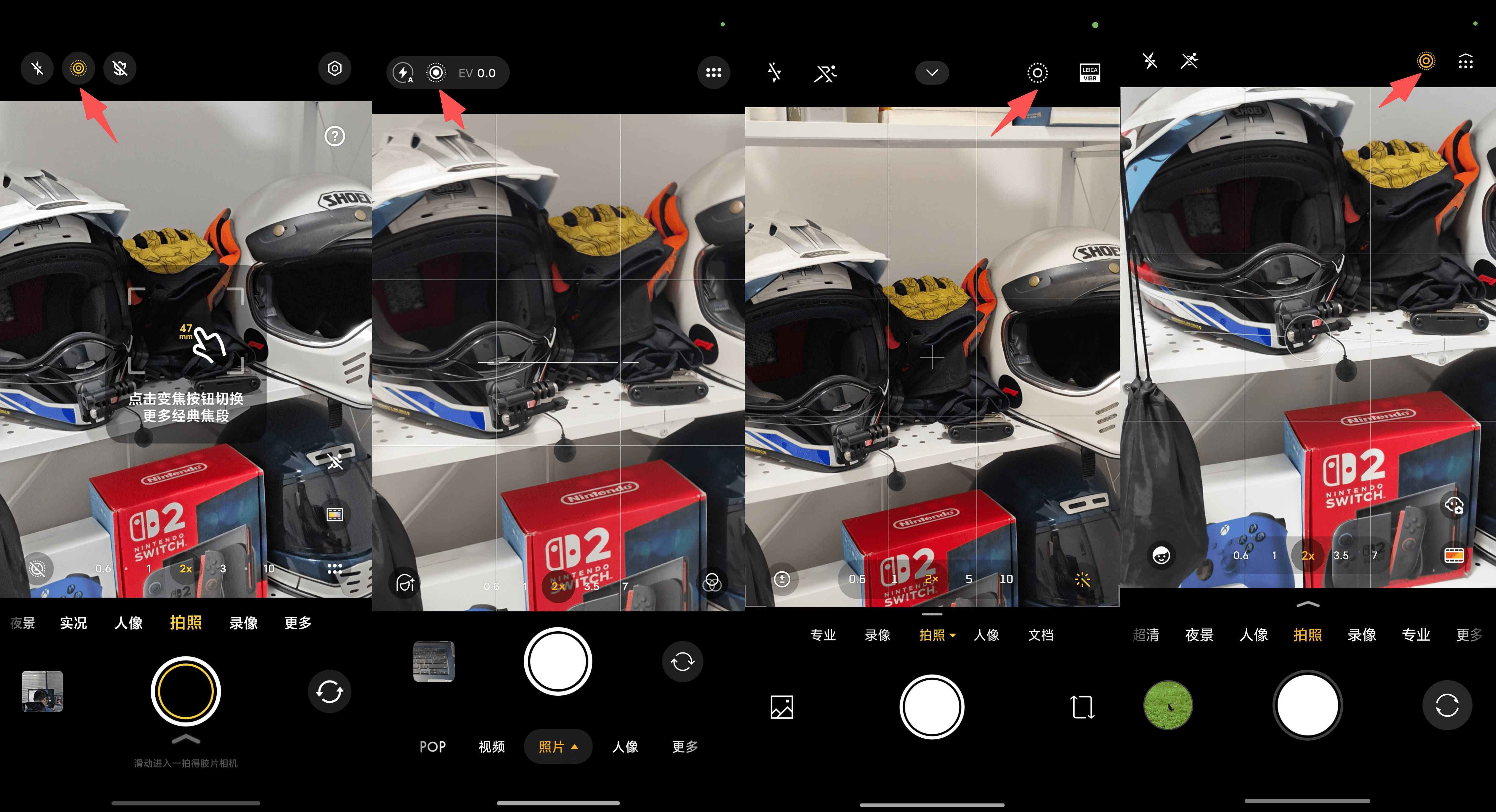
(Image source: Photographed by Leitech)
In terms of functional direction, the four smartphones take different approaches. The vivo S60 emphasizes 4K Native Live and 4K Starlight Live, focusing on seamless integration between still and dynamic elements and creating an immersive atmosphere. The OPPO Reno 16 Pro offers a variety of creative Live Photo options, such as Inst Film Live, CCD Live, Light Trail Film Live, Dual-View Live, and Viral Live Collage. The Honor 600 Pro centers on 4K Flash Mirrorless Live, prioritizing clarity and recording quality. The Xiaomi 17T Pro combines dynamic photos with its Leica-inspired tone, creating Leica Live Moments.
While these features may seem flashy, our criteria for evaluating a Live Photo are straightforward: the static cover should be sharp, the dynamic clip should be smooth, the colors between the cover and dynamic playback should remain consistent, it should not become blurry in low light, and it should retain its dynamic quality after being shared via WeChat or other platforms.
Although it may be somewhat subjective, Xiaolei chose to test all four smartphones in identical scenarios. This allows us to assess which one performs more stably, looks better, and excels in post-processing and sharing under the same lighting, actions, and environment.
The first aspect: dynamic capture capability.
The core value of Live Photo lies in "capturing the moment," so dynamic capture capability is naturally the first test. From practical experience, all four smartphones perform well, with no significant issues of missed shots or stuttering animations. In other words, for mid-range smartphones, Live Photos are no longer a question of "whether they work" but rather "which one is clearer and more stable" in well-lit environments. (Note: Colors may appear distorted after converting images to stills and compressing them; original images can be requested via private message to Leitech.)
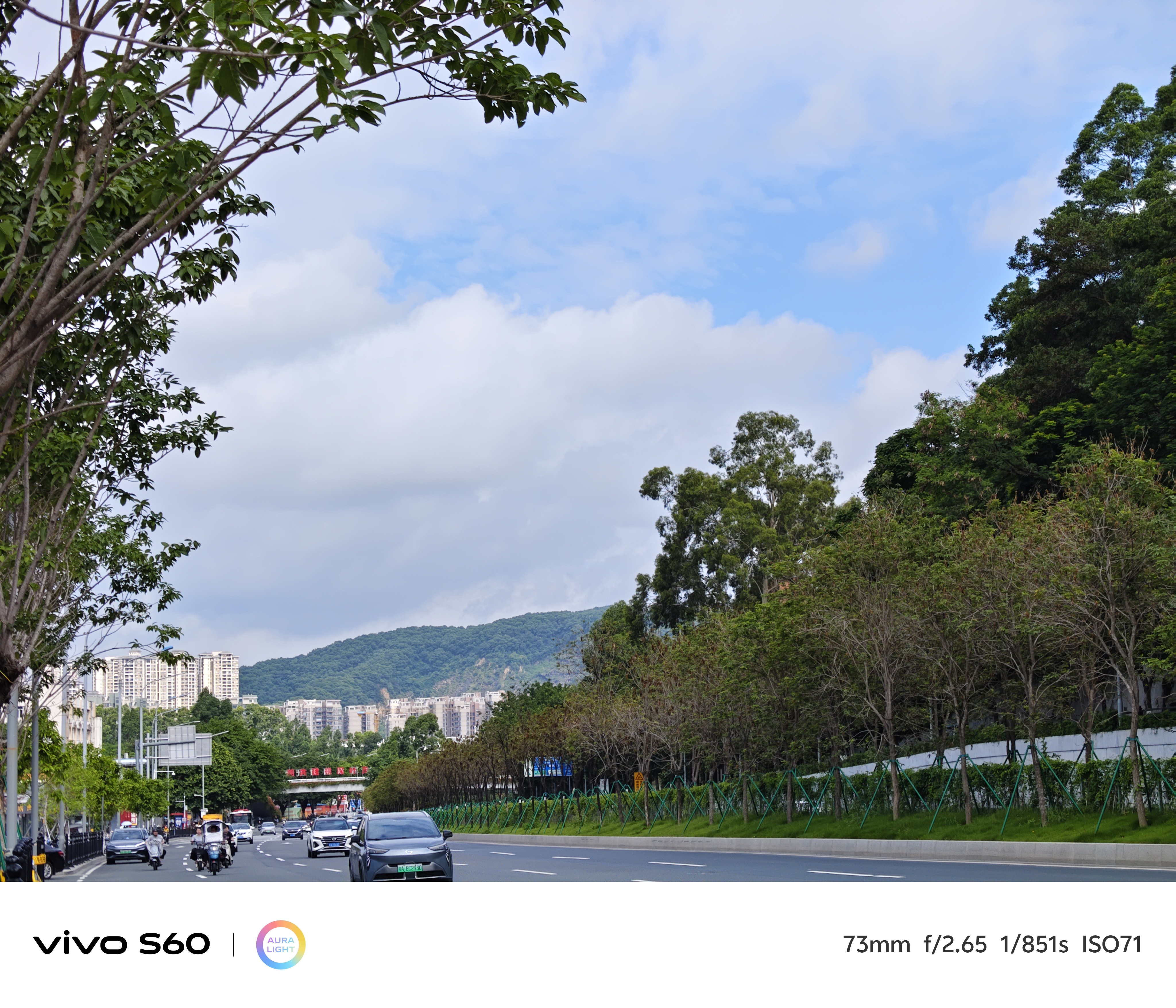
(Image source: Photographed by Leitech)
Among them, the vivo S60's performance aligns with its positioning of "4K Native Live." There is no noticeable disconnect between the cover frame and dynamic playback. When long-pressed for playback, the smoothness and brightness of the traffic flow generally match the perception of the static photo, avoiding the issue of the cover appearing clear but becoming blurry upon playback. This is arguably the most crucial aspect, as many dynamic photos ultimately involve selecting a frame from the Live Photo to share. If the image quality is insufficient, the value of the Live Photo is diminished.
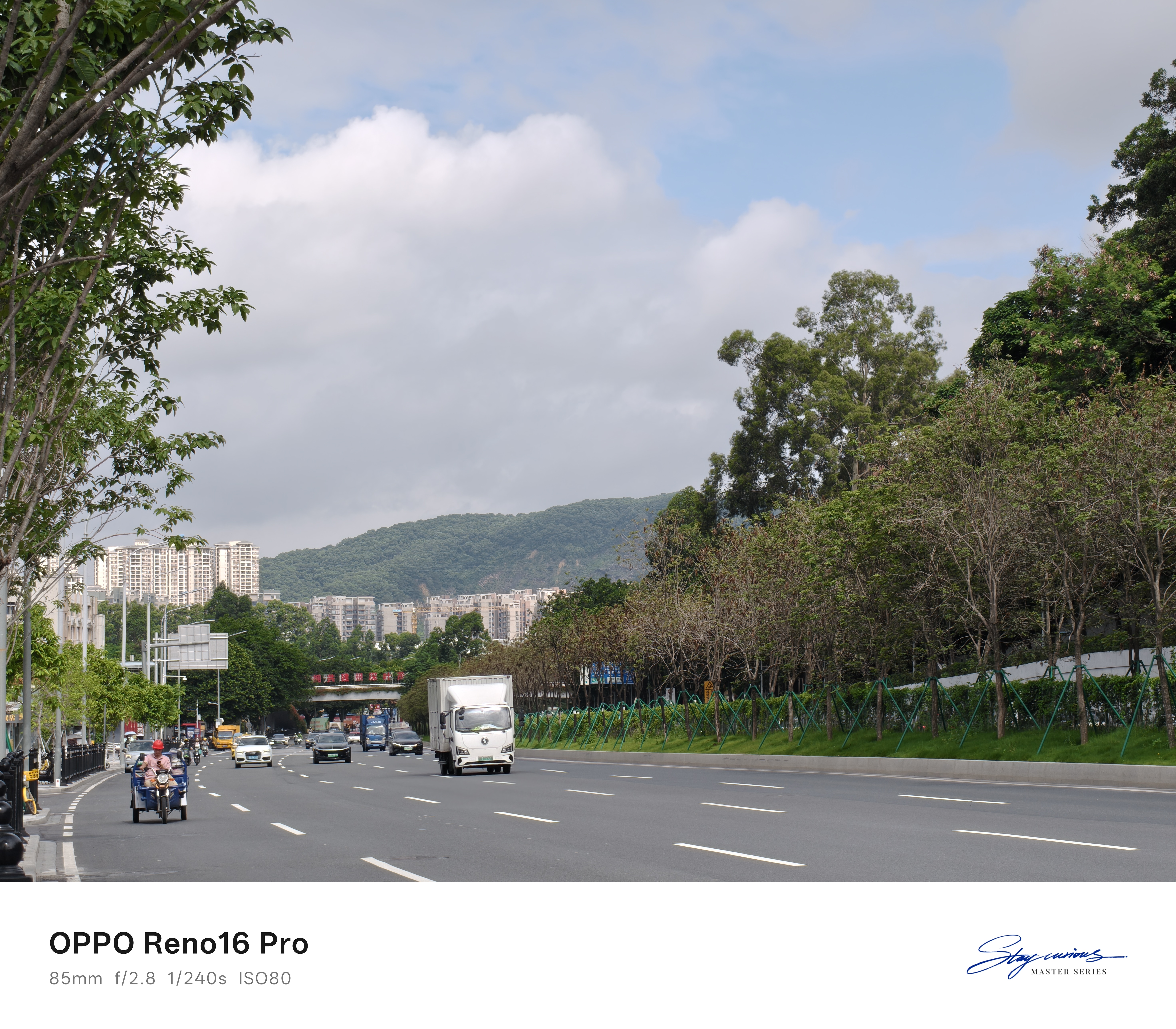
(Image source: Photographed by Leitech)
The OPPO Reno 16 Pro excels in color reproduction. The sky's color in the distance is closer to what the naked eye sees, ensuring no color discontinuities during Live Photo playback. Additionally, with features like Inst Film Live, CCD Live, and Light Trail Film Live, its post-processing versatility is indeed stronger.
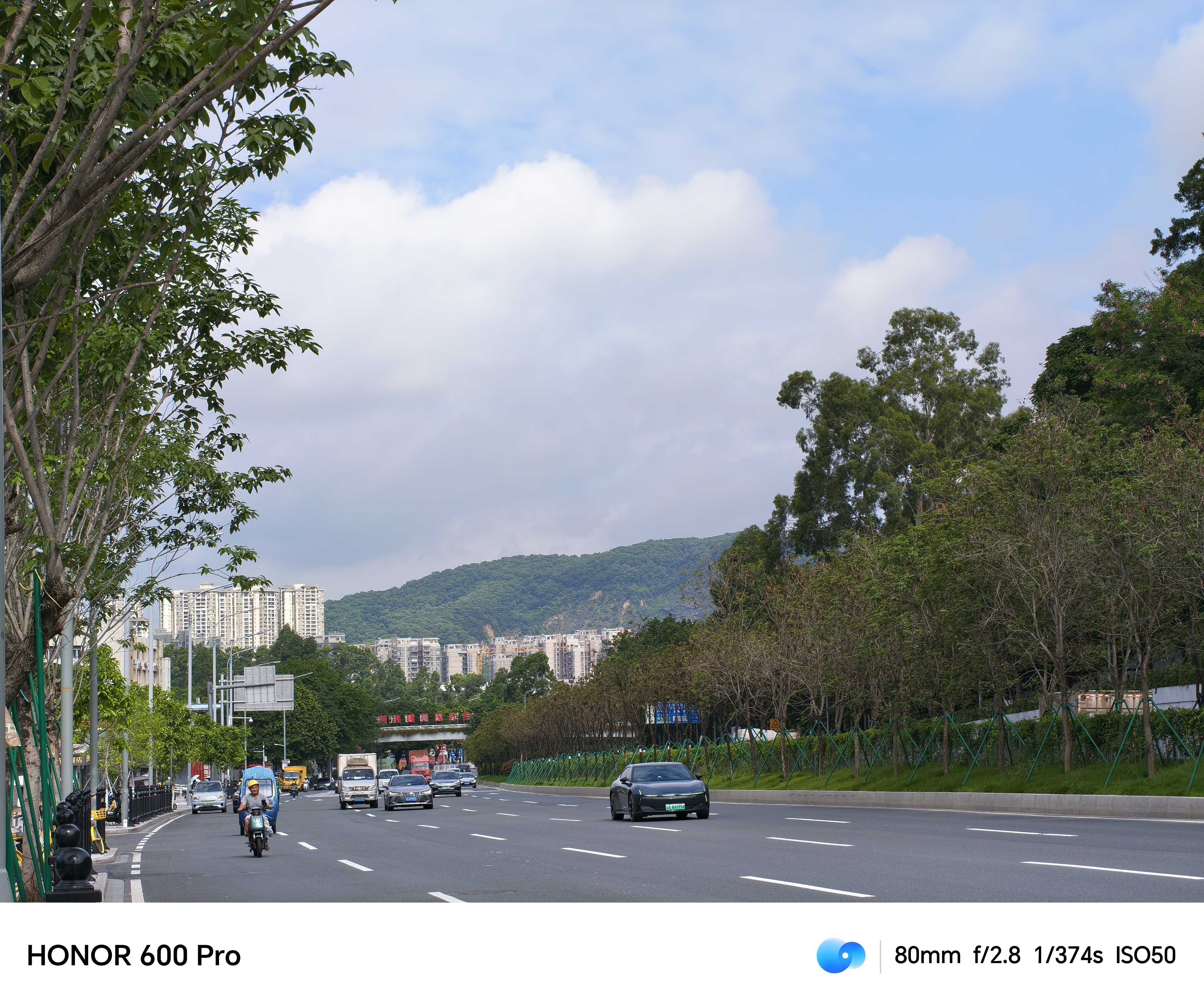
(Image source: Photographed by Leitech)
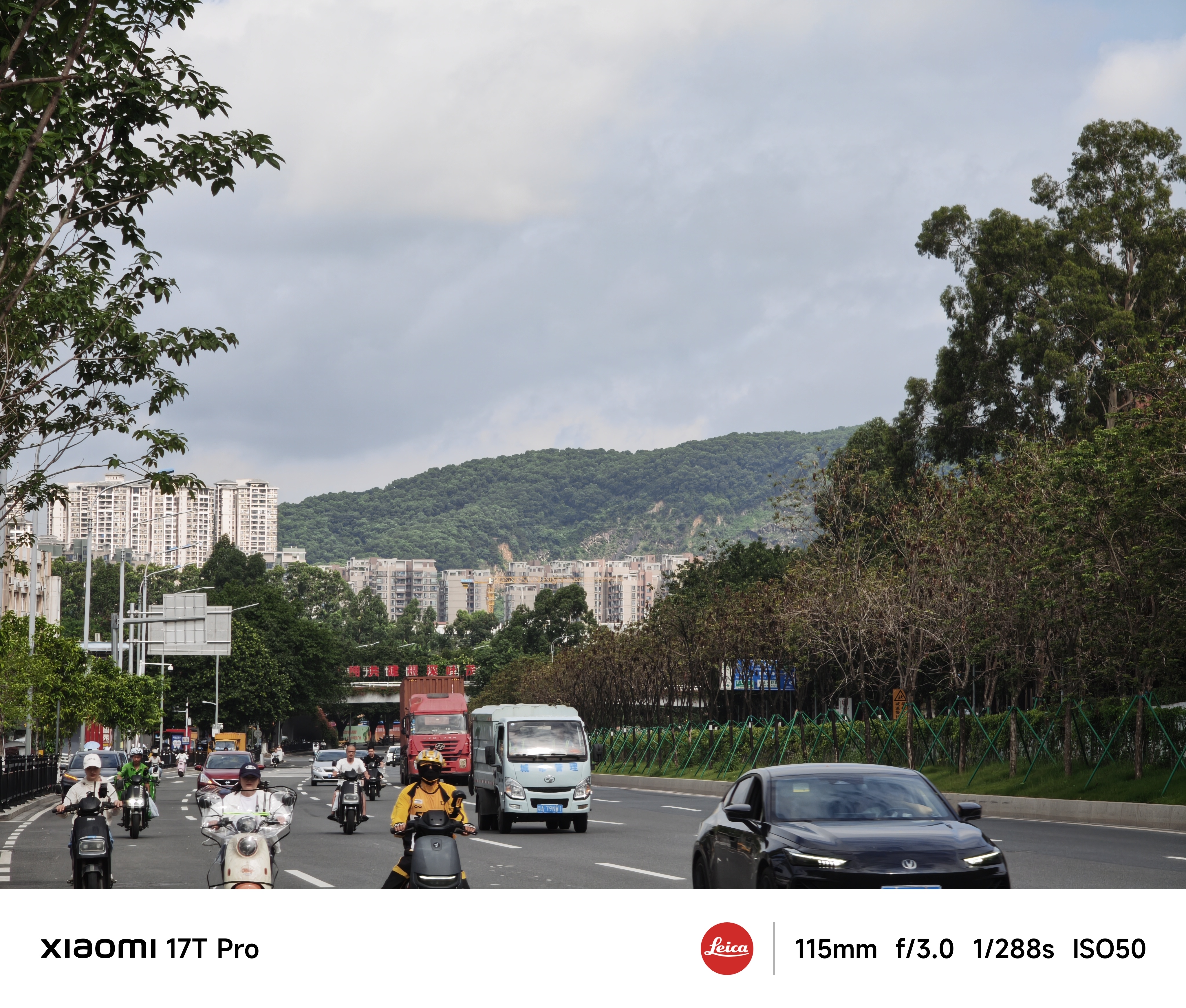
The Honor 600 Pro's style is somewhat similar to vivo's. Although the image is not as bright as vivo's, the overall perception is still outstanding. There is no noticeable frame skipping when capturing traffic flow and moving leaves, and the keyframes are highly usable.
(Image source: Photographed by Leitech)
The Xiaomi 17T Pro's Leica Live Moment offers a distinct flavor. It does not overly sweeten the image, with harder colors and contrast, giving it a more Leica-like tone. The advantage is that the photos have more texture, but the downside is that if the scene is relatively ordinary, Xiaomi's initial perception may not be as immediately appealing as Honor's or vivo's.
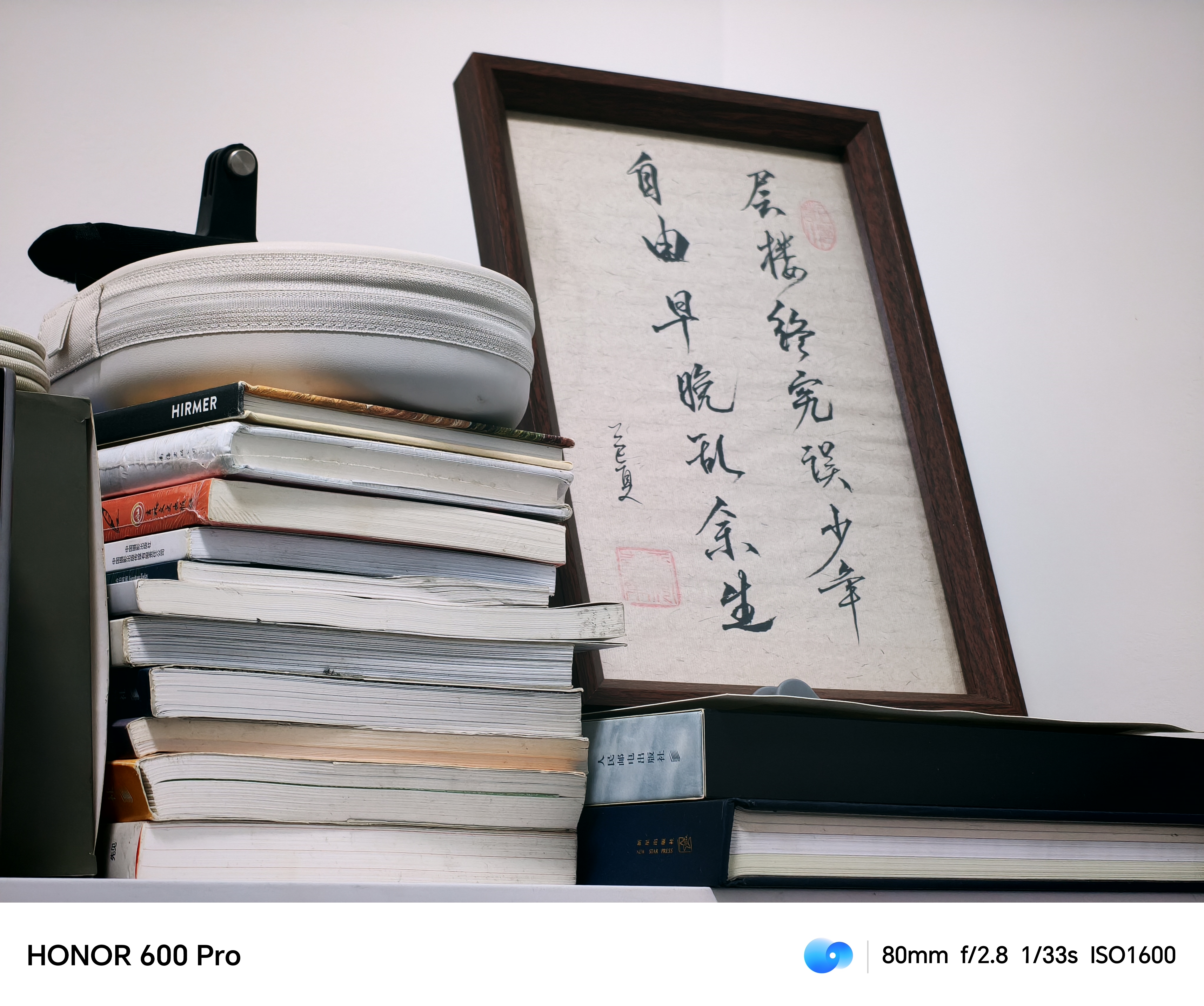
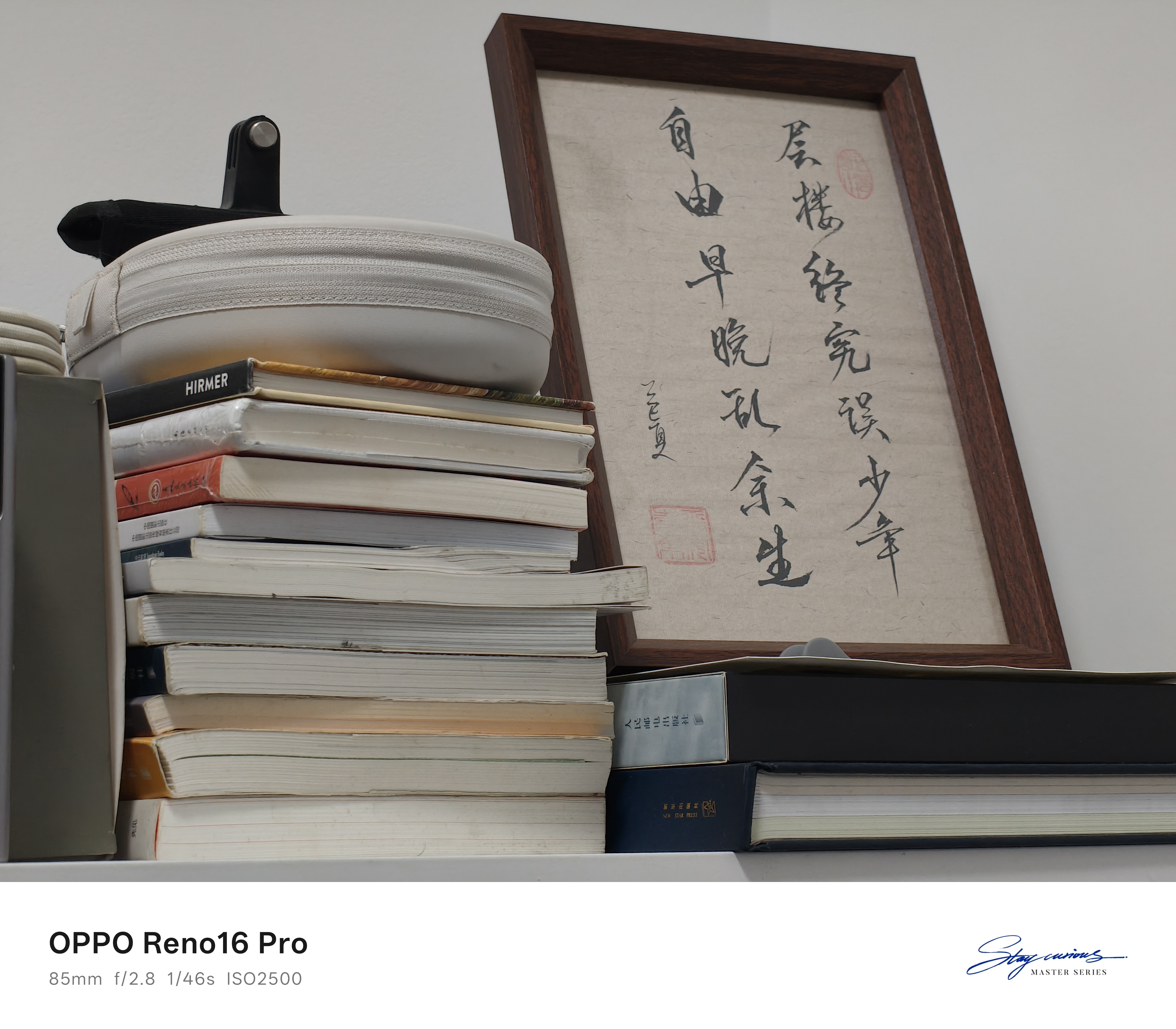
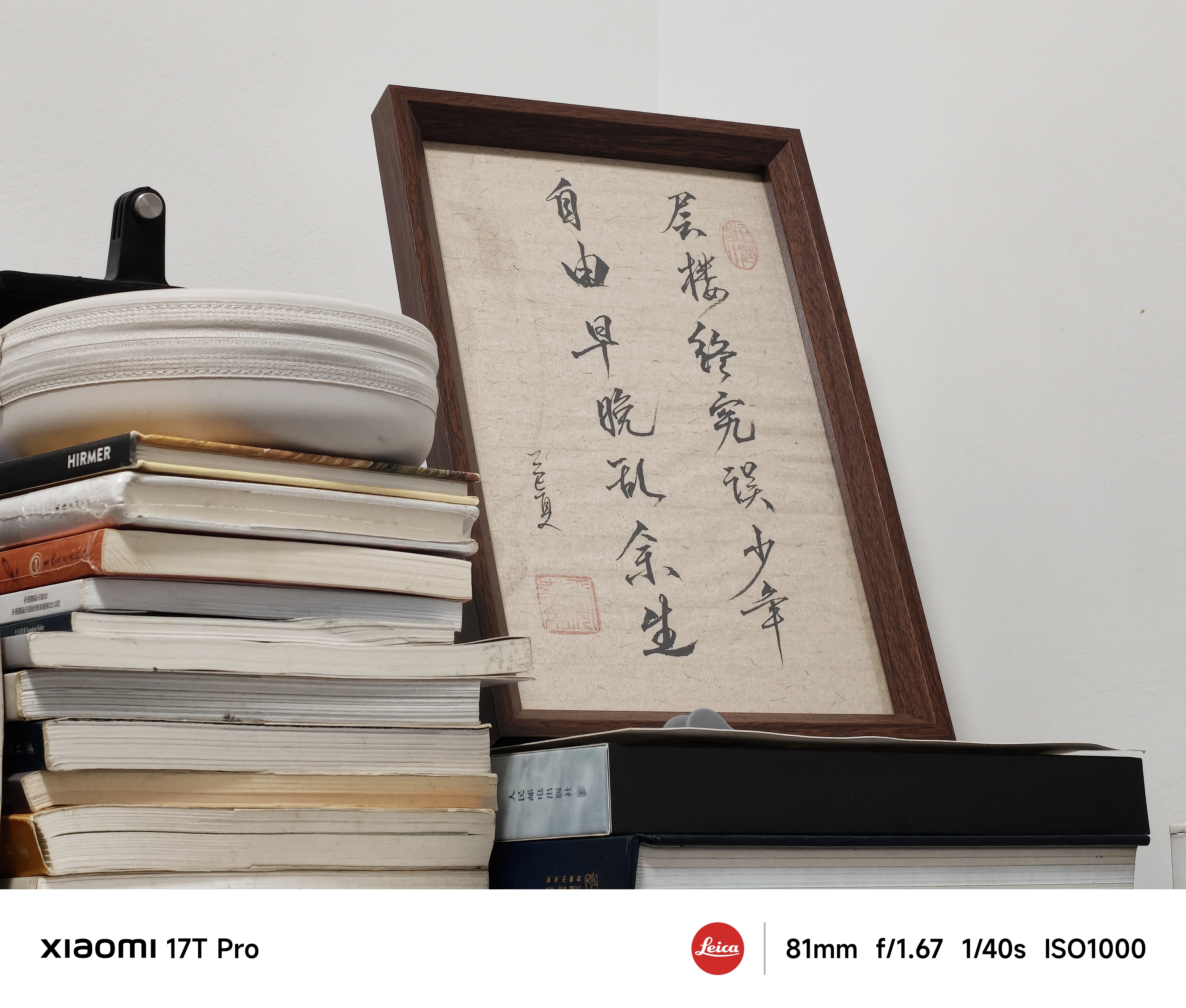
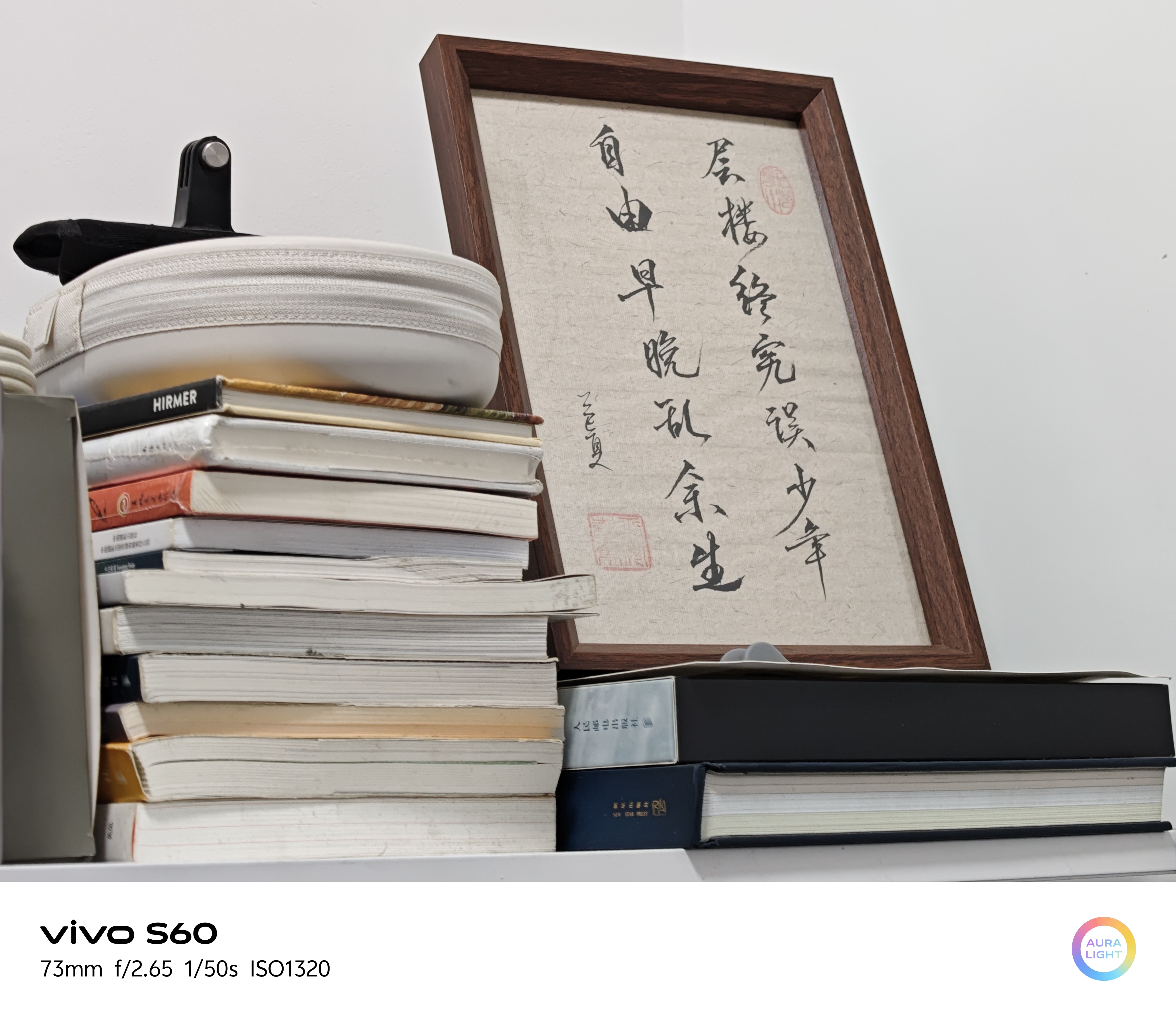
In the second scene, Xiaolei chose an indoor setting. Although there is no complex motion in this scene, it happens to be the best scenario for observing the static cover frame of Live Photos.
(Image source: Photographed by Leitech)
The Honor 600 Pro's image is relatively bright, with clear book edges, paper textures, and calligraphy. Its overall style still leans towards clear recording, providing ample information but lacking a particularly prominent image texture.
(Image source: Photographed by Leitech)
The OPPO Reno 16 Pro's indoor sample is softer, with more subdued colors for white walls, paper, and wooden frames. The image does not appear overly sharpened. It may not be as bright as Honor's, but the overall atmosphere is more natural, suitable for capturing quiet indoor objects.
(Image source: Photographed by Leitech)
The Xiaomi 17T Pro continues to maintain a texture-oriented approach. Its contrast is more pronounced, with more distinct layers between the wooden frame, books, and paper, giving the overall image a more tonally rich feel. However, its brightness is not as high as Honor's, and the details of the calligraphy and paper are not solely pursuing "the brightest and clearest."
 (Image source: Photographed by Leitech)
The vivo S60's indoor sample still leans towards an appealing style. Its image brightness is relatively high, with white walls and paper appearing cleaner and the calligraphy clearer. Compared to the other devices, vivo's overall perception is brighter, making it more suitable for direct use as a Live Photo cover frame. However, its image also has a certain degree of brightening and retouching, with the layers of paper and white walls not as thick as Xiaomi's.
A brief summary of the imaging performance of the four smartphones:
The vivo S60 is the best for casual life photography. Its photos are bright, colors are appealing, and the dynamic photo experience is natural. It's easy to capture great shots of food, pets, friends, and street scenes. It may not be the most authentic or have the strongest texture, but it understands what ordinary users want to capture.
The OPPO Reno 16 Pro is the best for portrait photography. Whether it's static portraits or capturing expressions in dynamic photos, OPPO's success rate is relatively high. Especially for those who enjoy taking selfies, photos of friends, and gatherings, the Reno 16 Pro remains an excellent choice.
The Honor 600 Pro is the best for hassle-free recording. It doesn't pursue a particularly strong style but excels in stability, with reliable white balance, exposure, document recognition, and night scene control. It's suitable for users who don't want to delve into tone adjustments or parameter tweaking and just want to pick up and shoot.
The Xiaomi 17T Pro is the best for capturing atmosphere. Its photos have more contrast, and night scenes and street photography have more texture. It's suitable for users who enjoy photographing cities, buildings, cars, cafes, and night lights. However, if you primarily take photos of people, Xiaomi may not be as hassle-free as OPPO and vivo.
Charging Showdown: OPPO and Honor Take the Lead This Round
For mid-range smartphones, battery life and charging remain essential experiences that cannot be overlooked. After all, the dynamic photos, night scenes, portraits, and AI retouching features mentioned earlier all rely on frequent camera usage, which happens to be one of the scenarios that drain the battery the fastest.
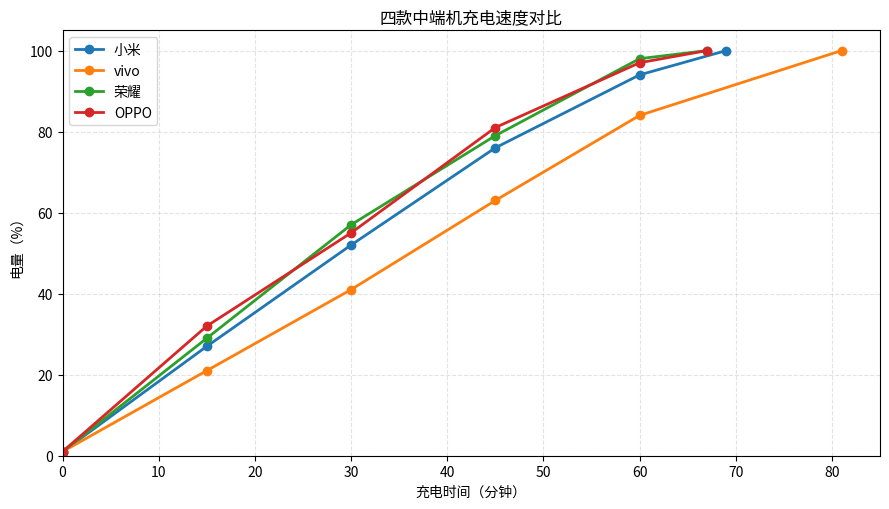
So, Xiaolei also conducted a round of charging tests, starting from around 1% battery on all four smartphones and recording the battery levels at 15-minute, 30-minute, 45-minute, and 60-minute intervals, as well as the time taken to fully charge.
(Image source: Created by Leitech)
From the results, the OPPO Reno 16 Pro and Honor 600 Pro demonstrated the most outstanding charging speeds.
The OPPO Reno 16 Pro reached 32% in 15 minutes, 55% in 30 minutes, 81% in 45 minutes, 97% in 60 minutes, and fully charged in 67 minutes. The Honor 600 Pro's performance was very close, reaching 29% in 15 minutes, 57% in 30 minutes, 79% in 45 minutes, 98% in 60 minutes, and also fully charging in 67 minutes.
Both devices adopt strategies suitable for fragmented charging. For example, if you need to go out unexpectedly in the evening and plug in your phone for just over ten minutes beforehand, you can generally recover a significant amount of battery. For users who frequently take night photos, Live Photos, or short videos, the experience of fast charging in the initial stages is particularly noticeable.
The Xiaomi 17T Pro ranked in the second tier but was not slow. It reached 27% in 15 minutes, 52% in 30 minutes, 76% in 45 minutes, 94% in 60 minutes, and fully charged in 69 minutes. Compared to OPPO and Honor, Xiaomi's initial charging speed was slightly slower, but the overall difference was not significant, with only a 2-minute longer time to fully charge.
The vivo S60 was the slowest of the four in charging. It reached 21% in 15 minutes, 41% in 30 minutes, 63% in 45 minutes, 84% in 60 minutes, 95% in 75 minutes, and fully charged in 81 minutes. While the absolute speed is not unacceptable, when compared to the other three devices, the difference is quite noticeable.
Especially in the first 30 minutes, the vivo S60 only reached 41%, while OPPO, Honor, and Xiaomi all exceeded 50%. This means that for short-term top-ups, the vivo S60's charging efficiency is weaker, making it more suitable for complete overnight charging rather than relying on quick top-ups in emergencies.
However, overall, all four devices can fully charge in just over an hour, which is sufficient to cover the daily needs of most users. The real difference lies in the fact that OPPO and Honor are more suitable for fragmented charging, Xiaomi offers balanced overall performance, and vivo leans towards a more conservative approach.
Conclusion: After Price Hikes, Mid-Range Smartphones Focus Heavily on Imaging and Overall Experience
Returning to the initial question: After the price increases this year, are mid-range smartphones in the 3000 yuan range still worth buying?
If you only consider cost-effectiveness, users may indeed feel that many mid-range smartphones are not as affordable as before. However, if you actually experience them firsthand, you'll find that manufacturers are not simply raising prices but are instead enhancing imaging capabilities and overall experience.
If you're wondering how to choose among these four devices, the answer is actually quite simple.
If you want a phone with a more delightful overall experience and a higher success rate for casual photography, the vivo S60 would be a better fit. If you value live photo features and an atmospheric imaging experience more, the OPPO Reno 16 Pro offers greater playability. If you prefer stability, ease of use, and reliability, the Honor 600 Pro is a safer choice. If you like photos with more cinematic tone and texture, the Xiaomi 17T Pro will better suit your taste.
Of course, none of these four devices are perfect flagships. The vivo's charging is relatively conservative, the OPPO's highlight control isn't the most restrained, the Honor's style isn't distinct enough, and the Xiaomi isn't always the most appealing in every scenario. But they are no longer the mid-range phones of the past, where the attitude was, 'At this price, good enough is fine.'
Especially with the widespread adoption of dynamic photos and Live Photo-like features, the photography experience on mid-range phones has undergone noticeable changes. In the past, when evaluating a mid-range phone's camera, we often said, 'It's good enough during the day, viewable at night, and decent for portraits.' But now, they've started addressing more specific scenarios: how to capture facial expressions, how to preserve motion, and how to take photos that are more suitable for social media platforms.
Because most users don't buy phones to look at benchmark scores or study sensor models; they want a device that is 'good enough to use.' When taking photos out during the day, the pictures should be shareable right away. When shooting signs while shopping at night, the images shouldn't be too blurry. The quality of Live Photos shouldn't be terrible. If you need to leave in a hurry, charging for 10-20 minutes should be enough to get you by. At the very least, the core experiences shouldn't be poorly executed.
In Leo's view, the real change in mid-range phones this year isn't higher benchmark scores or faster charging; it's that they've finally started to seriously understand why ordinary users take photos. Their purpose isn't about resolution, pixel-peeping, or winning on a spec sheet.
It's about preserving those spontaneous moments in life as completely as possible.
Mid-range phones from Xiaomi, OPPO, vivo, and Honor
Source: Leikeji
Images in this article are from the 123RF licensed library. Source: Leikeji
-
![]()
Insta360’s Post-Lockup Period Begins: Employees Suspected of Selling Shares, Institutions Biding Their Time—Is a Major Storm on the Horizon?
-
![]()
Are Houses Getting 'ID Cards' Now? In the Future, House Decorating, Renting, and Buying Will All Be Possible with a Simple Scan!
-
![]()
Where Should the Senior Citizens in County Towns Go?
-
![]()
【OFweek Weike Cup】Santec Officially Enters for the 2026 Optical Industry Annual Innovation Product Award
-
![]()
Anhui’s Taihu County Establishes a Project with an Impressive Annual Production Capacity of 850 Million Square Meters of Optical Film, Along with Supporting Rollers!
-
![]()
The AI Unicorn Valued at 960 Billion is Raising Funds Again
-
![]()
Unveiling the Strategy: The RMB 11.5 Million Deal of MLOptics
-
![]()
Qingtian Lease Hits 7 Billion Valuation in Six Months, Coexistence of Robot Leasing Bubble and Reality