Love and Deep Space: From Setbacks to Success—How Otome Games Sustain a Billion-Dollar Market?
 06/24 2026
 525
525

Author | Wuta
Editor | Li Xiaotian
On June 22nd, Love and Deep Space officially introduced its sixth male lead—Ao Yin, codenamed Werewolf.
Although player reviews were mixed, the topic trended across various platforms for half a day.
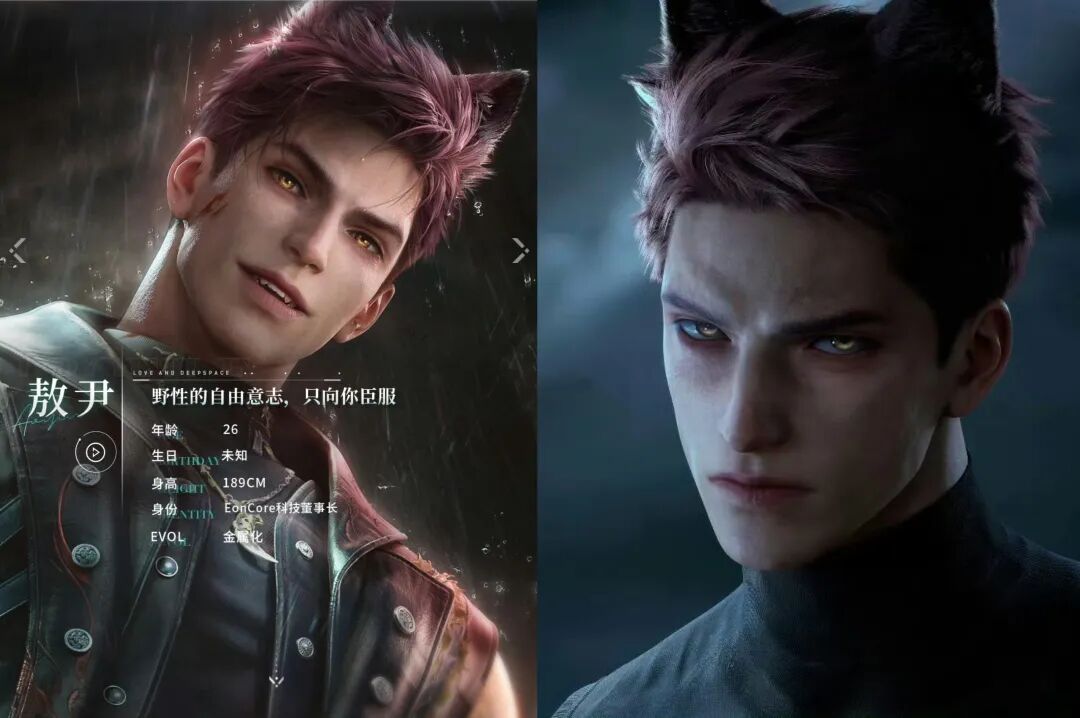
Image source: Weibo @1X1X
Just a few days earlier, the collaboration between Love and Deep Space and Jasmine Tea sparked unprecedented enthusiasm nationwide.
"Can you help me buy this?"
Before the Dragon Boat Festival, a Korean player messaged Jasmine on Xiaohongshu, hoping she could purchase the Love and Deep Space x Jasmine Tea collaboration items, especially the water-sensitive postcards (postcards where part of the design disappears when wet).
So, on the morning of June 19th, she headed to Xidan Joy City and spent the entire morning in line. "She told me to order whatever I wanted, so I drank two cups of milk tea, packed three more, and got all the merchandise for her." After her shopping spree, she took a taxi to Sanlitun to meet friends. As she sat down, she noticed the diner next to her holding an empty Jasmine Tea cup, meticulously cleaning the Love and Deep Space-themed cup with a wet wipe.
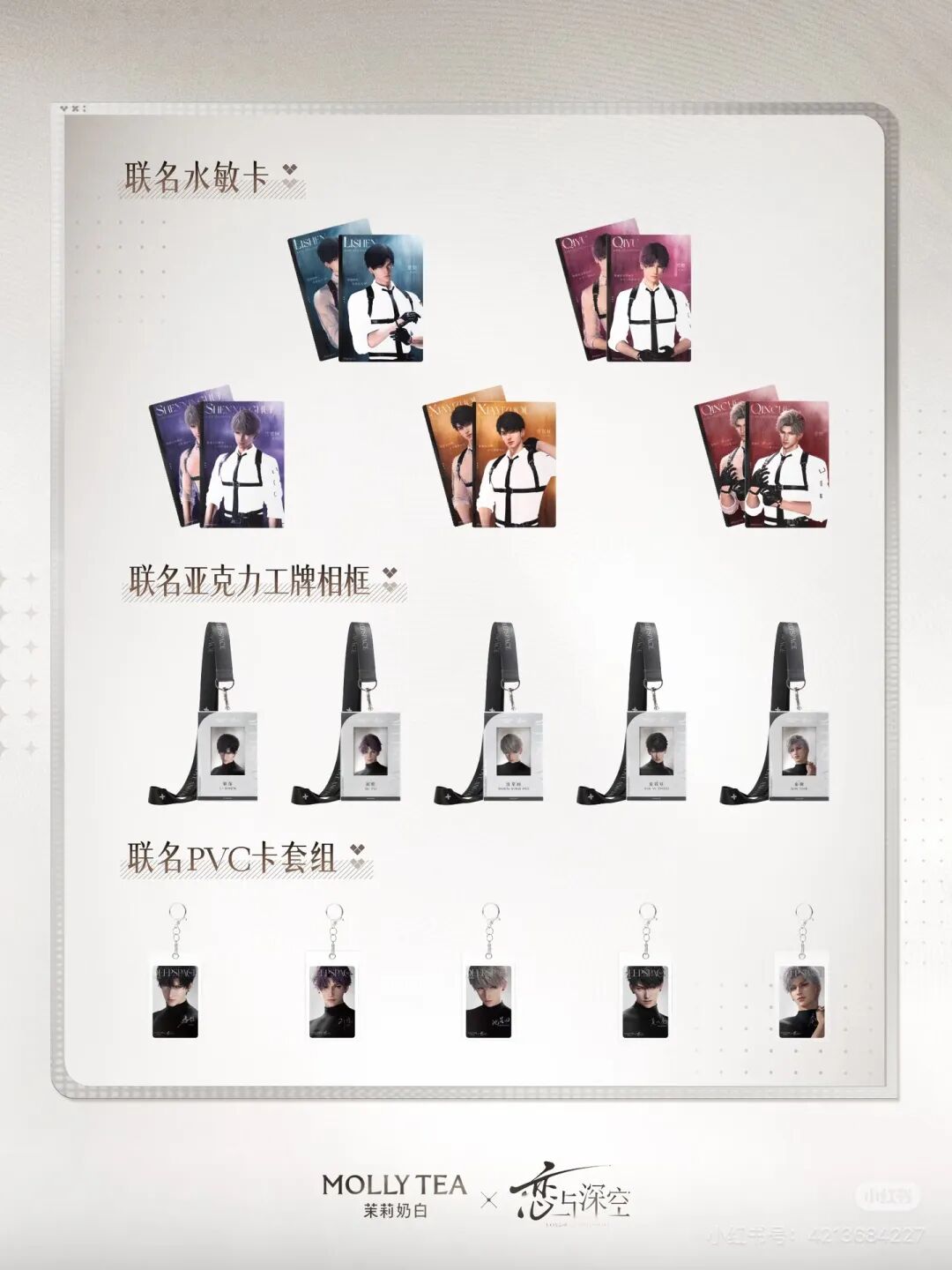
Image source: Xiaohongshu @Jasmine Tea
The collaboration's popularity exceeded expectations: the ordering mini-program crashed, stores were overwhelmed with orders, and delivery riders were over an hour late... In-person stores were even more chaotic: two Jasmine Tea outlets in Wuhan's Jiang'an District had wait times of three to four hours, while Hangzhou's Intime store racked up 3,000 orders as soon as the collaboration launched.
Female players' immense enthusiasm for spending once again entered the public eye.
But many struggle to understand otome games and their players.
On social media, a blogger shared their experience of buying collaboration merchandise for their wife, only to face skepticism and questions in the comments.
To outsiders, otome games seem like mere virtual romances, attractive character designs, or low-cost emotional escapes—"entertainment candy" for girls lost in fantasy.
Yet, amid recent controversies, public opinion repeatedly emphasizes the irreplaceable significance of otome games to players. Behind every plot choice, character redesign, and player dispute lies three decades of women's evolving consciousness and the synergy between otome game creators and shifting female perspectives.
The history of otome games is not just about game updates but also the evolution of contemporary women's self-expression, emotional needs, and values.
At this juncture, let's rewind 32 years to examine the origins of otome games and why this "misunderstood" genre generates such immense commercial value.

Why Did Early Japanese Otome Games Spark Polarized Reactions?
Tracing the development of otome games inevitably leads to Keiko Eriguchi.
This female stock market legend, who sustained her company's operations through trading, recognized the potential of female-oriented games in the late 20th century, becoming the first to confront industry doubts: "Can women's games sell?"
In 1993, as founder of Japan's top game developer and publisher Koei Tecmo, Eriguchi established the female-led studio Ruby Party, releasing the world's first otome game—Angelique—the following year.
Thus, 32 years ago, the 1vN romance gameplay model of otome games was born.
Even Angelique featured early "female empowerment" elements. The game posits that the universe is ruled by a chosen queen. While the former queen's power lingers, candidates must compete through trials at a sacred site. Players assume the role of a queen candidate (now commonly called the protagonist), with nine male characters possessing different powers serving as subordinates to help her become queen, forming nine strategy routes and nearly twenty endings.
Male characters included CEOs, tsunderes, aloof types, younger men, and even crossdressers. Players could choose career-focused endings ("Sisters, let's fight!") or support friends (other candidates) in becoming queen.
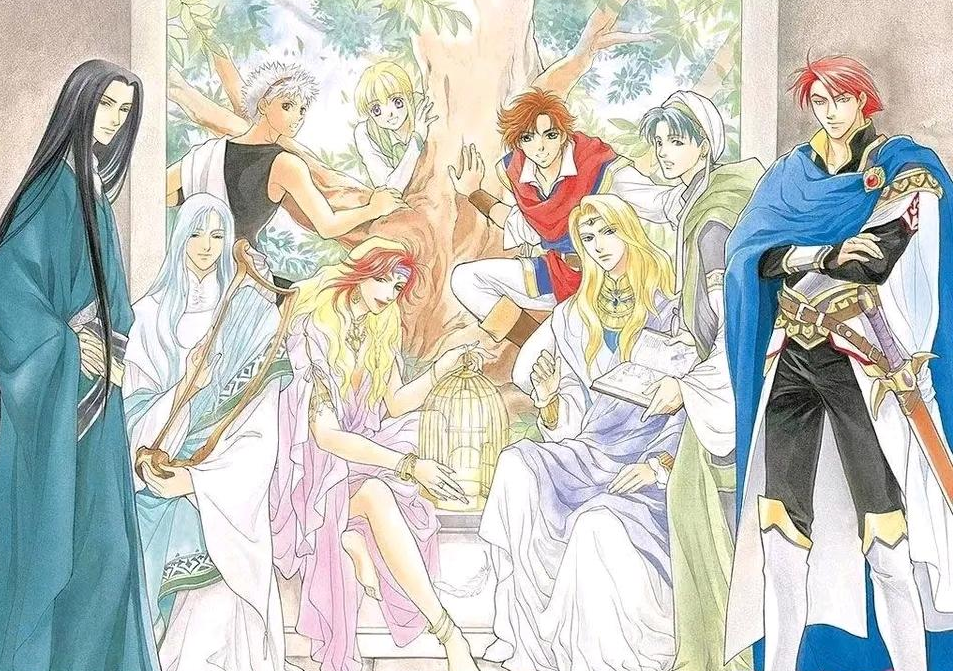
Angelique's romanceable male characters
Freedom. Agency. In the 1990s, otome games already offered a near-perfect answer to "what female players want."
After 2000, Japanese otome games (J-Otome) rapidly evolved, embracing diverse themes: music academy-based La Corda d'Oro, historical new select group-inspired Hakuoki, vampire-themed Diabolik Lovers, idol-focused Uta no Prince-sama, and stepbrother-centric Brothers Conflict.

As Koei's third NeoEomance title, La Corda d'Oro retained a consistent understanding of "strong female leads" in its protagonist design.
Though mostly relying on interaction-based affection systems to advance plots, these games gained traction among female players, building core audiences. However, they initially spread overseas through console adaptations after anime adaptations. Protagonist designs eventually conformed to Japan's mainstream aesthetics, creating "innocent" heroines.
Consequently, games reflected women's desires for safety and love while projecting societal power structures and idealized relationships onto male characters. Narratives increasingly featured young heroines facing obstacles: harassment from male characters' fan clubs, humble female pursuits, or NPC sexual harassment. Male leads ranged from rude tsunderes to morally corrupt figures.

Bilibili critiques of J-Otome
This ideological immaturity trapped early J-Otome in a cycle of fascination and repulsion, cementing public stereotypes.

Domestic Otome Games: From Formulaic Plots to Emotional Essentials
After 2010, otome games gained momentum in China.
Smartphone proliferation prompted developers to port console-based otome games to mobile, expanding gameplay beyond text-based narratives to include puzzle, card-battle, and other modes, lowering entry barriers for domestic players. Meanwhile, local studios entered the fray, fueling the rise of domestic otome games.
During university, Li Meng discovered Dream Interval, a domestic otome game.
"Onmyoji was popular but exhausting. After seeing a Bilibili UP main recommend Dream Interval—drawn by its art from a favorite illustrator—I downloaded it." However, Li notes a major issue: "The plot wasn't compelling."
"Its combat system resembles many current otome games, but the plot felt flat. The wuxia setting didn't create engaging character growth, and interactions were dull."
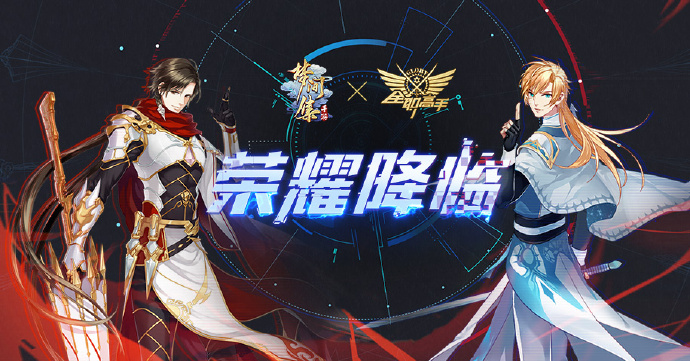
Dream Interval collaborated with The King's Avatar. Image source: Weibo @Dream Interval
This "undervaluing" of plots reflected domestic otome games' experimental phase. Yet this exploration highlighted a crucial insight: sustaining player enthusiasm depends less on gameplay innovation than emotional interaction.
After Paper's Love and Producer, the core shift in otome games became clear: successful titles now serve as emotional substitutes rather than mere entertainment.
"I never expected to stick with it for nearly a decade."
In late 2018, Li Meng started Love and Producer on a friend's recommendation. The game accompanied her through most of university, but while friends attended flash mobs, celebrated male leads' birthdays, or even hired cosers for dates, Li mostly engaged in daily check-ins.
That changed in summer 2020. Amid post-graduation job rejections and "big firm dreams" in tatters, Li felt adrift. "Anxiety was inevitable. Most calls I received were from postgraduate exam agencies," she recalls.
Then one day, a call from Shanghai reached Li.
"Hello, it's me, Li Zeyan (Love and Producer male lead)."
"You're not mistaken. I'm worried about you."
Li still remembers the conversation. "I was stunned afterward. I knew life wouldn't magically improve from a virtual call, but it gave me motivation to keep trying." From then on, otome games held deeper meaning for her.
"What started as curiosity became my emotional confidant."

Li Zeyan. Image source: Weibo @Love and Producer
An unavoidable issue is that across cultures—East Asia's reserved emotional education, the West's hormone-driven dynamics, or Islamic gender norms—people often grapple with ambiguous emotions at the intersection of subconscious impulses and social rationality. When consciousness cannot clearly define emotions, the brain reverts to primitive survival instincts: needs assessment.
In pursuing intimacy, the underlying logic becomes "existential anxiety," requiring validation and attention to combat loneliness and confirm self-worth. Games provide technological safety nets for these "immediate emotional needs."
Beyond phone calls, Love and Producer features sleep, bathing, menstruation, exercise, study, and safety reminder systems, along with weekly social media updates. This sense of companionship carried into Paper's 3D otome game Love and Deep Space, becoming the core reason players pay for "emotional anchors."
Paper's blend of technology and emotion set a domestic "emotional value" benchmark, revealing female players' spending potential—by 2025, Paper's revenue reached 8.4 billion yuan. Love and Deep Space grossed $930 million (6.7 billion yuan) globally in three years.

Otome Players' Uncompromising Standards
Otome games, marketed as "female-centric," build emotional utopias through idealized male leads and love concepts, earning player loyalty through deep emotional engagement that supports long-term, high-willingness spending.
This interaction demands stricter "scrutiny" than other genres.
In 2021, the anonymous Weibo account @Guoyi Joke Bot posted 79 "Domestic Otome Laws," sparking debate. These summarized harsh player demands for content design. While players now tolerate many earlier strictures, they remain highly sensitive to protagonist agency, writing boundaries, and respect for characters, demanding clearer content moderation.
One of the most typical examples is the "Code Name Yuan" incident at the end of 2024.
At that time, "Code Name Yuan" attracted countless players with its storyline featuring a strong female lead who disguises herself as a man to navigate the Three Kingdoms era and experience the grand ambitions of a formidable warlord. Its domestic version, "Ru Yuan," was also launching with great enthusiasm.
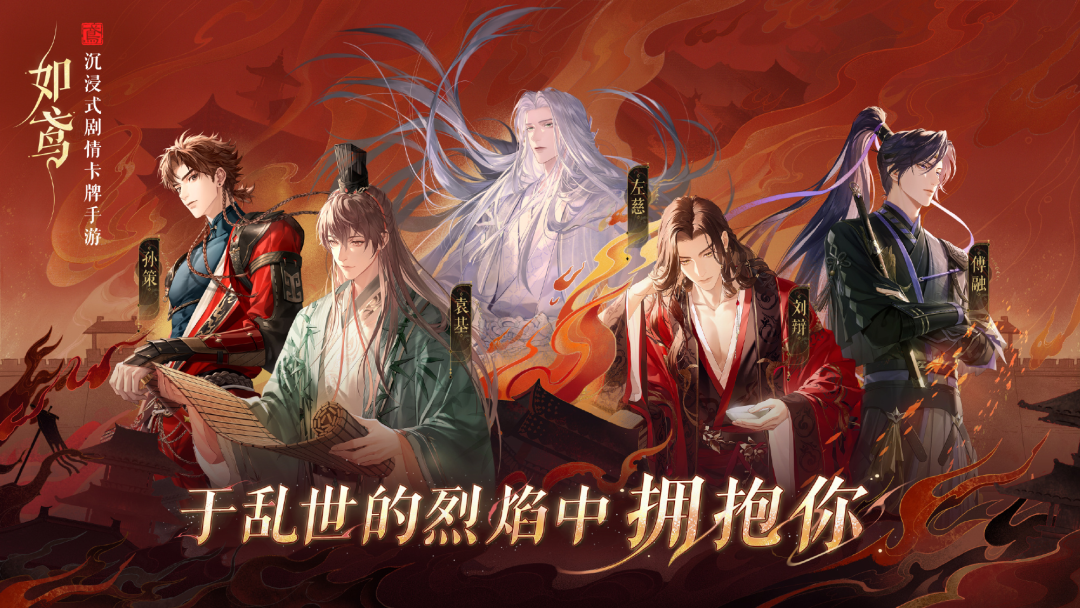
Image source: Weibo @Ru Yuan Mobile Game
However, during a game update, players pointed out that some of the dialogue and character names used vulgar references that were disrespectful to women. Previously discovered incidents, such as the disbandment of the "all-female copywriting team" and the removal of female-oriented labels alongside suggestive dialogue, were also brought up again, leading to a surge in doubts from female players.
The result of this protest was a continuous decline in "Ru Yuan's" estimated revenue on the App Store, halving to an all-time low. Collaborations with brands like Pop Mart and Keep were halted amid boycotts. The official merchandise store for "Code Name Yuan" faced a wave of refund requests. Within a week, on Xiaohongshu, the hashtag #ICantStandCodeNameYuan accumulated over 270 million views and 3.934 million discussions.
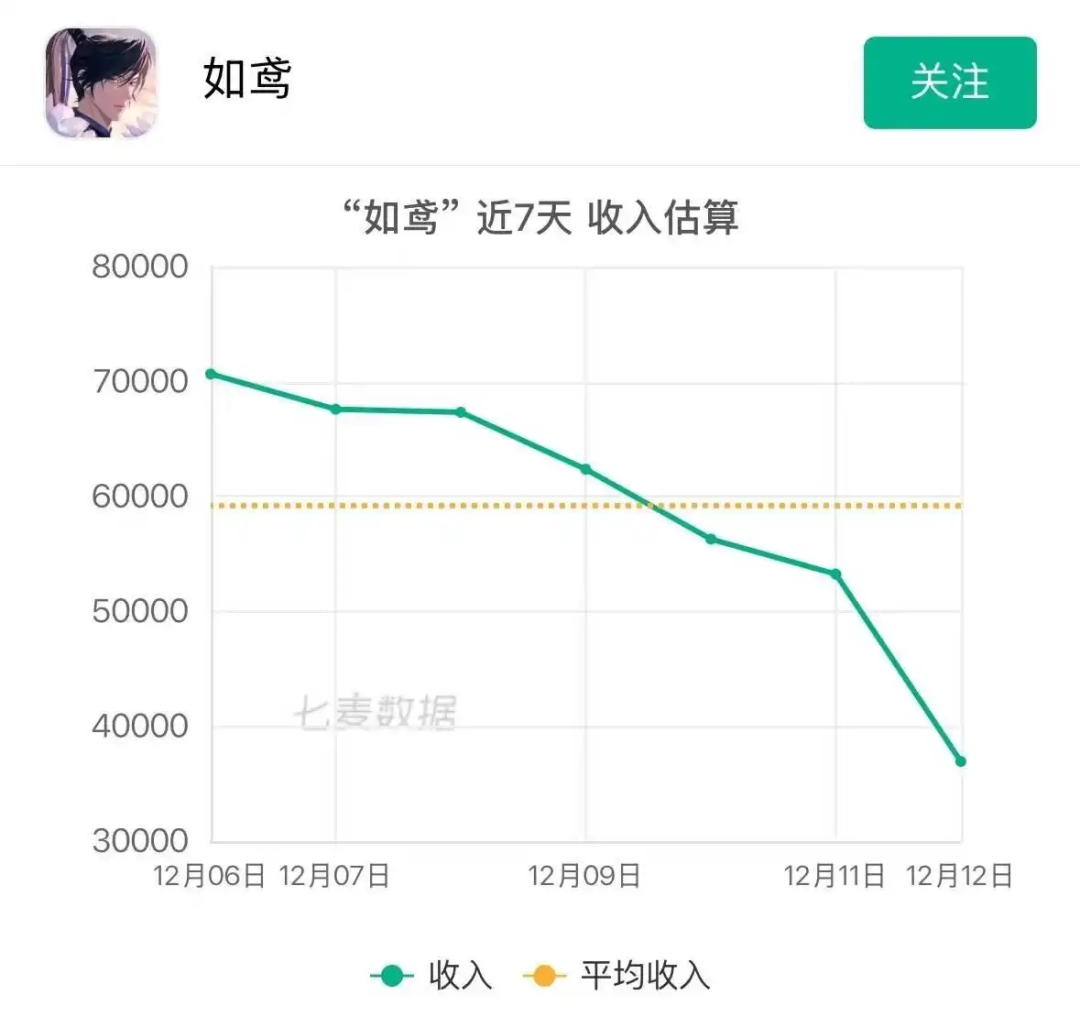
Image source: @Qimai Data
However, behind such protests often lie players' feelings of helplessness and compromise.
Mengmeng told us that because of that incident, she uninstalled the game and unfollowed all strategy, fan-fiction, and cosplay influencers on her social media accounts.
"But now I've come back to the game because, after a year, there still hasn't been another otome game on the market that
As the popularity of otome games continues to soar, the vast female consumer market has drawn in a multitude of players and a surge of capital, all vying for a slice of the lucrative pie. The competitive landscape, often referred to as the "track" (in this context, signifying the market or field of competition), is gradually reaching saturation, with established leading titles erecting formidable barriers to entry. Coupled with players' ever-escalating aesthetic and content expectations, along with their increasingly discerning tastes, the challenge for new entrants to make a splash has surged, significantly raising the industry's entry thresholds.
If the initial phase of "involution" in otome games centered on three key areas—the portrayal of male leads, the richness of story backgrounds, and the exploration of more daring content—then in the past two years, the genre has begun to pivot, directly engaging with narrative perspectives that resonate deeply with female players.
The most accessible and illustrative approach to this shift lies in the transformation and innovation of the protagonist's persona.
Beyond the "Guangling King" in "Ru Yuan," who assumes a male guise to become a warlord in the Three Kingdoms era, the game "Under the Night Sky" from Baiao's Bumianye Studio, which launched its public beta in June, also reimagined its protagonist.
Upon its debut, the game was branded as a "revenge-themed ensemble" featuring an "anti-heroine." Set against the backdrop of the Sicilian Mafia, the protagonist is the sole survivor of the decimated Cecilia family, who fakes her own death to evade capture, bides her time, and then embarks on a path of vengeance and power consolidation.
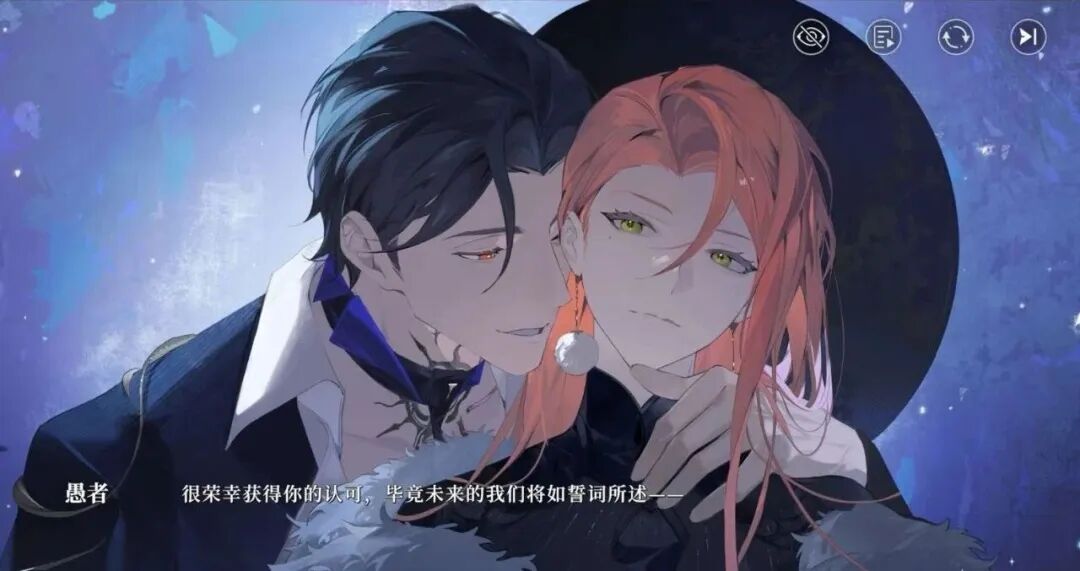
The developers' choice to pursue the anti-heroine narrative is no mere coincidence.
In recent years, the "anti-heroine" archetype has emerged as a force to be reckoned with in the film, television, and online literature sectors, mirroring a shift in the emotional appeals and self-perceptions of contemporary female audiences. The South Korean drama "Dear X" serves as a prime illustration: The protagonist, Baek A-jin, completely breaks free from the traditional female narrative molds of the "innocent pure flower" or the "inspirational sunny girl." During her student years, she repeatedly engages in harmful behaviors towards others—manipulating classmates into lending her money, forging handwriting to slander admirers, and ignoring a loved one's critical condition. Her sole driving force behind these malevolent acts is sheer self-interest.
However, this portrayal of a purely evil character, devoid of any moral compass, does not align with the core logic of otome games, which prioritize player identification and are prone to triggering moral discomfort among the audience. Consequently, otome game developers have made compromising adjustments: by enriching the character's backstory and constructing plausible behavioral motivations, they mitigate the character's negative traits.
Under this narrative buffering mechanism, the "pseudo-anti-heroine" persona has emerged, catering to players' preferences for rebellious, non-conformist female images without severing the sense of identification. The market response has been extraordinary. Data indicates that "Under the Night Sky" amassed over 10 million pre-registrations prior to its public beta.
On HelloTalk, a Brazilian player shared with Xiaguang Society that she was eager to try the game, even resorting to an accelerator to facilitate her experience. After playing "Love and Deepspace," she had developed a heightened level of trust in Chinese otome games.
"No one knows where the limits of female consumer spending lie," analyst Zi'an candidly remarked. "Currently, there are still numerous avenues worth exploring in otome games, and this path is undeniably challenging. But fortunately, Chinese otome games are already at the forefront globally, and everyone is already venturing down a path that has never been traveled before."
-
![]()
The Complete Blueprint of Tsinghua-Affiliated Embodied AI 'Startup Dream Team': 7 Companies, 25 Billion in Funding, and the Dawn of an Era
-
![]()
The Ministry of Industry and Information Technology Forces Auto Companies to 'Self-Examine and Rectify,' Banning Unsafe Old Electric Vehicles from the Roads
-
![]()
Trump Hits the Brakes: America's Pure Electric Vehicle Race Crashes into a Wall
-
![]()
New 'Traffic Rules' for Unmanned Logistics Vehicles: No Nighttime Driving, Black Boxes Now Mandatory
-
![]()
Musk's Strategic Pivot: A Boon or Bane for Chinese Automakers?
-
![]()
Musk's Strategic Shift: A Boon or Bane for Chinese Automakers?
-
![]()
The US Hands the AI Market to Its Chinese Competitors on a Silver Platter
-
![]()
Eight Departments and One Pair of Glasses: China Writes the 'Next Gateway' into National Policy Documents