The Ministry of Industry and Information Technology Forces Auto Companies to 'Self-Examine and Rectify,' Banning Unsafe Old Electric Vehicles from the Roads
 06/24 2026
 546
546
From an industry governance perspective, regulators have elevated the importance of NEV safety to a new level.
Last month, the MIIT issued the Notice on Conducting Safety Inspections for New Energy Vehicles in 2026, officially launching a comprehensive annual safety inspection for NEVs.
This MIIT-led nationwide inspection is far from a routine sampling check. Instead, it is a full lifecycle, industry-wide rectification campaign (rectification campaign) targeting long-standing issues such as battery hazards, manufacturing defects, intelligent driving vulnerabilities, and inadequate after-sales service.
The inspection covers all NEV manufacturers and power battery suppliers, focusing on three core risks: battery thermal runaway, high-voltage system failures, and intelligent driving malfunctions. A strict mandate requires in-depth investigations for any model involved in three or more fire incidents, with a comprehensive review of past safety hazards and targeted screening of commercial vehicles, those operating under extreme conditions, and those with frequent alerts.
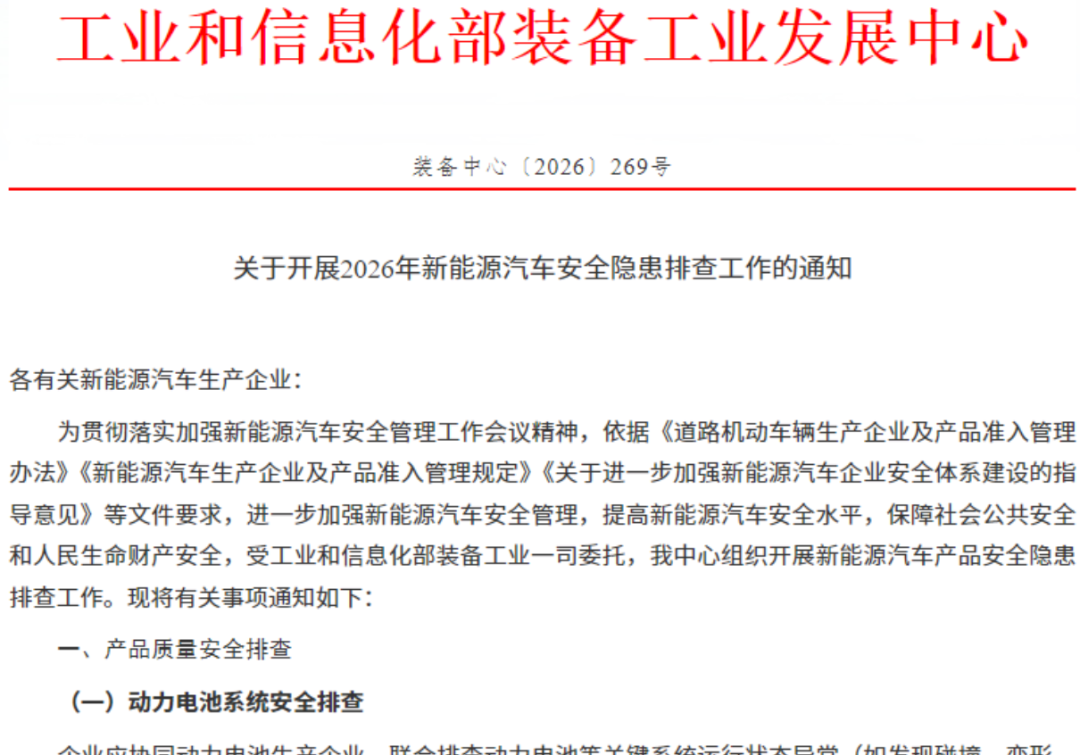
The new regulations set August 1, 2026, as the deadline for rectification. Companies that fail to meet the deadline or fully eliminate hazards will face escalating penalties, including public warnings, production halts, and model delistings, marking an unprecedented regulatory crackdown.
Coupled with the two mandatory national safety standards for electric vehicles that took effect on July 1, 2026, standards for vehicle protection, battery thermal runaway prevention, and crash safety have been comprehensively upgraded, enforcing uniform national compliance. From an industry governance perspective, regulators have elevated the importance of NEV safety to a new level.
Why now?
Earlier, the National Fire and Rescue Bureau released 2025 statistics showing that the NEV spontaneous combustion rate had dropped from 0.005% (0.5 per 10,000) in 2023 to 0.0018% (0.18 per 10,000). Notably, despite this probability decrease, the number of incidents rose due to the rapid market penetration and expanding NEV fleet.
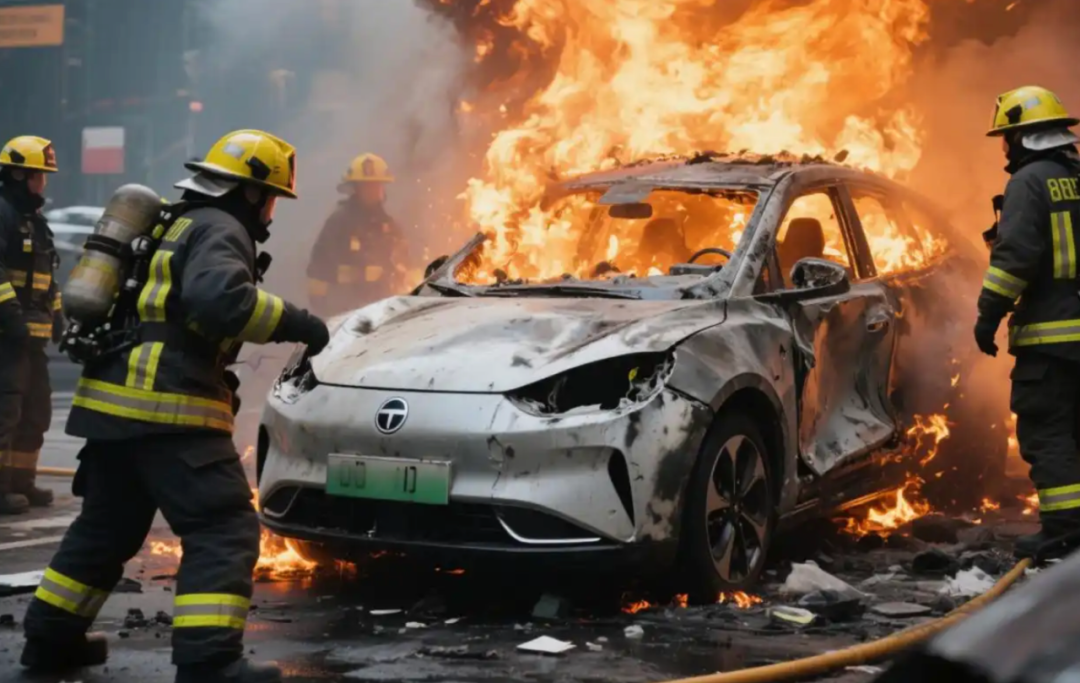
Public concern over such incidents has surged. It is no exaggeration to say that videos of vehicle fires circulate daily in some car enthusiast groups. Although causes vary, frequent fires are becoming 'normalized,' risking consumer desensitization.
In October 2025, an Ideal MEGA vehicle caught fire in Minhang District, Shanghai. Official investigations traced the root cause to batch-related manufacturing defects: inadequate anti-corrosion performance of the vehicle's cooling system aluminum plates led to coolant leaks and component corrosion over time, ultimately triggering battery thermal runaway. The brand initiated a large-scale recall, and over a dozen executives faced accountability measures.
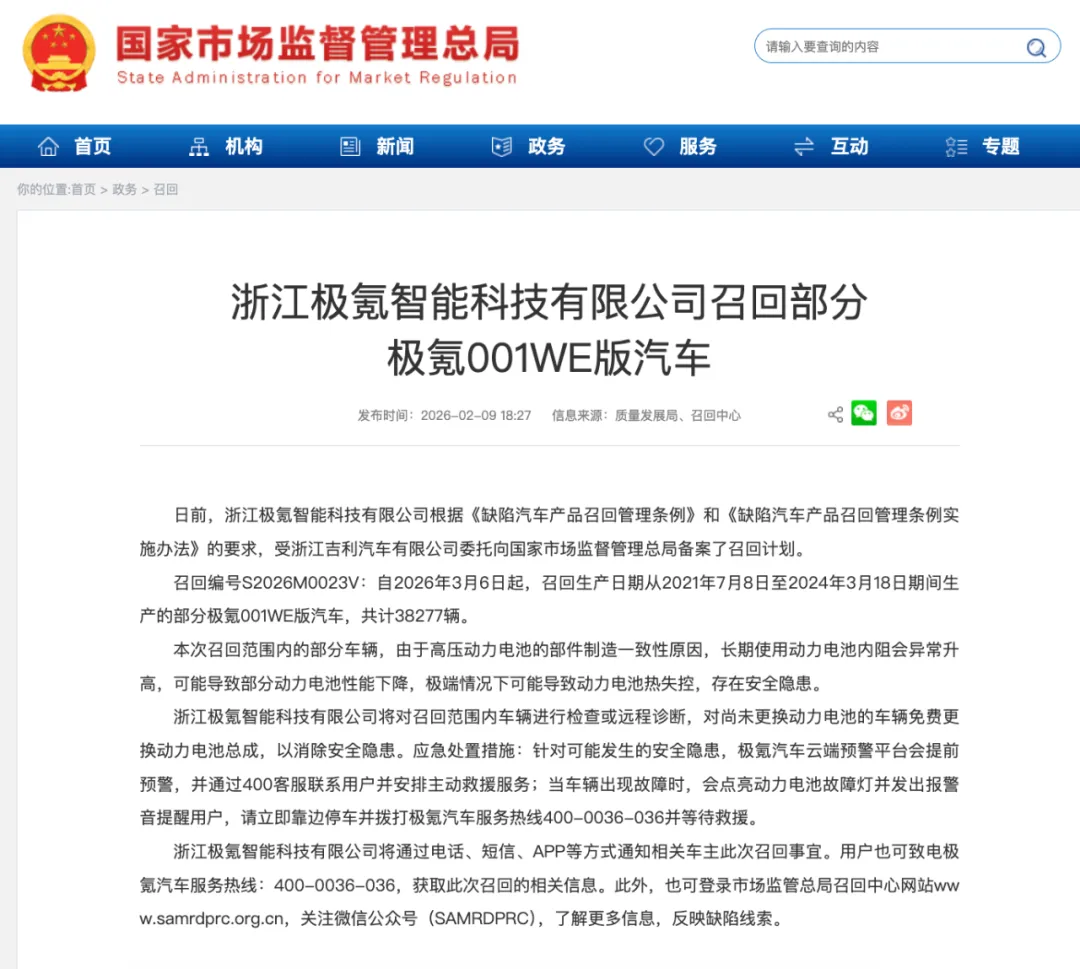
Earlier this year, a model under Dongfeng Motor Corporation exposed extreme safety risks when it burst into flames just 50 seconds after a collision, leaving virtually no escape time. Concurrently, Zeekr Automobile filed a recall plan to replace battery packs for over 38,000 001 WE models free of charge due to internal short-circuit risks in the same battery type.
In April 2026, a fire broke out at a Shenzhen factory, with shocking footage circulating online. The blaze originated in a multi-story parking garage designated for test and scrapped vehicles, caused by external contractors during equipment dismantling.
Despite clear explanations, the incident fueled negative public speculation.
Last month, another fire erupted on Shenzhen's Nanping Expressway following a traffic accident, engulfing the entire tunnel's noise barrier.
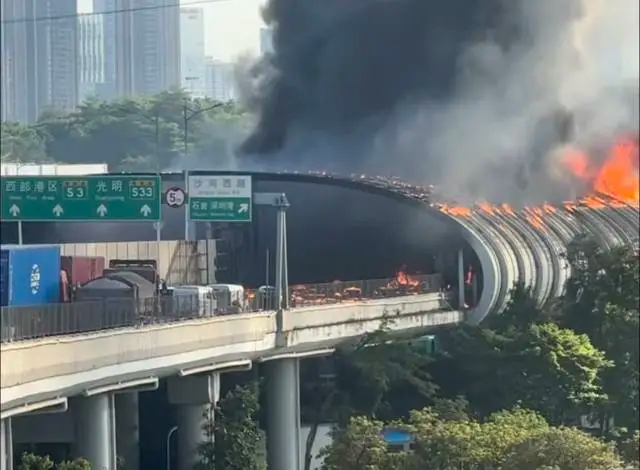
The 2026 'Bingwu Horse Year' (a year symbolically associated with fire in Chinese astrology) demands heightened caution. Beyond this, the MIIT notice tightens regulations on 'intelligent driving systems.'
In recent years, automakers have heavily promoted advanced driver-assistance systems (ADAS) for their intelligence and practicality, only to shift blame to users for 'failing to take over' after accidents. Extreme cases include known defects in nighttime glare, rain/fog recognition failures, and route deviations in some ADAS systems, which manufacturers delayed fixing via OTA updates or warning users, later evading responsibility by claiming such issues fell within 'normal system tolerance.'
Before the MIIT's self-inspection mandate, some automakers proactively introduced safeguard systems to win consumer trust.
Last month, BYD upgraded its dual-safety safeguard system, adding full coverage for urban navigation-assisted driving (NOA) to its existing parking safeguards. Under compliant ADAS use with continuous driver attention monitoring, BYD pledged full compensation for vehicle damage and third-party losses caused by system algorithm, sensor hardware, or decision-making errors, without affecting owners' commercial insurance or premiums.
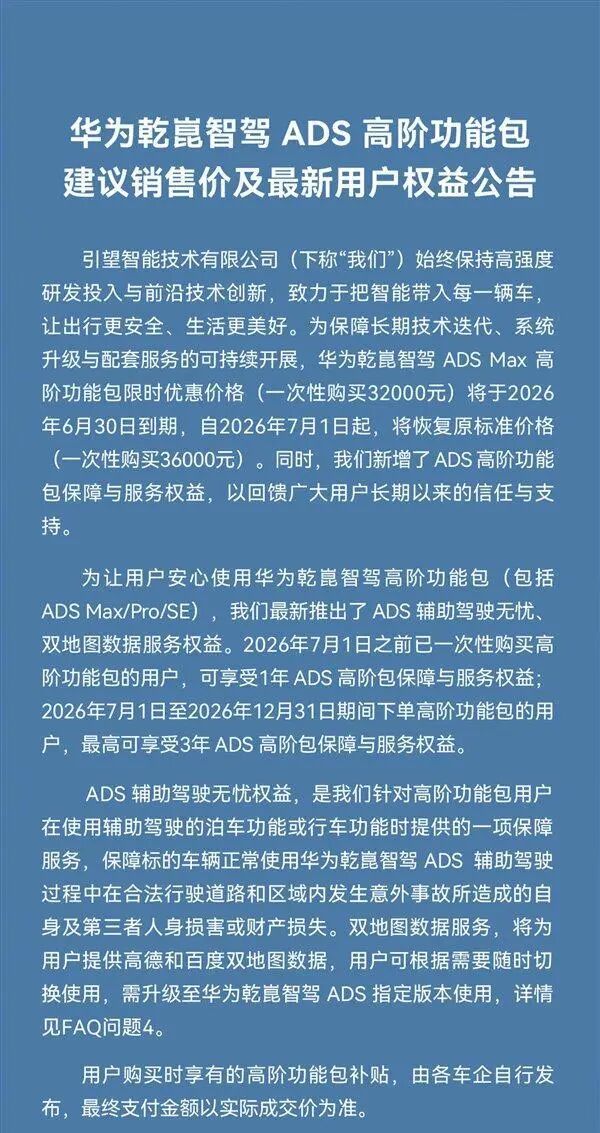
Huawei's intelligent driving system expanded safeguard coverage to all highway and urban NCA scenarios, offering up to three years of protection for new and existing users. Huawei will compensate for vehicle and third-party losses during legal road use of its ADAS.
With industry leaders setting precedents, many companies are expected to follow suit with their own safeguard programs.
It is foreseeable that regardless of how impressive executives' PPT presentations are in 2026, intelligent driving systems lacking manufacturer accountability will no longer be considered top-tier. This shift may also disrupt automakers relying on third-party ADAS suppliers.
Previously, automakers competed on range and chip computing power, with some even cutting safety testing to accelerate launches. This 'wild growth' era is ending, as sustained high-pressure regulation accelerates industry consolidation. Compliance capabilities, hazard control systems, accident safeguards, and all-scenario safety reliability will define market competitiveness.

For smaller automakers with weak quality control, frequent hazards, and poor rectification efforts, ongoing inspections and severe penalties will gradually erode their market presence, eliminating outdated capacity and technology.
The proliferation of ADAS safeguards will alleviate consumer concerns, transforming high-end ADAS features into trusted, practical configurations. This lays the groundwork for mass adoption of intelligent driving and the arrival of L3 autonomous driving in 2027.
Over the past decade, safety has remained central to NEV development. From isolated battery fires to systemic manufacturing flaws, and from ambiguous ADAS liability to dual-accountability frameworks, industry progress has stemmed from correcting safety lapses.
Safety is the industry's foundation and lifeline. Under MIIT's self-inspection initiative, the NEV sector will not only shed outdated capacity but also emerge healthier after this comprehensive 'health check.'
Note: Images sourced from the internet. For copyright concerns, please contact for removal.
-END-

-
Wang Aimin: In-Depth Analyses on Artificial Intelligence
-
![]()
France-Italy Micro Four-Wheeler Electrification Boom: A New Opportunity for China's Supply Chain to Go Global?
-
The Four Little Dragons of GPUs Enter the Scene, Cambricon is No Longer Alone
-
Why is CATL Partnering with Octopus Energy to Build a Battery-Swapping Network for Heavy-Duty Trucks in the UK?
-
![]()
Research on New Trends and User Value in China's Public Charging Consumption Market
-
【Insight】NPO (Near Package Optics) as a Transitional Solution for CPO, Industry Development Embraces Opportunities
-
![]()
Charging Industry Shifts from Quantity to User Experience as New Benchmark
-
![]()
Qianli Technology Aims for Autonomy from Geely's Sphere: Why Does BAIC Initiate the Alliance First?