Memory Prices Soar, Budget Phones No Longer Just Watered-Down Flagships
 07/09 2026
 406
406
Author|Wuzi Memory prices continue to rise, pushing budget phones into unprecedented cost dilemmas.
On July 2, 2026, Lu Weibing, Partner and President of Xiaomi Group, posted on social media that the smartphone industry is facing its toughest moment in a decade, with runaway costs sweeping the market—and budget phones are hit hardest.
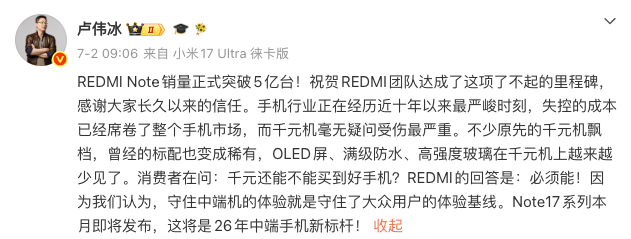
Image Source: Weibo
Lu pointed out, “Many former budget phones have shifted upmarket, with once-standard features now rare. OLED screens, top-tier waterproofing, and reinforced glass are increasingly scarce on budget models.”
Since 2026, to offset soaring memory costs, many smartphone makers have raised product prices.
The dilemma for budget phones is that if prices rise across the board, a gap forms in the original price range, requiring new low-cost models to fill it. Thus, budget phones face sharper cost pressures than mid-to-high-end models.
To keep prices low, budget phones have become compromise (compromised) products in the cost battle. Downgraded hardware not only harms user experience but also limits AI capabilities.
As the AI era approaches, budget phones may increasingly diverge from mid-to-high-end models.
01
Rising Memory Costs Push Phone Prices Up
Since 2026, the AI computing boom has triggered a memory price surge, putting unprecedented downward pressure on the global consumer electronics industry.
TrendForce data shows that in Q1 2026, DRAM contract prices rose 90%-95% QoQ, while NAND flash prices jumped 55%-60% QoQ. In Q2, DRAM prices climbed another 58%-63% QoQ, and NAND flash prices rose 70%-75% QoQ.
Apple CEO Tim Cook called the supply crisis a “once-in-a-century flood,” stating he had “never seen anything like this in over 40 years.”
Faced with relentless memory price hikes, smartphone makers have shifted supply chain pressures to consumers by raising prices.
On March 10, 2026, OPPO led the way with price hikes of RMB 300-500 on select models. vivo, Xiaomi, and Honor followed, with mid-range models rising RMB 300-800 and flagship products exceeding RMB 1,000 in increases.
Overall, smartphone pricing has shifted up one tier compared to previous years.
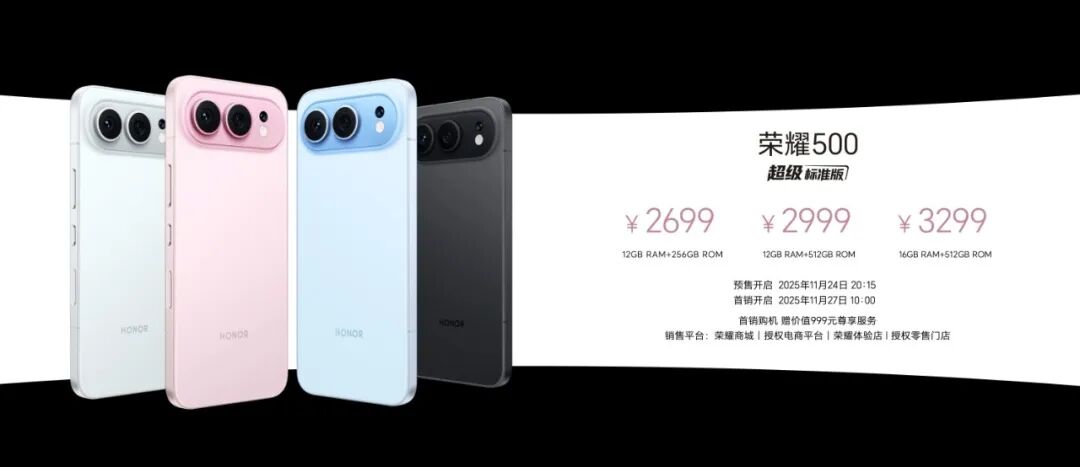
Image Source: Honor
For example, the Honor 500 Standard Edition (12GB+256GB) costs RMB 2,699, while the Honor 600 Super Edition (same storage) costs RMB 3,299. The series has jumped from the RMB 2,000 tier to RMB 3,000.
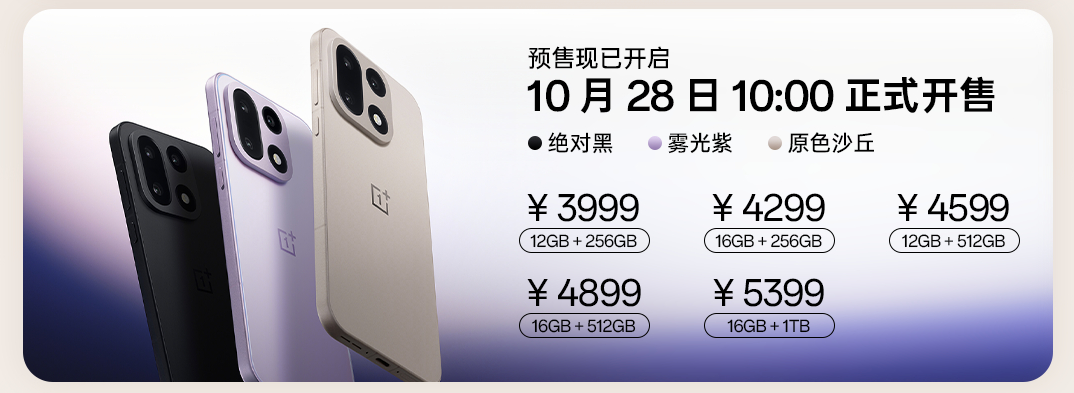
Image Source: OnePlus
Similarly, after two price hikes, the OnePlus 15 (12GB+256GB) now costs RMB 5,099, up RMB 1,100 from its initial RMB 3,999.
Memory price hikes affect all smartphone makers similarly, regardless of product positioning. To offset costs, manufacturers have shifted entire product lineups up one tier.
However, due to differing price bases, terminal price increases vary. Flagship models, with higher bases, see proportional price hikes more easily absorbed by consumers.
For budget phones, with lower price bases, cost increases leave little room: either accept sharper price hikes with existing specs or keep prices low with downgraded hardware.
02
Budget Phones Downgrade Specs, Huawei Seizes Market
In early 2026, IDC noted that memory’s cost share in smartphones had risen from 10%-15% to over 20%. For mid-to-low-end models, storage costs neared 30%, with some budget phones sliding into losses.
Under such pressure, new budget phones have seen steep price hikes. For example, the Honor X80i (8GB+128GB), launched in April 2026, costs RMB 1,999—up RMB 600 (42.89%) from the X70i’s RMB 1,399, entering the RMB 2,000 tier.
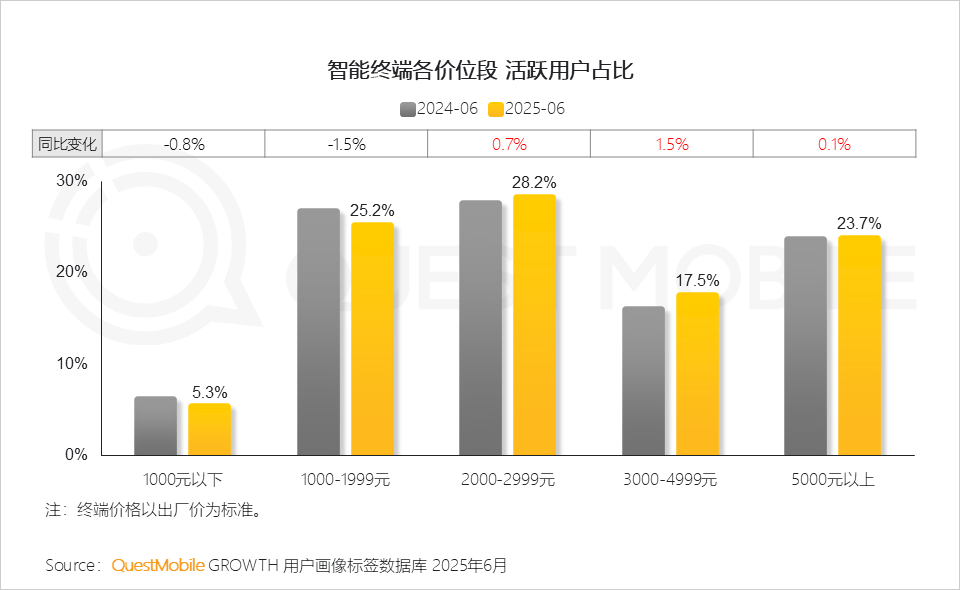
Image Source: QuestMobile
While budget phones have reasons to raise prices, this has left a massive market gap. QuestMobile data shows that in June 2025, 30.5% of active Chinese smartphone users used devices under RMB 1,999.
To retain budget consumers, makers must carefully balance costs, often downgrading specs to fill price gaps.
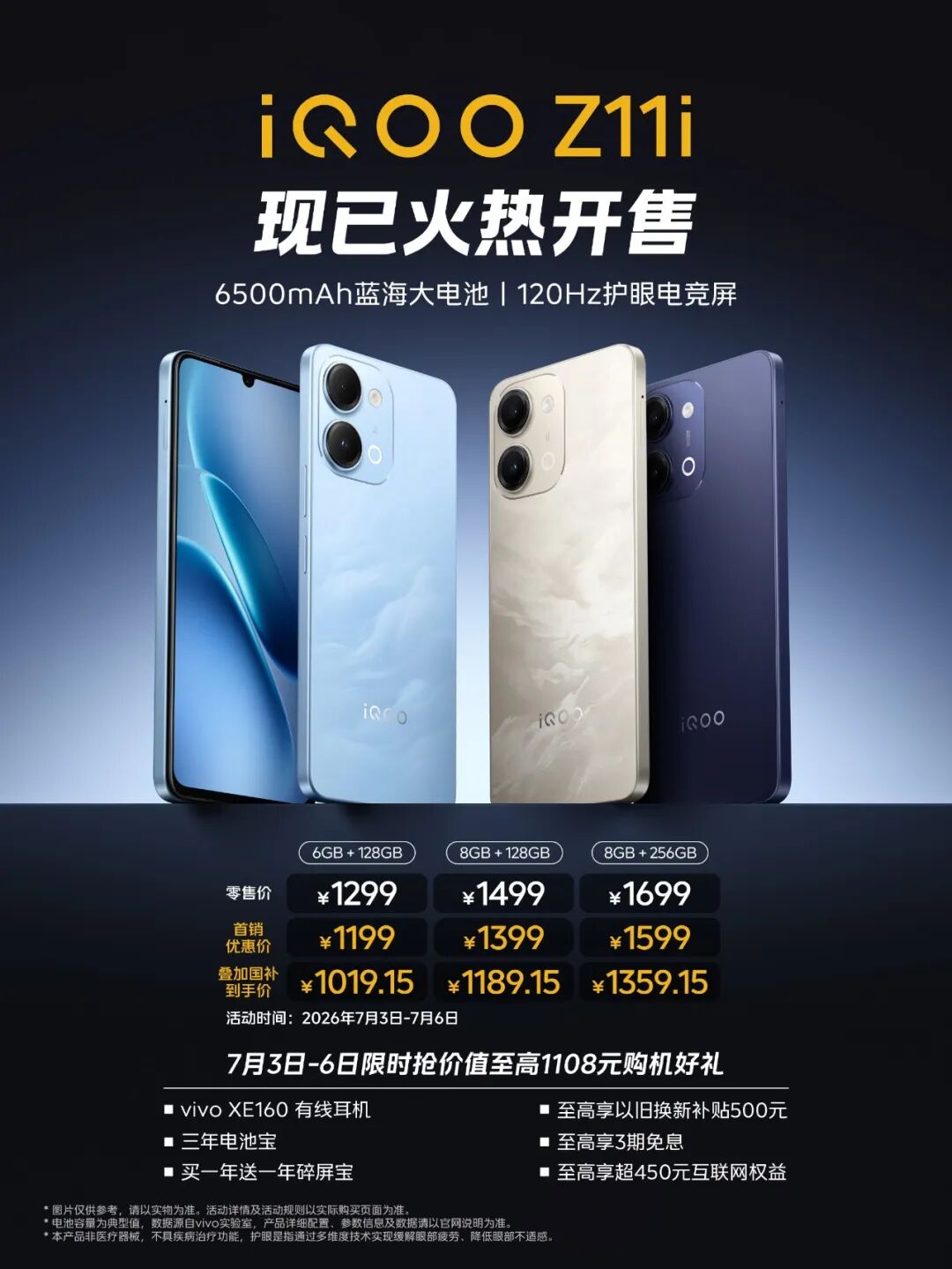
Image Source: iQOO
For instance, iQOO revived its Zi series after three years with the Z11i (6GB+128GB, RMB 1,299), featuring a second-gen Snapdragon 4 chip, 720P LCD notch display, and side fingerprint sensor—“ancient” specs.
Tech blogger “Digital Chat Station” noted on social media, “This year, sub-brands are rushing into the ultra-budget RMB 1,000 tier, with classic 1080P LCD screens, notch designs, and even 6GB+128GB and 8GB+512GB configurations making a comeback…”
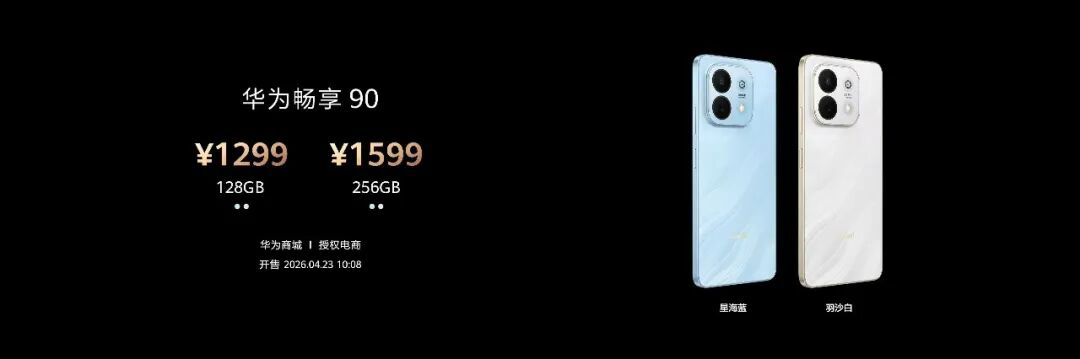
Image Source: Huawei
Not all makers have slashed budget phone specs. In March 2026, Huawei launched the Enjoy 90 series with a Kirin 8000A chip, HarmonyOS 6, and a 120Hz punch-hole display. The 8GB+128GB version costs just RMB 1,299.
With superior specs for its price, the Enjoy 90 series became a hit. BCI data shows that from W14-W23, Huawei ranked first in China’s RMB 1,000-2,500 market for 10 consecutive weeks, thanks to the series.
Huawei views the memory crisis as a strategic opportunity to expand its smartphone market influence.
Unlike most Android makers, which rely on hardware for revenue, Huawei leverages its self-developed HarmonyOS to attract users.
As an entry-level series, the Enjoy 90’s primary goal is to boost HarmonyOS adoption, not profit. Thus, Huawei set an aggressive price.
As Tianfeng International Securities analyst Ming-Chi Kuo noted, “Apple is using its bargaining power to secure chip supplies, absorbing cost pressures to gain market share, then offsetting losses through services.” To date, iPhone 17 series prices remain unchanged.
Like Apple, Huawei—one of only two smartphone makers with core hardware and software R&D capabilities—aims to absorb memory costs internally, enhance competitiveness, and expand market influence.
However, since Apple does not compete in the budget segment, Huawei is currently the only maker using profit margins to offset costs and maintain budget phone competitiveness.
03
When Downgraded Specs Meet AI: Budget and Flagship Phones Diverge
While Huawei is gaining budget market share through strategic pricing, future memory price hikes will intensify cost pressures, making profit-for-market strategies unsustainable.
Jefferies analysts predict that in Q3 2026, memory prices will rise another 40%-50% QoQ, followed by 30%-40% QoQ in Q4. “Over time, more makers will struggle to cope.”
Counterpoint semiconductor analyst Wang Xudong believes that for budget phones, storage cost increases have erased all profits. He expects makers to cut shipments of models under RMB 1,500, potentially eliminating sub-RMB 1,500 smartphones by 2027.
Huawei Executive Director, Product Investment Review Committee Head, and Terminal BG Chairman Yu Chengdong warned, “New phone pricing is under immense pressure. Costs have surged, and further hikes may be unavoidable.”
Thus, the budget market may soon enter an era of “spec downgrades.”
Now, AI technology is pushing the tech industry to a tipping point. Sharply downgraded hardware will not only harm user experience but also limit on-device AI capabilities, creating a vast capability gap between budget and mid-to-high-end models.
In the mobile internet era, budget phones generally underperformed flagships but shared core components like cameras, gyroscopes, and GPS sensors. With identical hardware, all smartphones supported basic functions like QR payments, navigation, and video playback.
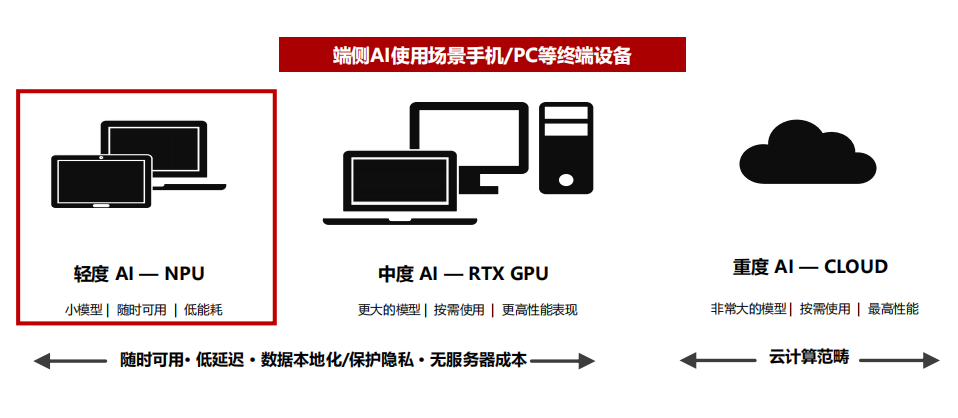
Image Source: Zheshang Securities
Now, as the tech industry enters the AI era, new use cases demand higher smartphone hardware requirements. As a mass computing platform, phones store vast user data. Deploying AI features cannot rely solely on cloud inference; on-device computing power is essential.
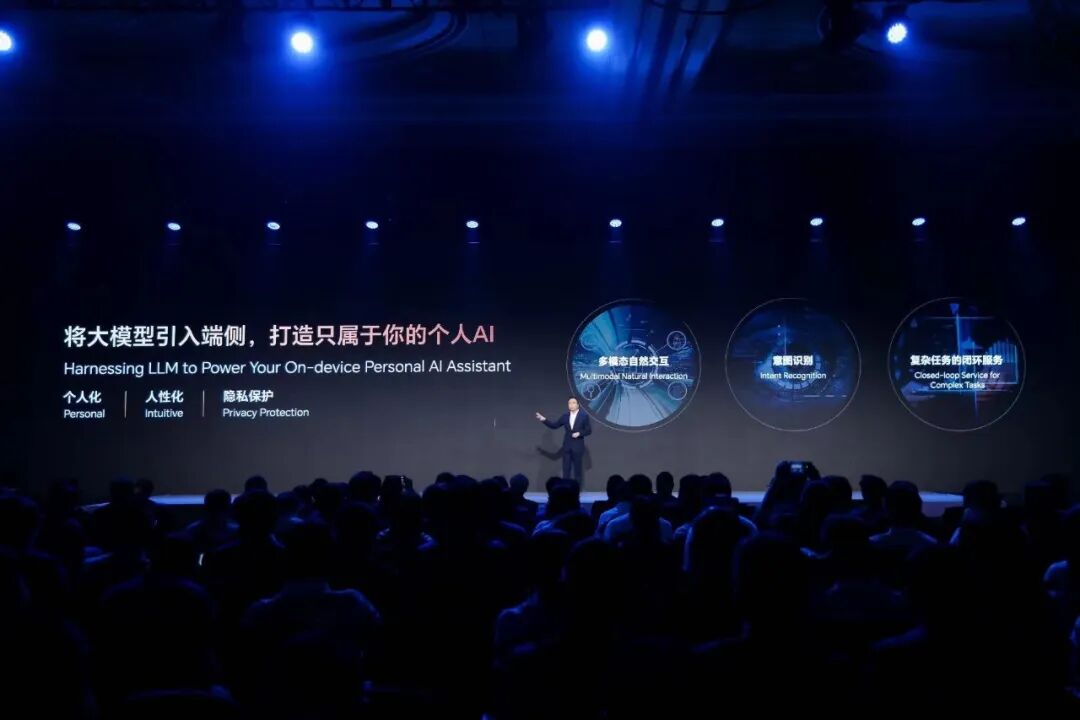
Image Source: Honor
In June 2024, then-Honor CEO Zhao Ming stated, “On-device AI offers capabilities cloud AI cannot, particularly in learning user data and protecting privacy. Its future lies in empowering consumers and complementing cloud AI.”
Currently, Android flagships like the Xiaomi 17 Ultra, OPPO Find X9 Ultra, and vivo X300 Ultra feature the fifth-gen Snapdragon 8 Gen chip, built on TSMC’s N3P process with a Hexagon NPU, delivering 80 TOPS of AI performance.
In contrast, entry-level processors for budget phones from Qualcomm and MediaTek often lack dedicated NPUs, struggling to provide sufficient on-device AI power.
As AI matures, smartphone makers are investing in AI agents to enable one-command task execution. Limited on-device computing power may leave budget phones far behind flagships in AI agent performance and multimodal understanding.
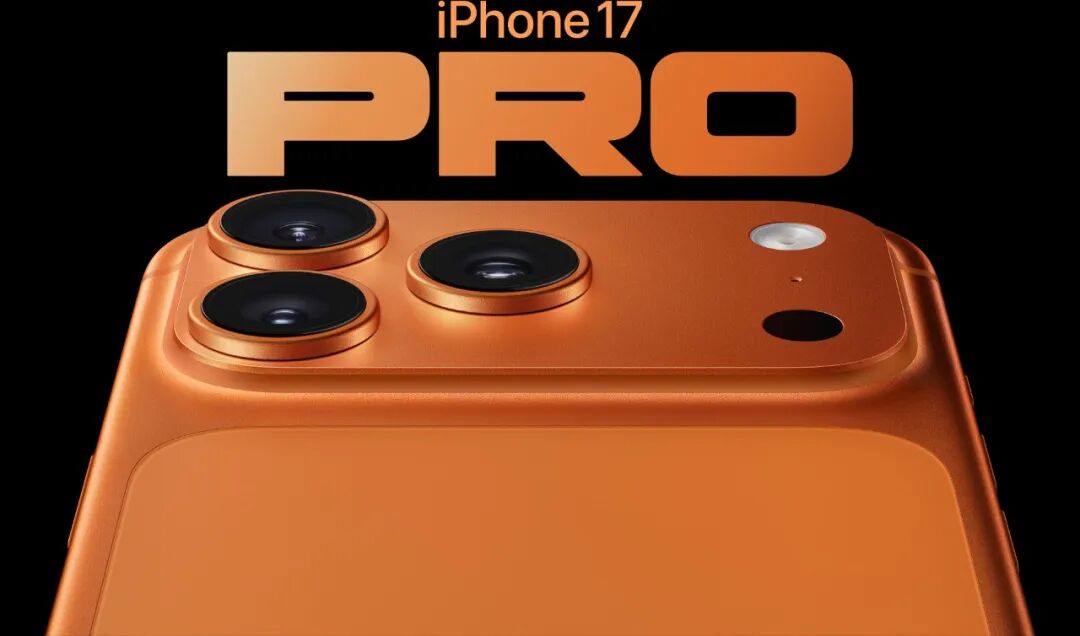
Image Source: Apple
Apple exemplifies this trend. Its cutting-edge AI features are exclusive to the iPhone Air, iPhone 17 Pro, and iPhone 17 Pro Max (12GB RAM), while the 8GB iPhone 17 lacks advanced Siri voice and dictation AI functions.
Thus, in the AI era, hardware differences are becoming key to user experience. Compared to the modest 4GB RAM gap in the iPhone 17 series, budget and flagship phones differ more sharply in memory, chips, and computing power, risking generational AI experience gaps.
During periods of stable supply chain costs, makers could optimize hardware to enhance AI on budget phones within limited budgets. But with memory and core component prices surging, cost pressures are shrinking budget phones’ spec headroom, making it increasingly difficult to support complex on-device AI.
From this perspective, memory price hikes affect not just phone pricing but also reshape product tier logic in the AI era. Future smartphone tiers will shift from traditional hardware metrics like screens, cameras, and performance to specific AI capabilities.
At that time, the differences between budget smartphones and flagship models may no longer be just about price and specifications, but a comprehensive divergence in AI capabilities, product positioning, and even usage patterns.
For consumers, buying a smartphone will no longer just be about choosing models at different price points, but selecting devices that offer vastly different user experiences.
Interactive Topic
What price range is your current phone in? What do you think are the advantages and disadvantages of budget smartphones?
-
![]()
Emerging Leaders Surge Ahead, While Others Grapple with Challenges|Mid-Year Review ①
-
![]()
BYD Executive Sheds Light on Electric Vehicle Wading Prowess: Theoretical Edge Over Fuel Cars, Yet Battery Seal Integrity Is Key
-
![]()
Zhipu Stages a 'Deep V' Turnaround on Lock-up Expiry Day: Can the 'Pioneer Large Model Unicorn' Maintain Its Edge?
-
![]()
Switch Transition from Copper to Optical: From 500 Wafers to a $10 Billion Market
-
![]()
Fuel Vehicle Pricing System Undergoes Severe Stress Test: Unraveling the Root Causes
-
![]()
Xiaomi Steps into Car Manufacturing, Embracing 'Extended Range' Strategy
-
![]()
Next-Gen 13-inch Surface Pro Review: Huge Improvements in Performance and Energy Efficiency, Integrated Graphics Rival Latest X86
-
![]()
SpaceX: Space Computing Power - Musk's New Vision or Real Future?