Xiaomi Steps into Car Manufacturing, Embracing 'Extended Range' Strategy
 07/09 2026
 509
509
Produced by: Xiahai Fallsea
Written by: Hu Buzhi
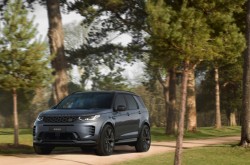
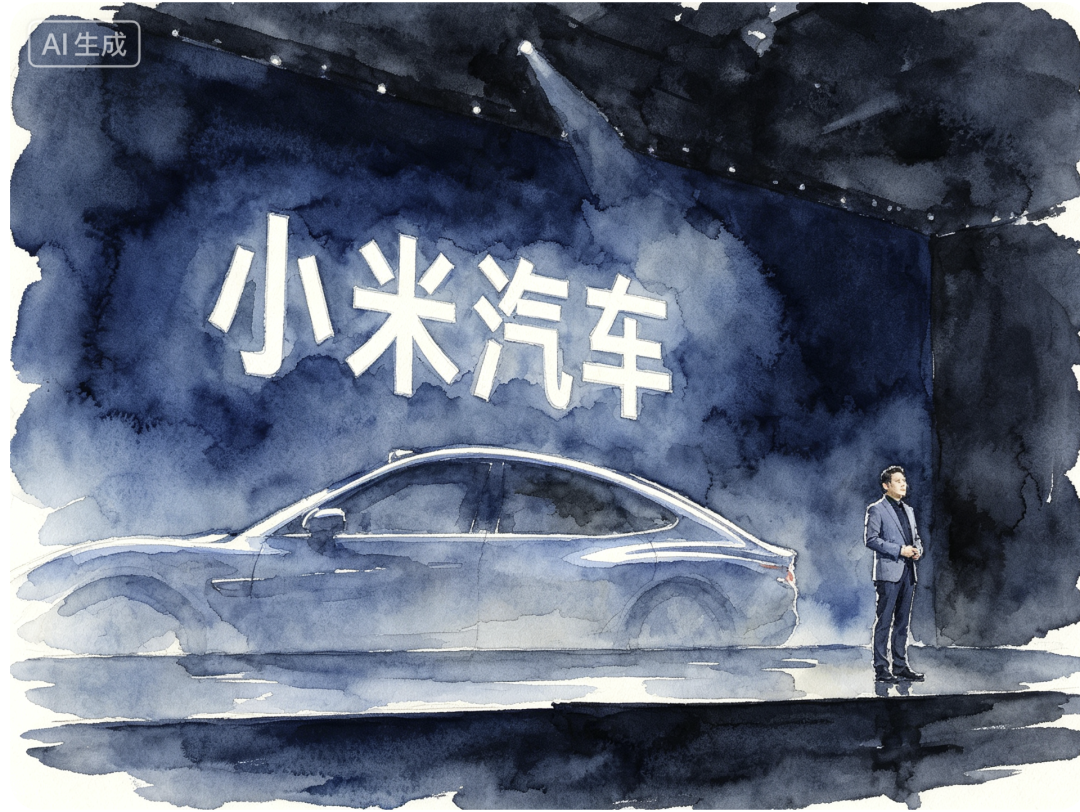
On July 8, 2026, Xiaomi Auto officially unveiled its new product line, SkyNomad, known in Chinese as 'Pengcheng.' This evocative name, which translates to 'Sky Nomad,' blends a touch of romance with a ruthlessly pragmatic commercial core: extended-range technology, targeting the mid-to-large SUV segment within the 200,000 to 450,000 yuan price bracket, and positioned below Xiaomi's flagship brand.
Reflecting on Lei Jun's declaration of entering the automotive arena two years prior and the dazzling debut of the SU7, Xiaomi Auto was initially perceived as a tech-savvy pioneer, staunchly committed to pure electric vehicles (EVs) and the pursuit of ultimate performance. Lei Jun once boldly proclaimed his ambition to craft dream cars on par with Porsche and Tesla. However, the unveiling of the extended-range SUV, internally codenamed 'Kunlun,' with its rooftop tent and seven-seat configuration as key selling points, signaled a pragmatic shift for the tech-centric Xiaomi.
Why opt for extended range? Why target the 200,000 to 450,000 yuan mainstream family market? This strategic move transcends mere product line expansion. With pure EV SUVs grappling with range anxiety and sales bottlenecks, extended-range SUVs emerge as the true cash cows, capable of driving scale and profitability. Xiaomi's decision marks a collective pivot among China's leading new energy vehicle (NEV) manufacturers, moving beyond the era of technological hype to fully embrace pragmatism.
Pure EVs serve as the face of Xiaomi Auto's brand image, while extended-range vehicles constitute the backbone for survival and scalable profitability.
The Face and the Substance
In the cutthroat automotive industry, pure EV coupes are leveraged to showcase strength and build the brand, whereas extended-range SUVs drive volume and generate profits—an unspoken consensus.
It's undeniable that the SU7 has achieved remarkable success in the pure EV sedan market above 250,000 yuan. In the first quarter of 2026, Xiaomi Auto delivered approximately 80,900 vehicles, with the YU7 contributing about 71,600 units, accounting for an impressive 88.6%. The SU7, with its outstanding design and seamless ecological connectivity experience, helped Xiaomi secure its initial foothold in the market, propelling Xiaomi Auto into the ranks of top-tier new forces.
However, the sedan market's ceiling is clearly visible. Most buyers of pure EV sedans are either families purchasing a second vehicle or young singles seeking driving pleasure. For the vast majority of Chinese families with only one license plate and able to afford just one car, pure EV sedans are hardly the first choice. Even pure EV SUV models face inherent challenges in long-distance travel and winter range. Although advancements in 800V high-voltage fast charging and battery technology are rapidly closing the experience gap, the nightmare of charging queues at highway service stations during holidays remains a significant obstacle preventing pure EVs from becoming the sole family vehicle.
In contrast, extended-range vehicles have demonstrated remarkable market resilience. According to data from the China Passenger Car Association, total sales of extended-range vehicles in the first quarter of 2026 reached 178,100 units, with an average market price of 261,000 yuan, significantly surpassing the average prices of pure EVs and plug-in hybrids. This indicates that extended-range vehicles firmly occupy the high-profit mid-to-high-end family vehicle market.
A glance at competitors' performance reveals the 'true appeal' of extended-range vehicles. The AITO M7 contributed 44,930 units in the first quarter, becoming the cornerstone of the extended-range market. Leapmotor Motor even surged to the top with 110,200 deliveries in the first quarter, largely thanks to its extended-range models. Li Auto, once the undisputed leader in the extended-range market above 200,000 yuan, faced severe challenges after 2026, with overall deliveries in May declining by 18.3% year-on-year, making it the only player among top new forces to experience both year-on-year and month-on-month declines. This underscores the intense reshuffling in the extended-range market, where only companies with genuine product strength and cost control capabilities can survive.
Before a revolutionary breakthrough in battery technology occurs, extended-range vehicles remain one of the optimal solutions for Chinese families' sole vehicle needs. They utilize a moderately sized battery pack to deliver a pure EV experience for urban commuting, while an range extender eliminates range anxiety for long-distance travel. This seemingly less tech-centric solution precisely addresses the core pain points of Chinese family users.
Why the 200,000-Yuan Tier?
Xiaomi has strategically positioned the Pengcheng series within the 200,000 to 450,000 yuan price range, a commercially astute decision. The 200,000-yuan tier represents the咽喉 (literally 'throat,' metaphorically 'the most critical part') of the automotive market here—dominance equates to market control.
The 150,000 to 250,000 yuan price range constitutes the largest share of China's passenger vehicle market, serving as the mainstream budget band for middle-class Chinese families and a fiercely contested base market for automakers. Xiaomi's flagship models, the SU7 and YU7, are positioned above 250,000 to 300,000 yuan. While their per-unit gross margins are attractive, their scale is limited. In 2026, Xiaomi Auto set an ambitious target of 550,000 deliveries but only achieved about 80,000 in the first quarter, less than 15% of the goal. This necessitates delivering over 52,000 units per month for the remaining nine months. To bridge this massive gap, Xiaomi must pursue volume in the lower price tiers.
From a financial perspective, the 200,000-yuan extended-range SUV presents an excellent business proposition. Since extended-range vehicles don't require the massive 100+ kWh battery packs needed for pure EVs, their material costs are more manageable. Based on current battery costs following the decline in lithium carbonate prices, a dedicated 40 kWh extended-range battery pack can save tens of thousands of yuan compared to a 100 kWh pure EV battery pack. These savings can be reinvested in enhancing cabin configurations and intelligent driving capabilities or translated into healthier gross margins. Once economies of scale are achieved, 200,000-yuan extended-range SUVs become the most stable profit generators.
More importantly, this strategic move combines defense and offense. At this price point, BYD's Tang, Han, and Song series are heavily fortified, Leapmotor C16 is sweeping the market with extreme cost-effectiveness, and Deepal and Galaxy are lurking with ambition. Traditional automakers are employing a 'high-spec, low-price' strategy to launch a 'rural surround urban' offensive against new forces. Xiaomi's launch of Pengcheng is both a proactive strike to capture family users and an effort to build a defensive firewall in its home turf.
However, it must be clearly recognized that Xiaomi is not entering a blue ocean but a brutal red ocean undergoing intense reshuffling and even showing signs of a turning point. Data from May 2026 has sounded the alarm. Wholesale sales of extended-range vehicles that month were only 95,000 units, plummeting by 24.9% year-on-year—the largest single-month decline in nearly five years. Extended-range vehicles' share in the NEV wholesale structure has fallen from over 10% at its peak to 7%. Only three extended-range models sold over 5,000 units retail nationwide that month, compared to 38 pure EV models.
The average price of pure EV models continues to decline to 169,000 yuan, aggressively eroding the price advantage zone of extended-range vehicles. Xiaomi must enter this market before the window of opportunity completely closes. Leveraging its strengths in supply chain management, cost control, and intelligence, Pengcheng is fully capable of carving out a niche in the 200,000-yuan red ocean. This is not just for sales volume but to secure a ticket to the finals in the brutal elimination round.
Xiaomi Auto's Redmi Moment
By launching the Pengcheng series, positioned below its flagship brand, Xiaomi attempts to replicate its smartphone-era success. However, brand differentiation in the automotive industry is far more challenging than in smartphones.
Recalling Xiaomi's smartphone history, the Redmi series once dominated the 1,000-yuan smartphone market, laying a vast user base for Xiaomi. However, Redmi's success also burdened Xiaomi with a heavy 'low-end' label, making its subsequent attempts to break into the high-end market with the Xiaomi 10 and 11 arduous, incurring significant brand repositioning costs. Today, Xiaomi Auto stands at the same crossroads.
Automobiles are capital-intensive, socially significant consumer goods. A car is not just a means of transportation but an extension of the owner's social status and aesthetic taste. When 200,000-yuan extended-range SUVs bearing the Pengcheng logo flood the streets, will the brand superiority of those who spent 300,000 yuan or more on Xiaomi SU7 and YU7 models be diluted? This is a brutal question Xiaomi must confront.
To mitigate this brand conflict, Xiaomi has adopted a relatively cautious differentiation strategy for the Pengcheng series. According to supply chain sources, Pengcheng will feature an independent design language, with a boxy, rugged full-size SUV silhouette that contrasts sharply with Xiaomi's flagship brand's streamlined, sporty style. Pengcheng might even forgo Xiaomi's 'MI' logo, opting for a dedicated emblem. This physical differentiation is a necessary measure to protect Xiaomi's flagship brand's premium image.
However, the real test lies in channels and services. Smartphones can easily distinguish between online and offline sales, Xiaomi Stores, and authorized retailers. But automotive sales, delivery, and after-sales systems are extremely complex. If the 200,000-yuan Pengcheng and 300,000-yuan Xiaomi models are sold through the same network, the exclusive experience for high-end users will inevitably decline, and sales advisors in stores will face severe internal product competition. If a separate sales network is chosen, who will bear the store construction and operational costs? In today's intensifying automotive price war, are dealers willing to build a separate network for a new series?
Li Auto's L series and AITO's M series have proven that family users need clear, unified brand recognition. Whether Xiaomi Pengcheng can find the perfect balance between 'leveraging Xiaomi's influence' and 'establishing an independent brand' will directly determine the new series' survival.
This is a high-stakes gamble. If successful, Xiaomi Auto will form a dual-brand matrix similar to Toyota-Lexus and Volkswagen-Porsche, achieving full coverage from the 200,000 to 400,000 yuan price range. If it fails, Pengcheng will not only fail to hoist the sales banner but may also drag down the high-end image Xiaomi Auto has painstakingly built.
Conclusion:
Xiaomi's strategic pivot is not an isolated case. It reflects the broader shift of China's NEV industry from fanatical technological worship to pragmatic business closure. Once, new forces in car manufacturing spoke only of pure EVs, solid-state batteries, and 800V high-voltage fast charging, as if not discussing these cutting-edge technologies disqualified them from making cars. But brutal commercial reality has educated everyone. Technological leadership does not equate to commercial success; only technologies that users are willing to pay for are good. When extended-range vehicles dominate the mid-to-high-end family vehicle market with higher average prices and more stable profit margins, any debate over technological route superiority becomes pale and meaningless.
Car manufacturing has never been a talent show about technological purity but a brutal survival game about scale, cost, and human nature. Lei Jun has set aside his obsession with pure EVs and taken up the weapon of extended-range technology. This may disappoint some tech enthusiasts, but it precisely marks Xiaomi Auto's true maturation. The journey from 'new force in car manufacturing' to 'mature automaker' involves not just production capacity and sales volume but also reverence for market laws and compromise with commercial essence. As the 200,000 to 450,000 yuan extended-range SUV becomes Xiaomi Auto's new growth engine, Lei Jun is actually one step closer to his dream of a 'top five global automaker.'
-
![]()
Model Giant Jieyue Xingchen Steps into Smartphone Arena: A Strategic Alliance with Huaqin Technology
-
![]()
Big Model Firm Dives into Phone Market: StepFun and Wingtech Forge a ‘Dynamic Duo’
-
![]()
Zhongrun Optics Makes a Bold Move with 1 Billion Yuan Investment: Is a Turning Point on the Horizon for the Precision Optics Industry?
-
![]()
Deploy CLBO Crystals and YIG Single Crystals! Erythritol Leader Invests 30 Million in Youwei Optoelectronics
-
CXMT’s July 16 Subscription: Leading Domestic Memory Manufacturer—What’s the Earning Potential per Lot?
-
![]()
Rhythm Discrepancy and Premium Value Erosion: Foreign Luxury Brands Must Re-evaluate Their China Strategy
-
![]()
Half-Year, 1 Billion Yuan Financing, 7 Billion Yuan Valuation: A New Dark Horse Emerges in the Embodied AI Sector
-
![]()
Strong Rebound for Tech Stocks in Hong Kong Stock Market: Is It Time to Bottom-Fish?