Jieyue Paves the Way for Agents with a New Phone and AgentOS
 07/14 2026
 452
452
Large model companies are no longer content with waiting for mobile phone manufacturers to dictate the pace; they are now venturing into creating their own phones. However, to be precise, the initial glimpse we got was only of the back of this innovative device.
On the evening of July 13th, ahead of the World Artificial Intelligence Conference WAIC 2026, Jieyue Xingchen unveiled the STEPX brand for AI terminals that are natively designed for large models, the Step AOS (AgentOS) operating system, and the personal agent Amoo. Additionally, it offered an early 'sneak peek' of its first phone: the STEPX Neo.
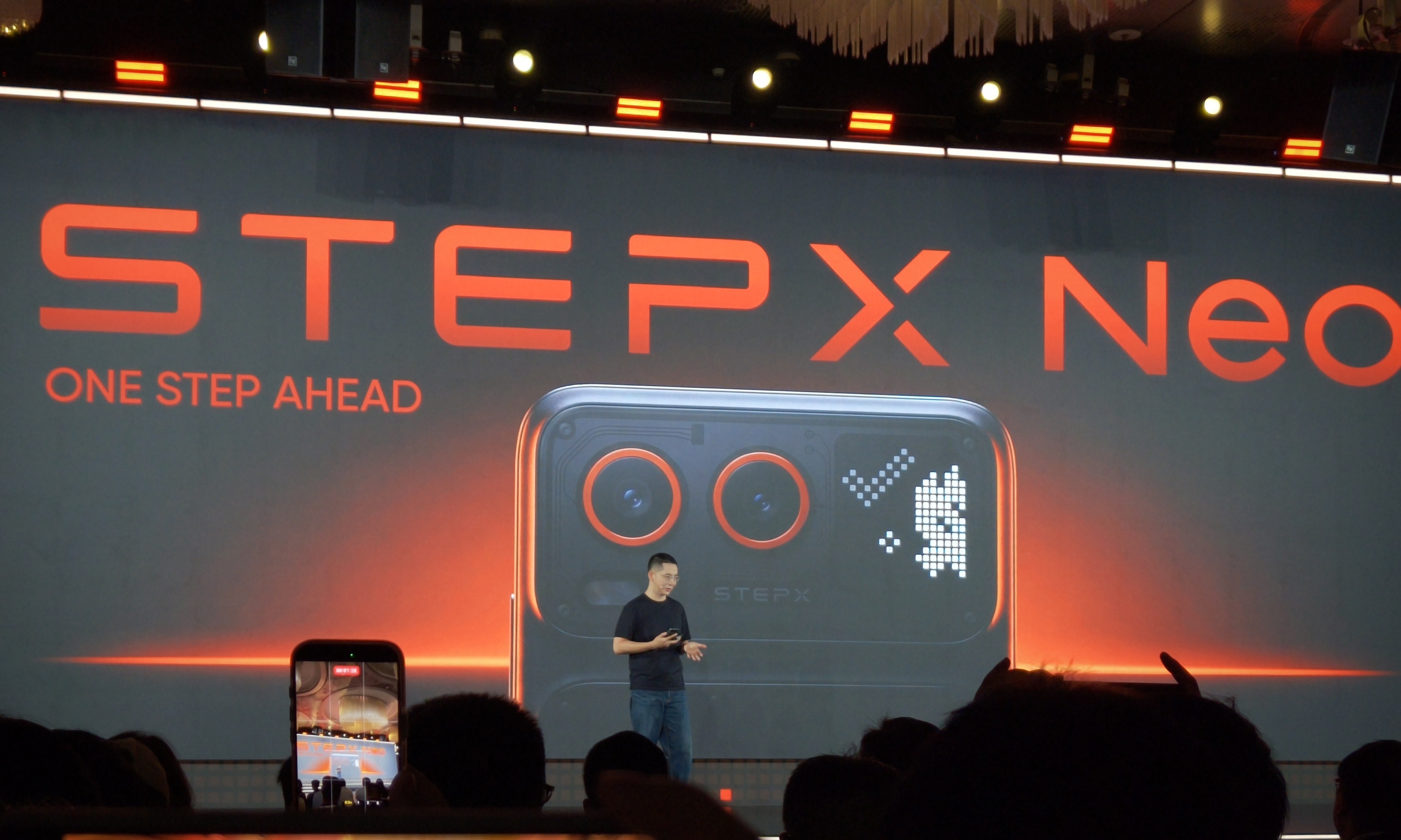
Image source: Leikeji
To a certain extent, this marks the world's first agent phone natively designed for large models. However, beyond its dual cameras and dot-matrix back screen, details about its other configurations, price, or release date remain unknown. From the statements made, we can infer that the STEPX Neo, as a pure AI agent phone, would lack independent value without its AI capabilities.
Is this still a phone? Frankly, it might warrant quotation marks around the term.
When a Large Model Company Ventures into Terminal Manufacturing
Jieyue's foray into phones was not entirely unexpected. Yin Qi, Chairman of Jieyue Xingchen, mentioned at the launch event that the company decided from its inception to develop its own foundational models, bet on multimodality, and ultimately create its own terminal hardware to define the complete form of human-computer interaction.
To achieve this vision, Jieyue has assembled a 1+N model matrix over the past three years. This includes the Step Pro to push cloud capabilities to their limits, the Flash model for balancing performance and efficiency, and the recently released Step Edge family of edge models. It also encompasses models for image, voice, video, music, and terminal interaction, enabling agents to possess a comprehensive set of 'five senses and six perceptions'.
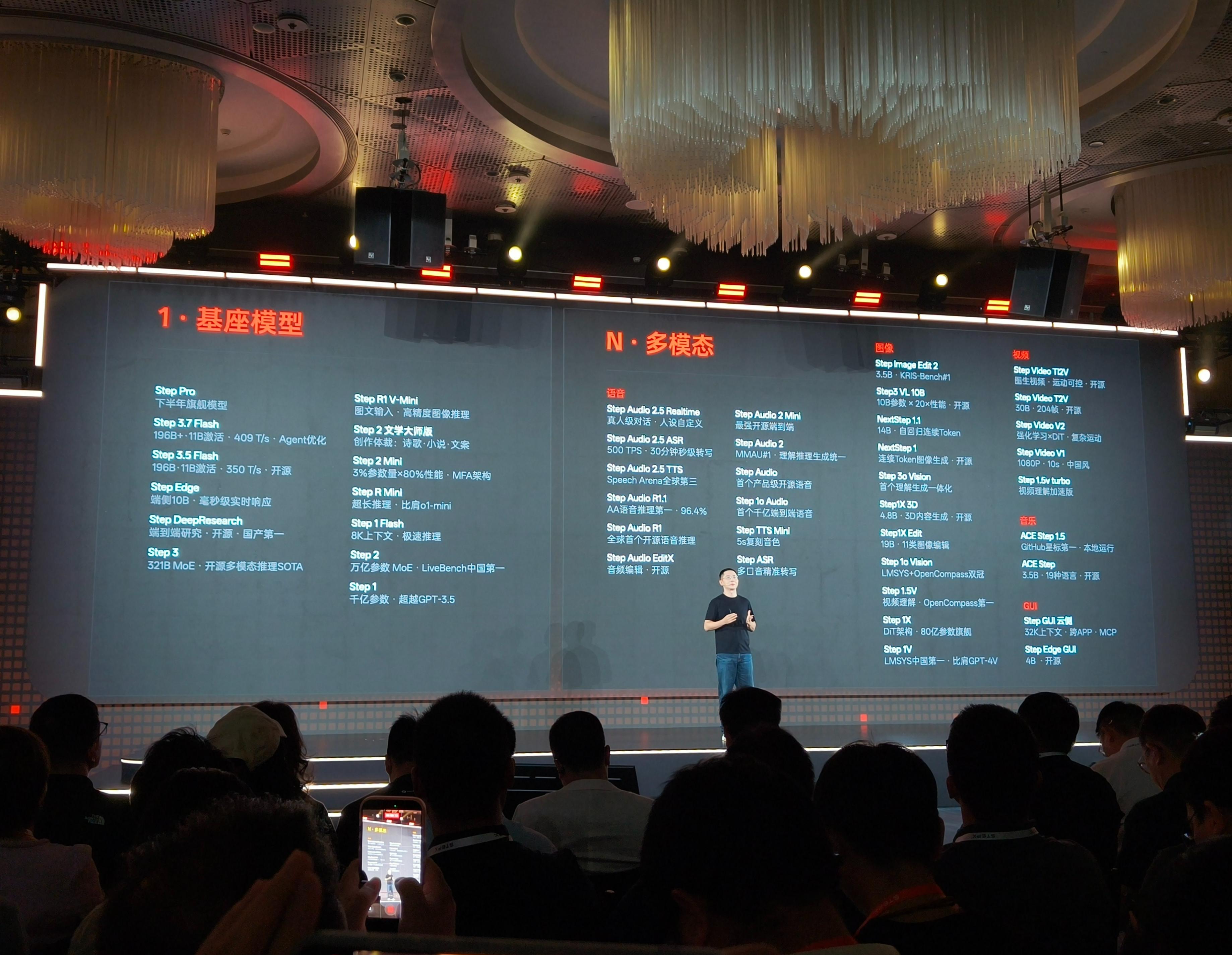
1+N model matrix. Image source: Leikeji
At least in terms of technological foundations, Jieyue has been laying the groundwork for quite some time.
On the other hand, Jieyue has been providing large models and agent capabilities to manufacturers of phones and car infotainment systems. Last year, it even identified intelligent terminal agents as a core direction for large model implementation. However, it eventually realized that cooperation alone was insufficient.
In a post-event interview with media outlets, including Leikeji, Yin Qi pointed out that simply outputting models makes it challenging to fully implement an OS and native agents or to stably run an agent closed loop. Ultimately, models can be integrated into other people's phones, but system permissions, hardware and software definitions, and product timelines remain controlled by partners.
Therefore, despite advice against venturing into hardware, Jieyue ultimately decided to take the plunge.
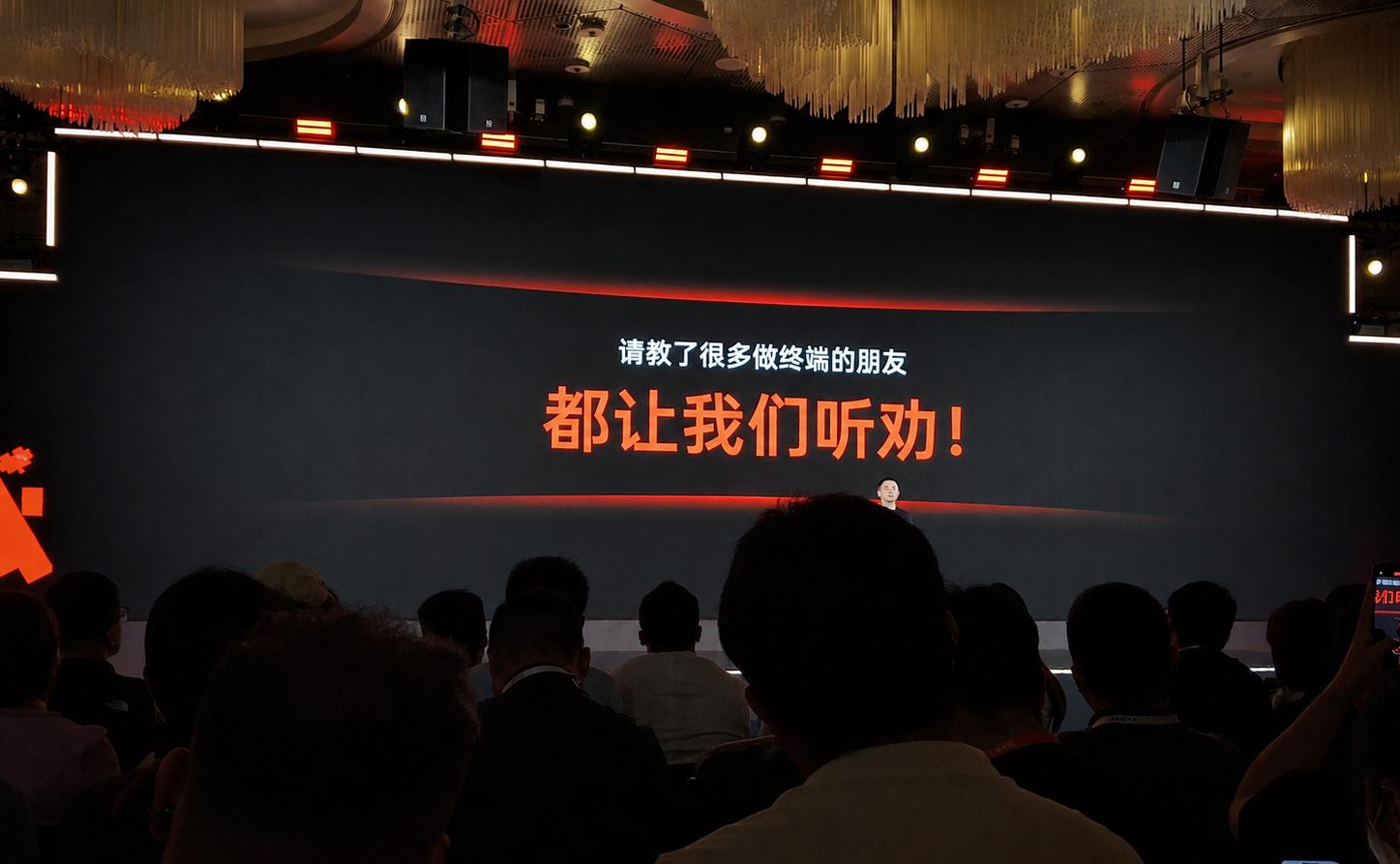
Image source: Leikeji
This decision was driven by both product dissatisfaction and commercial considerations. Yin Qi believes that pure code services are unlikely to be the primary commercial outlet for Chinese large model companies. Terminals allow consumers to directly experience models and generate real-world scenario data to train agents in return.
As for why they started with phones? Jieyue's answer is pragmatic: personal agent main devices need to be portable, require a screen for visual interaction, and need sufficient local computing power. At this stage, only phones meet all three conditions.
However, STEPX does not intend to stop at phones. Step AOS will later be adapted for Linux and RTOS (real-time operating systems), and terminals may expand to include PCs and wearables.
Of course, it is still early days. The STEPX Neo has yet to prove itself. Jieyue plans to first invite a small number of users for trials, including launching the 'Rhapsody Plan' with Bilibili to offer device trials to creators and allow ordinary users to submit feature requests, using 100 days to build out the early-stage agent ecosystem.
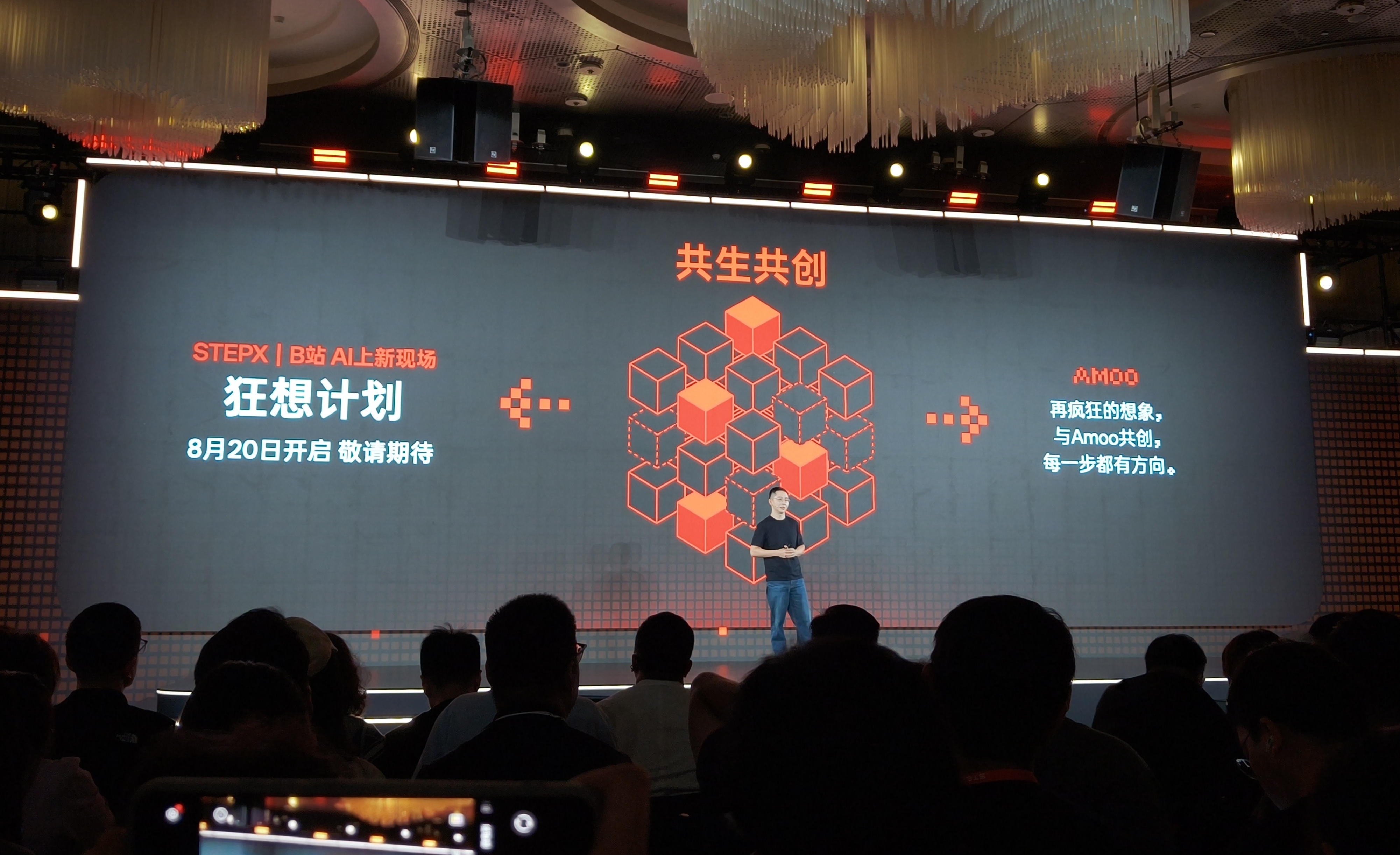
Image source: Leikeji
Step AOS and Amoo: Jieyue's Comprehensive Solution
At the launch event, Yin Qi summarized the challenges facing existing agents as three barriers: memories cannot be shared between apps, single models struggle with complex decision-making, and standalone apps cannot truly invoke system and other services.
Step AOS is designed to break down these barriers. According to Jieyue's vision, Step AOS will reorganize underlying computing power, user data, and application services. The computing layer will uniformly schedule CPU, GPU, and NPU, the data layer will establish cross-device, cross-app semantic data, and capabilities like communication and file management will be broken down into atomic services callable by agents.
Based on Yin Qi's post-event interview responses, as I understand it, the STEPX Neo is still based on Android but with AI-driven modifications to the underlying layer. Step AOS is more akin to a universal agent system that sits atop different underlying systems and can also be built on Linux and other operating systems.
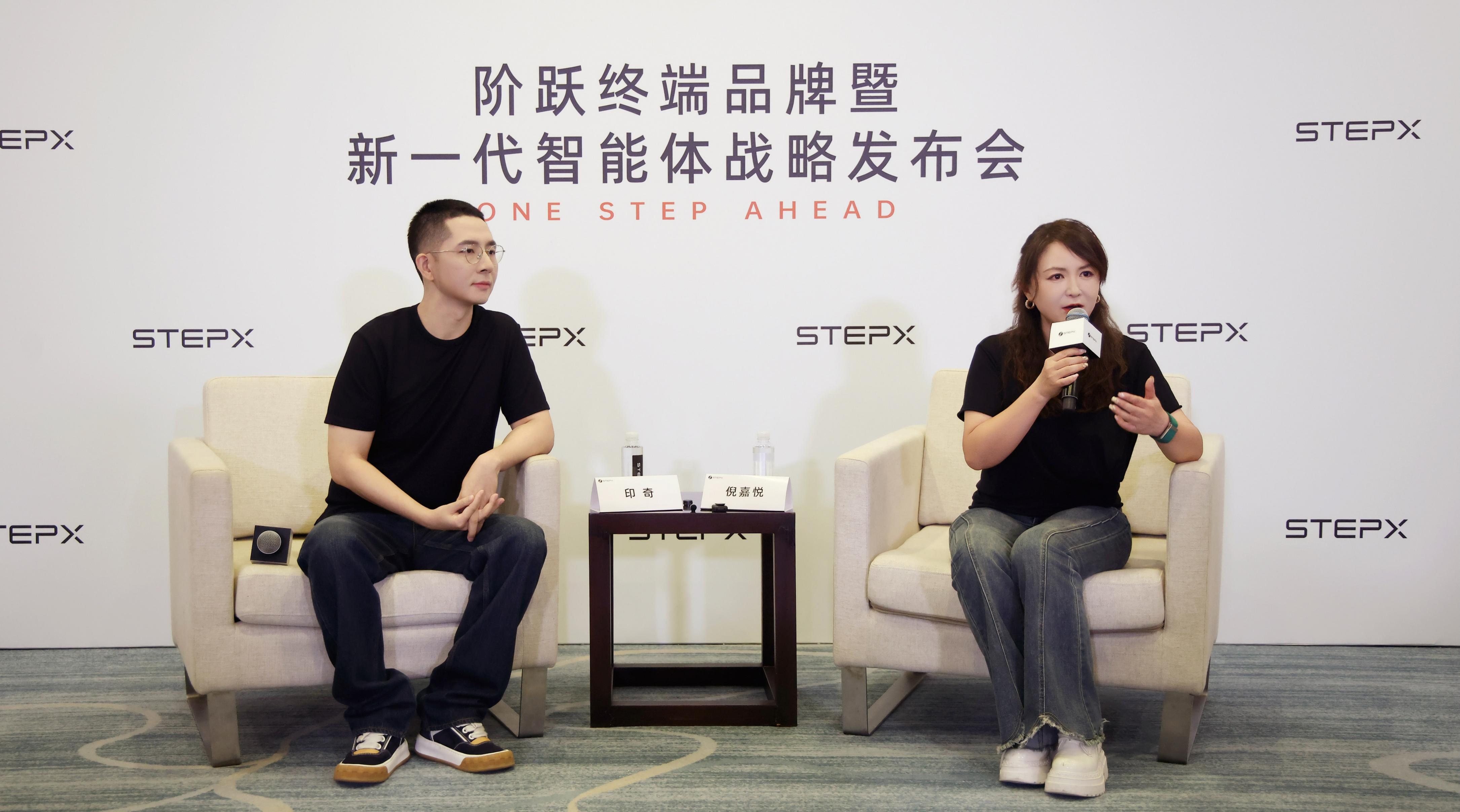
Yin Qi (left), Chairman of Jieyue, and Ni Jiayue (right), Head of Jieyue Terminals. Image source: Jieyue
The three most critical aspects of Step AOS are memory, decision-making and execution, and security.
Firstly, Step AOS simultaneously saves user facts, experiences, and preferences, as well as the knowledge, personality, and task experience gained by the agent. It then continuously organizes and invokes these through three steps: 'recording, organizing, and recalling.' Officially, its daily Q&A memory recall can be as fast as 15 milliseconds.
Secondly, simple tasks like setting alarms or finding photos are completed offline by edge models, complex reasoning is handed off to the cloud, and multi-step tasks are handled through edge-cloud relay. Users only need to express the goal, and the system fills in the intermediate steps. Yin Qi summarized this as moving from 'process interaction' to 'outcome interaction.'
Thirdly, the more proactive agents are, the more specific the risks become. Therefore, Jieyue has proposed four security principles for Step AOS: 'trustworthy, visible, controllable, and reversible.' Data should remain within security boundaries as much as possible, every operation should be traceable, permissions should be granted on-demand and revoked immediately after use, and mistaken operations should be reversible.
Amoo, on the other hand, is defined as an exclusive, symbiotic, continuously growing, and 'all-powerful' personal agent.
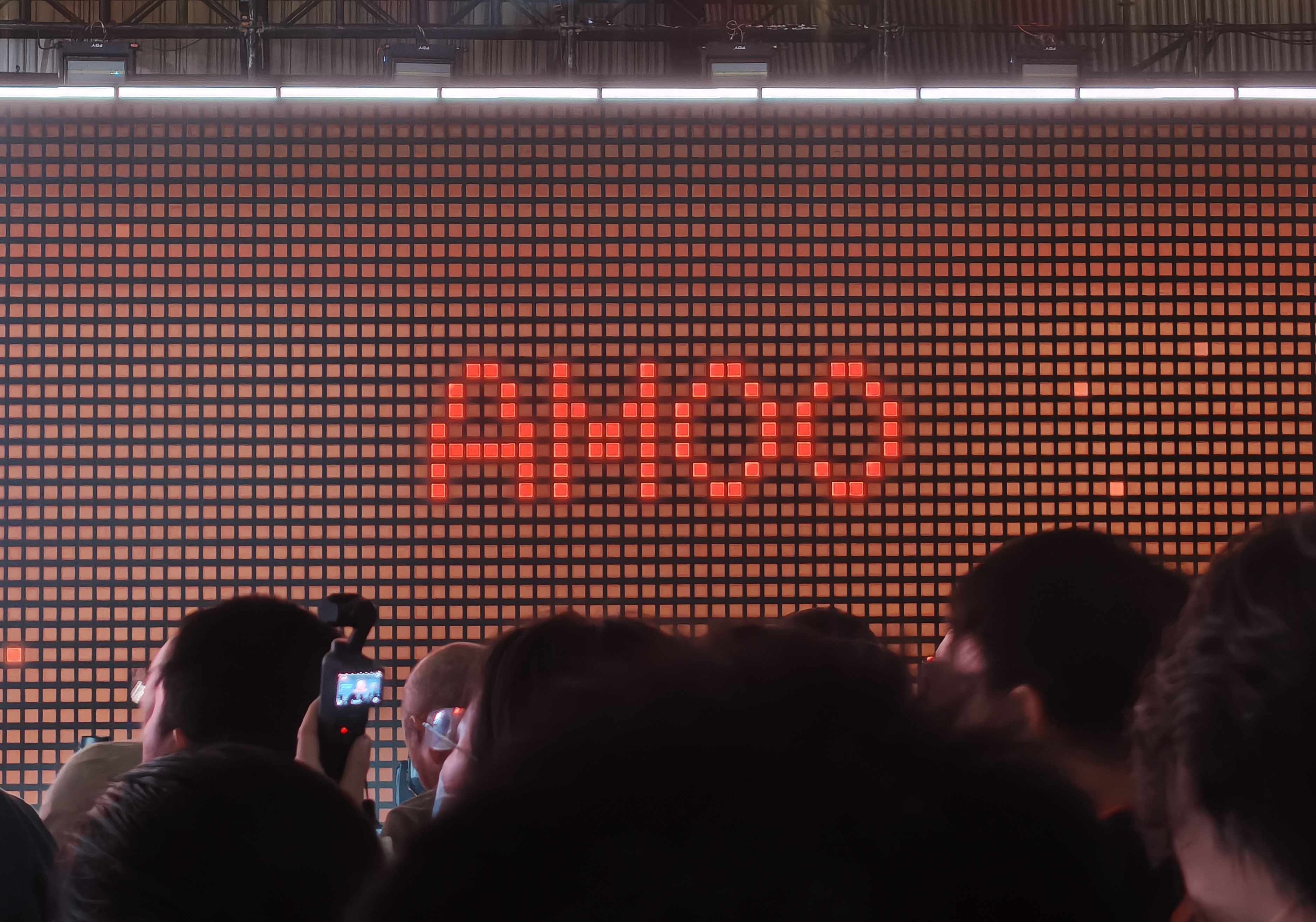
Image source: Leikeji
According to Jieyue's introduction, Amoo has a system-level identity, can schedule across apps with edge-cloud collaboration, and continue tasks across different devices. After long-term use, it will gradually form personal memories, preferences, and task experience.
The concepts have been clarified, but the products still need to prove themselves. Whether memories are recorded accurately, whether cross-app tasks can be completed stably, how high-risk operations like payments and messaging can be rolled back, and how much battery drain multiple agents running in parallel will cause—none of these questions received complete answers at the event.
For Amoo to become a 'partner,' the first hurdle is still getting users to dare to hand over their phones to it.
On the other hand, Jieyue has defined four keywords for Amoo: exclusive, symbiotic, continuously growing, and 'all-powerful.' The last word was intentionally placed in quotation marks because Yin Qi also admits that true omnipotence requires an open application ecosystem and for AI to enter more hardware.
Behind One Phone: Expectations from Up and Down the Industrial Chain
For a large model company over three years old to venture into phone manufacturing, the model itself is not the most challenging part. R&D manufacturing, distribution, and after-sales service are all significant barriers—and reasons why many advised Jieyue against it.
But interestingly, Jieyue's latest funding round included two major ODM manufacturers—Huaqin and Longcheer—as well as image sensor manufacturer OmniVision and ZTE, which has terminal and distribution capabilities. According to previous reports by Lanjing News, Huaqin is responsible for the contract manufacturing of Jieyue's AI agent phone, the STEPX Neo.
Ecologically, Jieyue also announced initial partners at the launch event, including Ctrip, Alipay, Didi, Meituan, WPS, and CapCut. This approach is more attractive to platform-type applications than relying solely on visual recognition to simulate clicks—the GUI agent route.
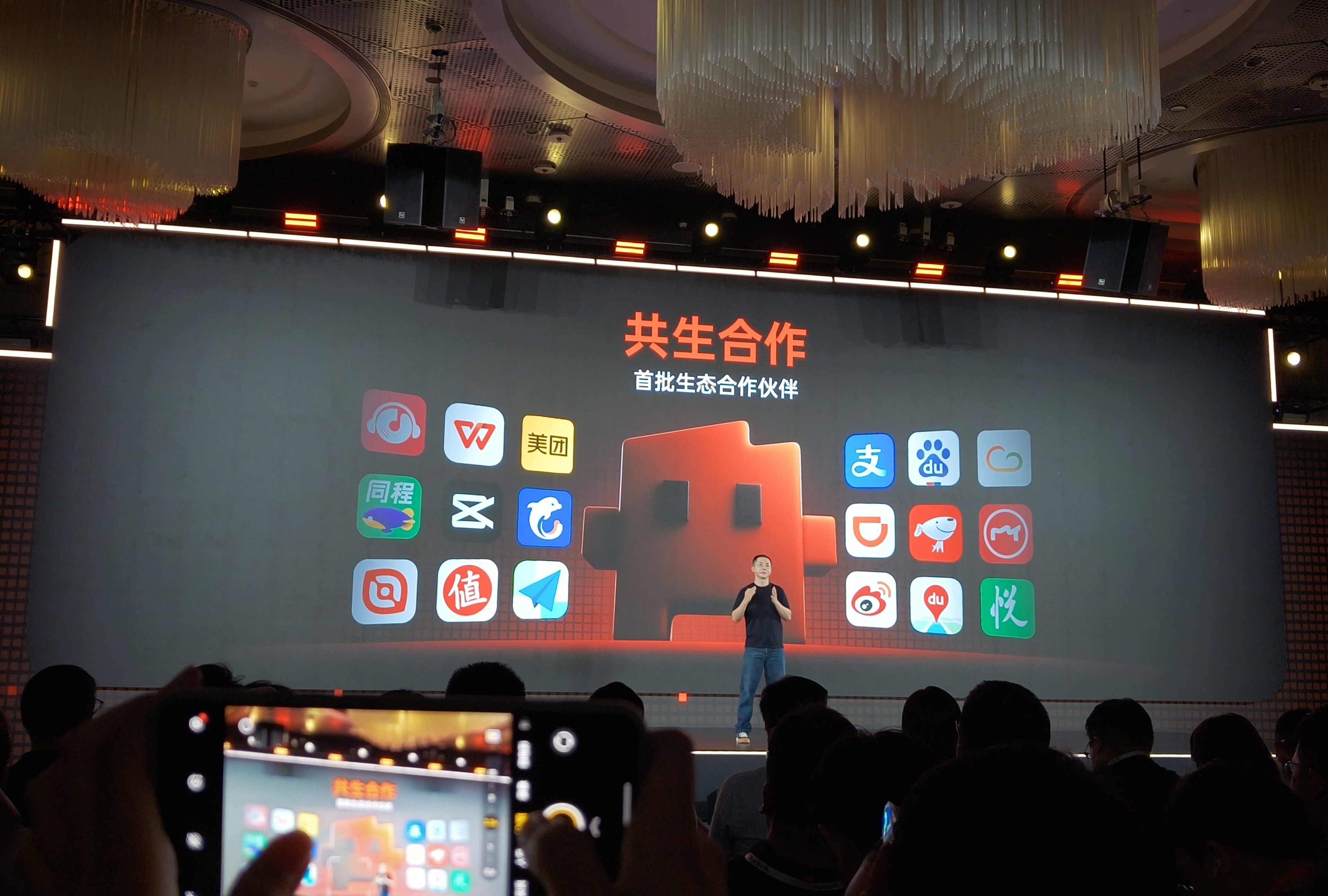
Image source: Leikeji
Jieyue is not alone in this endeavor.
OpenAI acquired io, founded by former Apple chief designer Jony Ive, with plans that include partnering with Qualcomm and MediaTek to build phones. Domestically, the technical preview version of Doubao's phone assistant late last year first opened the public's understanding and imagination of AI agent phones.
As Yin Qi mentioned in an interview, the industry today lacks a super-terminal product to lead the way. To a certain extent, the STEPX Neo aims to fill this role—not just for upstream contract manufacturers and supply chain vendors or downstream platform-type application vendors, but also by driving chip manufacturers to 'develop computing architectures tailored for agents.'
However, whether the STEPX Neo and its subsequent iterations can truly become that role ultimately depends on a few very simple questions: Can tasks be completed stably? Are third-party applications willing to open up? How are privacy and mistaken operations handled? And why would ordinary people switch from their current phones?
In 100 days, Jieyue will need to answer these questions with real products.
-
![]()
AI Enters Second Half: Buy the 'Cloud,' Not the 'Chip'?
-
![]()
Breaking the Monopoly! Trillion-Parameter Large Model Adopts Domestic Chips, Marking a Key Step Towards 'De-NVIDIA-ization' in AI Computing Power
-
![]()
Performance Drops Sharply, Seres Alerts 280,000 Shareholders
-
Behind the AI Boom: US Rakes in $314 Billion, South Korea $223 Billion, While China Lags at $26 Billion?
-
![]()
Volkswagen's 'Drastic Measures' to Cut Half of Its Models: Will China's Three Joint Ventures Be Affected?
-
![]()
It's already crowded in car manufacturing, yet Chunnan insists on joining in.
-
Confirmed: Fossil Fuel Vehicle Ban! Hainan Unveils New '15th Five-Year Plan', Weakening Passenger Vehicle Sector and Initiating Petroleum Asset Depreciation
-
![]()
Research on the Underlying Industrial Logic of the Booming Sales of Chinese Action Camera Brands in Japan and the Decline of GoPro: The UGC+AIGC Creation Wave Reshapes the Market Landscape