It's already crowded in car manufacturing, yet Chunnan insists on joining in.
 07/14 2026
 379
379
From Battery Cells to Receipts
Author | Zaizhou
In 2026, there are still new entrants in the car manufacturing industry.
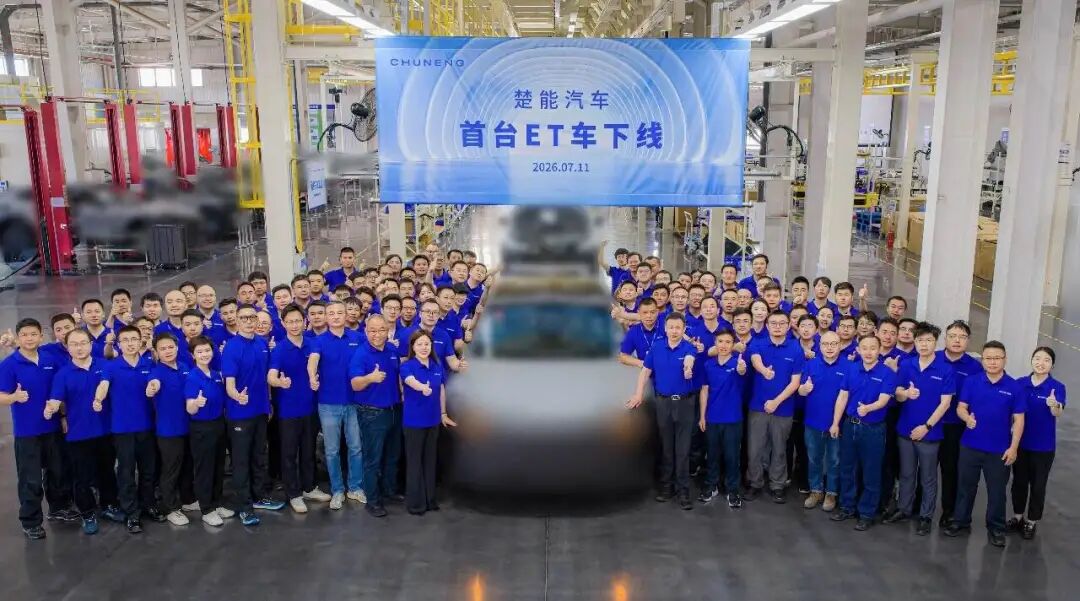
On July 11th, in Jiangxia, Wuhan, Chunnan Auto's first ET engineering prototype rolled off the assembly line at its in-house trial production center, with its first product expected to hit the market by mid-2027.
The media hype frames this as a critical leap from power battery R&D and manufacturing to full vehicle R&D, even elevating it as a landmark achievement in Hubei's battery-to-vehicle integration.
But by 2026, the term 'new force' already feels outdated. Too many contenders have already fallen by the wayside—Qiantu, Byton, HiPhi, Neta...each with stories worth telling.
As for WM Motor, even its Huanggang factory was taken over by someone else—none other than today's protagonist, Chunnan Auto.
So, car manufacturing carries a touch of absurdity in its cycle: WM fell at that factory, and Chunnan picked it up.
The question remains: Does the industry need another automaker?
01 Who is Chunnan?
Chunnan Auto Co., Ltd., established in December 2024 with a registered capital of 2 billion, has two shareholders: Hengxin Automotive Group and its founder Dai Deming.
Dai Deming is also the chairman of Chunnan New Energy Co., Ltd.—the true powerhouse. Founded in August 2021 with a registered capital of 4.94 billion, it specializes in energy storage and power batteries, headquartered in Wuhan, with three planned bases boasting a total capacity exceeding 350GWh. By 2025, its effective capacity will reach 110GWh, ranking seventh globally in energy storage battery shipments and second in effective capacity.
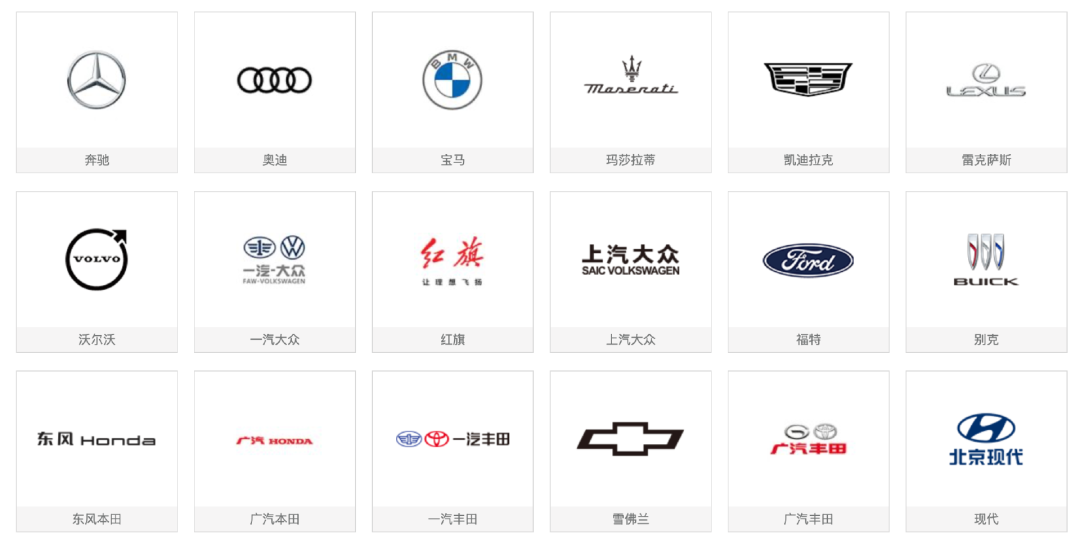
Hengxin Automotive Group, meanwhile, is China's fourth-largest auto dealer group, operating 310 4S stores across 60 cities, with 2024 revenue totaling 78.5 billion. It has sold Mercedes-Benz, BMW, Audi, Tesla, Leapmotor, and Zhiji.
Thus, Chunnan's car manufacturing isn't about internet giants disrupting the industry or smartphone makers extending their ecosystems. It's a collaboration between a local Hubei battery manufacturer and Central China's largest dealer group—a seasoned duo.
Dai Deming, initially a car dealer, crossed over into battery manufacturing in 2021 and now aims to integrate the two: upstream, his own batteries; midstream, his own vehicles; downstream, his own decade-old 4S dealerships.
This background, at the 2026 juncture, makes his cross-industry foray more compelling than others—since he never intended to rely on external financing.
02 Breaking Through: Battery Maker and Dealer
Understanding Chunnan's motivations requires dissecting its strategy to determine whether it's here to join the fray or seize territory.
First, the battery side.
How extreme has the profit margin gap become in the supply chain by 2025-2026? CATL's H1 2026 forecasted net profit stands at 40.5-42.8 billion, with a 17.6% net margin, while downstream automakers averaged just 3.2% in Q1. GAC forecasts wider losses, and JAC remains unprofitable.
Batteries account for 40-60% of a vehicle's cost, and CATL holds pricing power. Second-tier players like Chunnan, despite ranking seventh globally in energy storage, fall outside the top 10 in power battery installations. To climb higher, they face competition from CATL and BYD ahead, with Eve Energy, Sunwoda, and SVOLT closing in from behind.
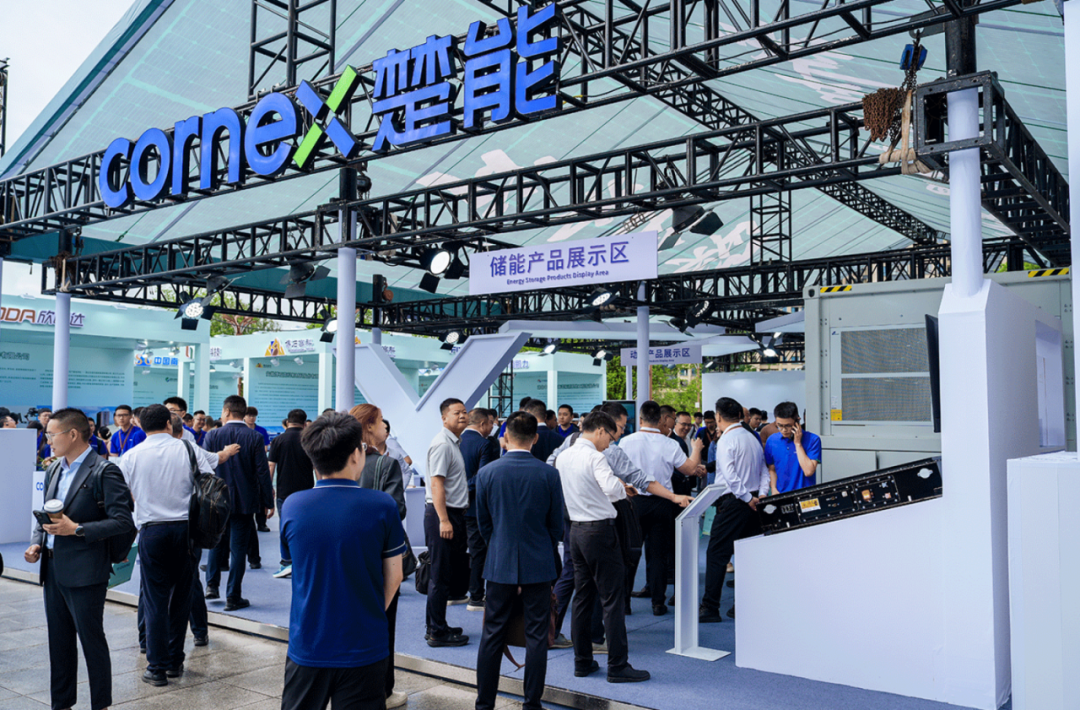
For Chunnan, the options are clear: either keep battling cost reduction in the battery red ocean—as Honeycomb Energy CEO Yang Hongxin put it, '80% of future profits depend on cost cuts'—or manufacture cars themselves to ensure a guaranteed outlet for their batteries, avoiding the need to pitch for second- or third-tier supplier roles with automakers.
Now, the dealer side. After decades in car sales, Hengxin knows automakers' tactics all too well—pressure to stock inventory, erratic rebate policies, and capricious business terms. 4S dealerships, though seemingly glamorous, are subcontractors' subcontractors.
The rise of direct-sales models in new energy vehicles further corners traditional dealers, with Xiaomi, Li Auto, and Tesla minimizing reliance on dealers.
Having spent years in automotive distribution, Dai Deming's move to launch an OEM is akin to switching from subcontractor to principal—a psychological shift that's easy to understand.
Thus, Chunnan's car manufacturing isn't about riding the New energy (new energy) wave. It's about securing a stable outlet for batteries and a non-exploitative supply source for dealers—a logically coherent strategy.
03 Chunnan's Survival Model
Its debut model is clearly positioned: a near-5-meter mid-size extended-range SUV priced at 180,000-200,000 yuan, with over 200km of pure electric range and 1,200km+ combined range. A smaller 150,000-180,000 yuan SUV will follow on the same platform.
The extended-range version alleviates range anxiety, while the pure electric version features self-developed 'Everest 6C Laminated' batteries + 800V high-voltage architecture, enabling 600km recharge in 10 minutes and 85% discharge efficiency at -20°C.
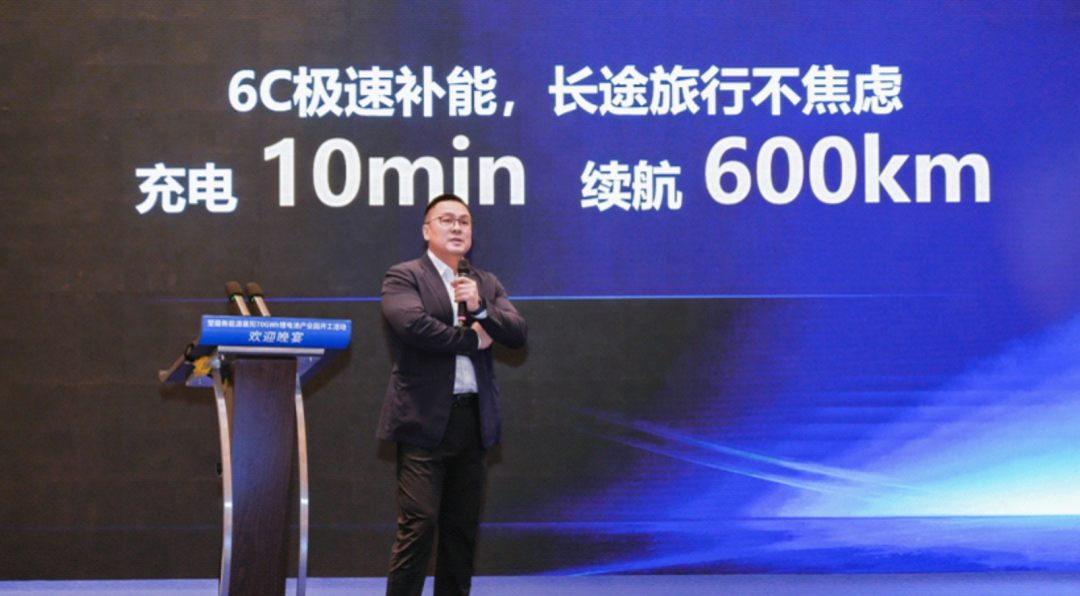
The specs are impressive, but the market not lacking high-spec vehicles. What truly matters is Chunnan's unconventional approach.
First, its financial war chest. Today's capital markets treat 'car manufacturing' with the same skepticism as 'P2P' once evoked.
Chunnan boasts 10 billion in self-funded capital, unburdened by IPO pressures or bets. This confidence stems from Dai Deming's two aces: Hengxin Automotive's nearly 80 billion in annual revenue and Chunnan New Energy's fully utilized battery orders.
The upside? No need to rush timelines to appease investors or inflate sales with '0-km used cars' for financial reporting. The downside? Any losses are real money, with no one else footing the bill.
Second, its factory. Chunnan scored a 'major bargain' by taking over WM Motor's long-dormant Huanggang plant. Unlike NIO's reliance on JAC for contract manufacturing or Xiaomi's greenfield construction, Chunnan moved into a fully furnished, move-in-ready facility.
WM Motor's legacy equipment, factories, and even mature supply chains were rebooted by Chunnan, saving not just two years and billions in infrastructure costs but also skipping the 'capacity ramp-up' phase that plagues new brands.
Finally, its technology. Chunnan's ace remains its batteries. CTP3.0, Everest 6C, 800V platforms—these jargon terms translate to in-house production and consumption.
Previously, Chunnan's batteries were sold to Dongfeng and FAW on bended knee. Now, they're installed proudly in its own ET models.
This strategy of 'keeping profits in-house' mirrors BYDI's playbook—using vehicle sales to absorb battery capacity and battery profits to fund vehicle R&D.
As for channels, Hengxin's 310 4S stores serve as Chunnan's natural 'offline experience centers.' While rivals pay hefty rents for mall showrooms, Chunnan's cars park discreetly in corner lots of its own Mercedes-Benz dealerships.
04 Technological Singularity or Business Patchwork?
Frankly, those expecting Chunnan to unveil groundbreaking tech in the ET will likely be disappointed.
A near-5-meter extended-range SUV priced at 180,000-200,000 yuan, launching in 2027, enters a hyper-competitive segment. Seres has Huawei's backing, Li Auto caters to family buyers, and BYDI wields cost advantages. No matter how impressive the ET's specs, it's just another wave in a red ocean.
Chunnan's true innovation lies in its architecture, not its products.
Consider this: CATL focuses solely on batteries, earning from automakers. BYDI manufactures batteries and vehicles, supplying externally. Chunnan aims to do both—and sell the vehicles too—creating a closed loop from battery cells to receipts.
The advantage? It disrupts traditional OEMs' absolute supply chain control, bypassing intermediaries to reclaim pricing and definition rights.
But this 'patchwork' innovation carries risks. Battery tech is its strength, but chassis tuning, smart cockpits, and especially autonomous driving algorithms require time to mature. Hengxin's 4S network is an asset, but can salespeople accustomed to selling Mercedes-Benz and BMW adapt to pitching an 180,000 yuan new brand? How will internal conflicts over sales priorities—self-branded cars vs. high-commission Teslas—be resolved? These internal battles are far more complex than building a car.
Thus, Chunnan's innovation resembles a business model stress test. It seeks to prove that vertical integration remains viable in a hyper-specialized era. Success could pioneer a 'Chunnan Route'; failure would merely define a red line for future carmakers.
-
![]()
AI-Generated Code Reveals Surprise That Thrills China
-
The answer lies in the performance of the production line by the end of 2026
-
![]()
The Voice in AI Hardware Industry is Quietly Shifting Amid Brain Drain
-
![]()
AI Enters Second Half: Buy the 'Cloud,' Not the 'Chip'?
-
![]()
Breaking the Monopoly! Trillion-Parameter Large Model Adopts Domestic Chips, Marking a Key Step Towards 'De-NVIDIA-ization' in AI Computing Power
-
![]()
Performance Drops Sharply, Seres Alerts 280,000 Shareholders
-
Behind the AI Boom: US Rakes in $314 Billion, South Korea $223 Billion, While China Lags at $26 Billion?
-
![]()
Volkswagen's 'Drastic Measures' to Cut Half of Its Models: Will China's Three Joint Ventures Be Affected?