Global Panel Giant Finds No Buyers
 08/14 2026
 464
464
From 'The World's Kameyama' to 'Unsellable Kameyama,' Sharp has completed a full cycle of an industry in half a century. However, once it chose to hand over the reins of its fate to others, it could no longer determine its own direction.
Cover image source: Unsplash

The once-global panel giant ultimately failed to attract a white knight.
In early August, Sharp announced a restructuring plan for its display device business, confirming that its Kameyama No. 2 Plant would cease production in December 2026. Last May, Sharp planned to sell the plant to its Taiwanese parent company, Hon Hai Group, but the plan ultimately fell through as Hon Hai deemed it difficult to generate economic benefits.
This blunt and almost cruel reason directly led to the helpless [English: helpless] closure of the plant, once known as 'The World's Kameyama,' which was the first factory globally to integrate LCD panel manufacturing with TV assembly.
However, in the business world, interests always outweigh sentiment. Sharp's story is merely one of many reflections of Japan's LCD industry's decline from its peak.
Nevertheless, the closure of Kameyama No. 2 Plant is not the most painful blow. A more severe test lies in the fact that Sharp's brand business, which it considers the foundation of group profits, is facing a 'double decline' in both revenue and profits.
A decade ago, Sharp and Hon Hai joined forces, hoping for a chance at rebirth. However, a decade later, the market has provided a clear answer with real data: not all strong collaborations yield good results.
1
The 'Panel King' Bids Farewell to Its Era
In the 1980s, Sharp produced the world's first LCD color TV. With the explosive global growth of LCD TVs, Sharp gradually became the global leader in LCDs.
However, for Sharp, its century-long entrepreneurial journey was a case of 'success and failure both due to LCDs.'
Sharp's technological breakthroughs allowed it to dominate the high-end TV market. In 2001, Sharp LCD TVs held an 80% global market share, reinforcing its LCD-centric strategic direction.
Yet, throughout business history, without extreme clarity, even the most prosperous can decline.
In the following years, with competition from Sony, Panasonic, Samsung, and others, Sharp's global market share in LCD TVs declined. In 2003, Sharp still held the top spot with around 40% market share, but by 2007, its share had dropped to 21%.
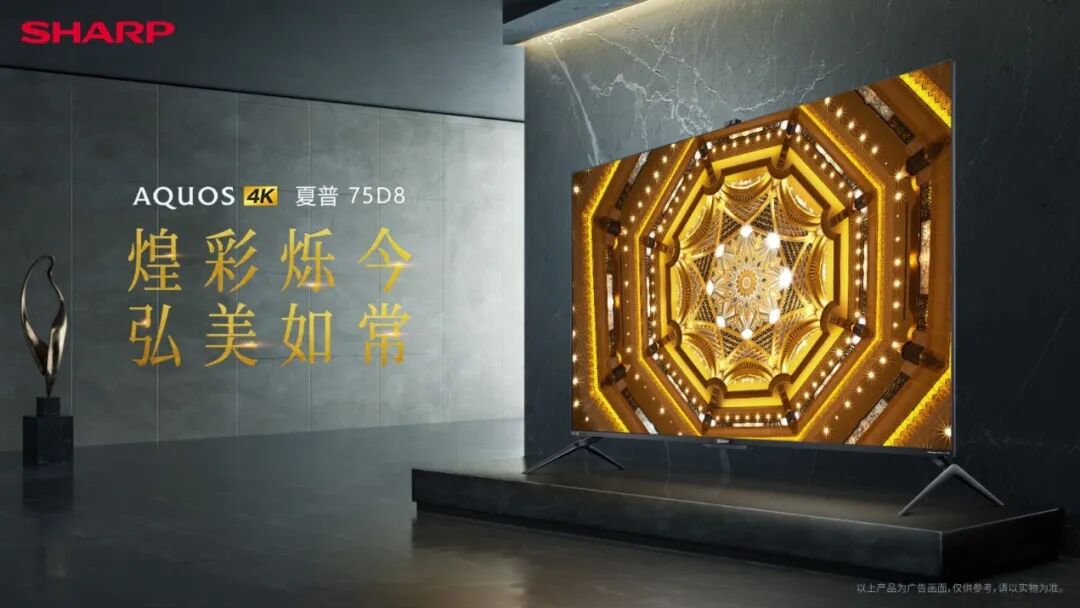
To consolidate [English: consolidate] its leading position, Sharp made an aggressive decision to invest heavily in building new LCD factories across Japan.
In 2004, the 'Kameyama Plant,' the world's first factory to integrate LCD panel manufacturing with LCD TV assembly, commenced operations.
In 2007, Sharp invested hundreds of billions of yen to build the world's first 10th-generation LCD panel production line in Sakai City, Osaka.
The Kameyama Plant, known for its high degree of vertical integration—from glass substrates and LCD materials to panel manufacturing and TV assembly—was dubbed the 'Kameyama Model.' At its peak, the plant contributed over 30% of the group's revenue.
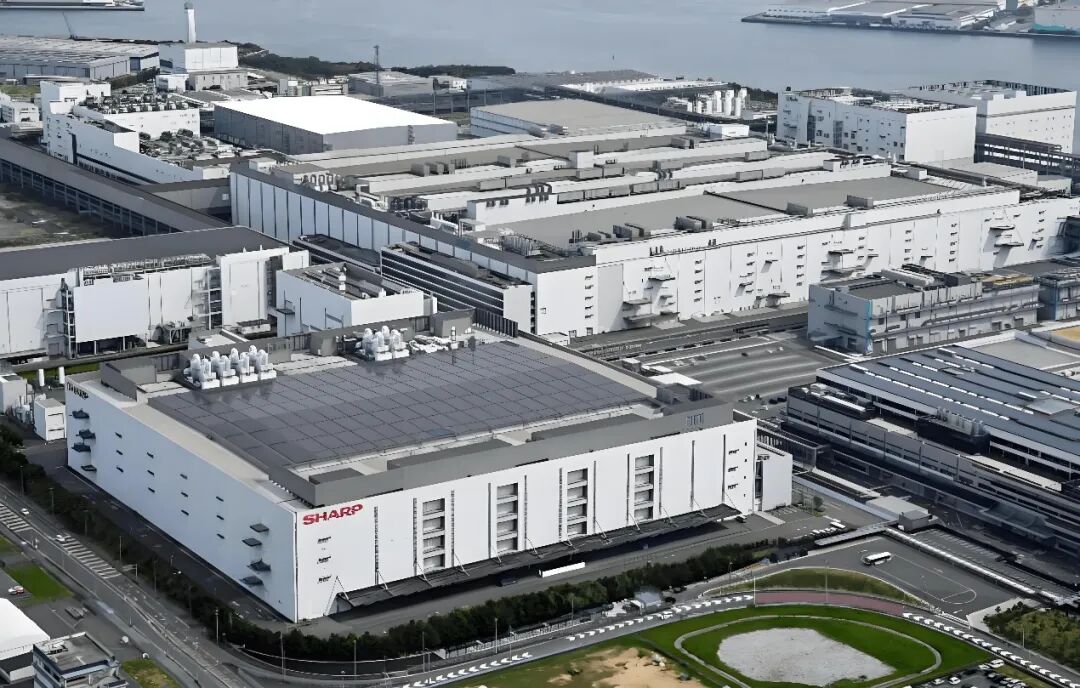
In the last century, Sharp reaped the rewards of technological innovation, becoming the leader in the LCD industry. Following past experiences, it attempted to once again build a higher technological moat through massive capital investments.
However, technological leadership does not equate to commercial success.
Display panels are a typical 'capital-intensive, high-iteration, strong-cycle' industry. Each technological leap requires tens of billions of dollars in investment, but once panel technology advances, previous production line investments can become obsolete.
After Sharp invested heavily in two LCD panel factories, South Korea's Samsung and LG began aggressively expanding production. Chinese panel manufacturers like TCL and BOE also rose strongly with remarkable cost advantages and production scale.
Samsung heavily invested in cost-effective, thinner edge-lit LED technology around 2008 and began operating its first 8th-generation line in 2007, gradually forming its own panel technology and complete production line system.
In contrast, Sharp bet everything on the costly 10th-generation line with limited market demand. As cheaper LCD TVs flooded the market, Sharp's calculations naturally fell short.
But this was just the beginning. From 2009 onwards, Chinese panel companies gradually overtook South Korean panel companies by betting on next-generation panel technologies and investing in high-generation production lines against market trends.
By 2025, Chinese panel companies will account for approximately 70% of the global display panel market, marking an unprecedented reshuffle in the global panel industry.
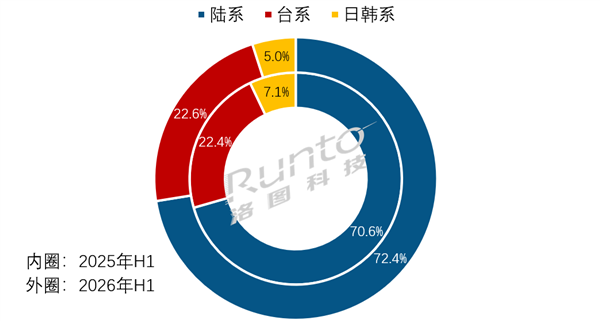
In August 2024, Sharp's 10th-generation panel plant in Sakai City will fully cease production. This December, Kameyama No. 2 Plant will also fully shut down. According to a Counterpoint report, by 2028, the market share of Japanese panel factories will drop from 4% in 2023 to 1%.
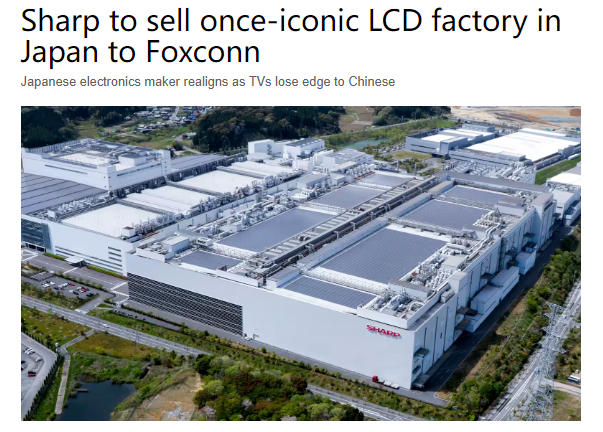
Recently, Sharp announced a restructuring plan for its display device business, consolidating scattered subsidiaries and operations within the group back into Sharp, indicating further contraction of its panel business.
The once-panel king, Sharp, now holds only a fraction of the global market.
2
Brand Business in a 'Slow Boil'
Realizing its panel business was declining in the market, Sharp attempted to save itself.
In fiscal year 2012, Sharp recorded its highest-ever loss of 545.3 billion yen (approximately $4 billion). Seeking alternatives, it turned to Hon Hai Group, which was then concerned about Samsung's impact on its panel business.
The two sides reached an agreement for Hon Hai to acquire a 9.9% stake in Sharp for approximately 66.9 billion yen (approximately $809 million). However, Hon Hai ultimately did not fulfill the agreement, citing Sharp's continuous decline [English: continuously declining] stock price.
The opportunity for cooperation arose again in 2016.
At the time, Hon Hai, as a key contract manufacturer for Apple, wanted to invest in next-generation screen technologies to compete with South Korean companies like Samsung and enhance its presence in negotiations with Apple. Sharp's Kameyama Plant had been a supplier of iPhone screens.
After experiencing massive losses in fiscal year 2012, Sharp saw some improvement through its 'Three-Year Revitalization Plan' and even returned to profitability in fiscal year 2013. However, it fell back into losses in the following two fiscal years, forcing it to sell assets.
In 2015, Sharp sold its American color TV business to Hisense. In 2016, Hon Hai acquired approximately 66% of Sharp's shares for about 388.8 billion yen (approximately RMB 22.4 billion), becoming Sharp's largest shareholder.
Hon Hai's takeover gave Sharp a respite. At the time, Terry Gou even vowed to make Sharp profitable within two years.
After Hon Hai's takeover, Sharp's performance briefly recovered. In the third quarter of fiscal year 2016, it turned from a loss of 24.7 billion yen a year earlier to a profit of 4.2 billion yen, achieving its first profit in nine quarters.
However, it still could not resist the tide of the times.
Over the past few years, Sharp's panel business has continuously contracted, with factories being sold or shut down. The group's profit focus has shifted from the panel business to the brand business, consisting of Smart Life and Smart Workplace.
However, Sharp's brand strength has also been experiencing a 'slow boil' decline.
In the fourth quarter of fiscal year 2025, Sharp's operating profit was 7.57 billion yen, below the estimated 8.51 billion yen. Its net loss was 20.08 billion yen, exceeding the estimated 12.43 billion yen. In the first quarter of fiscal year 2026, performance continued to decline, with operating profit at 8.2 billion yen, down 46.3%, and net profit attributable to shareholders at 3.1 billion yen, down 88.6%.
More troubling is that the brand business, seen as the profit engine, has also started to see increased revenue without increased profits. In the first quarter of this year, brand business sales were 344.9 billion yen, up 4.6% year-on-year. However, operating profit dropped from 21 billion yen to 14.4 billion yen, down 31.5% year-on-year.
The Smart Life business, directly related to home appliances, saw its operating profit decline 45.6% year-on-year to 3.7 billion yen, with its profit margin dropping from 4.9% to 2.6%.
Sharp TVs have seen the most significant decline. According to Sigmaintell, in 2022, Sharp TVs ranked 11th globally in shipments. By the first half of 2025, Sharp's global market share had been relegated to 'Others.'
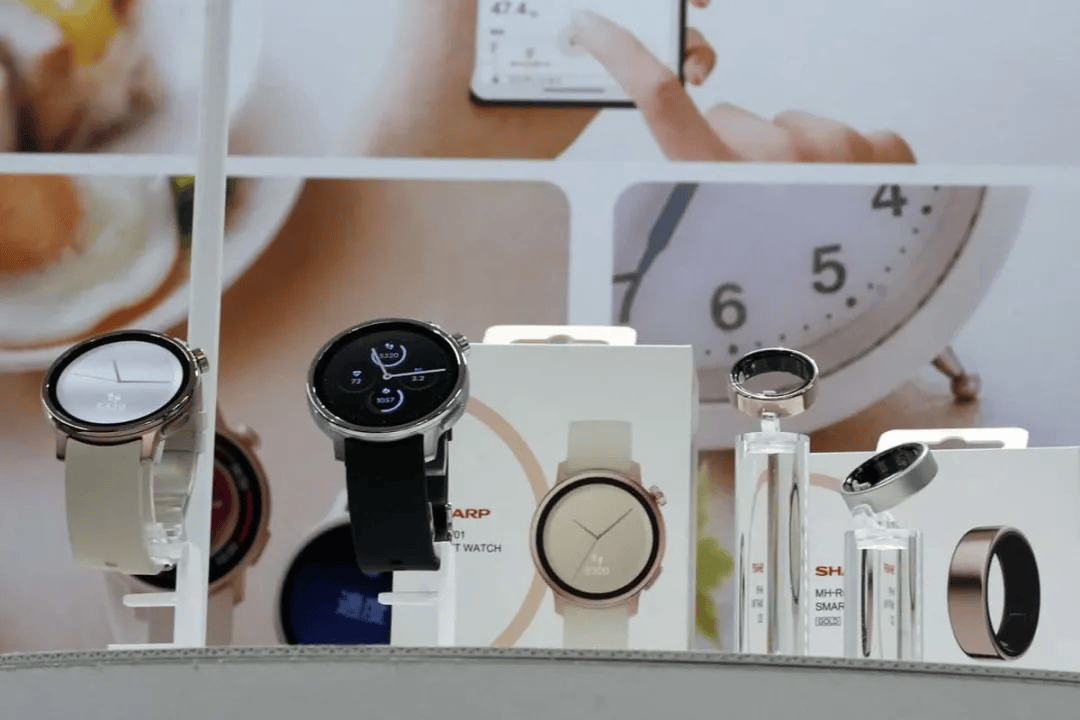
In recent years, Sharp has entered the smart wearables market and launched two new products—a smartwatch and a smart ring—in July this year. However, with Apple, Huawei, and Xiaomi firmly dominating the smart wearables market, Sharp faces an uphill battle to break through.
However, according to financial reports, Sharp's brand business sales have shown overall year-on-year growth. While sales remain strong, profit pressure persists, primarily due to rising raw material costs in the home appliance industry and yen depreciation, which are eroding profits.
This is not a unique dilemma for Sharp but a common challenge faced by all Japanese consumer electronics brands.
Samsung Electronics announced it would stop selling all home appliances in the Chinese mainland market. Sony entrusted its home entertainment business, including TVs, to TCL. Panasonic transferred its TV sales business in Europe and North America to Skyworth...
These former global giants are exiting the 'direct-to-consumer' battlefield in various ways, choosing to sell or license their brands to Chinese companies instead of competing directly.
However, while Sharp seems to have taken the same path, the results have been vastly different.
3
Can Hon Hai Save Sharp?
On the 10th anniversary of Hon Hai's takeover of Sharp, Nihon Keizai Shimbun interviewed former Sharp President Katsuhiko Machida, asking him about the impact of Hon Hai's acquisition. Machida bluntly stated, 'I believed at the time that handing over the LCD business to Hon Hai was acceptable, but Hon Hai would find it difficult to manage Sharp as a whole company.'
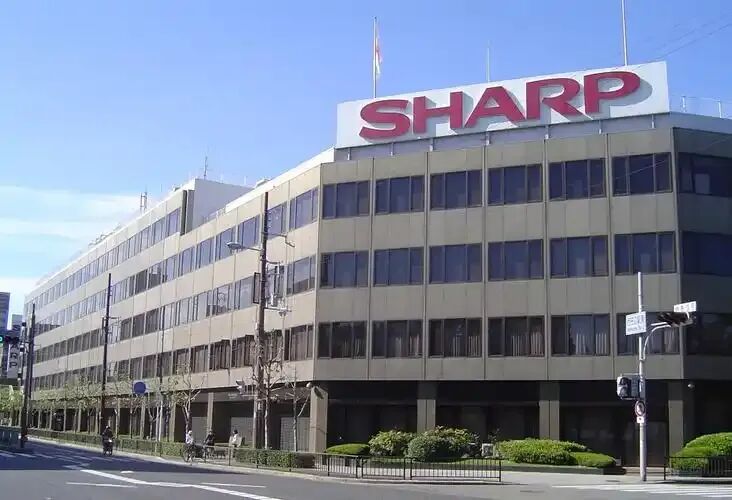
Looking back now, his words have proven prophetic.
The outcome of the Sharp-Hon Hai marriage has been disappointing. Sharp failed to 'rise from the ashes,' and Hon Hai could not transform from a contract manufacturer into a brand owner. What went wrong?
The first issue lies in differences in business philosophy.
Hon Hai, originating from contract manufacturing, pursues efficiency and scale, focusing on producing products quickly and cheaply as required. Sharp, as a brand company, must understand customer needs from scratch, design, develop, and launch new products—manufacturing alone is not enough.
Hon Hai and Sharp operate with two entirely different mindsets, leading to divergent product creation philosophies.
For example, Sharp holds over 10,000 display-related patents globally. However, Hon Hai, more adept at contract manufacturing, lacks the ability to incubate cutting-edge technologies. Even with patents in hand, it struggles to turn them into products.
Machida also mentioned this, noting that products like Plasmacluster and Steam Oven developed during his tenure are still on the market, yet Sharp rarely introduces new unique products.
Secondly, Hon Hai itself is undergoing transformation. A decade ago, Hon Hai relied heavily on iPhone assembly. Today, it actively promotes its '3+3+3' strategic blueprint, expanding into artificial intelligence, semiconductors, electric vehicles, and robotics.
Last May, Sharp hoped Hon Hai would acquire Kameyama No. 2 Plant. Hon Hai was initially interested but not to continue the panel business. Instead, it planned to build AI server production lines in the area, aiming to start mass production within a year for the Japanese market.
This raises the question: Was Hon Hai buying technology or production lines? The answer becomes clear.
Looking back, Chinese companies acquiring Japanese home appliance brands is not uncommon. For example, Midea acquired Toshiba's white goods business, and Hisense acquired Toshiba TV. Both companies have managed to grow Toshiba's brands.
After Midea took over Toshiba, it transferred some production to Wuhan and Hefei bases, reducing costs by one-third using the Chinese supply chain while retaining the Tokyo R&D center to focus on high-end refrigerator insulation and air conditioner inverter technologies.
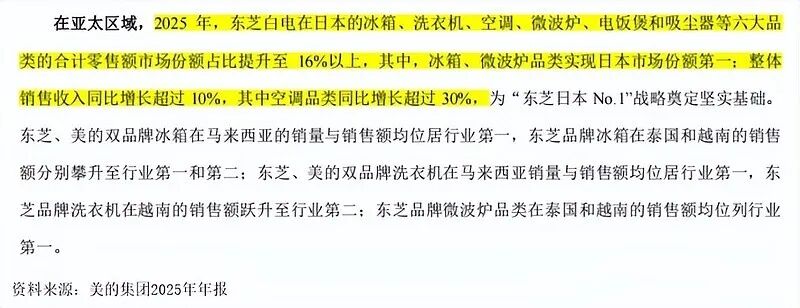
By 2025, Toshiba's white goods in Japan have increased their combined retail market share in six categories—refrigerators, washing machines, air conditioners, microwaves, rice cookers, and vacuum cleaners—to over 16%, ranking first in the Japanese market for refrigerators and microwaves.
From 'The Kameyama of the World' to 'The Unsellable Kameyama', Sharp completed a full cycle of an industry over half a century. However, once it chose to place the reins of its fate in the hands of others, it meant that it could no longer decide where to go.
Those who come later should learn a lesson from this story: For a company to grow from scratch, it may need to make a hundred right decisions; but sometimes, just one wrong decision can be the last straw that breaks the camel's back.
-
![]()
Dongfeng VOYAH’s New Car Makes a Splash, Targeting More Than Just the 30s and 40s Crowd
-
![]()
Annual Salary of 700 Million Fails to Retain Him! AI Genius Jiahui Yu Departs Meta to Launch His Own Startup
-
Qianwen Seeks to Move Beyond Its 'Alibaba Identity'
-
![]()
How Can We Comprehensively Resolve Ctrip's Monopoly Issue?
-
![]()
From Computing Power Supply-Demand Dynamics to Capital Integration: Jin Jing New Energy Embarks on a New Business Phase
-
![]()
Top Domestic Computing Power Supplier Exceeds Net Profit Forecasts for First Half of the Year
-
![]()
Wanwei Advanced Materials Plans to Raise 2.3 Billion Yuan through Private Placement to Boost PVA Optical Film Production!
-
![]()
Tencent Launches WeChat AI + WorkBuddy: A Strategic Long-Term Play