Dongfeng VOYAH’s New Car Makes a Splash, Targeting More Than Just the 30s and 40s Crowd
 08/14 2026
 508
508
Source | Yuan Auto
On March 19th of this year, VOYAH Automobile, a subsidiary of Dongfeng Motor Corporation, made its debut on the Hong Kong Stock Exchange. Nearly half a year has zipped by, and this 'pioneer high-end new energy vehicle stock from a central state-owned enterprise' has witnessed its stock price plummet from HK$7.5 per share to HK$2.76 per share as of the time of reporting. Granted, most automotive stocks on the Hong Kong Stock Exchange have taken a hit this year, but VOYAH’s fluctuations are particularly noteworthy.
However, a sluggish stock price doesn’t necessarily mean VOYAH is struggling in sales.
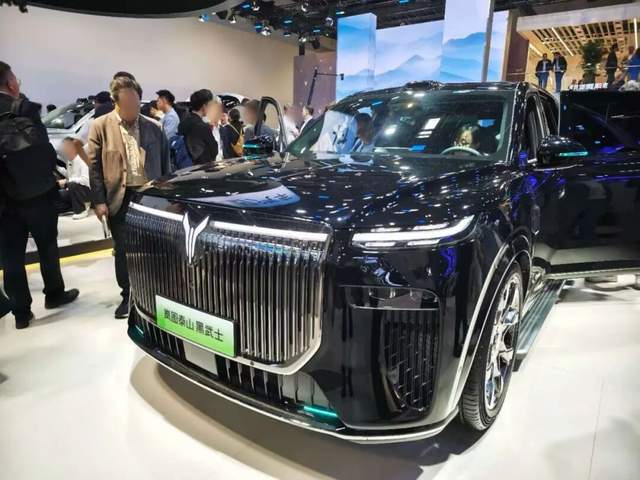
According to official data from the automaker, VOYAH delivered a total of 89,453 new vehicles from January to July this year, marking a year-on-year increase of 31%. While this performance doesn't quite measure up to mainstream newcomers like Xiaomi, AITO Wenjie, NIO, and Li Auto, it’s enough to position VOYAH as the sales leader among a range of high-end new energy brands from the 'national team,' including Avatr, IM Motors, and Hyper.
With sales on the rise and stock prices in decline, perhaps VOYAH’s business narrative isn’t quite captivating enough just yet.
Currently, VOYAH is primarily focused on manufacturing and selling vehicles in the domestic market. High-value-added segments within the industry, such as the development of self-reliant intelligent driving chips, ventures into cross-border robotics, the establishment of energy replenishment infrastructure, and vehicle exports, have yet to gain significant traction. Its appeal in the capital market largely hinges on two factors: its backing as a central state-owned enterprise and its deep-rooted collaboration with Huawei.
In essence, without substantial unexpected positive developments, shareholders' expectations for VOYAH’s future currently rest more on the creation of vehicles that spark greater market imagination.
This is precisely a notable challenge for VOYAH at this juncture.
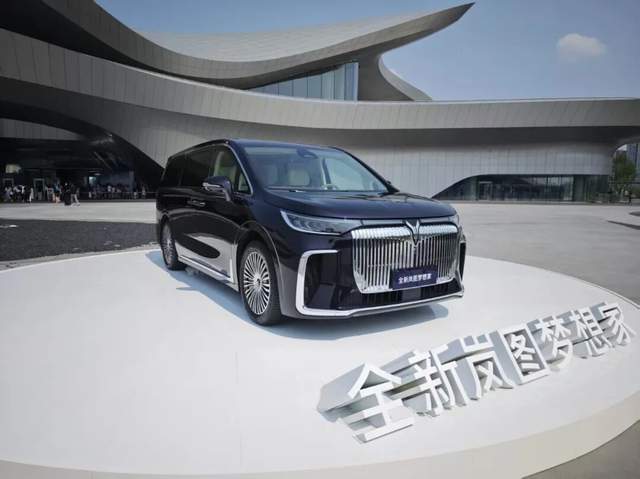
Based on third-party retail sales data from the China Association of Automobile Manufacturers and the China Passenger Car Association, over the past six months (February 2026-July 2026), approximately 43% of VOYAH’s sales volume came from the MPV Dreamer. Although the two SUVs, VOYAH Zhiyin and VOYAH FREE, which made a strong impression in 2025, secured the second and fourth highest sales volumes during the same period, their monthly sales trajectories started high and then dipped, recently hitting three-digit figures. The new model, Taishan X8, has begun to emerge as the brand's second-best seller.
As for the two flagship models, Taishan and Zhui Guang L, launched in November 2025 and December 2025 respectively, they accounted for less than 10% of VOYAH’s sales volume over the past six months.
To some extent, since VOYAH’s market debut this year, a significant portion of market expectations for its future has been pinned on four models: the Dreamer, Taishan, Taishan X8, and Zhui Guang L. However, all four models share a common limitation that stifles market imagination—they cater primarily to the 35-50 age demographic.
The Dreamer, which dominates the business MPV market and has been targeting the family segment since 2025, needs no further elaboration. The three new VOYAH models, Taishan, Taishan X8, and Zhui Guang L, according to surveys by renowned industry media, also target elite individuals aged 35-45.
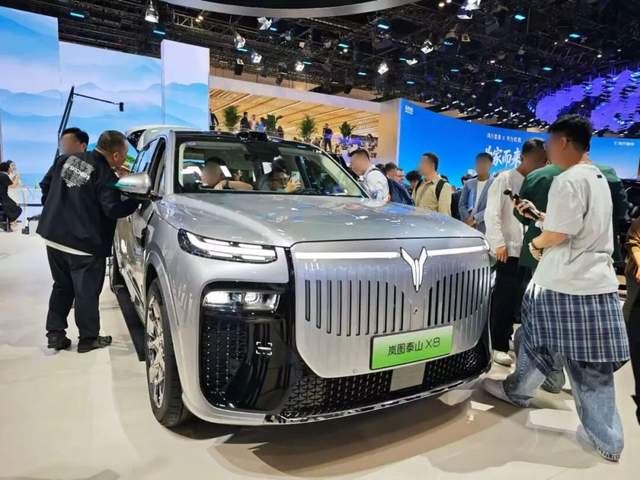
Take Taishan X8, for instance, which saw its monthly sales volume surge to second place within the brand in July and whose pre-sale orders, as announced by the automaker, exceeded 40,000. According to a summary by Car Fans of feedback from frontline VOYAH sales representatives, the majority of prospective clients (potential customers) for this vehicle are male, aged between 35 and 45, with 'corporate leaders, financial professionals, and civil servants making up the bulk.'
For VOYAH, fully penetrating the niche market of elite individuals aged 35-45 would undoubtedly be a commendable feat. However, the challenge lies in the fact that, based on current sales figures, VOYAH still requires a considerable amount of time to achieve this goal. If VOYAH can broaden its product appeal and seek faster sales stimulation, it would undoubtedly instill more hope in minority shareholders.
It appears that this 'national team' automaker has already gleaned similar insights with the launch of its latest model, the Zhui Guang S.
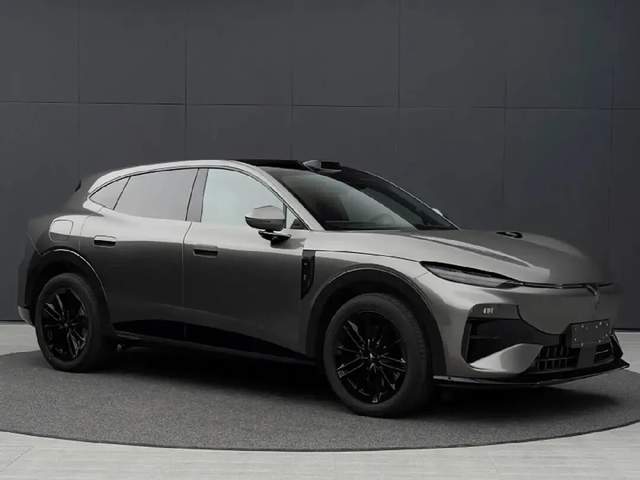
'The Zhui Guang S is not merely an addition to our model lineup; it represents the core vehicle for the brand's strategic shift towards a new generation of consumers.' At the pre-sale launch event for the Zhui Guang S on July 24th, Lu Fang, Chairman and Party Secretary of VOYAH Automobile, stated that the next step would be to expand the base of high-end new energy vehicle consumers, with the Zhui Guang S, defined as an FUV, marking the beginning.
The so-called FUV, as explained by Shao Mingfeng, CBO of VOYAH Automobile and General Manager of the Sales Company, embodies four key attributes: Fashion, Fun, Future, and Full. However, for consumers, what stands out more is that the Zhui Guang S adopts a crossover coupe SUV style akin to the Xiaomi YU7, which is often mentioned in the same breath as the Ferrari FUV Purosangue.
With its refreshing design aesthetic, the Zhui Guang S is poised to penetrate the user base aged 30 and even younger, a feat that is challenging to accomplish with mainstay models like the Dreamer, Taishan, Taishan X8, and Zhui Guang L. Compared to the Xiaomi YU7, the VOYAH Zhui Guang S boasts Huawei's assisted driving technology as its core differentiating selling point. Considering the vast fan bases of Xiaomi and Huawei, it would be reasonable to expect the Zhui Guang S to surpass the Dreamer as VOYAH’s best-selling model.
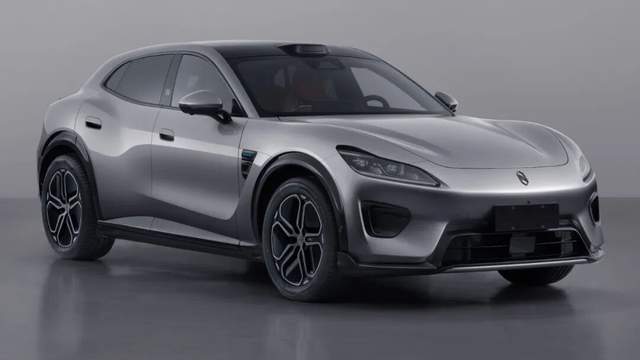
However, it's worth noting that the Huawei AITO RX, slated for launch by Huawei AITO between September and November, is also a crossover coupe SUV-style model. Given that both are 'Huawei-affiliated vehicles' and the AITO RX boasts a stronger 'Huawei presence,' the Zhui Guang S's competitive edge will undoubtedly be impacted.
Nevertheless, the Zhui Guang S represents a promising start. When VOYAH successfully broadens its user base from the 35-50 age group to the 25-50 age group, both sales volume and stock price are likely to follow suit.
-
![]()
Samsung Galaxy Z Fold 8 Review: Ultra-Slim Dual Design Shines, but Telephoto Absence is a Bummer
-
![]()
Dongfeng VOYAH’s New Car Makes a Splash, Targeting More Than Just the 30s and 40s Crowd
-
![]()
Annual Salary of 700 Million Fails to Retain Him! AI Genius Jiahui Yu Departs Meta to Launch His Own Startup
-
Qianwen Seeks to Move Beyond Its 'Alibaba Identity'
-
![]()
How Can We Comprehensively Resolve Ctrip's Monopoly Issue?
-
![]()
From Computing Power Supply-Demand Dynamics to Capital Integration: Jin Jing New Energy Embarks on a New Business Phase
-
![]()
Top Domestic Computing Power Supplier Exceeds Net Profit Forecasts for First Half of the Year
-
![]()
Wanwei Advanced Materials Plans to Raise 2.3 Billion Yuan through Private Placement to Boost PVA Optical Film Production!