How Can We Comprehensively Resolve Ctrip's Monopoly Issue?
 08/14 2026
 448
448
Once again, Ctrip has put us in an awkward position in front of our peers.

Ctrip has just been penalized by relevant authorities, which should have acted as a corrective measure to address its unfair market position. However, the reality is far more intricate than a mere fine can resolve.
Despite the penalty, Ctrip's market structure remains unaltered, its bargaining power intact, and its dominant position unchanged.
What's even more concerning is that the cost of this fine is likely to be ultimately borne by merchants and consumers. This is not just speculation, but an inevitable consequence of market forces. As long as the monopoly structure persists, the company has numerous ways to absorb external costs, passing on regulatory pressures through higher commissions, lower settlement prices, and differential pricing strategies.
If you have doubts about this, simply monitor its financial reports over the next two years; whether the profit curve rebounds will be the most telling indicator.
The crux of the matter is whether our goal is to penalize a specific action or to overhaul the entire system.
If the latter is our objective, then the fine is merely the beginning. True reform must commence at the institutional level, dismantling Ctrip's system of horizontal expansion and breaking its dual lock-in of 'traffic acquisition + transaction completion'.
Ctrip's monopoly did not emerge solely from natural market competition; it is deeply entrenched in outdated and ambiguous regulatory frameworks.
This situation is essentially similar to the long-standing debate over 'universal banking' in the financial sector. Globally, with rare exceptions like Ping An, most financial regulatory systems strictly segregate banking, insurance, and securities operations. The rationale is clear: universal banking tends to create super-dominant market positions under normal circumstances, distorting competitive ecosystems, while exacerbating systemic risks during crises, potentially triggering a chain reaction of collapses.
The prohibition on cross-border operations is precisely designed to draw a clear boundary between efficiency and stability.
Turning our attention to the internet platform sector, regulatory guidance has already made its stance clear. 'Opposing disorderly horizontal expansion of capital' is explicitly stated in policy frameworks.
Under this principle, several internet giants have ceased cross-border mergers, divested non-core assets, and refocused on their core businesses.
Yet, Ctrip remains the outlier, the sole holdout.
The reason is straightforward: Ctrip is heavily reliant on the structural benefits of universal operations and is unwilling to relinquish them.
Specifically, Ctrip has established a sophisticated 'two-way lock-in' mechanism.
On one hand, it secures a stable and massive flow of policy-driven traffic through vertical licenses for civil infrastructure such as airline and train tickets. This traffic is not derived from service superiority but from the spillover of administrative resources.
On the other hand, leveraging this inexpensive traffic, Ctrip exerts overwhelming bargaining power over market-driven merchants like hotels, compelling them to accept unfair terms, including exorbitant commissions, mandatory underwriting, and hidden fees.
Once this closed loop between traffic and merchants is formed, Ctrip gains 'free rein to abuse' at every stage of the value chain. It can arbitrarily modify ranking rules, differentially display prices, and allocate costs between users and merchants.
Analyzing this system uncovers Ctrip's three critical vulnerabilities:
Firstly, acquiring massive policy-driven licenses for train and airline tickets as core traffic engines to sustain its entire commercial ecosystem. These licenses, inherently public in nature, have been transformed into exclusive competitive weapons for a private platform.
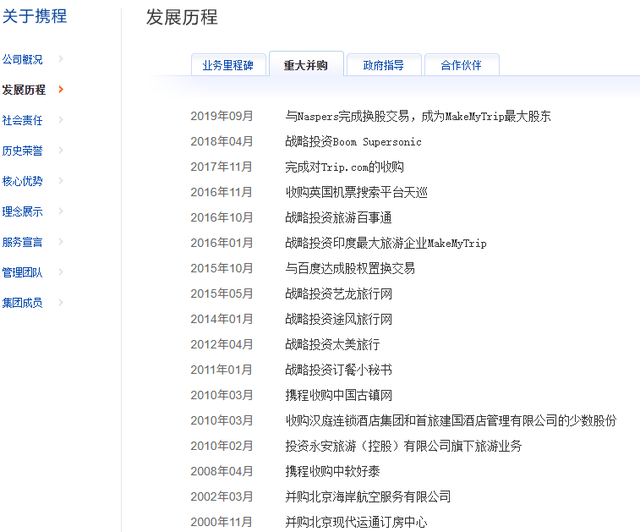
Secondly, relying on foreign capital for continuous mergers and horizontal expansion to suppress potential competitors, eliminate industry challengers, and solidify market share.
Thirdly, blatantly implementing price discrimination strategies, differentiating quotes based on user profiles, device types, and consumption history to extract unfair additional profits. This goes beyond normal commercial pricing flexibility and violates consumer protection principles.
Therefore, to comprehensively resolve Ctrip's monopoly, we must revert to the fundamental stance of antitrust regulation and decisively dismantle its structure.
Specifically, policy-driven businesses like train and airline tickets (involving license resources) should be strictly separated from market-priced commercial operations like hotel accommodations and vacation tours, severing the direct link between 'traffic acquisition' and 'monetization'.
Furthermore, Ctrip should divest all shareholdings in peer enterprises, a step already largely completed by major internet giants but deliberately overlooked by Ctrip.
Additionally, Ctrip holds seven financial licenses.
We must inquire: What forces are shielding Ctrip? Are there regulatory blind spots or collusive interests at play?

The convenience and efficiency brought by platform economies are undeniable, but so is the harm caused by platform abuses.
From travel bookings to accommodation consumption, nearly every link risks being repriced within algorithmic black boxes and exploited through regulatory loopholes.
Now that multiple large platforms have entered a phase of regulated development, it is time to subject Ctrip, this 'escaped fish', to the same level of scrutiny and reform.
Comprehensively resolving Ctrip's monopoly is not about denying the platform model but about upholding the dignity of market rules, ensuring that all participants, merchants and consumers alike, can make free choices in a fair environment.
Only by dismantling Ctrip's structural monopoly can regulation truly be effective. Otherwise, no matter how many fines are imposed, they will merely become short-term entries on its profit sheet.
-
![]()
Samsung Galaxy Z Fold 8 Review: Ultra-Slim Dual Design Shines, but Telephoto Absence is a Bummer
-
![]()
Dongfeng VOYAH’s New Car Makes a Splash, Targeting More Than Just the 30s and 40s Crowd
-
![]()
Annual Salary of 700 Million Fails to Retain Him! AI Genius Jiahui Yu Departs Meta to Launch His Own Startup
-
Qianwen Seeks to Move Beyond Its 'Alibaba Identity'
-
![]()
How Can We Comprehensively Resolve Ctrip's Monopoly Issue?
-
![]()
From Computing Power Supply-Demand Dynamics to Capital Integration: Jin Jing New Energy Embarks on a New Business Phase
-
![]()
Top Domestic Computing Power Supplier Exceeds Net Profit Forecasts for First Half of the Year
-
![]()
Wanwei Advanced Materials Plans to Raise 2.3 Billion Yuan through Private Placement to Boost PVA Optical Film Production!