Will WeChat's 'Ask a Question' Feature, Following Xiaohongshu's Model, Be Effective?
 02/14 2026
 690
690
On the eve of the 2025 Lunar New Year, WeChat implemented a multitude of substantial updates, including WeChat AI Search supporting evaluation of official accounts, the ability to retain chat records after deleting friends, and customizable timing for product appearances in video channels. In addition to these more popular and impactful updates for users, WeChat also introduced numerous 'invisible' or less-noticed minor updates.
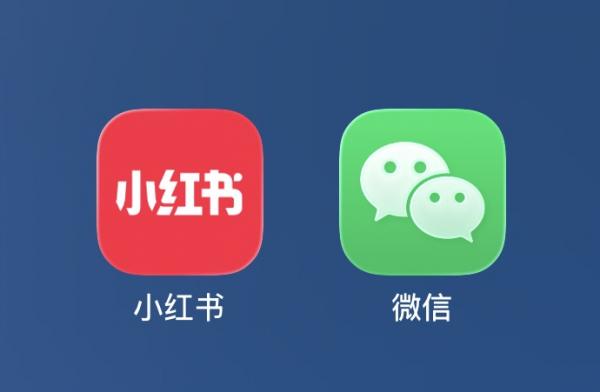
For instance, the Feed stream display in WeChat's 'Ask a Question' feature can easily be confused with Xiaohongshu if both are opened simultaneously without names. Of course, this dual-column display format for graphic and text (images and text) is not unique to Xiaohongshu, but it is most strongly associated with the platform. From the perspective of content display, WeChat's 'Ask a Question' also follows Xiaohongshu's model, but the question remains: will it be effective?
1. Cannot Rely Solely on 'Patchwork'
Vertical Q&A products like WeChat's 'Ask a Question' are a content format from the early days of the internet, with common examples including Baidu Knows, Zhihu, Sogou Wenwen, and 360 Answers. However, these Q&A websites have been thoroughly marginalized in the mobile internet era. On one hand, user numbers have not increased, and on the other hand, the factor of 'unpaid motivation' has disappeared from Q&A websites, leading more and more content creators to move to other fields. The problems faced by these early Q&A websites are that either the questions themselves lack depth or the respondents' content lacks depth, resulting in products that fail to provide value to users and consequently leading to fewer and fewer users.
In fact, in an earlier article titled 'If WeChat Really Wants to Make 'Ask a Question' Successful, It Should Pay More Attention to It,' I mentioned relevant issues with WeChat's 'Ask a Question.' However, as of now, these issues have not been resolved, such as its positioning, who asks the questions, what kind of questions are asked, and who answers them...
WeChat's 'Ask a Question' has not addressed some of the most critical issues at their roots but has instead focused on 'patching up' minor aspects. For example, the Feed stream page now displays content in a dual-column format like Xiaohongshu. While this can somewhat increase the chances of content being displayed, the two major issues—'deep access point' and positioning—remain unresolved.
The advantage of WeChat's products lies in the fact that they can thrive under the protection of a large platform. WeChat is the product with the highest monthly active users in China, with data showing that as of November 13, 2025, the combined monthly active users of WeChat and WeChat were 1.414 billion. This means that any product on WeChat will receive significant exposure. WeChat official accounts, video channels, and WeChat Search have all achieved success by relying on the WeChat platform. However, this past success can also lead to path dependency, namely the expansion of product lines on top of WeChat, known as 'WeChat+'.
Compared to Tencent, Douyin's success path involves not only promoting new products with a 'Douyin+' approach but also supporting them with various external resources. We often see Douyin's apps consistently ranking in the top ten of the Apple App Store's overall charts. A recently launched Douyin app called 'Dou Sheng Sheng' reached the top 20 of the App Store's free overall charts just one day after its release. ByteDance is rumored in the industry to be an 'App factory,' and this is no joke.
The access point for WeChat's 'Ask a Question' is: WeChat App → Discover → Search → Ask a Question. For users, this access point is too deep. Unless WeChat gives 'Ask a Question' the same treatment as Moments, Listen, and Mini Programs by displaying it directly on the 'Discover' page, it will remain hidden within 'Search' and fail to gain exposure. Without exposure, any other changes and updates will not touch the core issues.
2. The Decline of the 'Q&A' Model
Q&A websites have a long history, and one of their values was the scarcity of information on the internet. However, in the mobile internet era, content on the entire internet has exploded again, and Q&A website content has been subsumed into comprehensive content, eliminating the need for separate Q&A websites.
In 2016, Toutiao launched the 'Toutiao Q&A' product, later upgraded to 'Wukong Q&A.' By January 2021, Wukong Q&A announced its shutdown.
360 Answers was launched in September 2012. On November 14, 2025, 360 Answers announced that it would suspend new questions and answers.
In fact, even Zhihu is no longer just about Q&A content; stories, knowledge, circles, columns, and live streams have also become important channels in the app.
The entire content industry has long changed, encompassing not only graphic and text (images and text) but also short video content. Once short video content is involved, it inevitably leads to competition with apps like Douyin, Kuaishou, and video channels.
As a Q&A community, WeChat's 'Ask a Question' needs to explain to users: What is its purpose? What problems can it solve for users? Why should users use it?
Given the current decline of the Q&A website model, it is difficult for WeChat's 'Ask a Question' to ensure its continuity and high engagement.
The famous mathematician Shing-Tung Yau once mentioned in a conversation, 'I don't believe in geniuses. I've seen many of the greatest scholars in my life, and I don't see them as geniuses. If you ask them a question, they often take a long time to think before answering, but the answer they give is something you wouldn't expect. They might take two days to tell you. But I see many very smart people who answer you immediately, and everyone is satisfied, but the answer to that question is forgotten two days later.'
Often, it's not that Q&A websites are meaningless, but rather:
First, it's difficult to ask high-quality questions;
Second, it's even more difficult to answer high-quality questions.
Q&A websites struggle to ensure both points simultaneously. The common questions users see on Zhihu, such as 'How do you view...' and 'Why XXX, what is the reason?' have a certain generality (and are also a form of laziness), but in reality, these Q&As tend to be more about 'opinions' than 'answers' and are prone to significant 'clever' responses.
Q&A websites have also faced the most severe impact (impact) from AI.
3. With AI, Who Needs a Q&A Community?
Since the popularity of OpenAI's ChatGPT in early 2023, the entire AI industry has grown rapidly, with hundreds of AI assistants launching in China. After nearly three years of technological refinement and upgrades, domestic AI assistant products are no longer just 'showy.' Ahead of the Spring Festival, Tencent Yuanbao, Alibaba's Qianwen, Alipay's Mayi Afu, and AI assistants like Doubao and Wenxin engaged in a 'battle of the gods,' offering red envelopes and free orders, which played a significant role in the expansion and sink (penetration) of AI assistants among consumers.
For users, with AI, who needs a Q&A community?
On one hand, for relatively basic Q&A content, AI's answers are more direct and appear more structured than those from ordinary users under the UGC model.
On the other hand, for 'knowledge-based' content, AI's answers are also more detailed and do not contain excessive personal emotions or obvious value biases, whereas the quality of Q&A content from ordinary users can vary greatly.
Clearly, AI assistants are most likely to impact the content within Q&A communities. Alibaba's 'Qianwen,' to some extent, guides users to 'ask questions.' When faced with a question, users will clearly choose to ask AI rather than search for answers in a Q&A community.
Compared to AI assistants like Yuanbao, Doubao, Qianwen, Wenxin, and Mayi Afu, Xiaohongshu's advantage lies in its 'human touch.' Xiaohongshu not only features Q&A content but also includes various lifestyle and entertainment content, whereas AI assistants are typical tool-based products.
In promoting WeChat's 'content community' attribute, WeChat has also introduced a 'sticker' feature, transforming 'images and text' directly into 'stickers.' To show its emphasis on 'sticker' content, the Feed stream in the 'official accounts' channel has significantly increased 'sticker' content, which resembles Xiaohongshu's graphic and text (images and text) mode. WeChat's 'Ask a Question' also follows a similar model to Xiaohongshu, and it is unclear what the purpose of these two different approaches is. Could it be another internal 'horse racing' model?
In the era of early Q&A websites, many users became free 'promoters' for the platforms, driven by 'unpaid motivation.' However, in today's internet industry, relying on 'unpaid motivation' to attract people is almost impossible. When content creators treat content creation as a profession, they want to earn money, and once money is involved, it becomes more difficult for platforms. Xiaohongshu's e-commerce route has also undergone multiple transformations, making it not easy (not easy) for WeChat's 'Ask a Question' to achieve profitability.
Why are so many people still updating WeChat official accounts? Because official accounts can gain influence and earn money, providing such benefits. Can WeChat's 'Ask a Question' do the same?
However, the advantage of WeChat's product line is its 'thick blood bar' (resilience). Like short videos, Tencent tried many times without success, even reviving Weishi with heavy investment. In the end, it was only through the video channels loaded on WeChat that Tencent managed to gain a foothold in the short video field.
It's also possible that WeChat's 'Ask a Question' will persist until one day, experiencing a reversal of fate, with WeChat itself being the 'benefactor.'
By Guo Jing, WeChat Official Account: Guo Jing's Internet Circle
-
![]()
Xiaomi's MiMo Stages a Two-Year Comeback to Top Global Inference Volume Rankings
-
Tech Titans' Offline Tussle for Desktop Dominance: The Office Agent Showdown
-
![]()
Full-Spec Power and BOSE Subwoofer: The REDMI K100 Pro Max Performance Review
-
![]()
Yuewen’s Unending Innovation: Navigating Content Industry Shifts
-
![]()
Huawei, Li Auto, XPENG, Xiaomi: After Scrutinizing Seven Papers, What Are 'World Models' and 'VLA' Really Competing For?
-
![]()
Proposed to Raise 955 Million Yuan through Private Placement! Huicheng Vacuum Boosts Localization of Ultra-Precision Optical Coating Equipment
-
![]()
Cash Flow Soars 13-Fold! What Major Strategic Move is Wuhan Five Square Optoelectronics Planning?
-
![]()
Leaked Design of vivo X500: Reverts to Circular Camera Module in Top-Left Corner, Pays Homage to Classic X90 Aesthetic