Kuaishou Adjusts Strategy: Short Video Growth Stalls, AI Ventures Take Center Stage
 07/08 2026
 453
453
Kuaishou finds itself at a crossroads, navigating through a landscape of both challenges and opportunities.
On the evening of July 2, Kuaishou unveiled a restructuring plan for its subsidiary, Kling AI, attracting significant capital injections from BAT and other renowned investors, culminating in a post-investment valuation of $18 billion. Just three days later, Tencent Holdings, Kuaishou's major stakeholder, substantially reduced its shareholding, realizing billions in cash, with its stake dwindling from 15.68% to 9.37%. Following this announcement, Kuaishou's stock price took a nosedive, plummeting by over 12% the previous day.
Tencent's strategic pivot from short videos and e-commerce within Kuaishou to Kling AI mirrors the broader market trend.
The ongoing debate revolves around whether the Kuaishou APP, boasting 400 million daily active users and generating billions in annual revenue, is undervalued. Despite Kling AI's leading position in video generation models, it contends with fierce competition from the AI ventures of several internet behemoths. Can it truly propel Kuaishou into the future?

Significant Investment in Kling AI, Reduction in Kuaishou Holdings
The internet market, relatively subdued since the 618 shopping festival, was jolted by two major moves from Kuaishou-W (01024.HK).
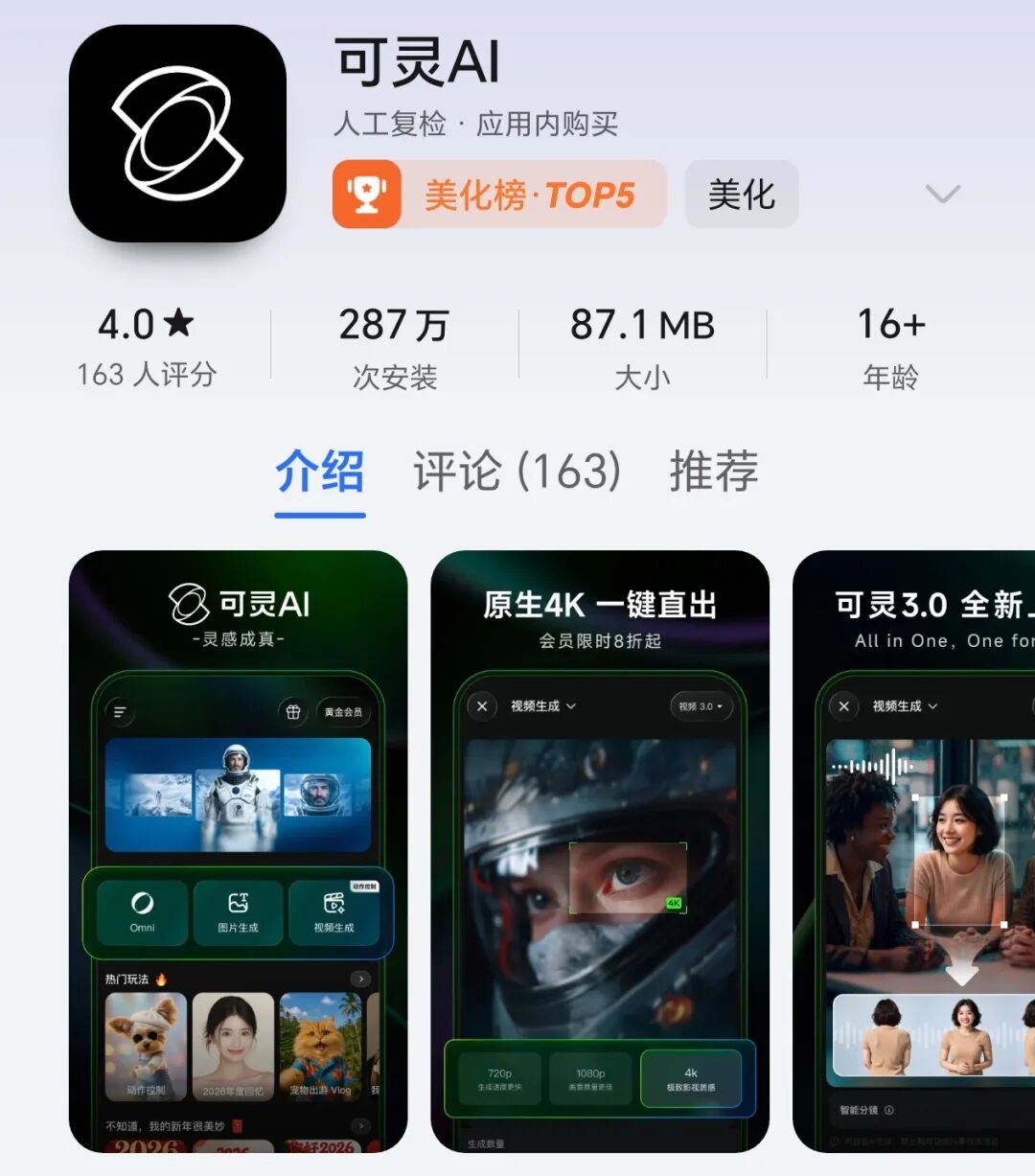
On July 2, the restructuring plan for Kling AI, a subsidiary of Kuaishou Group, was set in motion. Kling AI's operating entity, Beijing Kling, transitioned from a wholly-owned subsidiary to a controlled entity, with Kuaishou retaining a 68.33% stake and continuing to consolidate its financial statements.
Under the restructuring plan, 21 initial investors will inject 13.824 billion yuan ($2.028 billion) into Beijing Kling. The deal also includes an option for additional subscriptions, with total investments not exceeding 20.447 billion yuan ($3 billion), representing approximately 16.67% of Beijing Kling's expanded registered capital.
Based on these figures, Kling AI's post-investment valuation soars to $18 billion, roughly 80% of Kuaishou's current total market value.
Notably, the post-restructuring shareholder lineup of Beijing Kling is impressive, featuring internet industry capital from BAT, PE firms such as Yuanfeng Capital, Guofang Venture Capital, Hony Capital, Primavera Capital, and CITIC Securities, state-owned industrial capital like China Internet Investment Fund, and film and television capital from Huace Film & TV and Mango TV.
Following market norms, independent financing often precedes a spin-off and listing. In its restructuring announcement, Kuaishou also outlined a timeline for Kling AI's listing, setting a deadline of no later than October 30, 2031.
However, just days after Kuaishou's announcement of Kling's restructuring, Tencent Holdings (00700.HK), Kuaishou's largest shareholder, executed a stake reduction plan that sent shockwaves through the market.
On July 6, Tencent divested 272.9477 million Kuaishou shares to a third party through off-exchange block trades, cashing out billions. Its stake plummeted from 15.68% to 9.37%, relinquishing its position as Kuaishou's primary shareholder.
On the same day, Kuaishou, adhering to its repurchase plan, spent 8.35 billion Hong Kong dollars to buy back 174.84 million shares. However, this failed to bolster market confidence, and the stock price tumbled by 12.04% on July 7.
Tencent Holdings, with annual revenues exceeding 200 billion yuan and cash reserves nearing 500 billion yuan, chose a less-than-ideal time to reduce its stake, given Kuaishou's persistently low stock price this year. Thus, the ultimate motive behind this move is certainly not merely to cash out.
By reducing its stake in Kuaishou and increasing its investment in Kling AI, Tencent is strategically reallocating its assets within Kuaishou, shifting from traditional short videos and e-commerce to AI, which represents the future.
The Pressure Mounts on Kuaishou
Since its inception in 2011 as a platform for users to create and share GIFs, to its evolution into a short video social platform in 2013, Kuaishou has been a trailblazer in the global short video arena.
Subsequently, Kuaishou refined its business model, introducing live streaming in 2016, exploring commercialization in 2017, and venturing into e-commerce in 2018. Currently, Kuaishou's three core businesses—advertising, live streaming, and e-commerce—primarily monetize content traffic from short videos.

As the internet industry matures, Kuaishou faces mounting pressure in terms of traffic acquisition and monetization. This growth pressure has been evident in recent years, peaking in the first quarter of 2026.
After surpassing 400 million daily active users in the third quarter of 2024, Kuaishou's quarterly average DAU has remained stagnant, reaching 412.7 million in the first quarter of 2026, with a mere 1.2% increase year-over-year and quarter-over-quarter. With competition from Douyin and WeChat Channels intensifying, how much room remains for Kuaishou to vie for existing users and user engagement?
Also starting from the first quarter of 2026, Kuaishou ceased disclosing quarterly e-commerce GMV data and its growth. Perhaps, in the near future, it will follow in the footsteps of other internet platforms like JD.com and stop disclosing changes in user scale.
In the first quarter of this year, Kuaishou's revenue reached 33.716 billion yuan, a 3.4% year-over-year increase, driven by growth in advertising and Kling AI businesses, while live streaming revenue declined significantly. Net profit stood at 2.905 billion yuan, a 27.0% year-over-year decrease.
In previous years, facing escalating growth pressure, Kuaishou attempted to expand internationally, akin to Douyin's strategy. After several attempts, Kwai emerged as the primary product for international expansion.
However, its international business has encountered hurdles. In the first quarter of 2026, Kuaishou's international revenue was 1.162 billion yuan, a 11.6% year-over-year decrease, and operating profit in the international segment plummeted from 28 million yuan in the same period last year to -31 million yuan.
The Hong Kong stock market's tendency to overlook non-leading companies, coupled with Kuaishou's growth pressure in recent quarters, are the fundamental reasons behind its persistently low stock price.
Who would have envisioned that this leading internet platform, with 400 million DAU, 700 million MAU, annual revenues in the billions, and net profits nearing 20 billion yuan, would have a Hong Kong stock market value of merely 175.1 billion Hong Kong dollars, a fraction of Tencent Holdings' 4.19 trillion market value?

What Lies Ahead for Kling AI?
Fortunately, amidst the AI boom, Kuaishou swiftly capitalized on the new era's opportunities with Kling AI.
Following the AI craze ignited by ChatGPT in 2022 and the global model competition in 2023, the market entered a phase of multimodal differentiated competition in 2024. Leveraging its strengths, Kuaishou AI Lab launched Kling 1.0 in June 2024, becoming the world's first DiT architecture video generation model open to the public and commercially viable.
Over the past two years, Kling AI has undergone rapid iterations. In the fourth quarter of 2025, it released the world's first unified multimodal video model. In February 2026, the Kling AI 3.0 series models were introduced, supporting full-modal input and output covering text, images, audio, and video, seamlessly integrating video understanding, production, and editing into a simplified AI workflow.
Since 2024, Kling AI has been the fastest-growing business within Kuaishou. In the first quarter of 2026, it generated over 650 million yuan in revenue, a more than 300% year-over-year increase. In March 2026, Kling AI's annualized revenue run rate (ARR) approached $500 million.
In the AI large model market, which generally lacks reasonable and sustainable monetization models, Kling AI, based on its leading position in video generation, stands out as a relatively successful model brand.
Meanwhile, Kuaishou is comprehensively empowering its major business lines—content, advertising, live streaming, and e-commerce—with its AI capabilities, and the results are beginning to manifest.
Although Kling AI may not be the most comprehensive or advanced AI product on the market, the synergy between Kuaishou and Kling AI is one of the most compatible in terms of AI capabilities and application scenarios.

While other internet giants predominantly focus on general-purpose large models, Kuaishou's Kling AI has been a product of differentiated competition from the outset. Specializing in video AI capabilities enables it to swiftly establish technical advantages in video generation. However, its drawback lies in the limited potential user base and application scenarios.
Moreover, even within the video generation market, Kling AI faces stiff competition. Douyin's Jimeng AI, leveraging Douyin's ecosystem, is Kling AI's most direct domestic competitor. In April this year, Alibaba launched the Happy Horse video generation model, led by the former core founder of Kling AI, deeply embedded in Alibaba's commercial ecosystem with significant monetization potential.
Beyond technological prowess, the key to competition in video generation large models also lies in investment as a barrier—the longer the time, the smaller the gap with competitors like Kling AI may become. Platform user scale and commercialization foundation also determine long-term monetization capabilities.
Therefore, after Kuaishou dropped the bombshell of Kling AI's restructuring on the market, the waters will remain turbulent for a considerable time, and it's uncertain who will emerge victorious.
-
![]()
OFILM Reports Colossal 460 Million Yuan Loss: Founder Quietly Shifts Focus to Optical Modules!
-
![]()
Yutong Optics and Zeiss Forge Partnership to Develop Quality Measurement System and Launch "Optical Communication Joint Measurement Class"
-
![]()
AutoNavi Revises Splash Screen Ads with Precision Amid Controversy
-
![]()
Unlicensed Vehicle Disputes: AutoNavi Ensnared in the Aggregation Model
-
![]()
Agent: The 'Hard Requirement' for Entering Core Enterprise Systems for the First Time
-
![]()
Global Auto Market Outlook: Sales Decline in China, US, and Europe, Chinese Exports Approach 10 Million
-
![]()
AI Pioneer Breaks Free from the 'Doldrums'
-
![]()
Valuation Exceeds $26 Billion! Three Chinese "Gold Medalists" Shake Up the AI Industry