China Literature's Profits Plummet by 84%: Can Hou Xiaonan Lead a Successful Transformation Amid ByteDance's Aggressive Push?
 08/13 2026
 478
478
Is China Literature Facing a 'Golden Cross' or 'Death Cross'? ByteDance's Tomato + Hongguo Hold the Key?

After market close on August 11, China Literature Group released its H1 2026 financial results. Online reactions indicate widespread disappointment with the performance.
Yet, the stock price surged on August 12 following the earnings release. This intriguing market response suggests investors may be interpreting the results differently.
Revenue reached RMB 3.53 billion, up 10.7% YoY. Gross profit hit RMB 1.79 billion, a 11.1% increase. By these metrics alone, the performance appears respectable.
The profit statement tells a less flattering story. Net profit attributable to shareholders plummeted 84.1% YoY to RMB 135 million. Even when excluding non-cash items and one-time events, non-IFRS net profit attributable to shareholders fell 49% YoY to RMB 259 million.
Market reaction was swift and direct. Investment banks collectively slashed target prices around the earnings announcement.
CLSA lowered its target from HK$42.3 to HK$24.3 (a 42.6% reduction), while cutting its adjusted net profit forecasts for 2026 and 2027 by 44% and 34% respectively.
Jefferies adjusted its target from HK$31 to HK$24.4, citing changing industry trends, WeChat channel's shift to free models, and market focus shifting toward short dramas and AI-generated series.
China Renaissance Securities took a relatively moderate approach, reducing its target from HK$35.4 to HK$24.7 while maintaining a "Buy" rating.
These revenue-growing financial results, which revealed an 80% profit decline and prompted collective target price reductions by investment banks, raise a critical question: Is China Literature experiencing a crisis or undergoing a transformation?
I
Without RMB300 Million Tax Remediation, Performance Wouldn't Look So Dire
Several key factors explain the profit decline.
First was tax remediation—the most significant impact. A subsidiary conducted a self-examination of tax risks related to its Horgos, Xinjiang unit following tax bureau notifications, resulting in RMB166 million in corporate income tax payments for 2020-2022 plus RMB134 million in late fees, totaling approximately RMB300 million recorded as a one-time current period expense.
The company emphasized no administrative penalties were involved and full payment has been completed. This remediation directly reduced net profit attributable to shareholders by RMB300 million.
Second was last year's high base effect. In H1 2025, China Literature recognized RMB598 million in net gains from deemed disposal of invested companies, which did not recur this year. The combination of these two factors created a nearly RMB900 million profit gap.
However, these factors are now in the past. The true uncertainty stems from substantial upfront investments. Production costs for TV dramas, web series, animations, films, short dramas, and AI-animated series totaled RMB433 million in H1, more than doubling from RMB195 million year-on-year.
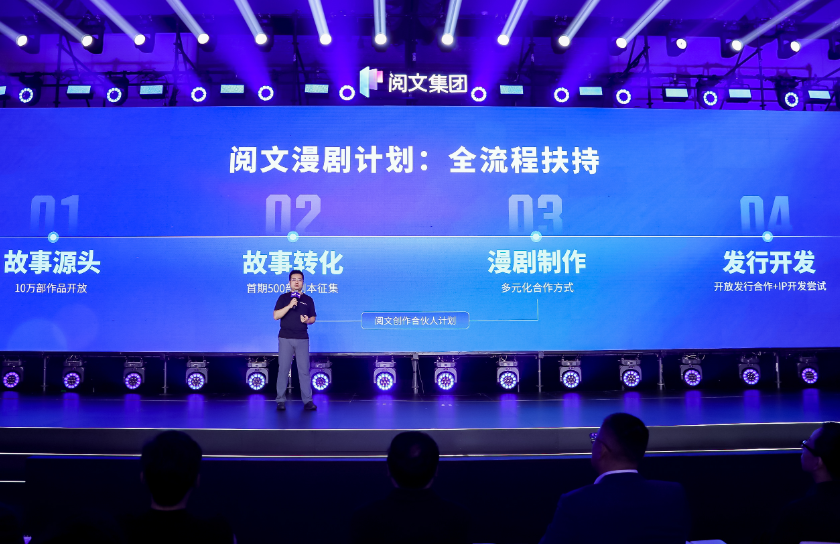
Short drama and AI animation production costs increased by approximately RMB220 million. With most of these projects scheduled for H2 release, expenses were incurred before revenue generation, creating future uncertainty.
After excluding one-time factors, adding back the RMB300 million tax remediation, non-IFRS net profit attributable to shareholders would have been approximately RMB559 million compared to RMB508 million year-on-year—representing about 10% growth. This suggests China Literature's core operating capabilities haven't deteriorated and may have slightly improved when excluding legacy issues and base effects.
Nevertheless, the RMB135 million net profit attributable to shareholders fell short of market expectations around RMB200 million. The impact of upfront costs proved more significant than anticipated.
Selling and marketing expenses reached RMB1.01 billion (up 9.6% YoY), general and administrative expenses hit RMB560 million (up 15.5% YoY), and R&D spending totaled RMB300 million (up 39.8% YoY). These increases directly relate to IP business expansion.
While the profit statement appears concerning, this doesn't necessarily indicate major problems—nor can all issues be dismissed as temporary.
The upfront cost strategy represents an active choice, but its success must be validated by H2 revenue. Whether these expenditures will generate returns remains uncertain.
II
Monthly Paying Users Decline by 1 Million
The financial report warrants closer examination of business structure.
Online reading revenue fell 7.3% YoY to RMB1.84 billion, with its revenue share declining from 62.2% to 52.1% year-on-year.
This represents China Literature's foundational business and core operation for two decades.
User metrics paint a clear picture. Average MAUs reached 134 million (down 5.1% YoY). Monthly paying users totaled 8.2 million (down 10.9% YoY), representing a full 1 million decline year-on-year.
This marks the lowest level in five years.
The decline results partly from passive factors: Free novel platforms like Fanqie and Qimao continue to siphon users, while short videos and short dramas compete for user time.

China Literature candidly acknowledged in its report: "Online reading faces increasingly diversified and rapidly expanding competition from IP visualization markets."
In response, the company increased free reading content in WeChat ecosystem self-operated products, though free content monetization efficiency lags far behind paid models.
Tencent channel MAUs declined 20.5% YoY, partly due to the company actively directing core content to its proprietary platforms.
Interestingly, ARPU for paying users increased from RMB31.3 to RMB32.7 (up 4.5% YoY). While some users departed, remaining subscribers spent more—representing user purification, albeit within a shrinking user base.
The decline also stems from active strategic shifts. China Literature is redirecting online reading traffic and content toward short dramas and AI animations.
As the report states: "Content distribution is shifting from online reading to short dramas and AI animations." This represents an internal resource reallocation rather than simple revenue decline.
Meanwhile, copyright operations revenue surged 41.9% YoY to RMB1.61 billion. Combined with other revenues, copyright operations and other businesses reached RMB1.69 billion (up 40.3% YoY), accounting for 47.9% of total revenue.
The most notable growth came from short dramas and AI animations, which generated RMB430 million in H1—more than triple the previous year's RMB140 million (up 230% YoY).
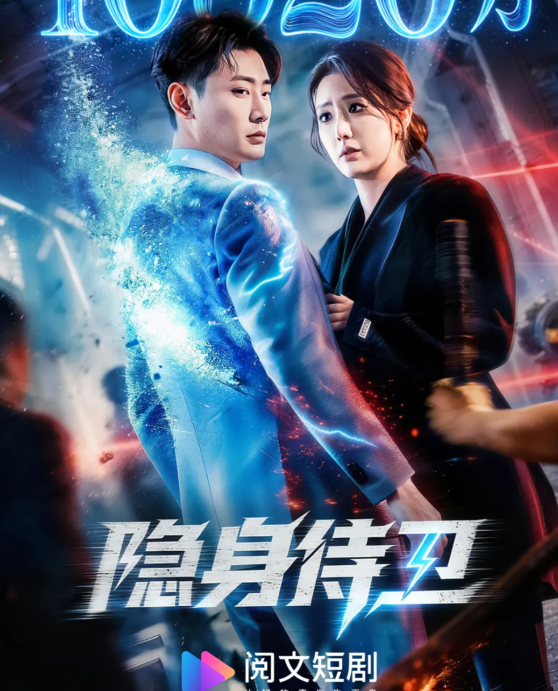
Breaking this down: Over 90 short dramas were released, with men's fiction title Hidden Bodyguard achieving 5 billion+ views and 100 million+ platform heat value (popularity score) to become an industry phenomenon.
The women's fiction original IP "Sweet Wife" series accumulated over RMB50 million in profits, establishing a replicable monetization model for original short drama IPs.
This demonstrates China Literature's scalable production capabilities in short dramas rather than relying on occasional hits.
AI animations performed even more strongly, with over 1,000 web novels adapted into AI animations in H1. Forty-six titles exceeded 100 million views, 367 surpassed 10 million views, and the million-view rate was 5x the industry average.
Flagship title 3,000 Blessings exceeded 3 billion views across platforms and propelled its source novel into Qidian's top 10 bestseller list.
According to DataEye, China Literature ranked #1 among major platforms for AI drama/animation copyrights in H1 with over 1.6 billion popularity points.
Additionally, IP derivative GMV reached RMB780 million (up 60% YoY), setting a new record.
During 618, China Literature Goods flagship store GMV surged over 300% YoY, BW comic convention (comic exhibition) on-site GMV grew 84%, and offline pop-up event GMV increased 203% from January to July.
From blind box figurines to towels and bedsheets, IPs are penetrating higher-frequency lifestyle scenarios.
Film/TV and animation businesses remained active. Cloud Data shows four of 2026's top 10 long-form drama series and eight of the top 10 animation series were adapted from China Literature IPs.
The Under One Person S6 achieved 21,800+ peak heat on Tencent Video—the highest for any 2D animation in three years.
One business declines while another surges, but these trends are interconnected.
The decline in online reading and growth in copyright operations represent two sides of the same transformation. China Literature is shifting content from text to visual formats, redistributing online reading traffic to short dramas, animations, and derivatives.
This represents strategic repositioning rather than simple displacement.
III
Golden Cross or Death Cross?
Examining both trends together reveals a critical signal.
Online reading generated RMB1.84 billion while copyright operations reached RMB1.61 billion (RMB1.69 billion including other businesses)—a mere RMB230 million gap.
Given H1 growth rates (online reading down 7.3%, copyright operations up 41.9%), copyright operations will likely surpass online reading as China Literature's primary revenue source next quarter.
This represents more than numerical crossover—it signifies corporate identity transformation.
Consider Disney's evolution: The company originally relied on animation film box office revenue before derivative and licensing income surpassed ticket sales to become its largest revenue stream.
From that moment, Disney truly transformed from a content producer to an IP operator.
Box office revenue ceased being the endpoint and instead became an IP value activator.
China Literature is undergoing a similar inflection point, transitioning from a web novel platform collecting subscription fees to an IP industrial development company. If successful, this transformation will require reevaluating its valuation logic.
China Renaissance Securities' latest research report assigns China Literature a 20x PE—above the 17.4x global average for IP operators—citing its upstream IP advantages (platform hosting millions of authors and over 18 million works) and relatively asset-light model that begins with low-budget animations/short dramas before selectively adapting long-form content.

However, a deeper question remains: Does declining online reading revenue indicate disappearing value?
We believe not. Paid reading's role is evolving from profit center to IP screener.
A web novel undergoes multiple Filter (screening) stages from initiation to completion—through collections, continuous reads, monthly tickets, and rewards.
Every reader click and subscription represents tangible validation.
After two decades, this mechanism essentially functions as an IP screening system powered by massive user behavioral data.
China Literature's animation million-view rate is 5x the industry average, and its short drama hit rate is 4x the market average. This success rate doesn't come from AI but from upstream paid reading screening.
As AI lowers content production barriers and supply explodes, the ability to identify quality stories becomes increasingly scarce.
Small 3-5 person teams can now produce an animation weekly—production capacity is no longer the bottleneck, but judgment capability is.
That said, screeners themselves require fuel. Sustained online reading decline would impact new writer recruitment and quality content supply.
While H1 attracted 240,000 new writers who produced 460,000 new works totaling over 30 billion characters, the 1 million decline in paying users cannot be ignored.
Proprietary platform MAUs grew slightly (0.8% YoY), indicating core readership remains, but Tencent channel MAUs dropped 20.5%—revealing overall traffic contraction.
Sustaining copyright operations' growth also faces questions.
Competition in short drama/animation sectors is intensifying. DataEye shows approximately 50,000 animations were broadcasting in December 2025 with a 0.18% hit rate, but by February 2026 this doubled to 120,000 broadcasts while the hit rate fell to 0.12%.
Production capacity more than doubled, yet hit rates declined. While AI lowers barriers, it also weakens competitive moats.
CITIC Construction Investment's research highlights a risk: Pure paid animation ROI nears 1.1, with sales expenses potentially consuming 70-80% of revenue.
While derivative GMV of RMB780 million appears impressive, penetration remains low relative to China Literature's IP library size. The path forward carries significant uncertainty.
The golden cross represents direction, not destination. The critical question is whether the new growth engine can outpace the decline of the old one.
IV
Entering the "Critical Window Period"
Having discussed key variables, future success hinges on continuous monitoring. Several milestones warrant attention.
Most critical is the 2026 annual report.
The RMB220 million in upfront short drama/animation production costs from H1 corresponds to projects primarily launching in H2.
The annual report will serve as the first key validation point for return on investment.
Institutional forecasts for full-year net profit attributable to shareholders vary widely: CITIC Construction Investment predicts RMB1.013 billion, Guosheng Securities RMB718 million, and China Renaissance RMB788 million.
Most predictions preceded the H1 results. If H2 projects launch as scheduled and cost recovery proceeds smoothly, market confidence will recover. Any surprises would further pressure valuations and invite greater scrutiny of the valuation logic—which the market would likely find difficult to accept with alternative explanations.
The viability of Qidian Theater and ToonScroll also merits mid-term attention.
Launched on July 15, Qidian Theater represents China Literature's first proprietary short drama app focused on IP adaptations. Leveraging its library of over 100,000 web novels, it implements incentive mechanisms including guaranteed payments, permanent revenue sharing, and periodic rankings.

Its potential lies in creating an internal IP development loop where novels still in serialization can spawn AI-animated adaptations without waiting for completion or copyright transactions.
Traditional IP development chains are excessively long—Joy of Life took over a decade from serialization to adaptation, causing many mid-tier and lower-tier IPs to expire before monetization.
If Qidian Theater can shorten this cycle to weeks, mid-to-long-tail IPs gain viable monetization pathways.
Overseas platform ToonScroll launched in May, planning to release 1,000+ animations this year supporting English, French, Japanese, Korean, and other languages targeting North America, Southeast Asia, and Latin America.
Whether these platforms can achieve independent user scale and monetization closed loop (closed loops) will determine whether China Literature remains merely an IP supplier or evolves into an IP operator.
Risks remain apparent. Qidian Theater faces established platforms like Hongguo Short Drama and Hema Theater that already dominate user mindshare. Domestic short drama viewing habits have solidified with highly concentrated traffic.
ToonScroll faces challenges overseas, including localization and high customer acquisition costs, and the pressure on ROI for purely paid-for comic dramas remains.
However, we could be given a bit more time to observe.
Then there's the perennial question of whether the AI tool matrix can evolve from efficiency tools into a competitive barrier.
China Literature released its Buddy series of AI agents in the first half of the year: NovelBuddy assists in online literature creation, DramaBuddy handles comic drama production, and IPBuddy completes IP value assessments for works in just a few minutes.
Together, these three initiatives cover the entire chain from creation and adaptation to IP development.
DramaBuddy claims to be able to 'read' a million-word novel in just five minutes, and AI Book Query can instantly pull up character relationships and key plot points, making adaptations less likely to go off track.
But honestly, the competitive barrier of AI tools themselves isn't particularly high. These tools might be good for telling stories to retail investors in A-shares, but institutional investors in Hong Kong might not be as impressed.
If China Literature can use them, so can ByteDance. ByteDance, the force behind Hongguo Tomato, has stronger channels and traffic than China Literature.
China Literature's advantage doesn't lie in a single tool but in its systematic approach that combines tools, an IP library, and a distribution platform.
Porter once said that a company's competitive moat comes from a set of interlocking activities, not just a single isolated component.
Single points are easy to copy, but systems are hard to replicate.
The problem is that this system is still just a framework, and its ultimate effectiveness will take time to verify.
V
In Closing
Is this financial report a disaster or a transformation?
Standing in front of the current quarter's income statement, it doesn't look good. RMB 300 million in tax adjustments, the disappearance of a RMB 598 million high base, and RMB 220 million in upfront costs are all eating into profits. It's not unreasonable for investment banks to cut their target prices—CLSA directly slashed it by over 40%, indicating that market expectations for short-term profitability are indeed declining.
But looking at the evolution of the business structure, it could mark a significant moment. The revenue gap between online reading and IP operations has narrowed to RMB 230 million, and it's likely to be overtaken next quarter.
China Literature is transforming from an online literature platform reliant on subscription fees into a content company that monetizes through industrialized IP operations.
Whether this transformation will succeed remains uncertain.
Paid users for online reading are still declining, the hit rate in the short and comic drama sectors is falling, the proprietary platform hasn't proven its viability yet, and the competitive barrier of AI tools isn't deep enough.
China Literature holds the industry's largest IP library, has ecological support from Tencent, and a solid financial foundation with RMB 9.86 billion in net cash and zero interest-bearing debt. However, whether these advantages can translate into sustained profits depends on the real returns from projects launched in the second half of the year.
Hou Xiaonan stated in the financial report that the company aims to 'usher in the next golden decade of IP value creation.'
That sounds inspiring, but a golden decade isn't achieved through mere rhetoric. Moreover, the next annual report should at least contain some positive news; otherwise, the market won't wait indefinitely, nor will competitors like ByteDance stand still.
-
![]()
Tencent Makes a Bold Move on AI, But Will the Capital Market Buy In?
-
![]()
How Deepseek V4 Pro Outperformed Claude: The Scaling Up of China’s Super-Nodes
-
![]()
Summer Blockbuster Season Sees 3% Market Share for Panoramic Cameras: Far from the Mainstream Imaging Trend
-
![]()
Summer Blockbuster Season Captures 3% Market Share: Panoramic Cameras Remain Outside Mainstream Imaging Trends
-
![]()
Why Are Giants Like Alibaba Remaining Silent Amid Zhong Shanshan's Criticism?
-
![]()
Which Automakers Have Achieved Over One Million Export Units for Two Straight Months?
-
![]()
Leapmotor Also Builds a MINI Cooper
-
![]()
Why Aren’t Joint Venture Family Cars Being Phased Out?