Why Aren’t Joint Venture Family Cars Being Phased Out?
 08/13 2026
 515
515
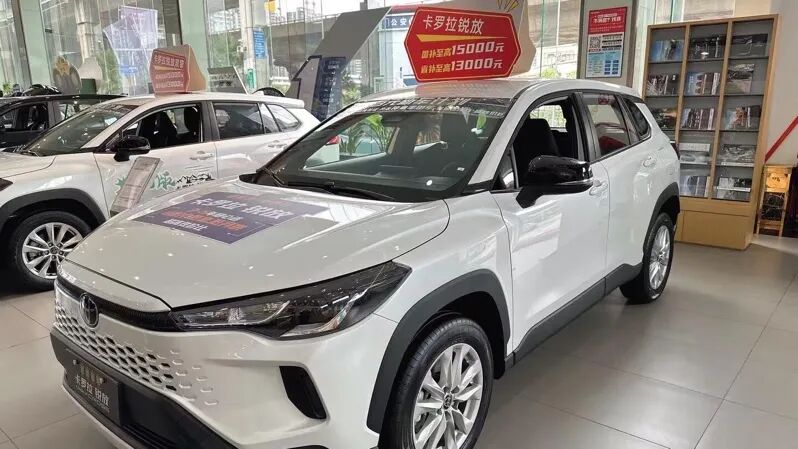
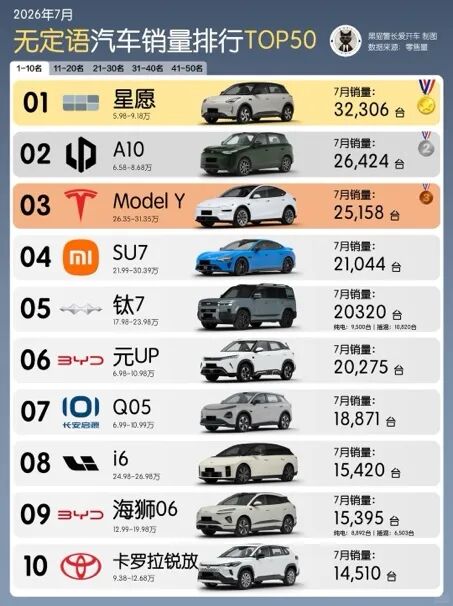
The passenger vehicle sales rankings for July reveal a highly symbolic shift. Among the top ten best-selling models, only the Toyota Corolla Cross remains a traditional fuel-powered vehicle.
This change is in line with broader market trends. Data from the China Passenger Car Association (CPCA) indicates that nationwide passenger vehicle retail sales dropped by 20.9% year-on-year in July, with fuel vehicle sales plummeting by 44%. Furthermore, this is not an isolated occurrence but rather another acceleration in a trend of declining market share for fuel vehicles over several consecutive months.
From a market structure perspective, it is evident that Chinese automotive consumption has shifted its focus towards new energy vehicles (NEVs). This shift is particularly noticeable in the sedan market.
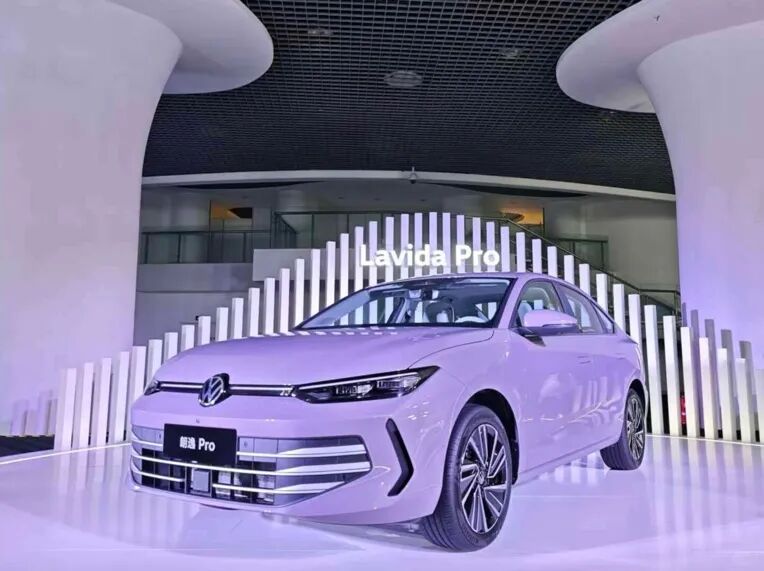
In July, among the top ten best-selling sedans, only three were powered by fuel: the Volkswagen Lavida, Volkswagen Sagitar, and Toyota Camry. Notably, the Camry was the sole mid-size fuel sedan in the top ten. The rest of the list, apart from mid-to-large new energy sedans like the Xiaomi SU7, was dominated by compact and subcompact electric models such as the Geely Xingyuan, BYD Dolphin, and MG4.
New energy vehicles have started to fully dominate the sedan market. Interestingly, however, when the rankings are expanded to the top twenty, a striking contrast emerges: the mid-size sedan market remains predominantly controlled by joint venture fuel vehicles. Models such as the Volkswagen Magotan, Passat, Toyota Avalon, and Mercedes-Benz E-Class maintain a stable market presence.
Thus, a counterintuitive phenomenon has arisen: despite the overall decline in the market share of fuel vehicles, joint venture family cars have not collapsed as swiftly as many had predicted.

The Resilience of Joint Venture Family Cars
Why do fuel-powered family cars remain resilient? The reasons are more intricate than many realize.
Firstly, sedans are inherently more challenging to electrify than SUVs.
SUVs offer greater spatial flexibility, making it easier to accommodate plug-in hybrid systems or large batteries for extended range. More space equates to higher technical tolerance. Sedans, however, face greater constraints.
Especially compact and mid-size sedans, with their limited height and compact underbody space, pose significant challenges for automakers. Arranging batteries, motors, and thermal management systems within confined spaces while ensuring rear passenger comfort, seating posture, and trunk capacity demands exceptional technical expertise and cost control.
In simpler terms, new energy SUVs can more easily "add features," while new energy sedans are more prone to revealing shortcomings. This explains why SUVs have long been the primary focus in China's new energy vehicle market.
From the Li Auto L9 and Seres M9 to the Lynk & Co 900 and Denza N9, Chinese automakers have relentlessly pursued larger vehicles. Large SUVs not only convey a sense of luxury but also align better with new energy platforms. Li Xiang, the founder of Li Auto, publicly stated that the company avoids sedans because they lack "sportiness." However, the deeper reason lies in the sedan market's lower tolerance for error.
Consumers demand low energy consumption, spacious interiors, and a balance of comfort and handling from new energy sedans. Unlike SUVs, sedans cannot rely on a single selling point to achieve breakthrough success. Consequently, while Chinese automakers have focused on larger "8-Series" and "9-Series" SUVs in recent years, few new energy sedans have consistently dominated sales rankings.
Even popular domestic sedans like the Geely Galaxy, Emgrand, BYD Qin, BYD Seal, and Chery Fuyun have failed to completely displace classic joint venture models such as the Sylphy, Lavida, Sagitar, and Corolla.
The true strength of fuel-powered family cars lies not just in their branding but in their mature product capabilities honed through over two decades of market competition.
For instance, the Lavida's balanced performance, the Sagitar's highway stability, the Sylphy's fuel efficiency and comfort, and the Camry's durability and resale value cannot be simply replicated through specification upgrades.
While many new energy vehicles excel in smart cockpits, screen size, and acceleration, joint venture fuel sedans retain strong advantages in long-term usability, such as durability beyond five years, maintenance networks, long-distance reliability, and resale value.
Especially in third- and fourth-tier cities, fuel sedans remain a "safe choice." For Chinese households, "certainty" remains a critical factor in car purchases. This explains why, despite the 44% overall decline in fuel vehicle sales, models like the Lavida, Sagitar, and Camry continue to hold their ground.
Can Joint Ventures Sustain Their Dominance in the Family Car Segment by Emulating Chinese Automakers?
Joint venture brands are not remaining idle. Facing the new energy wave, they have begun adopting the manufacturing logic of Chinese automakers.
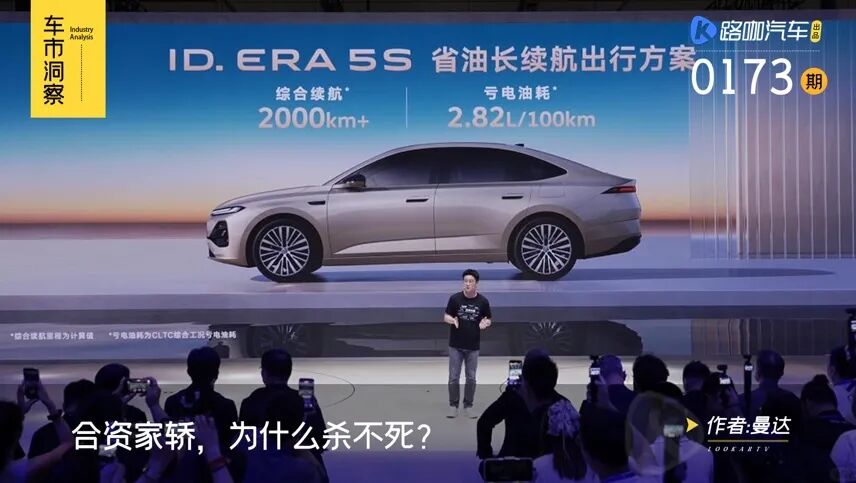
The most notable example is SAIC Volkswagen's newly launched ID. ERA series.
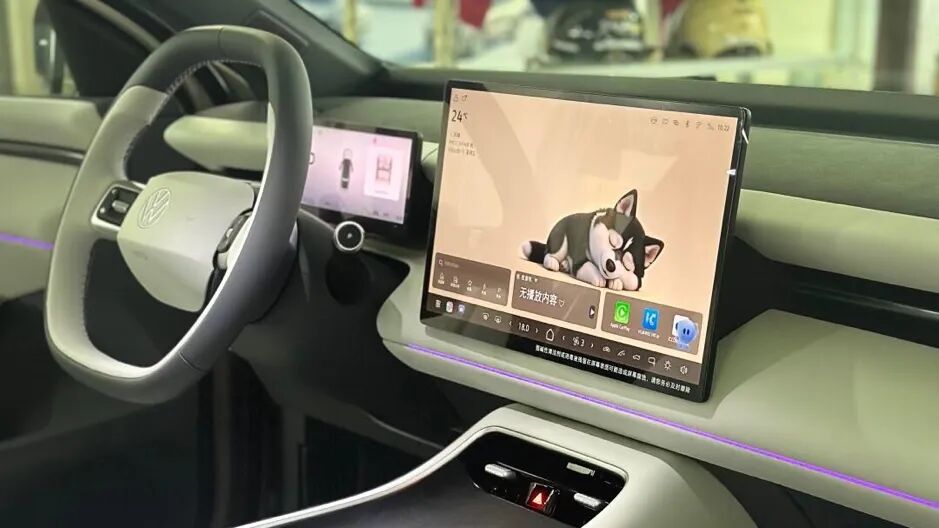
The pre-sale price for the first sedan, the ID. ERA 5S, ranges from RMB 115,900 to RMB 145,900. The top-spec Max version offers urban and highway NOA (Navigate on Autopilot) functionality, marking its entry into China's core intelligent driving competition.
Moreover, following industry norms, the final pricing is likely to be even lower. In other words, SAIC Volkswagen has started adopting Chinese automakers' strategies: competitive pricing paired with rich intelligent features.
This represents a significant shift. Consumers prioritize three things: high specifications, strong intelligent capabilities, and low pricing. Brands that deliver on all three are more likely to succeed. The ID. ERA 9X has already received initial positive feedback.
Dubbed by many industry insiders as "the most un-Volkswagen-like Volkswagen," the ID. ERA 9X clearly draws inspiration from domestic "9-Series" models like the Li Auto L9, Seres M9, and Lynk & Co 900 in terms of product definition and comfort-oriented approach.
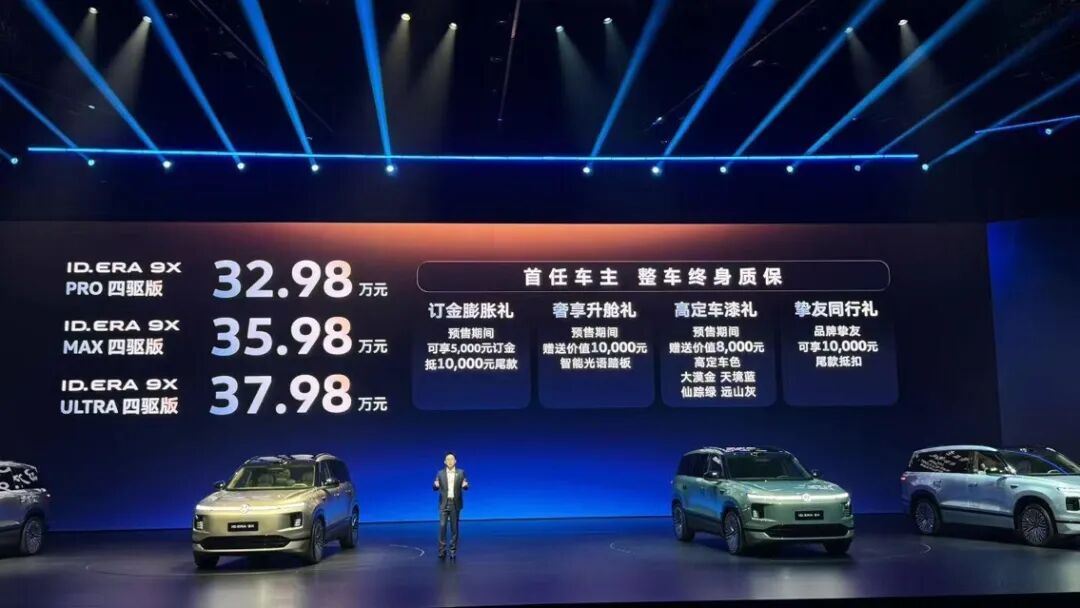
This "Sinicization" or "localization" extends to technical systems. For example, the ID. ERA 5S uses SAIC's proprietary platform, while its intelligent driving solution is developed by Horizon Robotics, a joint venture between Volkswagen and Horizon Robotics.
Joint venture automakers have become adept at leveraging China's local technology and supply chain ecosystems. Essentially, they recognize that the key to competing in China's new energy market lies not in global experience but in Chinese speed.
For SAIC Volkswagen, another natural advantage exists: its massive user base accumulated during the fuel vehicle era. Models like the Lavida and Passat have long been among China's most successful family cars.
However, the challenge remains: even after adopting Chinese automakers' manufacturing approaches, joint venture brands have yet to achieve significant success in the new energy sedan market.
Models like the Toyota bZ4X, Nissan N7/N6, and Buick Electra L7 have followed similar trajectories: high initial excitement followed by rapid sales declines once the honeymoon phase ended. Many of these models struggle to maintain monthly sales above 1,000-2,000 units.
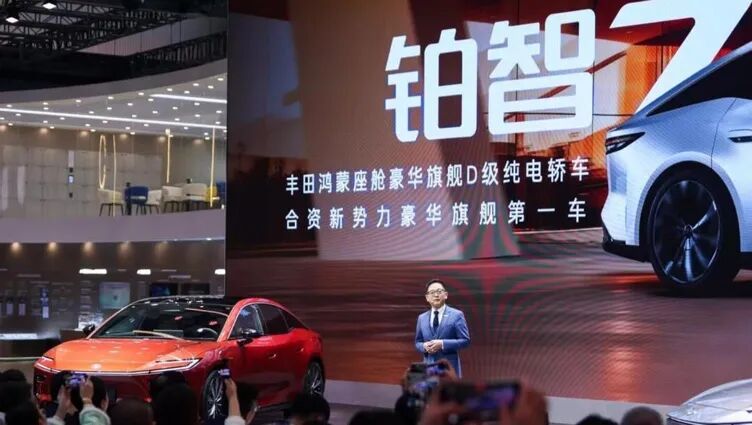
This highlights a reality: joint venture brands can mimic Chinese automakers' specification and pricing strategies but find it difficult to replicate the systemic capabilities of Chinese new energy brands in a short time.
As a result, China's automotive market presents an intriguing contrast: joint venture brands remain strong in the fuel-powered family car segment but struggle to gain traction in the new energy sedan market.
The former represents brand credibility and product reputation built during the fuel vehicle era, while the latter tests entirely new systemic competitiveness in the new energy age. To some extent, this resembles a balancing act—difficult to master simultaneously.
Ultimately, whether joint venture family cars can maintain their market position hinges on how much vitality fuel vehicles still possess in China. For now, despite rapid new energy growth, a significant portion of Chinese consumers still demand fuel vehicles. However, this space is steadily shrinking.
-
![]()
Tencent Makes a Bold Move on AI, But Will the Capital Market Buy In?
-
![]()
How Deepseek V4 Pro Outperformed Claude: The Scaling Up of China’s Super-Nodes
-
![]()
The Real Story Behind Zhong Shanshan’s ‘Criticism’ of E-commerce
-
![]()
Summer Blockbuster Season Sees 3% Market Share for Panoramic Cameras: Far from the Mainstream Imaging Trend
-
![]()
Summer Blockbuster Season Captures 3% Market Share: Panoramic Cameras Remain Outside Mainstream Imaging Trends
-
![]()
Why Are Giants Like Alibaba Remaining Silent Amid Zhong Shanshan's Criticism?
-
![]()
Which Automakers Have Achieved Over One Million Export Units for Two Straight Months?
-
![]()
Leapmotor Also Builds a MINI Cooper