Bu Yizhou from Junyuan Capital: The Allure of Commercial Space Investment Transcends Mere Rocket Recovery Success
 08/20 2026
 338
338
Special Contributor / Bu Yizhou, Managing Partner of Junyuan Capital
Editor's Note:
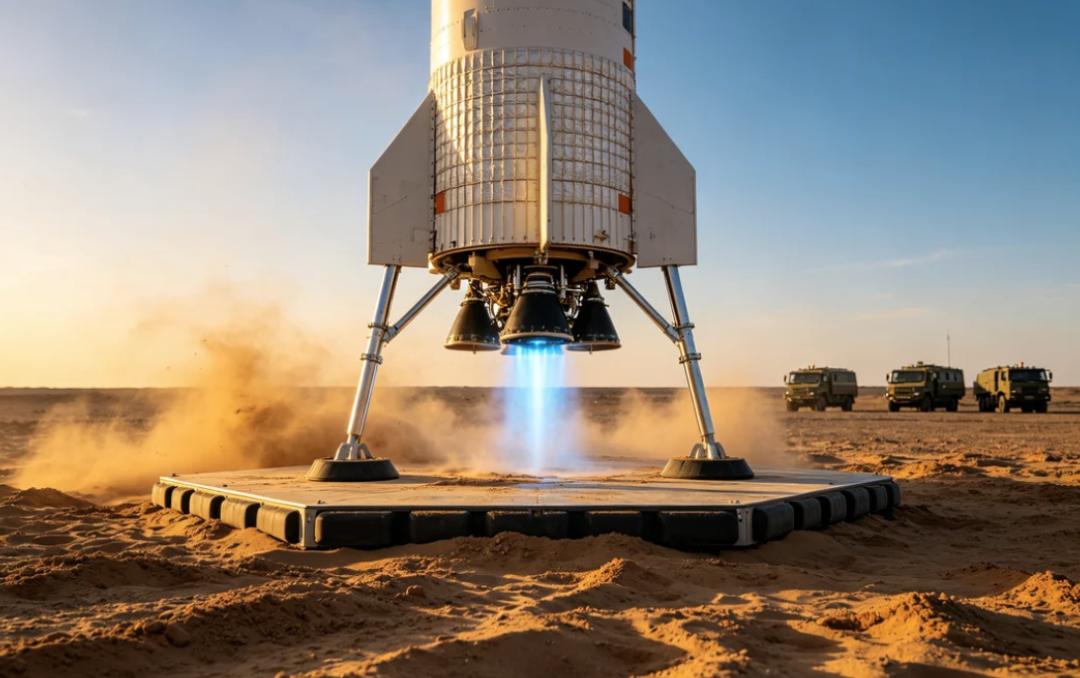
On August 19th, coinciding with the Qixi Festival, LandSpace's ZQ-3 Y2 rocket achieved a successful launch and orbital insertion, with its first stage accomplishing a flawless landing recovery. This milestone marks the inaugural achievement of such a feat within China's private commercial space sector, finally answering the long-standing question of which private rocket enterprise would pioneer rocket recovery.
Bu Yizhou, the author of this article, serves as a managing partner at Junyuan Capital and is an investor in LandSpace.
In his investment philosophy, the true value of a commercial rocket company lies not in a singular technological breakthrough but in two more formidable challenges: the ability to consistently secure and execute missions (mission execution density), and the capacity to progressively reduce unit costs as mission volume escalates, thereby maintaining reasonable gross profits (profit retention capability).
Drawing insights from today's accomplishment, Bu Yizhou revisits a frequently oversimplified question: Is the disparity between Chinese and US commercial space sectors rooted in capability or organizational strategy?
His response leans towards the latter: China already boasts a comprehensive national space system. The role of commercial entities is not to fill voids from scratch but to innovate supply methods and diminish system costs within the existing mission framework. SpaceX's divergent path is largely attributed to the unique internal mission closed loop (closed loop) forged by Starlink, a feat challenging for others to emulate.
The following is the main text. Enjoy:
Today, LandSpace's ZQ-3 Y2 rocket has successfully launched and entered orbit, with its first stage achieving a planned and successful land recovery. Congratulations to China's private commercial space sector on this remarkable breakthrough. The question of which private rocket company would first achieve recovery now has a definitive answer.
As an investor intimately involved with China's commercial space sector, I believe it's time to set aside the long-held preoccupation with reusable rockets in China's commercial space endeavors. Adhering to the law of technological diffusion, capability breakthroughs will swiftly disseminate through engineering talent, supply chains, infrastructure, and mission demand, gradually becoming industry-wide standards. From the Long March 10B to LandSpace, and onto more practical missions, the evolution continues.
From this day forward, the focus of commercial rockets can shift back to the broader industry landscape, without the need to excessively magnify a single capability. After this romantically engineered Qixi Festival, an even more spectacular and grand industrial development awaits. This is truly a cause for celebration.
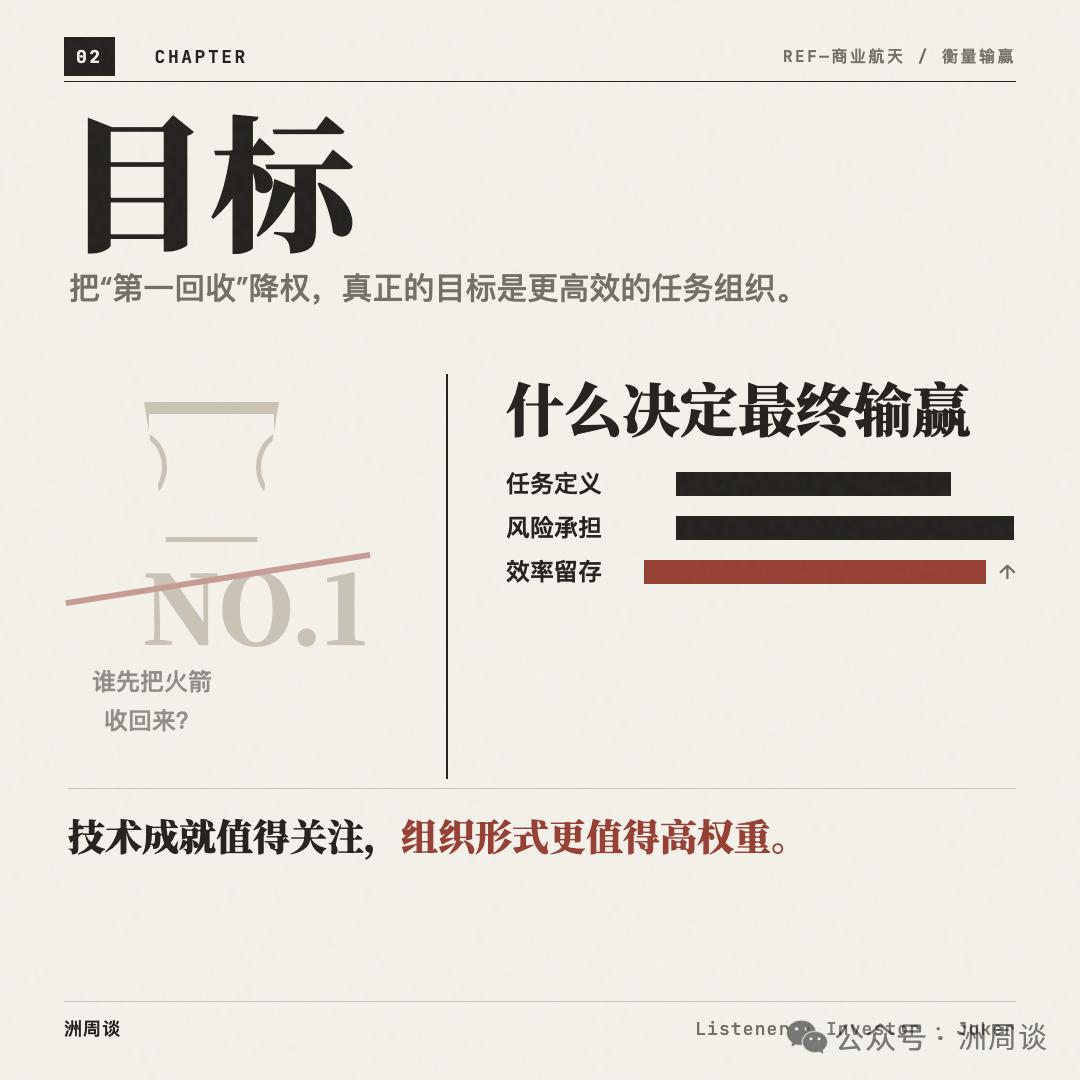
The question of who will become China's first private company to achieve rocket recovery largely arises from a comparison with the United States.
The narrative "The US has it, so China must have it too" is a compelling one. It directly links technological achievements to national competition and easily frames a company's engineering progress as the vanguard of the times. In many discussions I've encountered, commercial space is often pigeonholed within the context of semiconductor self-sufficiency. While they may share superficial similarities, their underlying motivations differ significantly.
Semiconductors face the risk of supply chain disruptions. China must therefore master critical supply capabilities. Here, the imperative is strong for "China to possess its own."
China's commercial space sector does not originate from this premise. China already possesses rockets, satellites, launch sites, tracking and control systems, and a comprehensive national mission framework. It does not lack the capability to "send things into space." The successful controlled return of the Long March 10B's first stage, its maritime net recovery, and today's land recovery by LandSpace all attest to the establishment of key technological links for "recoverability."
The disparities between Chinese and US commercial space sectors are more pronounced in the organizational forms of space missions: who defines the missions and allocates resources, who shoulders the research and development and failure risks, who executes the missions, which components are more efficiently handled by whom, and who reaps the cost-reduction benefits.
For the nation, the objective is to continually accomplish space missions at a lower overall system cost while upholding strategic security and necessary redundancy.
For the industry, the goal is to discover an organizational approach that facilitates more frequent missions, faster feedback loops, and continuously declining costs.
From an investment standpoint, the aim is to identify entities capable of surpassing the industry's average efficiency and retaining efficiency gains as corporate profits.
The primary divergence lies in the objectives. Then arises the question of why China and the US have adopted divergent organizational approaches, and what are the phased (phased) goals for commercial space companies under China's unique circumstances?
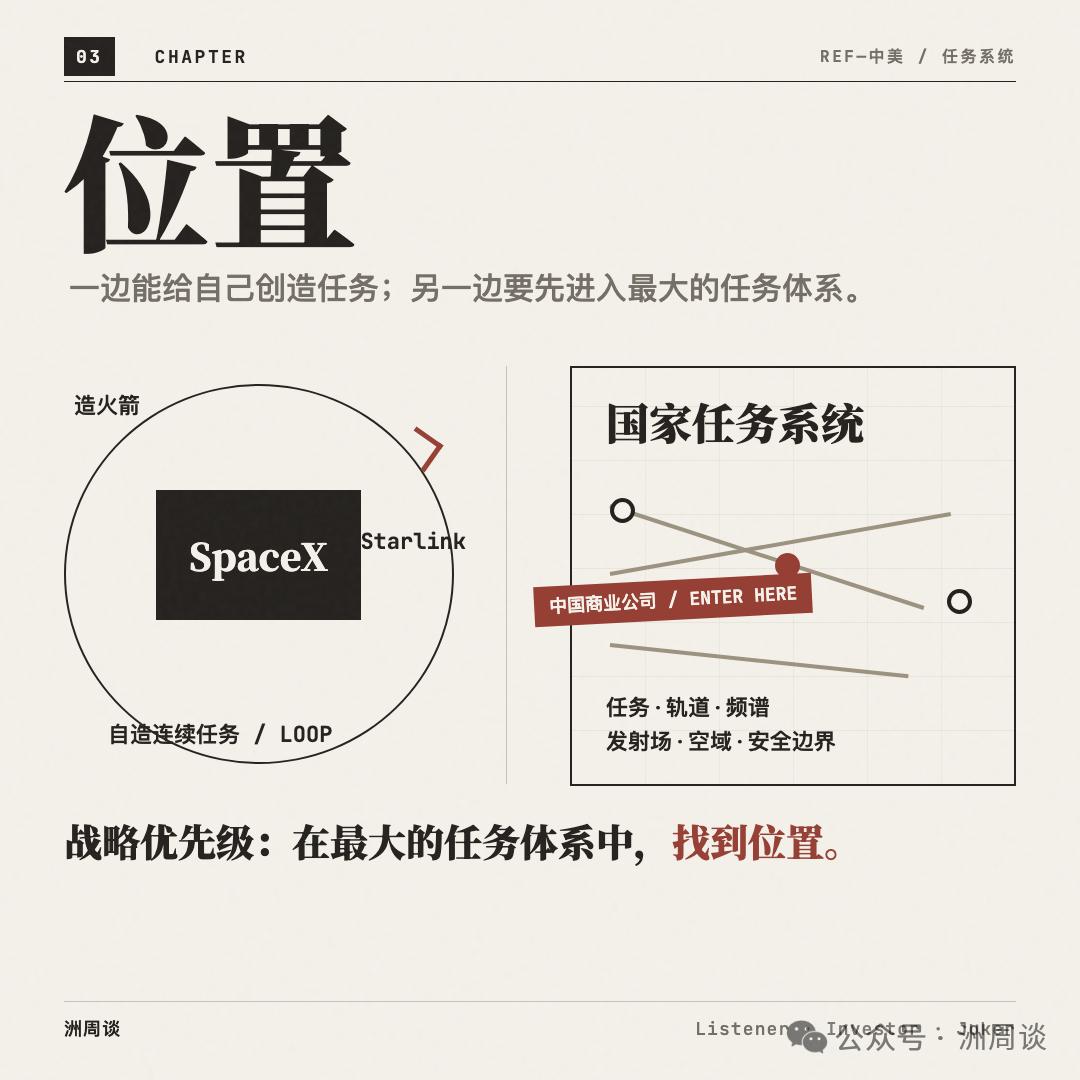
The development of the US commercial space sector commenced with NASA confronting a transportation gap for the space station. In certain missions, the government transitioned from being a system developer to a mission purchaser: the government set the mission and safety parameters, while enterprises decided on the product solution, bore some of the costs and overrun risks, and retained product autonomy and cost-reduction benefits.
SpaceX later introduced a unique closed loop that is difficult for others to replicate. Starlink, invested in and constructed by the same company, continuously generates internal launch missions. It can both build rockets and tailor them to the missions.
China's starting point is diametrically opposite.
China already possesses a complete national space system. The current mandate for commercial companies is not to fill gaps in national capabilities but to innovate supply methods within the existing mission system and reduce overall system costs.
Mission control dictates that SpaceX can create continuous missions for itself and determine its annual flight frequency. However, under China's current developmental framework, the number of national constellation launches, their timing, mission allocations, orbits, frequency spectra, launch sites, airspace, and safety parameters are still coordinated (coordinated) by the state.
At this juncture, the national mission system remains the largest market for commercial rocket companies. The priority for commercial entities is not to craft a complete and elaborate narrative outside the system but to find their niche within this expansive mission system.
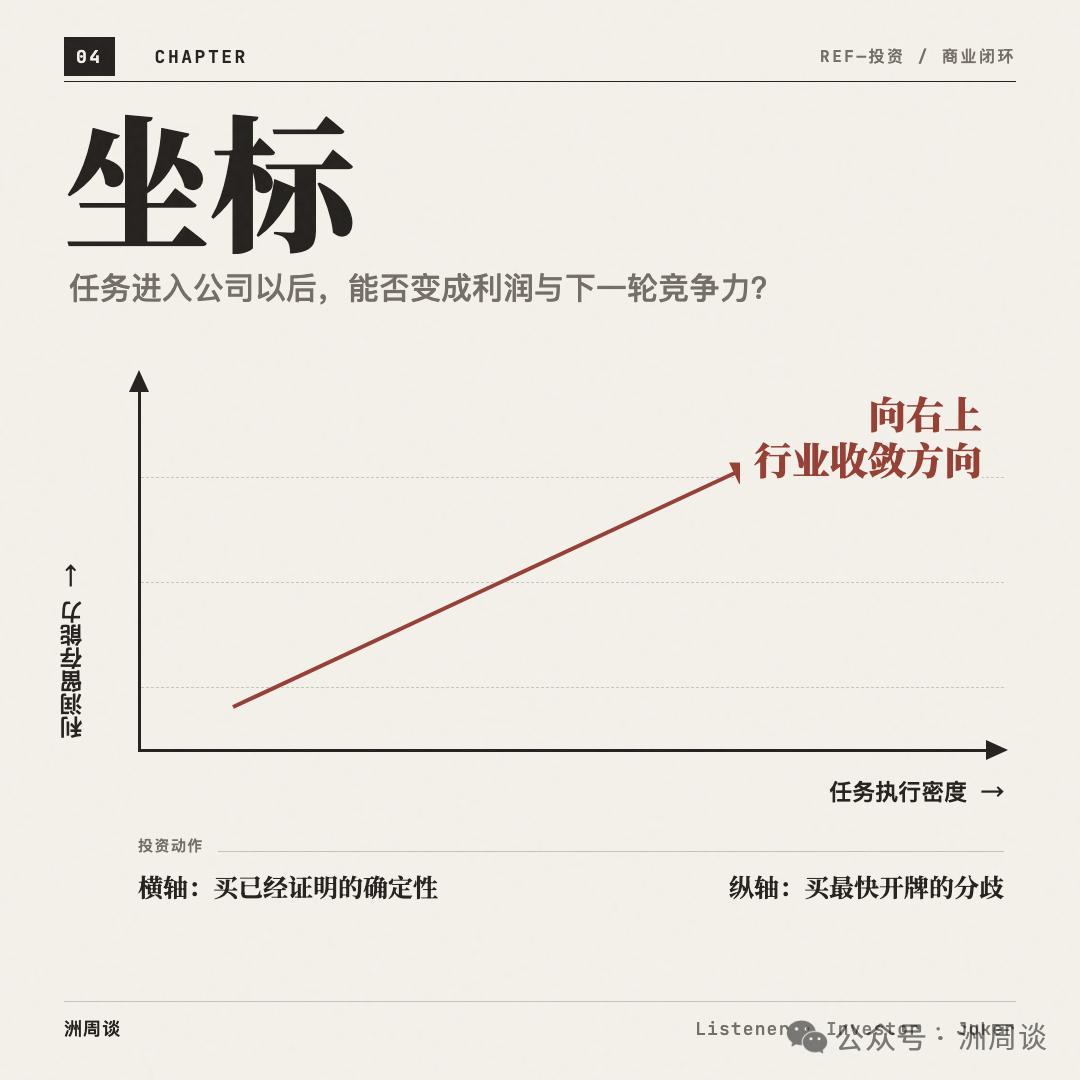
Let's delve into investment considerations. For commercial rocket companies, we can envision two axes. The horizontal axis represents mission execution density: the ability to consistently secure and execute missions. The vertical axis represents profit retention capability: the ability to reduce unit costs as mission volume increases and retain reasonable gross profits even as procurement prices decline.
These two axes govern the two ends of the commercial closed loop (closed loop). The horizontal axis determines whether there are sufficient missions entering the company, while the vertical axis determines how much profit and next-round competitiveness these missions can generate after passing through the company.
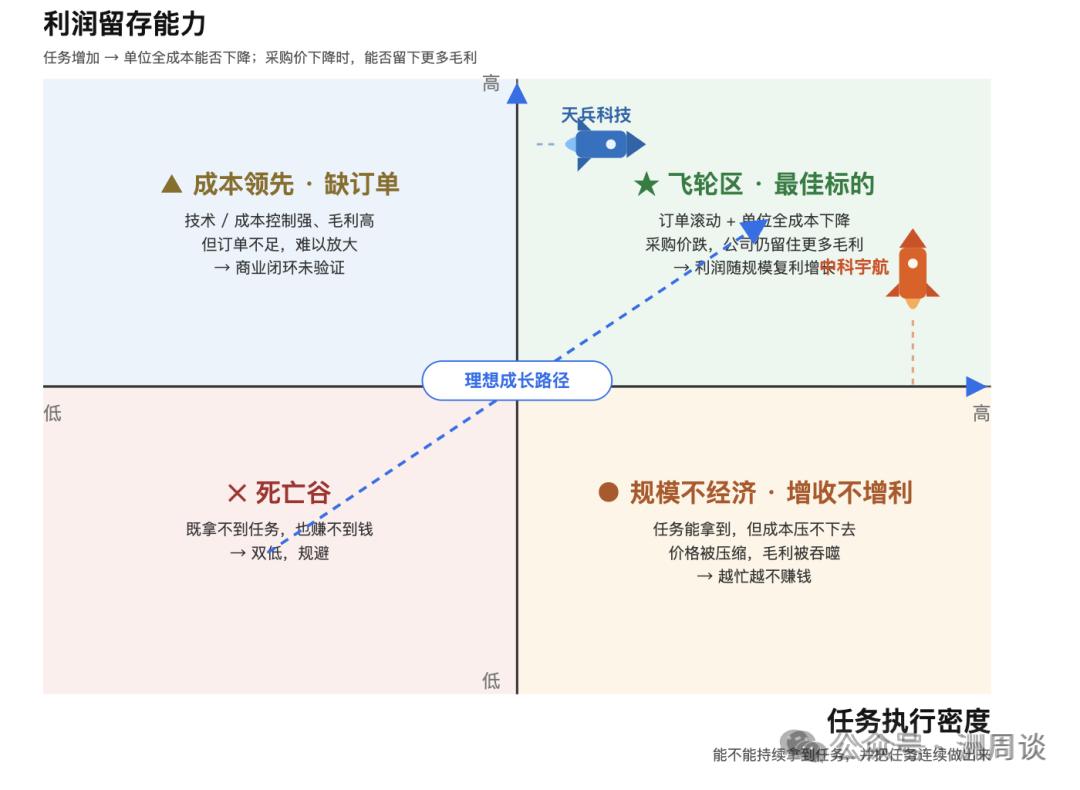
Behind these two axes lie two fundamental capabilities. The horizontal axis determines whether an enterprise can enter the industrial cycle, while the vertical axis ultimately determines whether industrial progress can translate into shareholder returns.
The horizontal axis represents fulfillment capability. Continuous delivery necessitates mission access, client credibility, scheduling prowess, supply chain coordination, production rhythm, and recovery capability after failures. Completing missions within predetermined timeframes, orbits, and safety parameters is a capability that clients can trust and repeatedly rely upon.
The vertical axis represents cost capability. Low pricing does not equate to low costs, nor does recovery equate to economic reuse. Vertical axis capability must revert to overall design, manufacturing processes, and supply chains, accomplishing the same missions with fewer materials, components, man-hours, and funds. As future average procurement prices decline, costs must decrease even more rapidly for the company to maintain reasonable gross profits.
Each company's founding background and capabilities vary, determining their current positions on these axes. However, the industry's convergence towards the upper right is evident.
There is little dispute about the leading companies on the horizontal axis. CAS Space's ability to complete missions is already a proven fact. The ability to organize fulfillment around missions is true expertise and a rare certainty in the industry.
The vertical axis represents an unproven direction that everyone is still pursuing. It is impossible to compare win rates for unproven matters. The best odds structure lies with those who adhere to a speed and cost culture, do not simplify or alter the objective function, and directly tackle difficult problems.
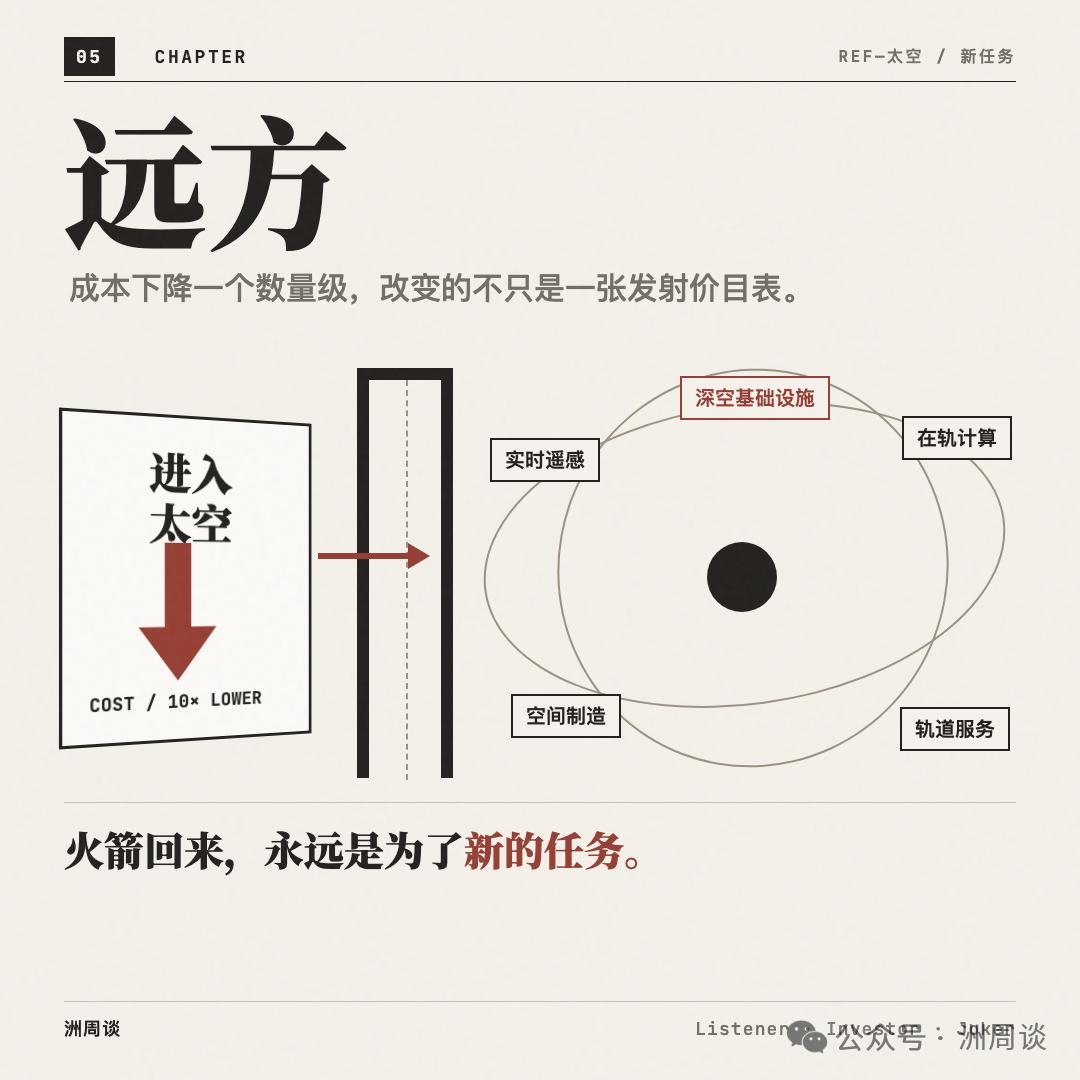
When the cost of accessing space decreases significantly, the changes will not be confined to the launch market. Cheaper satellites can be deployed and updated more rapidly; remote sensing may evolve into real-time perception of Earth's ongoing operations; communications can extend to areas where laying ground networks was previously uneconomical; on-orbit computing, space manufacturing, orbital services, and deep-space infrastructure may also gradually transition from concepts to engineering problems with calculable input-output ratios.
China does not need to replicate SpaceX's narrative after the US. China has its own questions to answer: How to organize the nation's strategic capabilities, vast manufacturing system, and the engineering efficiency of private enterprises into a cycle (cycle) that is both secure and capable of rapid learning.
This will naturally involve both national teams and private companies; major projects and commercial orders; transitional products that may incur temporary losses and far-reaching explorations whose revenue sources are still unclear today.
Rockets return to embark on new missions.
*The featured image is generated by AI.
-
![]()
2026 Chengdu Auto Show Preview: Emerging Forces, Top Five Chinese Brands in Showdown, Joint Ventures Speed Up Localization Efforts
-
Has Xiaomi Weathered Its Toughest Phase as Single-Quarter Revenue Again Tops 100 Billion Yuan?
-
![]()
14.6 Billion Yuan in Asset Impairment Losses: What’s Ailing Geely Holding Group, and How Will Li Shufu Navigate the Crisis?
-
![]()
Baidu’s WorkBuddy: Beyond Task Completion, Toward Trusted Automation
-
![]()
Bu Yizhou from Junyuan Capital: The Allure of Commercial Space Investment Transcends Mere Rocket Recovery Success
-
![]()
Avita Seeks Independence from Huawei
-
![]()
Li Shufu 'Steps Down,' Handing Over Reins to 30-Year Geely Veteran An Conghui
-
HONOR Incorporates 'DJI-Inspired' Tech into Smartphones: Hype Surpasses Actual Sales