Chang'an and ARCFOX Unveil L3-Level Autonomous Vehicles with Licenses, Marking a Crucial Transition from Technical Validation to Practical Application
 12/25 2025
 522
522
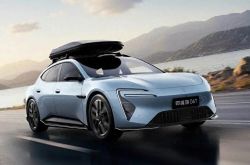
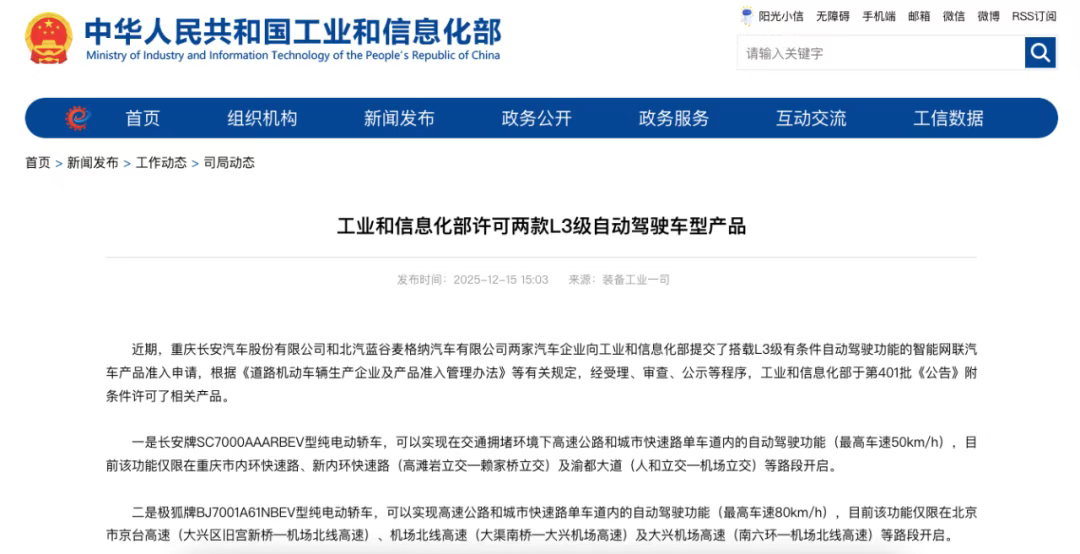
In December 2025, the Ministry of Industry and Information Technology (MIIT) officially granted product market access permits to two vehicle models equipped with L3-level conditional autonomous driving capabilities. The Shenlan model from Chang'an Automobile and the ARCFOX model by BAIC Group were selected for this milestone. Simultaneously, Beijing and Chongqing issued the nation's first batch of dedicated license plates for L3-level conditional autonomous driving vehicles. This development symbolizes a significant leap for China's autonomous driving sector, transitioning from closed testing environments to real-world road deployment after years of technological advancement and policy preparation.
China's L3-level conditional autonomous driving has officially moved beyond the "testing-only" phase into a commercially exploratory "controlled application" period. This transition not only provides automakers with real-world scenarios for technological refinement but also establishes a developmental framework characterized by "policy guidance, industrial collaboration, and safety-first principles." As BAIC's ARCFOX Alpha S and Chang'an's Shenlan SL03 commence pilot operations on designated routes in Beijing and Chongqing—with plans to offer ride-hailing services to the public starting January 2026—L3-level conditional autonomous driving is officially making its way from laboratories to everyday mobility scenarios.
▍Establishing a Controllable Framework for L3 Deployment
L3-level conditional autonomous driving is considered a watershed between assisted driving and true automation due to its redefinition of the "responsible entity." In L2-level and below assisted driving systems, regardless of their sophistication, the driver remains solely responsible for vehicle operation, requiring constant vigilance and readiness to intervene. In contrast, L3-level systems can fully take over dynamic driving tasks—including steering, acceleration, and braking—under specific conditions, allowing drivers to temporarily "take their hands off the wheel and eyes off the road" for non-driving-related activities. This seemingly minor shift touches upon the core of legal, insurance, and ethical considerations: when the vehicle operates autonomously, who bears responsibility in the event of an accident?

The "Beijing Regulations on Autonomous Vehicles," introduced in 2025, along with MIIT's market access policies, provide clear answers: during normal operation when the system is activated and within its designed operational domain (ODD), if an accident occurs due to system failure or decision-making errors, the responsibility shifts to the automaker or system supplier. However, if the system issues a takeover request and the driver fails to respond within the specified time, responsibility reverts to the individual. This "scenario-based responsibility allocation" mechanism, established at the national level for the first time, provides a legal foundation for high-level autonomous driving and clarifies previously ambiguous responsibility boundaries created by L2+ marketing rhetoric.
Taking BAIC ARCFOX as an example, after obtaining market access, it explicitly committed that when the L3 function is enabled, the enterprise will assume corresponding safety responsibilities. By uploading real-time data to a regulatory platform, it ensures accident traceability and clear responsibility determination. This institutional arrangement not only enhances consumer trust in the technology but also lays the groundwork for insurance product innovation and optimization of accident-handling processes.
It is important to note that responsibility transfer is not an unconditional "passing of the buck" but is built upon strict technological boundaries and operational restrictions. Currently, approved L3 vehicle models can only operate on well-structured highways or urban expressways within a single lane, with maximum speed limits set at 80 km/h in Beijing and 50 km/h in Chongqing. The system actively avoids high-risk scenarios such as construction zones, toll stations, and severe weather conditions. These restrictions reflect a cautious regulatory strategy aimed at balancing safety and innovation. Through the "conditional market access" model, regulatory authorities provide space for technological deployment while maintaining a controllable framework for real-world environmental validation, thereby avoiding public trust crises triggered by individual extreme events.

The deployment of L3-level technology relies on continuous technological advancements. ARCFOX explained to Cheshi Ruijian that the ability of the ARCFOX Alpha S (L3 version) to "hit the road with a license" stems from BAIC's long-term technological accumulation in intelligent connected vehicles, new energy, and safety. BAIC's exclusive intelligent connected vehicle technology system, "BAIC Yuanjing Intelligence," is the first in the industry to achieve full coverage from L2 to L4 levels, establishing a "one core, three rings" intelligent connected vehicle safety development and assurance system.
"One core" refers to the core philosophy of "system assurance for safety," establishing a safety design and verification-oriented development process system. "Three rings" involve establishing a triple safety protection system covering the entire product lifecycle. BAIC monitors the status of vehicles in transit 24/7 and analyzes data through its enterprise autonomous driving safety monitoring platform. Notably, relying on the BAIC Yuanjing Intelligence technology system, all BAIC vehicle models share high-level safety standards, striving to achieve "safety without differentiation, the same baseline across all models."
▍Commercial Pathways: From Pilot Operations to Large-Scale Adoption
The commercialization of L3-level conditional autonomous driving follows a gradual pathway of "B-end first, C-end follow-up." Currently, neither the ARCFOX Alpha S nor the Shenlan SL03 are directly sold to private users but are provided as ride-hailing services by designated operational entities (such as Beijing Mobility Automotive Services Co., Ltd.). This strategy serves multiple purposes: on the one hand, B-end fleets facilitate unified management, data collection, and safety monitoring, enabling the accumulation of large-scale real-world operational data in the initial stages for algorithm iteration and optimization of extreme scenarios. On the other hand, professional drivers serve as a "backup safeguard," capable of responding promptly when the system requests takeover, thereby reducing safety risks. More importantly, this model provides stable expectations for vehicle installation across the supply chain, driving core components such as LiDAR, domain controllers, and high-definition maps from trial fitting to mass production, accelerating cost reduction and supply chain maturation.
From a technological implementation perspective, the first batch of L3 vehicle models generally adopts multi-sensor fusion solutions to ensure perception redundancy and system robustness. For example, the ARCFOX Alpha S L3 version is equipped with three LiDAR sensors, over a dozen cameras, and millimeter-wave radars, combined with Huawei's ADS intelligent driving system, to construct a 360-degree environmental perception network. The Chang'an Shenlan SL03 relies on its self-developed SDA Tianshu architecture and UNIBrain central computing platform to verify its positioning and decision-making capabilities in Chongqing's complex terrain. These technological configurations not only meet current functional requirements within the ODD but also reserve computing power and hardware redundancy for future scenario expansion. It is worth noting that L3 functions cannot be upgraded from L2 vehicle models via OTA updates, as they involve the reconstruction of underlying systems such as the vehicle's electronic and electrical architecture, wire-controlled chassis, and power backup, requiring native support from the design stage.
From a supply chain perspective, large-scale pilot operations will drive core upstream components from "trial fitting" to "mass production." Components previously reliant on small-batch supply, such as LiDAR, 4D millimeter-wave radars, and high-computing-power domain controllers, will gradually achieve mass production with the stable installation of L3 vehicle models, thereby driving cost reduction and technological iteration. For example, the supplier of LiDAR sensors for ARCFOX models has begun optimizing production lines to accommodate larger order volumes. The self-developed "Tianshu Intelligence" system used in Chang'an models will also drive the development of downstream service industries such as software algorithms and data annotation, forming a supply chain synergy effect of "vehicle traction, component upgrading, and service matching."
The commercialization of L3-level conditional autonomous driving will proceed steadily along the pathway of "scenario expansion - cost reduction - regulatory refinement." The year 2026 is regarded as the inaugural year for large-scale pilot operations, with cities such as Shanghai and Guangzhou expected to join the pilot program alongside Beijing and Chongqing. More vehicle models (such as BYD Yangwang U9, XPENG X9, and SERES M9) are also anticipated to obtain market access.
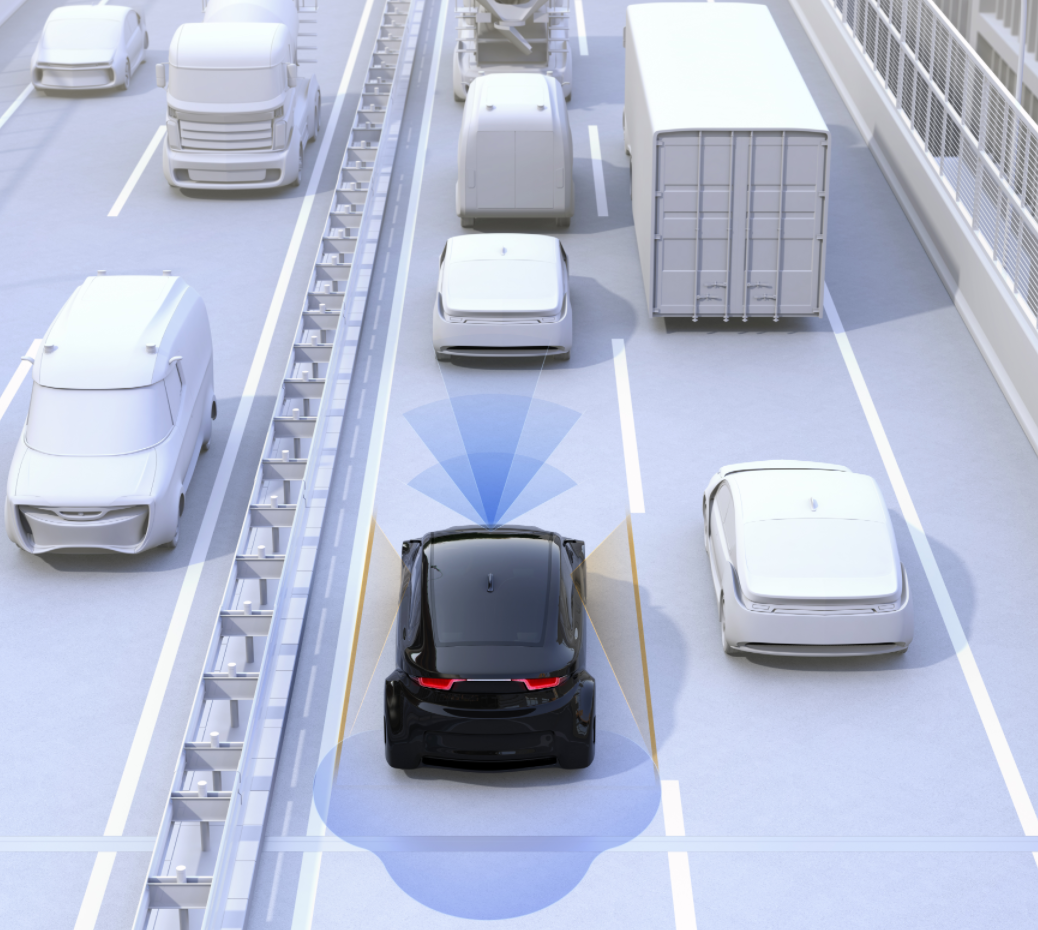
At the recently held 2025 9th China Automotive Customer Voice (VOC+) Symposium, Shi Jianhua, Vice Chairman of the China Automotive Industry Association and Professor-Level Senior Engineer, pointed out that currently, L2-level combined driving assistance functions are entering the popularization stage, with lower-tier markets becoming a focal point. Meanwhile, the penetration rate of new vehicles equipped with L3 and above levels is expected to exceed 10% by 2030, showing rapid growth. Additionally, the hardware costs of assisted driving systems continue to decline, enabling richer functionalities in intelligent driving systems. More profoundly, the real-world road data, human-machine collaboration experience, and vehicle-road coordination infrastructure accumulated by L3 will lay a solid foundation for L4-level highly autonomous driving.
Despite the significant strides made by L3, its widespread adoption still faces multiple challenges. First is the issue of technological adaptation, as current systems cannot yet handle highly uncertain scenarios such as unprotected left turns, heavy rain and fog, or sudden pedestrian crossings. The takeover rate in extreme situations remains a key indicator for measuring reliability. Second is the lag in regulatory and insurance frameworks. While local regulations have initially defined responsibility, a nationwide unified standard for accident determination and L3-specific insurance products still need refinement. Furthermore, user education cannot be overlooked—many consumers tend to misinterpret "hands-off" as "complete let go," neglecting their obligation to be ready to take over at any time. This requires guidance from automakers through human-machine interaction design, training mechanisms, and alert strategies.
The official deployment of L3-level conditional autonomous driving represents not just a technological innovation but a systemic transformation involving legal, ethical, business model, and social acceptance dimensions. Although current pilots are limited to specific routes and operational entities, the signal they release is clear and resolute: autonomous driving is no longer a distant future vision but a realistic choice being integrated into daily mobility. Under the premises of clear responsibility, controllable boundaries, and safety prioritization, L3-level autonomous driving is steadily permeating daily life.
Layout 丨 Yang Shuo Image Sources: Ministry of Industry and Information Technology, Chang'an Automobile, ARCFOX Automobile, Qianku Network
-
![]()
Enflame Tech's IPO Journey: Navigating Over 5.9 Billion Yuan in Losses and Soaring Debt in Q1 This Year
-
![]()
Trillion-Yuan Giant Li Shufu 'Streamlines': Could Levc Be the Casualty?
-
![]()
AI Competes for Electricity and Generates Power in the Gobi Desert
-
![]()
The First Batch of Victims of the AI Bubble: Programmers
-
![]()
ByteDance, DJI, and Xiaohongshu Secure Top Three Positions Among China’s Fastest-Growing Unicorns
-
Tesla's in-car voice system in China is finally learning to 'understand human language'
-
![]()
Foreigners Are Amazed: Chinese Electric Vehicle Drive Systems Unveil Innovative 'Poses'
-
![]()
700,000 Brothers and the Future of Robots: Behind JD.com's 'Nirvana Plan'